Transforming Revenue Enablement with Agentic AI
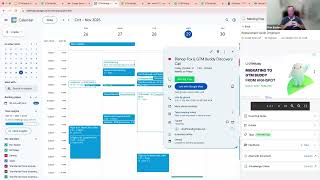
Ron Baden from GTM Buddy shows how agentic AI handles four revenue enablement pillars: content management, learning, in-workflow activation, and analytics. The platform uses AI agents for meeting prep, email drafting, and post-call follow-ups, with reported gains in adoption rates and win rates.
Welcome back everybody. We have an amazing session with Ron Baden. He's the Chief Revenue Officer of GTM Buddy and we are going to talk about how to transform revenue enablement with agentic AI. Ron, tell us what we're going to expect from you today.
Yep, absolutely. And Gerhardt, thank you so much for allowing us to come on. We're very excited. Talk to the audience and share what GTN Buddy does. Just a little bit more background on me. So I have been a career CRO. I started out in product and then became a CRO. So I'm very much a hands on CRO. I would say I do most of our demos because I use it the most. I actually bought the product for my 300 sellers and the thing we were specifically looking to solve was we did a very good job of hiring good people and writing a good playbook and making sure that we scored the plays. But where we struggled was an activation. So just like any sports team, what if the rubber doesn't meet the road and they're not doing it in game time? You could watch all the film you want at the end, but if you have, if you prepped them and they're not doing it watching the film, it's good, but it's better to make sure that they're doing it in live and Activate. So we're really going to talk about four things today. This is what we can cover in the broader suite of GTAM Buddy. We are built with a, what used to be called a traditional content management system. So making sense of all your videos and all of your PDFs and all of the documents that product marketing and enablement create and sales can never find and says we don't have enough of. That's part of the problem we solve layered on top of the fact that how do we train people? Well, there's many, many ways, but just putting them out on the field and giving the content. And I had a CEO one time who said we're going to learn by making our prospects crash test dummies. And I was like, okay, we must have enough pipeline. That's amazing. We could do it that way. I don't think that's the world we all live in today. So we want to make sure we do a really good job of training. So that's the second sort of foundational part of GTM Buddy. The next part is this Activate. And this is where this is our big secret sauce and this is where we meet them, where they work. We're very worried about what's in the reps heads and what they're doing. But we're also worried about do they have to leave another app to go to somewhere else? Because if you tell them to leave their workflow they're going to tell you where to go and it's not going to be very polite. So that's where we're going to spend most of the time here and then we will look at the analytics and revenue impact. So these are kind of the four things that enable it does and make sure that they're prepped with. If I look at this, this is, this is the way we think about enablement and frankly today Gerhardt and team, we know everybody's doing these and they're frankly doing them I think pretty well. Like there's a ton of lms as they've been out there a long time. As we spin the flywheel, we're starting to now get into this really neat world of reinforce. I think there's some demos actually today about how do you reinforce those skills and let them pitch and let them AI role play where when I first started learning IBM way back in the day, I stand in front of a mirror and do stand and deliver and I had to pick on myself and be embarrassed for myself. This is becoming a great new way to reinforce the message, reinforce the new products, reinforce what we're doing. So enablement got a huge leg up here. But it's still this area that how do we be in the deal? How does enablement be in the deal? How does a product marketing be in the deal? How does sales leaders be in every deal? Well that's where GTM buddy comes in. We specifically focus on deal specific insight. We're about micro conversion. So are we excited about helping someone win a discovery call? Absolutely. Are we more excited to help them kick off the first two minutes and intro themselves properly and win that little micro conversion of business report? Heck yeah. And then that leads in to analyze which once we get the data we retrain them again. And I'm going to show you a great example of how we take this, analyze and learn and actually use it and put it into activation. So we talked about this being an AI power revenue name Flywheel. I talked about the Flywheel for enablement. I do want to be very clear. We have five pillars of co pilots, agents, whatever you want to call them that are running. As I told you, I don't love the pilot co pilot analogy because in no way when you fly are pilots and co pilots flying together. Pilots fly. Co pilots are reading altimeters and weather and you know, distance. If they're flying together, it would be like a parent trying to teach a kid to drive and they're both stepping on the gas and brake at the same time. It doesn't work. What's interesting is in this next 15 to 20 minutes I'm going to show you a demo, the four things. And in those four things we are going to enact all of these co pilots minus this rfp. So if people want to see more about that, we can certainly do that. We are going to go through content, we're going to go through learning and seller what they do pre and post and then we're going to talk about reporting. So specifically we're going to show it in this activate mode. That's what today is all about. Showing people how AI can be run autonomously, how, how AI can run in partnership with and be that good buddy or co pilot to the sellers. We're going to talk about it in meeting prep, how the reps can be more successful and then sort of in the buyer group mode. And that is not a slide I wanted to show. So we're going to show and we're going to jump into the actual demo now. All right, so let's start here. So I normally wouldn't show this in a demo, but for today, being that it's all AI, I did want to show these agents are running in the background. These are ones that we deploy out of the box. We also let you configure your own. But these are always running. And what they're about, these four in particular is this is looking. Did a competitor do a release of a new feature? Did they do something different? Did they have a press release? So this is helping product market enablement, keep the content fresh and delivering it all the time. This one is a copilot that's running as new content gets delivered. It's got a lens of a sales manager and it's saying take this 17 page dense deck and narrow that down to four things the reps can remember. So we would call those cliff notes, but this is always looking at decks to narrow them down to what the reps actually need. This one is sending all of the information to the rep post the meeting. So it's taking the recorded call, it's taking the notes and it's saying here's what you promised, here's what the follow ups are, here's next steps, here's your CRM update, et cetera, et cetera. And this one is one that we all want reps to do. We all think they do it, they all think they do it, and frankly, they don't do a great job of it, which is who are you talking to and what are you going to talk about? How did they come here? So this one, in our world, the way we deploy it, an hour before the meeting, we actually get an email. That's the first form. And it's doing a very good analytical job. This is a meeting I got right before I jumped on. So meeting these nice folks at Castle Systems. And I get firmographic landscape, I even get what might they care about based on who's joining. I even get who's joining, what they care about, what they're going to ask about, key things that, that that have happened. I get all this their LinkedIn profile. So an hour in advance I get a quick little feedback loop of who am I looking at? And I'm starting to get my mind ready for this next meeting. That's one hour in advance. Now that then feeds GTM Buddy. So that information is now being used for what we call rep success. So now I've gone to my calendar and I'm in the wrong week. So you can't see that this is truly my calendar today. And so here's that meeting with Castle. So I got that an hour in advance, but here's a discovery column in a run. And this is very, very normal how reps work. They go to the calendar, they all have the muscle memory of let me click my zoom or my teams call, and that's how I launch it. So an hour in advance, we send them an email. 30 minutes in advance, we start getting them ready by prepping for the meeting. So we're going to look at this Bishop Fox meeting and all of that information that was on that page that we expect the rep to learn and read, which they're not going to comprehend, all of it. We're feeding that into GTM buddy, partnered with the CRM data and now we're giving it context. So if this was football, I would tell you we're telling the reps it's 4th and 1 and here's the play we're going to run. Or it's the end of the half and we're throwing a Hail Mary without context of where are they, what industry are they in, who am I meeting with, who's the competition, what product? I can't make my questions great. I can't make it about them unless I get this context. So we're running this agent to feed another agent, which we call meeting Prep Agent and then based on this information, we're using AI to then call all the content down to the key things they'll need to be successful. I can't tell you how many times I've had people come to me and say, hey Ron, what's a good reference or good name to name drop? I heard in a meeting that Nike was good. And I'm like, well, Nike is great, but you're talking to mom and Pop's Taco Shop of Iowa. Why would you talk about Nike? It's not even relevant. Well, here GTM Buddy is saying, okay, we're nowhere in cybersecurity. Here's five people that you can talk about. And the assets, how do I know they're good? Again, using that AI to say they're in the same industry, they're using the same product. So I've got the reps really well prepped at this point in terms of the information I'm giving them. So build your rapport by name dropping. Here's the sales decks that everybody searches around and can't find. Here's the product collateral that helps me understand if they ask me a question without my se Or Se on the phone, what do I do? And then lastly, I had mentioned the second agent, which is an agent that's scraping the content looking for summarization. So I'm going to go into this one and I'm going to show you. This very first guide is talking about High Spot. That is one of our competitors, but it's also the what Bishop Fox uses currently. And when I do this contextualization, what it's going to tell me is this doc has a lot of use we and it is tagged for the competitor High Spot. Now why does that matter? All of this is auto tagging done by GTM Buddy. So we don't have to go in. We get deep insights on the content, but let's open it and this is going to be a very normal case. So what's normal about. This is a product marketing doc and I'll pick on them for a minute. It's very dense and it needs to be very dense because we're convincing people that they should go and they should look at GT and Buddy and this is how you'd replace it. So this is 17 pages of the 17 pages. I know the reps talk about a few things. That agent that's running in the background is updating this with new information based on what people say, based on what we record, etc. So now I Get here's what you talk about. Cost efficiency, implementation speed, user centric design. Those are the four things that you should talk about so that it's like you have enablement doing the training, it's like you have your sales leader all in the calls with you and it's amazing to have this in there. So those are a couple example of agents that are running AI for meeting prep for rep success. I want to go to the next one which is look, we spend a lot of time training rep. So we train them, then they go do the call, then we listen to the game film and truly sometimes they don't get fully what they're, what they're still supposed to do. So we'll flip this now and show next version of AI using on the lms. So this is now a combination of your onboarding, your self paced, your events that are live practice, that's individualized, AI role play, that's bidirectional and your game film. So these five things are being put together through an algorithm and a set of rubrics. And what it's telling me that across the whole team, we're not great at building rapport, we're not great at objection handling and we're not great at questioning. It will narrow down who. So now that I have that information, now I can actually recommend not only content to them, but I can push training to them in their calendar, in their workflow as well. So how do we make sure reps are successful? Well if I go back here, I've got all the trainings that this person supposed to do. So there's review yourself on the LMS demo. They didn't do well in questioning. So we're going to give them a course. Not, not sequential learning. We're going to pull it out and do space learning and say when it matters most we're going to deliver it to you to make sure you look at that. Now this can be forced. You can make them do the courses. You don't have to for us, we don't make them, we just say, hey team, a suggestion is go refresh yourself on these before you go do it. Now what have we learned? That role play is a great way to reinforce this content. It's also a great way here to activate it. So we do this thing called dynamic role play, slightly different and additive to what some people do. So here I can now practice my discovery call that I'm about to do with this person and it's going to pick up everything about their cybersecurity. They're on high spot there. You can see it's actually written this. Now I can run this and practice this exact call without having to write a role play, without having to do anything as a rep. So now we're putting ourselves in the mind of the rep. Here's the training, here's the role play, here's the content. Go be super successful with this. So that's an example of how you activate. This is the big theme we're going to talk about. That's how we can activate this in their workflow. But that's not the only workflow they work in. What are they going to do next? So now what they're going to do is they are going to go in and they're going to send an email. That's the follow up. And often reps struggle with sending emails. So I'm going to show that next. Let's see where am I? Good. Okay, so I'm going to show that next. So now we're in my email and I was just meeting with Anthony Huffman and Anthony's with Bishop Fox. So it's got context on the deal. And if we had recorded this, what Buddy would do is, is listen to the call and say, okay, we're going to write a follow up email and we're going to take the problems from that discovery email and we're going to embed it in here. And by the way, let's use the good emails that, that people have used before to write this because this might be a new rep who maybe hasn't sent a bunch and can't remember the sales play of how to write that perfect email. And what we want to include is a case study. We want to include pricing because they asked us about it and they want to ask us the top reasons we beat our competitor. So now all I have to do is when I push content, that same contextualization is going to happen on Bishop Fox. So I'm going to get these smart snippets and lo and behold, what's the number one thing that shows up? A case study. Why? Because it's the number one thing we wrote here and it that it heard. So it gave me case studies. I get my context and my relevance that this one's been used. It's the exact same industry. So boom, I can do that. Sorry, I didn't click add. A little user error there. I'm going to click add and now you'll see it go in. That link looks like a link for them. It's actually based on Sending it from, from, from you, not from us, because we send it from us. No one will trust it, especially cyber security. But let's now layer onto this. So let's ask Buddy now. And this truly is not autonomous. This is running in the background. This is an agent that you're going to invoke just like, hey copilot, how high do I have to fly to avoid this turbulence? And you'll see that I'm going to ask it to write a discovery follow up email including the relevant problems discussed. Now I could tell it to be concise, I could tell it to write for 5th grader. I can tell it TLDR. It does respect and understand all those things. But most importantly, you're going to get a consistent email from just that short prompt. Now it's looking at emails that have been written and it's looking at what's actually one who's written good emails. And so now here's what it came back with. Here's the meeting summary, here's your action items, I'll send you a demo, decisions, next steps, etc. So I get a very good email that I have, but it's not just good, good, it's consistent. So what we want to know is we train them on it. We got the problems we're not writing, hope you had a good weekend and hope you had a good week and hope you're doing well and you know, all those kind of things, we actually get a really good email and then I could just add that in and that would be the basis for it. So that's one thing you can do. Now I'm going to show you something that I think is amazing, truly, truly amazing, which is I had asked GT and Buddy to figure out a way to train not only in, not only in the calendar, doing the spaced learning, but if this is the interface where people spend most of their time, shouldn't we train them here too? Why not give them the ability to train here as well? So let's do this pricing one and I'm sure everybody on the phone knows this one very well. What happens when someone asks pricing in a discovery call? We all get nervous, especially if we're the person who's too expensive or expensive and we get nervous about it. So now when I do pricing, what Buddy's actually doing is looking to write the answer. Forget content for a minute. What Buddy's doing is going through and saying, hey, look, you're in a discovery call. Don't be nervous, don't quote pricing. Instead, let's talk about the right things to say. Here's what we do, here's the things you're going to think about, here's the modules we have and now here's what we want to say. Our pricing is flexible and modular based on team size, usage and selected modules. We'll tailor planning your goals and budget. Reach out to explore the right fit on your team. This avoids the show up and throw up. Here's how much it is or it's in a bread box or it's be doing this range or it's like some like this for someone like you. So Buddy is training, but here's another one that I think is so amazing. My reps will often ask me how do I, how do I do pricing? Have you done it? What have you said? Here's an example where Buddy, two things. One, governance. We don't share pricing docs here, so it's marked internal, it will not share, will not allow your reps to share it. But this one is so super interesting. This was a live call I did with a procurement person who came onto the phone. He said, ron, my team told me they really like it, but if you can't fit into this breadbox and that pricing doesn't work, we can't work with you. So I went through the whole spiel of here's our pricing and we're going to fit into it and what's so important to you? And did the whole thing. Buddy actually tagged that using the auto tagging. And when we get to pricing calls that are in the discovery phase, it pushes this as a training that they can listen to to help themselves get better and get a better understanding of what do I say right here. So now this was one of my biggest learnings. When I had 300 learners, I couldn't be in deals anymore. I could only come as an executive sponsor. But I learned how to get myself into every day. I learned how to scale myself to get into these deals and be part of these deals because we helped win. When sales leaders are in, when enablements, when product marketing is it, we help win deals. But I can get myself in every conversation now. So this to me became an incredible, incredible way to do just that. So now let's go forward on that. So we've done the rep workflow. One other thing about that, that AI right there, we've set it up to use a few different models. And so this is now an area where not only can the reps ask a question like how do I run a discovery call? What's the next step. What am I missing for medic? All of those things. But they can also use repeatable. I call them projects. So somebody has a battle card format and they want to just do a quick little review of that competitor, they can run that battle card. Or in my case, this is one we use all the time. This is very simple. Create a battle card on how GTM Better Buddy is better than two of our competitors. We happen to be in a compete. And I wanted to make sure we had the pieces of information at our fingertip. We certainly battle cards, but I wanted not only battle cards, I wanted information from the web. So we went and looked at different websites and we looked at different battle cards and we looked at different info and then I said, look at the most relevant because that's what I wanted to make sure I got. And based on that quick prompt in our format, this is all approved data. So they're not getting anything that they. That's not blessed and isn't, you know, like stuff that shouldn't happen. So. So first, here's your key points. These are the things that you want to keep saying in the demo. Here's the landmines to let. These are quick. These aren't, you know, oh, it's this. Or I mean, this is just, hey, you should be aware of. And have they spoken to you about that? And this is the differentiation for us. All the way down to a table that. Now this is marked internal, so I can't. But all the way down to a table of what we think is important. The reps can run this and add their prompt to it. So instead of doing full prompts, chatgpt, Notebook, LLM. I can just come in here and say, here's the competitor I want. I get all my information structured, nailed, so that I go in very, very well prepped. Okay, I'm going to do one more. Now. We've talked about sort of the admin side. We've talked about a lot of the different features. The last one I want to talk about is how to engage buyer groups. And buyer groups are becoming the norm in our world. It's funny, in fundraising, if anyone ever done fundraising, the buyer groups are large. Like, you get a lot of people at the firm and you meet a lot of different people. And in that world, we had data rooms, data room, data room, data room. And our CFO is on the data room. And we put in contracts and customers and all those things. But it was very, very interactive. And that's the same world we live in today. Now, for our buyers, we don't get a ton of time to go work with our buyers. They're out doing their own research and they want to see the product. Everybody we get asked all the time. We do a trial. This is an example of how you do a trial. How you sell when you're not selling is by using a digital sales or digital buyer, digital collaboration room. It's a great way to get people engaged without you having to be engaged. Now I'm actually going to go back and we'll build one real quick because the two, the two big parts that are AI driven here is one, the ability to create them based on context and two, the ability to allow your users to use that, that copilot to do some of the same things I was just doing. So what do they get? They get a highly formatted page. It's going to, because this is cybersecurity, you're going to see a product overview. Then you're going to start to see, because this is high spot, you're going to see those documents, you're going to see customer evidence in that space, product documents, even integration. In this case we use calendly, calendly integration, Docusign integration, Adobe sign integration. So you're going to get all your content on that page with a nice homepage. The next thing that people really want is are you keeping the deal moving? Are you keeping it on pace? So we do allow the embedding of these digital sales within the digital sales room, we do allow the ability to add mutual action plans. Now one thing that a lot of reps get wrong is they think the mutual action plan is just a checkbox, just an activity list. It's not. If you're truly engaging with your buyers, there are things that you're asking them to do that aren't just show up to a demo and bring your exact sponsor. It's can you sign an NDA? Can, can we send you the msa? And so we do also have success criteria baked in here. And two things I'll tell you that I think are really interesting about this success criteria. Number one, reps don't love CRM update. This will update the CRM. Not only that the activity has happened, but that it has triggered the success criteria. So we received an NDA. Fill up that in the, in the methodology. The other thing it'll do is it'll open up parts of the digital sales room. So let's say NDA is important. Once they ask for info sec, there's sections in here that are hidden. I guess this one doesn't have. But we have hidden sections that once it triggers the success criteria, then it automatically opens that section for people. So infosec, pricing, MSAs, all those kind of things get open next going across the top. All of the meetings that are going to be done are automatically published into the meeting section. So a lot of people use conversation intelligence tools. We are not that. What we are is the delivery mechanism. How long did they watch it for? Who watched it? What insights can you actually get? And it's automatically integrated now. Why do you see meeting not available? We use a Voma. We don't plug our Ivoma into our demo system. There would just be two way, way, way too many things getting uploaded. It's also by account and our accounts aren't going to show up on our demo system. But what you will get is a summary of what happened in the meeting, who participated, a running list of the meetings. You also get who's joined. So I get both the selling team and I get the buying team. So I can see how long has the executive sponsor been in? Have they been in? All of those things I could see. And then I can get a running list of what they've actually done on here, just as if I was screen recording them and seeing what's happening. So here's our buddy, Anthony Huffman. He's looked at 33% of the assets he's been in twice. And when I open this now I get to see that on March 13th he opened the room, he looked at a case study, looked at it for 22 seconds, looked at the same one again later on, about an hour later, maybe dinner or snack, then looked at a product overview of CMS coaching. Interesting. Why I say interesting is because when I see different products, I want to go back to my notes and make sure that that was part of the discovery. Did they actually talk about lms? Because now I know something that maybe I didn't before. And then they viewed the room and then closed that. So I get great insight on everything that's happening in here. Now, a couple of things that make this very collaborative. You can also add a collaboration section. You can also come here and interface with the selling team. So Alex left a note and said, can you please share the product video we spoke about? We would upload that instantly. But here's one that's more interesting. Our customers are always looking for information on us in the, on the Internet, chatgpt, wherever it is. So we give them that ability to do the same thing Here So I've shown you this copilot in the way to form a document. I've shown you in the way to write an email. Now I'm going to show you for your buyers how they can access this little LLM, this mini LLM and in the form of a digital sales room. Meaning they can only get answers to what's in this digital sales room. But let's say this will be a little self gratuitous, a little pat on the back. But let's say somebody sees the case studies and says I don't have time, I'm, I'm an executive, I'm the CRO, I don't have time to read the three case studies. Can I just find out why? Here, we'll do it this way. Top three reasons people buy gtm buddy, be concise. I only want the top three. I don't want a whole, a whole soliloquy. And so now what it's doing is looking at what this user has access to and then it's summarizing the three documents and I'm getting that answer. So think about selling when you're not selling what's interesting and I'll share this with you. It's a little Big Brother is we do get to see the chats, we do get to see what they're searching for. I am of the feeling and of the mind that it's okay to say, hey X show you in the digital sales room. You asked for a document, you haven't seen it, why not do it? I mean no one's come back and said geez Ron, you shouldn't have done that. What they do come back and say, man, you're right on top of it. The way we do that we actually use Slack. So every time they're in here when they're opening stuff, I'm getting slack messages in real time that they're looking at the content that they're searching and can't find something. So I'm literally selling when I'm not selling. And it's such a nice way to interface. Now the other thing is, let's just talk about this real quick. And Gerhard, let me know when I'm running out of time. I still want to leave a couple minutes for some questions. But I do want to do this because I think it's important. People are like, how hard are these to build? Like is this something that's going to take me a while? Can my reps do it? Is this going to be like, you know, in a data room when we're, when we're fundraising, you know, that's always an analyst who's doing it. But the way we've set these up are really nice. And, and there's two different ones. One is a room for just that buying team. This one is really interesting. If you're a marketing exec or you're doing events or you're doing field events, you can set up campaign rooms that allow even for like scopes, where you can get the content in there. You can say here's the, the schedule, here's your travel details. And it just allows people very easily to stay on task and to drive through. You can see what content they're reading. How many people read the agenda? The ones who didn't read the agenda. Are you going to get an email? But let's just do a new room and I'll show you how easy this is. So we've already got industry specific templates. It knows industries. And this one, we do a lot of work with cyber security. So I'm just going to select this one and then once I give it the name. So this is going to be GTN buddy. Plus we'll do Bishop Fox again because I don't have the logo Bishop Fox 2. And now this is where it's going to get all its contact. So I'm going to say opportunity and it's going to come up and ask me what opportunity? And I'm going to tell it's Bishop Fox, because I want that specific branding. Maybe just do it this way. It wouldn't be a demo until something didn't work. Let's see if I can find it this way. All right. So I guess I don't have an opportunity, but I can go get their logo for branding. So there that is. Okay. I'm going to try to pick one. I know another one. Okay. I might not be able to do it anyways. So once you do that, you do this and it automatically creates the digital sales room for you. And if I had an opportunity, I do not why we do this all the time. I'm not sure why that didn't work, but that would create it for you. It would be that. What the AI does, just like meeting prep, is it picks up that context for you that shows here's the right case studies, here's the right product, here's the right stage level information so that people don't have to go through and do that each time. All right, I'm going to pause there. Gerhard, questions?
Thank you. You did a phenomenal Job. Can you hear me? All right, good. So I wonder can GTM buddy track external buyer engagement who opens, reads and forwards and shares content?
Yeah, yeah. So that, that and I, I didn't mention that. But this is the what's in it for them? And by them I mean the rep. And what do we know? Reps constantly download their own content. They save it to their hard drive. They get very frustrated. That way they can find it but they get no tracking. So to answer your question, the answer is yes. So let's take Bishop Fox as an example. We sent them a bunch of content. We know it's got six views and they've viewed it for 13 minutes. I can get a content level view of what was sent, what was engaged with even to this point where we sent it to a month ago. But this document has been sunset. We're no longer going to allow them to look at that document. This document's even more interesting. We updated this while this was out with a bunch of different people. So it used to be 15 pages. The reason it's 15 of 17 viewed. We actually updated 17 pages. They haven't seen those two new pages yet. But I can see Anthony viewed it twice. A bunch of people came in once including an executive sponsor. That's great news. And when I click on this document it's going to tell me it was viewed for one minute. Now this is what's in it for the rep. What page did they actually look at? So we can send them a doc and they just click through it. But here's where their eyes were focused. Was this page five? So what I want to know what's page five? And lo and behold, this is the money page. This is the one we want them looking at. So for product marketing, what's interesting, product marketing wants to know are they using this? Do I move the page up? Which pages do I get rid of? Do I shorten the doc? So yes, this is all buyer engagement for the rep level. You can also track it Gerhardt here on the dashboard. So I can get specifically, very, very specifically. Let me do last. Okay, let's try this. Can't always remember the data. There it is. So these are all the deals and this is our playbook. So our playbook says share, share some content stage one. This one did nothing in prospecting but we got the meeting and then we shared a bunch of content. When I click on it, I can see exactly what they looked at. But I can also see things like if I'm in product marketer enablement, I Can see that this document was used in 13 deals. We won 12. We have a 92% win rate. We won 6 million in revenue. Like I want to get everybody using this document and you can see it's for opportunities, buyers, internal, etc all the way across to you know what AI are people using all this AI I just showed you. How are we keeping track of it? How are we swapping in and knowing what they're looking for, what we need to create.
You were originally introduced to me by Sandy Robinson and she was talking about the impact GTM buddy has on win rates. Can, can you share a success story or maybe hers?
Yeah, absolutely. So we know, we know, we know, we know the stats. We actually do a very self serving, we do a very self serving thing in our proposals Gerhardt where right before we send it we ask for that exact thing from the AI and we get the responses. So here's what we know. Adoption rates from Reps in the first month goes up from 40 to 50% normally to 95 plus percent. We start seeing reps winning deals in their first month by using digital, digital sales rooms by swapping in to other deals. We know that at one company they came back to us and they're like we didn't need. This was like a sweet Easter egg. Our pipeline went up by $12 million because we used to convert, we used to convert stage ones at a, you know like 40%. Now we're converting at 60%. And it's all about the meeting prep. It's all about them being in there and not having to say sorry, I don't know that answer. Let me come back to that and ask it in two days. Like that's the death of sales is let me get back to you. We used to love that because we bring a really smart person back with us. Now people like nope, I'll go to another company to get that answer. So pipeline win rates I can tell you even at ours we shoot for a very high conversion rate. We're in the 75, 76% conversion rates on discovery calls because we like people ask us all how do you know every question? Like I even had one. Just very interesting because I've been selling a long time, I'm not a new seller but a CEO was added to my discovery call and I was like I'm going to role play it real quick. I role played it three times. He said you didn't know I was joining until like two minutes before the call. How did you get ready for it? And I showed him. I actually played in my role plays. And I said, here's you and here's what he did. We ended up, he bought that day because he was so shocked at how well that worked for me with him. So we in fact win rates, ramp time, micro conversions, man, that's where enablement can hang its hat on. I'm helping get the right content activated in the right moment where they need it to win it that second.
That's awesome. I have one more question, final question. Can you talk about the governance around the agents to prevent copied agents that don't get updated or agent scroll?
Yeah, yeah, it's a great question. So there's, there's a few things. First, the agents that we're showing you are very specific. We, we don't allow, when you're creating your own agents, we don't allow you to recreate a meeting prep agent. We don't allow you to recreate a content summary agent. We allow you to tweak them but not create them because we are trying to prevent agents problem. It can be, I have that. I use ChatGPT still in my personal life to do a lot of stuff and frankly I, I asked the same question a lot of times. So we, we do, we don't allow people to duplicate agents that already exist. So that's one thing. The other part of the question was copied agents. So we also, it's, it's very much at the centralized level and so not everybody can create agents. Everybody can, can use the agents but not create them. That's more of an admin function. So what ends up happening, the governance is somebody says, I'm trying to do this search, I'm not getting the results back. The enablement product marketing team will get alerted that either there's an agent that doesn't exist or we need to tweak one of the things that they're using to make it better. And that's how we control those two things. We also have done a very good job in fairness. Like salespeople are the tip of the iceberg. The tip of the spear, the top of the iceberg. The last thing we ever want is a prospect asking a question, GG buddy giving an answer, and then them saying, great, could you send me the content you got that from? And the rep going, oh, I don't know where that came from. So we actually will say we don't have that answer. Like we just, here's close. But we don't have that because we absolutely would rather just say no than give them a meh. Answer, if you will.
That's awesome. Thank you, Ron. Fantastic presentation. And I hope to see you soon at one of our next events.
You sure will. Thank Gerhard. Thank you for letting us be on here. It was awesome. So appreciated it. And yes, you will see us at the next event. Take care. Bye, everybody.
More from Gerhard



What Selling Looks Like When Your AI Agents Have the Context Your Sellers Do

Better Conversations, Smarter Support: Wearable AI in Business






When Scarcity-Built Systems Meet Abundance - The Judgment Gap in AI-Powered Sales Leadership
