Why Most AI Sales Initiatives Fail – And What Sales Leaders Must Fix First
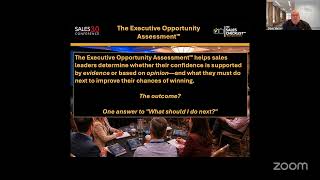
Dave Warner explains why AI sales tools fail: they need concrete evidence, but most sales teams run on opinion. Four reps given the same deal produced four different next steps. His fix is The Sales Checklist, an app that syncs teams around shared evidence instead of guesses.
Chapters
I don't think any of us can open up our emails in the morning and not see something about AI and how AI is not meeting expectations. If I can get this to advance here. We all see these numbers every day, and 6 months ago that was news. Now it's just, yeah, this is the way it is. It's not working. But why? What's causing the problem? And give you a quick story here, a trigger event for me. I was delivering a Sales 3.0 program to a company out on the, on the West Coast, and they brought in their global sales team, and they wanted to work on one particular sales opportunity. And at the end of the 2-day program, the idea was they would take that opportunity and develop a best action plan. You know, what are the things we need to do to move this forward? And so we finished it. Program went great. They were engaged. They were learning. It was fun. We were on time. And so the first group reported out, okay, what are you going to do to move this opportunity forward? And they presented, here are the 3 or 4 things we're going to do. The group, okay, golf clap, everything wonderful. Next group presented. Same opportunity. They had a different best action plan. And I thought, that's kind of strange. Okay, Group 3, what do you think? Different best action plan. So the shortest story, all 4 groups had a different best action plan. And I have an engineering background and I couldn't get away from that. How can that be? How can we have gone through 2 days, of a program designed to give these participants these sales skills to win these opportunities. When we get done, they can't even agree on what to do next. So I developed what I call the case study question. This is something you all can think about to see if this applies to you. Think of an opportunity that your team is working on right now, or you're working on, and it's a critical opportunity. And ask yourself, If I was to pass this out to my team and say, what's the next best step to move this forward? How many different answers would you get? And typically as well, how many people are involved? And if you think about that, if you get more than one answer, you have a problem. You know, you're not ready for AI. AI operates off of evidence, not opinion. And so if you're selling on opinion, It's not going to work for AI. It's obviously not going to work for your sales team. And so what's the impact of doing that? Well, if you're working on opinions rather than evidence, basically your win rate's going to be lower, inaccuracies, you're going to be investing in the wrong opportunities. All these negative things happen. But then the question is, how do you fix it? That's what I want to talk a little bit more about. And this is the book that Gerhard just mentioned, and it will be formally released towards the end of July. But it's designed to address specifically this problem. You know, how do we fix this opinion-based selling? So it's, it's the Sales Checklist: The End of Opinion-Based Selling. And it describes the problem, but I think more importantly, it provides what's the solution? How do we fix that? And so the— if I'm sitting where you are right now, okay, that's great. I understand the problem. I did the case study question. Yes, I have opportunity. Yeah, I see the book. That's all well and good. But how do I know if this really applies to me? What will I specifically get out of it? So we put together an assessment that allows you to take an opportunity and basically run it through what's in the book. And the outcome for you, it helps you see, are you running your organization, are you running your sales on opinion or on evidence? And so, the outcome of taking the assessment, you'll get this very specific feedback on what you're doing. But really, then you also get the answer to the, what do you do next? You'll get that one answer. So then, in less than 5 minutes, you're going to start, you find things such as, what's my biggest risk here? What are some blind spots? What am I missing? How about coaching? How do I coach this? Because if you think about it, if you have more than one answer to the case study question, the same applies to coaching. If you were to take that same opportunity and give it to your sales management team and say, how would you coach this? They're all going to coach differently. And you think about how that impacts your organization. And if we thought about, if, for example, your shipping department ran on opinions, what would that mean? It would be chaos. And it's the same thing here. So this is how we identify the problem, the solution, and then for you to validate, is it really for me? What do I really get out of this? That's what the assessment does. And for you to get the assessment, pretty straightforward. I just need your— shoot me an email or a text. And the email is just, again, dave@malauigroupglobal.com, or the text. And then in the email or text, just go ahead, please, and put your name, title, company, and a phone number, and then I will send you the assessment. And when you take it, you'll get a very detailed report showing really all the things that we've been talking about, but you'll see it applied to your specific opportunity, not just to hypothetically, this is how it works, or here's a demo using canned information. This is tied back to your specific opportunity. And just one other quick thing on top of that, there's also the Sales Checklist app, which allows you to have this real-time collaboration with your team based on evidence rather than opinion. So if the question comes up, okay, this is great, I can understand how to do this, I understand we can go and we can learn how to do it, but how do we then get our team all on the same page? How do we do this so we could have this type of information as it happens, not in a weekly meeting or monthly sales meeting, but how do I know minute by minute where my sales team is on these opportunities and where they are as far as to get evidence or, or opinion? So summary. So high-level overview, again, 3 things we talked about. What's the problem? You know, why does AI not work? Well, AI can't work on opinions. It needs evidence to generate intelligence. So, the problem is you go through the case study question and you either determine, yes, I have something I can fix there, or no, we don't have a problem. We had one answer. Great. Go get a cup of coffee. You're good. Then, we shared about the solution, the Sales Checklist and of opinion selling, the solution. Then, the next step we talked about is, okay, what can I do next to find out if this really applies to me? And that's where the assessment comes into play. So those are the 3 different things. And I guess I could give you an idea of time. I don't have my timer here. I imagine we're probably relatively close to my window here.
Yes, you are. But I have a question. You started out with a story where you explained that there were 4 different outcomes in terms of that opportunity. So people are running in different directions after the training. Can you share a success story where people were aligned?
Yes, actually, there's one worked on fairly recently with a company that manufactures building materials. And it's a, it's a global company. And the challenge is they, they sell to, for example, a top 100 builder. Well, the challenge they have is the builders are located in, in many different geographic areas. So it's not one sales team that covers that builder. There'll be somebody who covers Midwest, somebody covers South, somebody covers the West. And the challenge they were having is they, they had those different islands trying to sell. And what they were able to do then by, by using this is to bring everybody together, give everybody visibility to the overall sales being trying to be made. Everything can be communicated from East Coast to West Coast real time. So for example, they knew, you know, who are the people we're calling on? What are the problems we're solving? What's the solution we're looking like? All the things we want to know about the sale, rather than having little islands, they were all together. So they all know right now, here's our next step to move this this top 100 builder forward. Rather than having 5 or 6 different distributors and dealers going after the order, they'd have one sale that they'd be following. So by doing that, they, they all were doing the same thing, the right things at the right time. They knew what the West Coast, East Coast was doing, and they could answer all those questions versus everyone just doing it their own way and hoping.
Well, Thank you, Dave, for contributing to our Revenue Acceleration Summit. I love your checklist. And, uh, can you show the slide with your book again? I also would recommend that you go to amazon.com and, uh, get Dave Warner's book, uh, because that, uh, revised edition of the Sales Checklist is to me a Must have. It's not a nice to have.
Well, thank you. Yep. And it'll be released, looks like July 27th.
So awesome. And you can preorder it right now. Yeah.
And then thank you very much. I enjoyed the opportunity to be on this and look forward to hearing from people how we can help.
More from Gerhard



What Selling Looks Like When Your AI Agents Have the Context Your Sellers Do

Better Conversations, Smarter Support: Wearable AI in Business






When Scarcity-Built Systems Meet Abundance - The Judgment Gap in AI-Powered Sales Leadership
