Ep. 3 - Uncle Marketing Live - Nova Chiropractic School Supply Drive
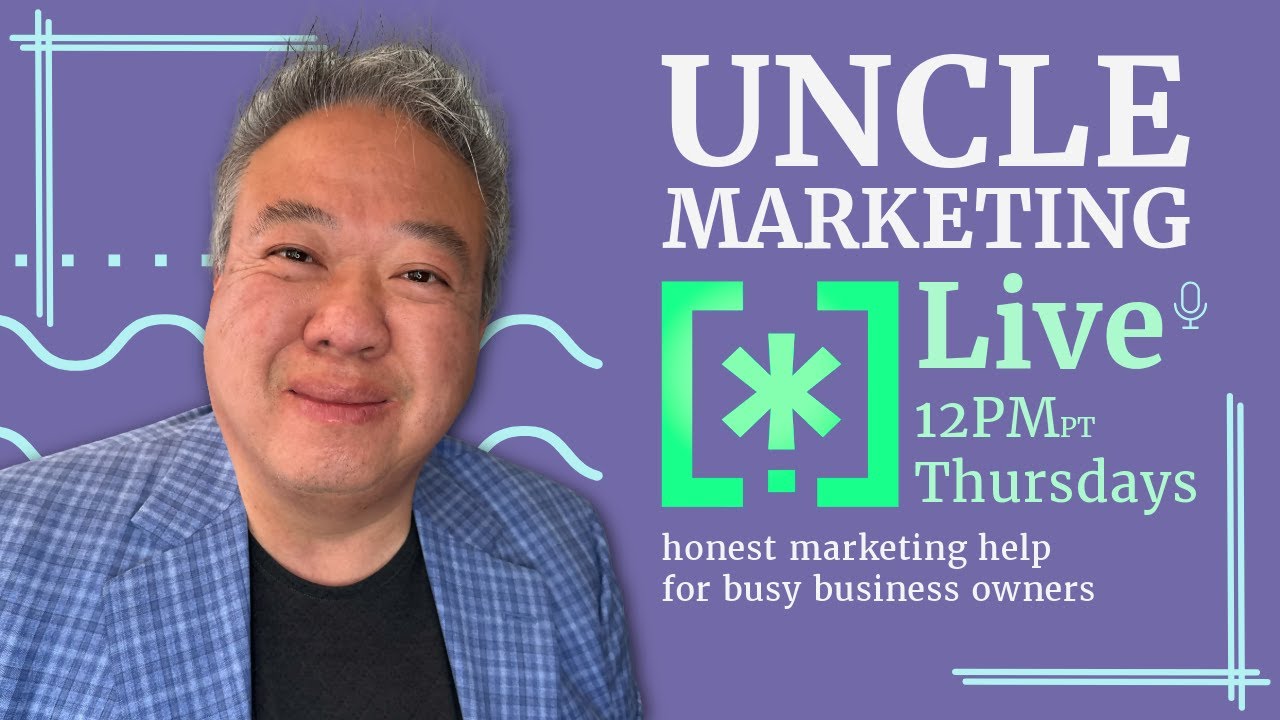
Heather and Dr. Alex Green of Nova Chiropractic discuss their school supply drive, which started in 2004 after a fire at Bookser school and now serves multiple low-income districts. They've grown from in-office events like chair massages and petting zoos to a multi-school effort, using raffles, QR codes, and farmer's market partnerships to fundraise and spread the word.
Chapters
All right.
Hello everyone, this is Uncle Marketing Live. My name is Derek Cheng. I am live, live. I'm in person at Nova Chiropractic with Dr. Shah and Dr. Alex Green.
Yes.
Sorry. And we're going to talk about an initiative they're working on. It's pretty unique, but it's really expressive of the community here in Santa Clara. So I will cut to the chase. Heather and Alex, thanks for having me. Heather, we want to introduce Nova Chiropractic a little bit and kind of what your specialties are.
Sure. So I started Nova Chiropractic in '95 here in Santa Clara, and so we've been here for a while. And this is actually— this house, we're in a house which is kind of fun for the area, and it's been a chiropractic office for 70 years at this point.
Wow.
So yeah, it's been around for a while. And so I got the opportunity 20 years ago to move here, and so we've been here since. And so since we had space, we wanted to like do some community things. And so we'll get into the why of what we're doing. But what we do here is that we have various techniques that we do for chiropractic to help you feel better. But we also have low-level laser, which is really good for pain and inflammation. We have some various physical therapy, muscle stim, and things like that. And I also do some nutrition.
Thanks. And Alex, you've been— you're relatively new. Relatively not 70 years.
No, no, no, relatively new. I started here in '21. And yeah, it's been, it's been 4 years now. It's pretty awesome, right? The stuff I do is more full body, like Soft tissue type therapy, rehab therapy, um, really looking at just the structural, not only, uh, just the specifics of where people are injured. Um, so people come in with low back pain, I'll check legs as well because your feet are the first contact with the ground and it can travel up or down, right?
Yeah.
So I try to keep the whole picture of what's going on. I'm very big into sports and sports injuries and stuff like that, so that's where it kind of drives my passion. into what I do to kind of make people feel better and live their lives a little bit better.
So yeah, thank you. Yeah, so the, the reason you contacted me and the reason I think we want to explore, uh, you've been doing a, um, school supply drive for how many years now?
Since 2004.
Wow, I have to do math now.
Don't make me do math.
That's 21 years. 21 years. Wow. So the local community with Uh, the school district, do you specifically work with one school or the entire district?
So how it all started in 2004 was Bookser had a fire and it knocked out much of the science wing and things like that. And we're like, we need to do something to help them. And so we said, they probably need some supplies, let's start, you know. And so we started the supplies at that point. Yeah.
And so 21 years doing it, what Um, what's changed recently that—
So, well, so initially we were kind of like doing it on a smaller scale where we were kind of like having people come around and they donate supplies and they can go to different therapies. We had like chair massages and, you know, various things they could go to, and then realized that, you know, a lot of people wanted to be involved in that, so we couldn't do it that way anymore. So So then we found out also that, you know, some of the other schools had a bigger need than Bookser. And so we went to Scott Lane and found out what they needed because they're low income. And so we wanted to support them. But it's evolved. We've done various things to see if we can kind of generate different interests. And we had like a mini petting zoo one year.
Oh my gosh.
That people were able to come to. And actually, we have the help, we can do that. But anyway, so we did that and we've done various things. We had some of the students from the school come and do face paintings. We had ice cream we were giving away and games and things like that. So it's kind of— we've tried various things, but we just wanted to be able to reach more schools.
Yeah.
You know, because we've been focusing and so people like People, a lot of people enjoy buying school supplies if their kids aren't of age. And so that's the comments we have that we just love going to the store when there's like all these sales going on.
So maybe it brings them back to when they're—
Yes. So just trying to, you know, just help a lot out of their pocket to pay for supplies. And that's, you know, we have a lot of teachers come in that say, you know, they're They're spending like $5,000 a year just for paper. And so we have a lot of people will donate paper because, you know, they limit how many copies they can do and things like that.
So, okay. So I think there's a lot to talk about because have you really truly orchestrated like the drive? I mean, I know like I get an email sometimes that it's happening, or I walk in and get treatment and it's there. But have you like actually built out like an organizational effort towards it?
At various points we had, like various things. We had like somebody that was coming in and doing, like, you know, she was doing a lot of the email blasts and kind of like being a little more repetitive about it. We've gone out to the community and kind of had local businesses donate things for raffle prizes.
Yeah.
We had the actual schools send out email blasts to all the parents and stuff so they knew that was going on. And we also do our email blasts. We've had flyers around the community. We put flyers in the library. But it wasn't until I got a call about an award a few years ago that this person who's involved in this went to Bookshare and said, You know, all these other schools like have empty shelves and you, you have, you know, always supplies. What's happening? Why is it you always have supplies? And they said, well, Nova Chiropractic gives them to us. And she's like, I've never heard of this. And so they called saying they wanted to give us an award and they were like, we didn't know this was out there. Oh. And so—
The district didn't know.
So I was like, oh, we're kind of missing a mark here. So this was a perfect opportunity when you kind of brought it up that, you know, we can make this better here.
Well, and I think any type of community activity, it's about visibility, it's about building awareness. And so there's a lot of different ways that— I mean, obviously digitally through email and social and things like that, those are kind of staples, but What I like is that your, your offices are here on Jackson, and every Saturday there's a farmer's market just a block away in the Franklin Center. And so knowing that, knowing that there's foot traffic, knowing kids are walking back from school because Books-A-Rusle is right there, library's there. So it's a really central place to try and kind of elevate what you're doing. And, um, uh, I think maybe we can go actually go outside and kind of look at it a little bit.
Yeah.
All right, so I apologize if anyone has, uh, motion sickness. So we'll go and, uh, camera switch. All right, there you go. So there's— you also get a tour of their offices. So this is somebody's house.
So this is a duplex. So the front area is the office and the back area someone lives in. So that's a nice unique area for that. Across the street, right, it's Jackson right here, and just down the street here is Homestead. But like Derek was mentioning, the Franklin Square is right there. Um, you also have Santa Clara University down the street a little further.
So this is like a blank canvas. You know, uh, the fact that, you know, the Nova logo is great. Um, I'd love to see like some kind of display, uh, right around the— this part. Um, around the corner. Yeah, so this whole open area you could do something with. Like, I mean, there's the basic stuff, um, Thermometers, you know, goal meters, things like that.
Yeah.
Another one would be if you want to go even higher end, I was thinking something like a scoreboard, like a digital scoreboard, which maybe won't work for outside, but we could put something in one of the windows.
Yeah.
But then you could like Tell people, hey, we have this many backpacks and we want to get to this many. We have this many reams of paper or notebooks and we want to get to this many. Something like that.
Yeah.
You could rotate in some messaging that way digitally, which is a very attractive— and in fact, the neighbors might hate you, but just turn it off at night. But it's another way to kind of visualize for people some kind of Path to accomplishment. Um, or you could go low-tech, you know. Uh, yeah, the other way to do it is if you couldn't do this digital sign or the LED sign, you can get like those ping pong, um, scoreboards.
Oh, there you go.
Right? And then just put a little note underneath it and then just flip it when you—
yeah, yeah.
Um, do people tend to Donate just goods, or are you going to accept funds as well?
Yeah, we typically will do donations, and then after we give them the supplies, we ask them what else would they need, and then we could buy it from there. Because basically they, they say if we— they can't accept the funds themselves because it just goes into a district fund. Sure. And so they'd rather us take care of that. Yeah, yeah, yeah. Yeah, so...
And some years we've split it up into 2 where we've had, uh, the initial part of it be like backpacks because there have been a couple years where we got all these school supplies but no backpacks, and then some years we got all backpacks with no school supplies. So, uh, a couple years we tried doing split of like backpacks earlier in the year and school supplies later in the year, and, um, this last one was still a mix of both.
So yeah, yeah, they usually have a list that they— of things. And a lot, a lot of things are like for teachers too, like dry erase things because they're expensive.
And, uh, you know, but there's any supplies too, especially for the like books or little kids and stuff.
Oh yeah, the Kleenex.
Yeah.
And sanitizer was also— it was big.
Yeah, especially after COVID.
You know, they said they don't have enough tissues for these kids, you know. So a lot of people bring still sanitizer wipes and things like that.
Okay.
So it's outside of, you know, regular pencil, paper stuff.
So in terms of like the outside, um, do you have a sense of like— this is a sensitive topic, but how do you— are you thinking in terms of like making an investment in something like that, or Like a lighting system? Like the lighting thing, or would you rather do something low-tech?
Um, yeah, I could take a look at like what kind of cost that would be and see, you know.
Low-tech would be good for Optimaly, and so we can get a little more exposure, maybe. Right, right. And yeah, like being in the corner where it's a little bit dead space, or even like over here in this corner where like you kind of get some blockage of the tree. Yeah, right. So have another sign up There and saying like, hey, you know, I'm donating to your community schools, right?
We've had like sandwich boards out for like the days of, uh, you know, farmers market. Farmers market, we've given out flyers down there, things like that.
Sneaking them in because otherwise the farmers market police will come get you.
Yeah, they're on the corner. Yeah, so, uh, but yeah, so whatever, um, you know, I don't know. Loving ideas, just because there's options, right?
Like you said earlier, like, yeah, we do get a lot of foot traffic at times, especially on the weekends. Um, like, we can see it from our window where, like, people will look at our sign, but there's sometimes when people are so unsuspecting, it's just a house, you know, they don't realize there's an office here, right? Those drive right by, you know.
So we usually have banners out front.
Yeah, we do banners, like, bump—
uh, yeah, like just saying school supply this month, for that month, and, uh, come inside and find— get a list, or, you know, what's needed.
That actually is another thing. It's like, um, we could put out a QR code, um, and then it could just go to either the Venmo or like a page on the site where you can list what's, what's needed right now, um, progress. Again, you could track the progress that way too. Um, and yeah, it just involves people that— because the thing is, like, if they see, oh, they only need 10 more backpacks, yeah, I got 5 right here, right? And in fact, you're taking corporate donations as well, even if they're branded, or no, they don't want branded stuff?
They don't really ever kind of comment about, like, you know, you know, last year the, uh, we wound up doing stuff with the Santa Clara Resource Center because Scott Lane already had too many backpacks. So they said take them elsewhere. And so the resource center accepted everything. So we were going to see from them like what kind of things they were needing so we can kind of hit a little bit more.
Right.
More schools then.
Yeah. Good. All right, cool, cool.
Yeah, well, um, like, uh, you had said, you know, one, like, we weighed them at one point, like, you know, how many. Like, we had 800 pounds one year, but the, the first year we had like donations from local printers, so we had like tons of paper and we had to actually get, um, moving trucks to move the So, you know, so it's, it's kind of varied what the amounts were, but I think last year was 800 pounds.
Wow.
Yeah.
So how many kids is that? That's a good question. Okay, we are back.
I'll say one year that, uh, we had some people order just giant boxes worth of just small backpacks for elementary and preschool, uh, students. And I think we had up to 4 to 6 of them, and they were packed full, about 20, 30 backpacks each. And those, those are like hefty, hefty boxes.
Yeah.
So yeah, lots of— and we like, we have some old teachers here that come And they just like, I still have tons of untouched school supplies that I just want to move out, right?
Yeah, when we were dealing with Bookshare, we actually asked each individual teacher what they were looking for, and they were bringing up that, you know, a lot of times like art supplies are really lacking because they're not funded anymore.
And so, you know, construction paper was big for them, or crayons, or markers, or So, but, you know, so generally, as long as you are like an Office Depot in there, you're pretty happy.
Yeah, pretty much. Yeah, sticky notes, cleaning supplies, backpacks, anything you can think of a school would need. Right, right, right. So, and sometimes we've had people who have like brought backpacks that might be too big for the little kids, so we've had Uh, we donated them to other schools that might have needed them as well.
So everything finds a home.
Yes, exactly. Yeah, and it will.
Yeah. So, and we've tried to like attach it to like, um, you know, encouraging people come in and they're like exam—
if they bring in school supplies, you know, then yeah, you get to spin the wheel, right?
You know, you get— you get— that's right, you get the local businesses, you can kind of get a ticket, but They bring in school supplies, they can get their exam, you know, stuff like that. We're just trying to encourage like different ways of like how we can, you know, encourage people to bring in things.
Yeah.
And each year we have— so for the raffle and the spin the wheel that Derek was mentioning was some of the businesses, local businesses, will donate certain gift cards and we'll put it in a raffle. So you spin the wheel, you get so many Raffle tickets, and then you write your name on it and put it into whatever baggies you, you want. And, um, if you— at the end, we'll take them all down, we'll call, draw out a name, and then whoever gets those, those raffle tickets— Even some of the prizes are on the wheel itself, like maybe like a free laser session or free soft tissue session or like a movement assessment or just fun little trinkets, you know.
So what's been something that has really gotten people excited on the wheel?
Well, there's like, uh, somebody will, uh, the acupuncture place will donate acupuncture treatments, you know. Um, but also Mission Grill. Mission Grill has donated $50 gift cards.
Okay.
So we've had, uh, like, um, Psycho Donuts donates gift cards. Roundtable, you know, just various local ones. So gift cards are always a, you know, Starbucks is donating coffee and things like that.
So, you know, that's a whole other side to this, is getting some partner help, sponsor help.
Yeah.
Um, how have you done that in the past?
Um, for at one point we, we contacted like Great America, see if we can get cards that we've actually received, um, entrances to Winchester Mystery House. They gave us things. So it's just a matter of sometimes it's like we're asking too late. Like, Great America in particular was like, yeah, you have to do this in December.
Sure.
Um, um, or like, just— we were just thinking about various venues that people like going to, and it's a matter of like we have to plan in advance. And so we were able to kind of You know, do different things. I think at that point it was the San Jose rep gave us stuff, you know, doesn't happen, nothing exists anymore. But, um, but yeah, things like that, movie tickets.
Okay.
Yeah.
Cool. Um, do you want to head back inside now?
Yeah.
Okay, so this is a little bit more of the front. Again, we're on Jackson and Homestead. Has it always been here, Heather?
What?
Nova.
Oh, um, yeah, I had, uh, I was over on Benton next to Mio Bettino for a couple years, and then I had this opportunity to come here.
Have you noticed since there are more people moving in that you're getting a nicer influx of clients?
We have a lot of referral-based clients, so I, um, we have a lot that come from like Pilates teachers and acupuncture and—
That we work with and refer to, and our own clients too. We can sit properly. Our own clients too will refer people to us as well. Um, yeah, so we have various sources, but mainly referral. Let me switch back.
Um, I'd like to talk a little bit about kind of centralizing an event. So we had many years ago the, uh, the petting zoo face painting. I was just looking at the pictures the other day. But, uh, yeah, the, uh, you had face painting and things like that. So it was a family activity that people kind of gather around. If we were to kind of plant a day in the summer that would work, uh, and then create an activity around that. Maybe even not here. It could be. I mean, ideally it's here, but what kind of brainstorm, what would you want to do there?
Like, as far as what the activity looks like?
Yeah, yeah.
Yeah, you know, so be kind of— I always had this vision, like, at some point we did like games for the kids and You know, something that kind of expands on that a little bit, maybe that they get some, you know, like a prize. Yeah, yeah.
Nice thing, uh, maybe like Central Park, right? Because not too far away, right? And set up some tabling for there and like games for the kids and just have like a whole—
That one might require some permission.
Yeah, exactly. That's what I was thinking, my permission. But it might be a good idea just to kind of get more, right, well, one, exposure, and two, more openness.
Yeah. So Yeah. We could piggyback off the farmers market. So if people are already kind of here, direct them with some, like, a sandwich sign and some balloons on it, and just like, hey, there's a drive. And even if they don't have the donation items with them, they can download it or you can connect Get reminded that, you know, hey, you pledged basically, right? It's a way to kind of reinforce that relationship. And by pledging, hey, yeah, I'm gonna donate this many things, even if they don't have it now, you know, they could spot order it on Amazon.
Exactly. Right.
Or something. But it's a way to kind of let— what I'm looking for is a way, any way to attract people and remove as much friction as possible. And attracting people, I think you're on the right course. It's like, okay, let's create some family activities, games, prizes. Alex can dress up like a clown. Can you do a balloon animal?
Very, very shoddy ones.
But there are actually like balloon artists you can bring in and get some help there.
Do a little song and dance, you know.
There you go.
Music is great. I mean, if you find like somebody who— probably one of your clients, somebody in your client base can do some of these things. Maybe by saying, you know, we're having this thing on this day. Would you like to sign up to kind of offer yourself as part of the effort? And she's not here, but my sister-in-law, your patient, plays a mean guitar, right? Would she come back for this?
I don't know. I'll have to ask her.
Right, right. But, you know, that's somebody like— You could bring it in and just have more variation on just like the typical thing. And it's not just an ask, it's like we're welcoming you into the community effort around this.
Yeah.
And building on that, ideally too, like, you know, you want to do this every year. So it's whenever we think about doing something like this, Can we kind of pre-plan it for next year as much as possible so that, you know, the next effort can be easier? The next effort can be easier. We're all getting older, so we want to, you know, and so being able to, like, if you would need to hand it off at some point, you could and build that kind of legacy of giving as well.
Yeah, because like the musical, we definitely have some Singers, right?
Yeah, yeah, we have a few singers, a few instrumentalists.
Puppet show or something. Yeah, you could write a little, you know, uh, a skit where the characters can't, you know, they have a sore back or something. Their backpack's all messed up and janky and they need to like really tie it in. That would be really fun. To do something like that. Um, uh, what else can we do? Um, so with this, with central event kind of right in the middle of the season, the giving season would be great because then you can kind of, uh, express it until the event, showcase the event, We can put it on the chamber event pages and then, you know, announce it and it gets picked up that way.
Right.
And then at the event, you know, everybody's having a good time. Hopefully you get some donations or pledges or, you know, whatever it is that we can try and drive people into. And then, and then after that, it's kind of just like catch-up, follow-up. Ideally, that big event helps you kind of— you're already at the— you can already get to the goal with the event. So now the rest of the way, you're basically seeing, can you stretch the goal?
Yeah.
And let me go— when I go back This week I'll come up with like a schedule maybe to just kind of sketch it out and see like, okay, where do you want to put things? Um, uh, and figure out if we can actually— what things we can actually execute on.
Right.
Um, and then if we can't do something, you know, it's, it's still a great idea, then put it and save it for next year.
Yeah.
You know, so there's no loss there because you're kind of You're already gonna do the minimum thing that you were gonna do, right? So now we're trying to like, how can we really build it out and get some excitement going there? Because the other thing with the event is now we can maybe pitch the, um, the local small media that's around, um, and get them interested. We could go to folks like the— so Idle Timelines, Joan, she has that pop-up. In fact, it's happening today. But she runs it every month.
Right.
And you get a free table if you want it. So you could bring a few of the materials and try and get pledges that way. And maybe get some awareness from people who are there. That's another kind of freebie event that you're piggybacking off of other communities and just letting people know what you're up to. And that way you are constantly expanding the network of who's out there.
Yeah.
I like those ideas.
Okay. So, uh, that— I have homework. I have homework, I promise.
Yeah, so do we.
So, uh, so yeah, when I get— when I go back, I'll send you a, a plan for next week, and then you can kind of review it and see where things— what things you want to do, because we talked about a lot of things. And this is the fun part, is like coming up with ideas, and then it's like, oh, now I have to do this. So what can we actually accomplish, right? Um, you'll know better than I do, like, what your capacity is and who you know and who you can call on. Um, but the framework of it, you know, I can give you, um, pretty easily.
So, yeah, perfect. Love it.
I like it.
Yeah.
Questions?
I'm looking forward to seeing what you have.
Yeah.
But it makes me feel like, you know, we need to start reaching out to our normal businesses that maybe expand on that in the meantime to kind of like—
That's the other thing. It's like if you let them know, hey, we're going to make this a little bigger this year. Especially this year, because I think you think about the economy, think about the cost of goods, right? Thinking about the kids who are undocumented and will be struggling this, you know, their normal, like, psych— psych— psych— psych—
psychologically.
Psychologically. Thank you. Psychologically, they're going to struggle this year.
I know last year a big part of it was Scotland had a lot of foreign people coming in for job opportunities, so a lot of it they didn't know what they needed because a lot of the kids coming with like very minimal stuff too. So that was another thing, just like a lot of people, more influx of work visa type immigrants.
Yeah, Scotland in particular They get shoe donations. That's how— it's so sad that, you know, Rotary actually donates shoes to them.
Oh yeah, you're part of Rotary too?
Yeah.
Does that— so you can tie those folks in too?
Yeah, yeah, yeah. So, but yeah, that was like, wow, shoes, you know, you don't think you're in Silicon Valley, but it's like a nice area and yet there's still so much—
yeah, poverty discrepancies.
Yeah, but also, you know, our chamber members, if they want to be a part of, uh, you know, highlighting their business and some of our raffles, you know, that would be an opportunity on your end too. Yeah, yeah, absolutely.
Uh, and, uh, it's a— it is another thing to pitch during our weekly member weekly meeting too, because like if you want to spend a week just saying Hey, we would love sponsors for this thing. Any, you know, any gift above this would be a reasonable thing or something. It's just a way to involve more people.
Right.
And people want to help, and if the help is easy, then—
Right.
So the whole key is like, how can we remove all the obstacles?
Right.
Yeah, and the fact that, you know, you're not a nonprofit, you're just doing this because you fucking care. Um, and that's like, that's part of why hopefully people go, oh yeah, it's not like they're gonna stock up on this stuff and try and sell it or— yeah, or whatnot. This is— everything goes.
Everything goes. Like, we'll even have sometimes, we'll have even Our waiting room will be full of stuff and we'll have to figure out where to put it. But yeah, no, everything that we get doesn't go back into our, our back or anything. All of it goes out. And if Bookster doesn't need it, if Scotland doesn't need it, it'll find a home somewhere else.
So my dream is that you guys end up with those moving pods.
Yeah.
And then you just load up the moving pod and just You can show people, it's like, hey, the pot is this much full now.
Yeah, yeah, we've done before and after. Like, this is the start of the event, we're getting some, and we'll have like a final picture. Like, this is the end of the event, this is how much we've had, you know. So very cool.
All right, um, I think we can end it. But, uh, anyone who's attending live, thank you. Uh, looks like we've got a comment. Nope. Well, thank you, Heather and Alex. We're going to get to work and we'll talk soon. Perfect.
Thank you so much for coming out, Derek, and thank you all.
Yes, thank you.
More from Derek

Yeah… about that Taylor Swift Super Bowl theory… #taylorswift #traviskelce #superbowl