📈 Mortgage Rates and Inflation 🔥
Derek McGowan from the McGowan Mortgage Team explains how the Federal Reserve's actions on inflation drive mortgage rates. He walks through the economic trends and historical precedent for where rates are headed and what it means for the housing market.
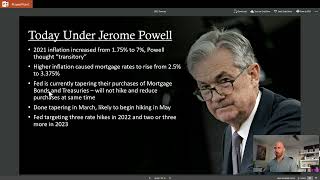
Hey, it's Derek McGowan with the McGowan Mortgage Team and I wanted to talk about all things inflation and mortgage rates. So we've got some pretty awesome things lined up here. Let's dive right in. So to start, let's kind of go back and do a quick little recap of last year and look at how things turned out. So we've got 2021 recap here. You know, obviously interest rates were a headline thing in the mortgage world. You know, my prediction was that rates would begin to rise at the beginning of the year and kind of recover into the fall. Rates did rise last March kind of just as planned, and they did recover a little bit earlier than expected. You know, housing, strong demand, tight supply. I think we can all say that that is certainly the case still. Demand has never been higher and supply has never been shorter. So I think that's spot, spot on. Actually, no one could have predicted just how drastic house prices did go up, but on average across the country it was 19%. I think that blew everyone's predictions out of the water. But certainly I have been kind of echoing that, hey, it's going to be a hot housing market and it doesn't look like we're slowing down anytime soon. So that all did kind of play out last year. Now jump into 2022. The Fed's playing a huge role and I know that's, that's covering a lot of the headlines in the economy in general and the mortgage world. So they will play a big factor in kind of how things end up this year. But they'll be driving interest rates and impacting the housing values as well. So they're going to be tightened. Inflation again, inflation's the headline thing. Inflation's at almost, you know, long term highs and that is causing a lot, we'll dive right into that next. But the Fed has to have a reaction. And a lot of what they're doing, raising their rates is kind of their reaction to the crazy inflation that's going on right now. So they probably should have hiked sooner. Things wouldn't have got quite as out of control. You know, inflation's over 7% right now and 2%'s a normal typical good year. So we're way through the roof. And it took the Fed a while to, to pull the trigger and start, start interacting and trying to put, pump the brakes on inflation again. We'll dive into all of that momentarily. But I think a lot of it, the Fed thought that it would just kind of subside and go away on Its own. They needed to get in control. They now know that it just took them a while to kind of get the ball rolling on that. But if we look at the history real quick, we can kind of see exactly how the Fed interacts with inflation. Inflation. So if you jump back to the 70s, we got Arthur Burns was the Fed chair again, ignored inflation. Sounds familiar. And it was rapidly rising, thought that it would, thought it would just be transitory or kind of subside on its own. Same thing we've seen in the 2021, 2022 economy. Inflation went from 7% back then to 14% in those couple of years. And this also inflation is the kryptonite. It kills mortgage rates, it pushes them higher. And I'll dive into that in just a second. But you can see a direct correlation to inflation boomed, mortgage rates boomed at the same exact time. That'll be the running theme here in just a second. Paul Volcker then jumps in the driver's seat of the Fed in 1980 and hiked the fed funds rate from 11% to 20%. That's a lot of the headlines that we're all seeing now. This is the Federal Reserve's way of pumping the brakes on inflation. And it dropped inflation from 14% back down to 5%. Because that happened direct correlation mortgage rates went right back down from 18 to 12%. This did hurt the stock market. However, the S&P 500, which would be the stock market, but that is very common where what helps the stock market doesn't always help the mortgage world. They kind of oftentimes not direct correlation. Oftentimes they act independent or opposite of one another. Alan Greenspan, later into the 90s, under his control, inflation doubled. It pushed mortgage rates up, hiked the federal funds rate. And we can see how that responded to inflation. So again, inflation went up. Fed says, oh shoot, we need to bump up our rates to slow inflation down. It stopped inflation and or it slowed it down, dropped inflation back down, that dropped mortgage rates back down. So you can see a direct correlation here over and over and over. Now The S&P 500 gets hit hard when the Fed increases their rates. And again, I'll go over all this as a recap in one second here. But now at Jerome Powell, inflation increased from, you know, less than 2% to now it's over 7%. This has caused more. And this is a, you know, times are rapidly moving on. US mortgage rates are now well into the 4 and for many lenders out there, 5% now. So this is still rapidly increasing the Fed was heavily involved in the market during the COVID times. They were buying $120 billion a month in Treasuries or bonds, with a lot of that being mortgage backed securities. They were kind of keeping the bond market afloat and the mortgage rates low by pumping a bunch of money in during COVID because the economy needed that. Then they've been tapering out. So they went from 120 billion a month and, and they decided last fall they would start tapering and buy 20 billion less per month until they see their way out the door and are no longer buying kind of an artificial amount of bonds to keep the market afloat. This is also a big reason of why the bond markets started tanking and that hurts mortgage rates. So obviously the Fed's going to keep increasing and hiking rates this year because they have to do, that's their one biggest method to slowing down inflation. They have to do that. Once they do that though, it should help mortgage rates, you know, kind of curb their increase and slow down their increase. But sorry. And then until they, until they do that, inflation and mortgage rates are going to continue to go through the roof. That is what's causing it. So to recap, put it all on one screen here. You can really, really see kind of what's going on here. So inflation goes up, mortgage rates go up, Fed funds rate goes up, inflation drops, mortgage rates drop. And then again inflation goes up, it hits mortgage rates. Fed says, oh shoot, we got to increase our rate. Inflation drops back down, mortgage rates drop back down. It's a simple pattern. So we do the same thing here. Jerome Powell Currently, inflation went through the roof. It's really hit mortgage rates. Fed funds rate has been zero. And they're, they're talking about increasing it a quarter of a percent each, at least every time they meet, every six weeks. That should certainly slow down inflation, which then eventually will slow down, mortgage rates increasing. Now the stock market won't be so pretty there. And that's why a lot of people are thinking a recession is in the near future, because that's what's happened in previous times here. So Covid does play a major influence. If there was a new strand, Covid sparks back up, then by all means we very well could see mortgage rates get better from that. That's what happened when Covid initially sparked up more stimulus. If that were to happen, that really hurt or that really kind of threw gasoline on the, on the fire, which is inflation. Because ultimately inflation is just a weakening dollar. When the Federal Reserve just printing out money Left and right for the stimulus funds that really weakened the dollar this last year or two. So again, and that, that was a direct reaction to Covid there. So that's what's going on. And then this is again talking about the Fed kind of tapering their, their purchasing of the bond market or of bonds. So again, as the Fed kind of sees its way out, that stops keeping the bond market super strong, which keeps mortgage rates super strong. So let's dive into the charts real quick. I think that'll make a lot more sense. So inflation here, as you can see, this is just the last five years. You can see inflation again. I was mentioning 2% to be average. You can see, give or take 2% for the longest time and then all of a sudden, bam, you see what inflation has done recently. It has rapidly increased to, you know, the highest inflation since the 80s. So for many people's, you know, whole adult lifetime or career, this is the highest anybody's ever seen inflation then. So talking about the bond market, let's just look at the bond market here. And this is mortgage, you know, mortgage backed securities, which is the mortgage section of the bond market. Now when inflation is through the roof, it really hurts the bond market. And I can explain why. There's a very logical reason to that. So if you think about it, just simple economics class here, you got stocks and bonds, you've all probably heard of those stocks being the, the riskier play that is more volatile changes day to day. Bonds being the slow long term play, a mortgage as it turns into a section of the bond. There are other types of bonds, but obviously the ones that I focus on are the mortgage backed securities. So with all of that being said, the bonds and mortgages are longer, slower acting investments, if you will. So because people are, even if it's a 30 year mortgage, they say the average person stays in their house six, seven, eight, nine years. So still a longer term, slower play there. Now if you're a huge bank or investor buying up mortgage backed securities or a bunch of mortgages where this is a slow, long term recoup on your investment. Now you look at those numbers and okay, well over the course of these seven, eight, nine years that we expect this person to carry this mortgage we plan on getting during COVID times, it would have been two and a half, 3%, let's say in interest back on that loan. Well, that works for their calculations. But the moment that inflation starts going through the roof on all these mortgages that they already have under their belt, I'm talking Big investors, much, much bigger than myself. They're looking at widespread mortgages here and they're looking at, hey, if we're going to get, let's say two and a half, 3% of interest on all these loans that we've locked and closed for people in the last few years, that works as long as inflation stays at about a 2% year over year increase. So we know the value that we're going to get back over time and they account for inflation. Everyone's well aware that even in a good economy there is a little bit of inflation that, that, that's needed. But when inflation goes to 7%, now they're saying, oh wait, wait, wait, we were planning on getting this value back, which is a 2% hit every year to our money. Now it's a 7% year over year hit to our money. We can't continue to honor those lower rates because we're not getting back the same value that we were going to. So because inflation is way higher and it's eating away at the returns of those mortgages, well, we can't change what's already been closed. Those people, heck, they got a good deal. They made away with an awesome setup for themselves. But all new mortgages coming along well, they kind of have to pay the price, if you will, and take the higher interest rate because inflation is eating away at their profits. So they have to keep mortgage rates on pace with it to then long term down the road, recoup the losses that are made and not lose money on those new mortgages. So showing the inflation chart a second ago, this is also the bond market chart, the mortgage backed securities, so mortgage section of the bond market you can see for it's been up here in the 107 range and it's been chugging along pretty smoothly. Inflation hit and bam. You can see what's happened here. Drastic, drastic changes. Pretty direct correlation there where that thing is lost, you know, seven, almost 700 basis points. And ultimately what that means is that's at the price like 7% of the loan amounts in value to the mortgage world. So who try to put a dollar figure on this, a $300,000 mortgage, 7% of that, not, not interest rate percentage, but just 7% in cost worse. So that's $21,000 on a $300,000 loan. That's how much worse inflation has caused mortgages to be. Across the board, across the board. Every single lender has been impacted the exact same way. But just sometimes it's helpful to see a clear chart picture on exactly what's going on and how one thing impacts the other. Now if we look here, this is also more of a direct correlation to mortgages. I know I kind of showed the internal workings of the bond market. Well, this is also mortgage rates the last year or so again when inflation started hitting. So I mean pretty, pretty easy to see this. As soon as inflation started bumping up here, what do you know, mortgage rates started hitting the fan. So that's very, very clearly why now. Big things that are causing inflation. Obviously the stimulus money that's been printed out has been a huge, huge thing that has put a lot more money, it's kind of oversaturated or watered down the value of a dollar. So you have that on one side making a dollar less, there's more of something that's less valuable then Covid has caused a lot of supply chain issues. So we all know if we're trying to order anything or do anything, it's slower. Even in building a house, they're slower than they ever have been before because every step along the way things are slowed down. So supply demand's all out of whack. People have a lot more cash in hand and so they want to go spend their money. Demand is super high and they'll pay more and more and more for something. And as more has been printed, it's worth less. But people can't get as much of the items that they want or those goods and services that they want. So it's slowed down also further increasing the value and watering down the value of a dollar. So that's kind of the imbalance that's going on. I think we've all seen, you know, with the gas prices and everything, There's a lot of tangible examples as to how this has impacted the economy. But the good news is the Fed is reacting to it. So the Fed is well aware that they have to slow down inflation. So what they're doing, they're raising interest or their Fed interest rate, the Federal Reserve interest rates, which are different than mortgage rates, they're raising that to and that impacts the shorter term goods or shorter term loans like a car loan, a credit card, home equity line, the shorter, smaller balance loans. By doing that, it makes it less attractive for consumers to go out and take on new credit. So it slows down the demand is the slows down people spending money, which right now is what they need. People are spending money left and right. It's watering down the value of the money, the value of a dollar. So the Fed raises their interest rates. That slows down people's appetite for wanting to go take out loans because they're more expensive now. It lets inflation calm back down. With inflation calming back down, interest rates should calm back down. Many are predicting a recession coming in the next year or two. Should that happen, that actually very well could drop interest rates back down lower than they are day, which is right around high four, low 5%. So that's kind of the ins and outs of how one thing leads to the next. Hope that was helpful. The good news is the Fed's helping, the Fed's reacting, things are in motion. And the Fed raising their interest rates is actually a very good thing for the economy and the mortgage world.