Why housing prices shot up in 2021. Supply hit a 40-year low while demand surged, builders faced zoning delays and supply chain problems, and millennials finally started buying homes. The pandemic accelerated everything.
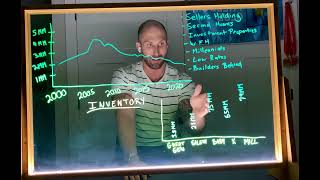
In this video, I want to do a little deeper dive into all things going on in the housing market. We all can agree it's a pretty abnormal time. And, you know, it's a pretty wild, wild year and a half or so since COVID started, and it's really made the housing market pretty interesting. So let's take a look at. A lot of this is just supply, demand. But I think if we go behind the numbers a little bit, it'll start to make sense of why it's such a big supply, demand imbalance. So if we start with inventory, so, and trust me, I looked at data on this, I drew out, I kind of emulated the chart here. So inventory over the years. Over the last 20 years, you have about 2 million homes available. Back in the 2000s, obviously, that was no problem finding homes available. They peaked kind of around the 2008 era, where people had financial issues, many foreclosures and bankruptcies and short sales. So many, many houses available. This is also why houses weren't worth as much, because they were readily available, not as rare. And that's a big thing. I'll come back to that in a second. Then, obviously, you can see we've kind of d. Dwindled down here to where there's only about 1 1/2 million homes available across the country in today's market. Why is that? Well, if you go back, housing reports go back to about the 70s. So if you go back to the 70s, 80s, 90s, and 2000s, every decade there for 40 years, it was a pace of about 20 million new homes built per decade. So that was kind of the quota, the status quo. Then 2008 happened, you have this huge surplus of inventory. So home builders kind of pulled back the reins, and they weren't as needed because you could walk down the street and find new homes. But the important thing for people to remember, though, I think this misses the mark on a lot of housing reports out there. These people didn't just disappear. They just had to go rent or go somewhere else. They had to get out of the housing market. Maybe because there are kind of waiting periods before you can enter back into homeownership. If you did have a bankruptcy, foreclosure, that kind of thing, they removed themselves, got back on their feet. They're back. The homes aren't. Then if you factor in just simple generational topics here, look at each generation. So the baby boomers at the time, that was the biggest generation ever. Their children are now the millennials, and that's now surpassed them as the biggest generation ever. Millennials are now turning 30 years old or in their 30s, and that's the time frame where people get that first home for their families. So. So these people came back. Huge generation of people buying their first home that have never been in the market. And home builders are a decade behind on building homes because keep in mind, 10 million, I'm sorry, per decade, 20 million new homes built. Only 6 million new homes were built between 2010 and 2020. So about a quarter of the homes as the previous quotas were. Now everybody's back. Homes aren't there. Then, as we all know, Covid kind of put a stop to many things, including home builders. Builders had to slow down. They couldn't produce homes. There was three or four months last summer or spring summer where many builders just couldn't work at all. So they were already behind. And then that really stunted their growth then. So if we think about it, any major city, you know, the new construction generally is in the suburbs as they keep building out further and further. But they have to get those new areas zoned for, you know, a residential. I mean, I guess this is mainly talking residential as a residential neighborhood. Well, it used to be zoning didn't take that long, but now the government's super backed up with a lot of things. Zoning's taking longer than ever. So builders can't break ground as quick as they used to. Then we all know the supply chain issues that people are having that's impacting builders. We talked about lumber, plumbing. Months ago, lumber prices were through the roof. Couldn't get lumber. And if you could, it was super expensive. The home buyer and the builder didn't want to pay for it. So a lot of them just paused until lumber prices subsided and then continued. Then you have many supply chain issues along the way. The chip shortage is affecting automakers, and same type of thing on home builders. Think about every appliance in that new home. So even if they get the home almost to the finish line, the fridge, the microwave, the dishwasher all have those microchips, and there's a huge shortage. So every single thing that could happen is happening right now to home builders. So they've been behind. They can't get houses to market quick at all. So there's a ton of new homes started, but not. There's. We're losing ground on how many new homes are being finished each month because builders are in that middle ground. Can't get them completed then to finish this up, the demand part of it. So you also have to factor in for one, I guess we'll go back to. Sellers were holding last year as well. So just what that means is many people, before they understood what Covid was, they weren't really super hip to put their house to market, have strangers in and possibly go look at somebody else's house. So that kind of pulled back. There was less new homes listed. We just talked about builders not being able to put brand new homes in the market. So on both sides of it, existing homes and new homes that pulled back. Then on the buyer's side, many people were looking for those second homes, vacation properties. As soon as it was announced that many employers will allow people to work from home, you also have many. I probably did more investment property transactions than ever before in the last year and a half because many people saw it as an opportunity they could jump on some homes and rent them out. And so that's happened. That's brought a whole new aspect to the market, more so than ever before. Work from home, the lineal generation, low interest rates the last year and a half, that's not stopped anybody from getting in the market. It's a great time to buy because even with the crazy increase in house prices, the low interest rates are still making the payments more affordable and builders are behind. So that's a little bit more in the background of what's going on. I hope that helps.