The Future Of Facebook Ads - FDDTC #26
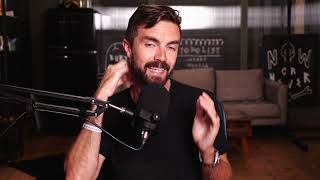
This is a YouTube video titled "The Future Of Facebook Ads - FDDTC #26" created in May 2023. It features Devin Zander as the sole speaker hosting the "From Delivery Driver to CEO" podcast. In this episode, Devin discusses the evolving landscape of Facebook advertising, particularly for e-commerce and print-on-demand businesses. He explains how Facebook is shifting from interest-based targeting to AI-driven ad delivery based on pixel data, ad copy, and images. Devin also shares strategies for broad audience targeting and emphasizes the importance of understanding customer avatars to optimize ad performance and business growth.
What's up, guys? Devin Zander here. I always move the mic. I gotta get this figured out. Welcome to the From Delivery Driver to CEO podcast. Today we'll be talking about the future of advertising on Facebook, specifically for E commerce and again, specifically for print on demand E commerce. So, yeah, that's good. Anyways, I'm Devin Sander, your host. This is the From Delivery Driver to CEO podcast. These are stories, lessons, tales of how I went from a high school dropout and Jimmy John's delivery driver to. To the CEO of an eight figure software education and e commerce company. Let's get in today's episode. All right, guys, so the Mike, it's really killing me. What I wanted to discuss today was the future of e commerce, specifically Facebook ads. And something that we've changed a lot is over the past few years, Facebook has gotten rid of basically every interest that we target.
Okay?
So if you're familiar at all with Facebook advertising, which you should be if you're watching this, the way it typically works is you open your Facebook business manager, you start creating an ad, and then you choose who you want to target, right? Do we want to target people who like dogs? Do we want to target a certain religious group? Do we want to target this, like, political affiliation? Do I want to target electricians like we reviewed on the product of the week club, Right. That is how it is always worked, right? You open it up and you just target interests or people who like some sort of thing. And Facebook determines that based off the type of content people engage with on Facebook.
Right?
So for instance, if you were to ever try to target a right wing people, so, you know, Republicans on Facebook, you're also going to be targeting the most radical left wings too. And the reason that happens is because when you're targeting right wing people, Facebook identifies them by saying like, okay, show me people who interact with a lot of right wing content. So they analyze the content and they're like, okay, this is right wing content. And what happens is a lot of super radical left wing people will also interact with right wing content all the time, constantly. Because they're, you know, commenting on those posts and saying, like, you're an idiot. This is stupid. You're going to go to that, right? So, um, yeah, and that's not a bad thing, by the way. It's not bad that your ads are being shown to those people. In fact, it's a good thing you want that to happen because that means your targeting is really good. Uh, when you create a product, it should really piss off or repel people who are the opposite.
Right.
Obviously that's not going to happen in every single niche. Like you're not going to piss people off selling a shine on product or an electrician product. But if you're selling like a right wing shirt, for instance, it should really piss off people on the left. So when you get those like hateful comments or something, it means you're doing something right. Anyways, that's a little off topic, but that's how Facebook advertising has worked, right? You target interests. And back 10 years ago when we first started advertising on Facebook, you could target like anything. You could basically target any fan page and people who like those fan pages. You could target like these micro celebrities. You could target all kinds of different interests. There was tons of them interested in. And Facebook is slowly and slowly and slowly getting rid of all of them. And it's not necessarily a bad thing. A lot of people think, oh, it's terrible, it's a bad thing. Well, let me tell you what, our sales are up year over year since they started this and we plan on having our sales continue to increase. And the reason why Facebook is removing targeting and interest is because they want to allow their AI, their artificial intelligence to do most of the heavy lifting. Okay. And the way they do this is by reading your content and like reading your image. So Facebook is using AIs to try to understand who your target market is based off of three things. And there's probably a lot of other factors too, but there are three super obvious things. Number one, the most obvious is your Facebook Pixel. What kind of people have been interacting with your products, what people have been interacting with your website, adding to cart and all those things in the past. Right? So, so that's like the first layer, that's the big layer.
Right.
But what about when you don't have any pixel data or any history, then what do they do if you cannot target? And it's really simple, they analyze the language in your ads. And for instance, if your ad talks a lot about golf, guess what they're going. And you choose like a purchase objective for your ad. Facebook is going to go out there and they're going to look for people who interact with similar posts about golf and have a history of purchasing from other websites or fan pages or whatever. Facebook accounts that also mention and talk about golf a lot. So their AI targeting is doing a lot of the work and it's making it easier. They're trying to idiot proof.
Right?
So that's layer two. One is the pixel Two is what you say in your ad. And third, and the final thing that I believe is going to have a huge impact is your image itself, the ad image or video. Now I assume that Facebook is analyzing when you use a video, I assume they have the subtitle generator. So they're automatically transcribing all videos that you upload. They know every single word that is said in your videos. And to prove that to you, if you ever try to say a bad word in a Facebook ad, they will shut that down. They know when you're, what you're saying, they know if you're saying bad words or whatever, okay? So they're analyzing what you're saying. They're also recognizing the images within your video. And then it's a little bit simpler with images, right? So if you're running image ads, they basically just scan the image and they use AI to say, okay, this is what's in the image. It's a shirt that reads this and it has a picture of a dog on it. So that's it. And then what they're going to do is they're going to be able to even they'll tell to the most minute detail. They'll know exactly what your shirt says, they'll know exactly what the text in your ad says, whatever that is. If you have a picture of a Boston terrier, their Facebook's AI will be able to say that is a Boston terrier dog on that shirt. Unless your design is like really fucking bad and it's like impossible to tell what it is. Like if it's like a little stick figure dog that looks like it was driven by a five year old. Facebook might not be able to tell, Cap. But the point is, is if you have good designs, which I'm sure everyone does, it's not that hard to recreate a Boston terrier or like a grill or something like that, right? Or electrician type shit. If you watch Product of the Week, it's not that hard to recreate these things. So Facebook is analyzing it and then they're serving ads to people who've interacted with that. So if your shirt has a Boston terrier on it, right, Facebook's AI recognizes that. Then they're going to go out, they're going to look for people who have interacted with Boston terrier websites or interacted with other photos of Boston terriers, or they've interacted with Boston terrier stuff and they have a history of purchasing products through ads. Boom. That's who they're going to serve. Your ads to. So while targeting is going away, Facebook's algorithm is getting smarter and smarter and smarter and you don't even need targeting anymore. Okay, Now I will say that you can really help yourself out by understanding your customer avatar because then you can write better ads that the AI will be able to process better, that will communicate with the customer better. It will get more engagements from the right kind of customer. It'll get more purchases from the right kind of customer. Just making the AI easier. The understanding the customer avatar is going to be the most important part of running Facebook ads in the future. And by the way, hey, we're releasing a course on that within the next seven days. Make sure you sign up for it. We're only allowing 100 people to join, so that's coming out. It's called the 5W framework. Keep an eye on your email if you want access to that. If you're an incubator, you already have access. So bye now. That being said, while understanding your avatar is huge and while Facebook ads are getting easier, this is all amazing, okay? This is just lowering the bar. It's going to make it easier and easier for new people to, to get into this and to make money without doing a lot of work. They're trying to automate all the work for you. And it is in Facebook's best interest to make you as much money as possible. And that's why they're doing it this way. They want everyone on average that advertises on Facebook to make as much money as possible with as little work as possible. Because it's what's best for Facebook.
Okay?
Because if you make money, then you'll spend more money. They make more money, their market cap goes up, everybody's happy, right? So it is in their best interest to make the platform as foolproof, idiot proof as possible and make it as easy as possible to make money so they make more money. That is great news for you. That is massive. Now there is something else that we've started doing in our own businesses to make it as easy as possible for us. And the customer avatar goes hand in hand with this because if you're going to do what I'm about to tell you, you need to take time to understand the avatar to make it work. But it is the most powerful thing ever. This is how we went from seven figure store owners to multi eight figure store owners, okay? Is by targeting, by. We stopped messing around with small niche things essentially and we started targeting population percentages. So for instance, our store paws P A W Z Dot com. Hold on. I'm about to pull up my browser here because I want to look up a statistic. It's taking a little while. Okay, while that's loading, what's wrong with my computer, man? But our store, pause.com. you know, a large percentage of the population in the United States, they have dogs or they like dogs. They're dog people. A lot of people identify. Dude, I can't get my browser to open. What is going on? I guess I'll just use Chrome instead. Okay, that's interesting. Okay, so what percentage of the U.S. population has a dog? So as of 2022, 44% of U.S. households own dogs. Okay. And 29% own cats. So if I wanted to. Let's say target Electricians with the Facebook ad, right? How many. Let's Google this. How many electricians are in the USA? So there are 1 million electricians in the U.S. in the U.S. right. And that's like 0.25% of America. It's not a very large percent. I mean, it is pretty big, 0.25, but it's not a lot. Now, compare that to how many people own dogs. 44% of America owns dogs versus 0.25% of America are Electricians. So what we've done in our business is we've stopped focusing on things that are Electricians.
Right?
We're not messing around with the small stuff anymore. We're messing with things like dog owners. With our website, paws.com the store's done over $40 million in sales, and it's targeting 44% of the US population. And the reason why that is significant is because when it comes to Facebook ads, we do not need targeting at all. You know why? Because we create broad, good designs focused on branding and focused on understanding our customer avatar. We put it out there, and literally one out of every two people who see that ad is our target market. Now, if I were to try to do that with the electrician stuff, and I went really broad, let's pretend Facebook's AI doesn't exist. And I put that out there, right? It would be like one out of every 400 people would resonate with that ad, right? Versus one of every two. What? One of every two or dogs? One of every 400 for electricians. Now, a caveat there is that you. Yes, Facebook's AI is going to understand that this is an electrician image, and it will go out there to target electricians. But I want to make it as easy as possible for us, because we know that if we Create good products because we understand our customer avatar that resonate with our customer and we have a brand that our customers align with. So we donate to dog charities and we understand why dog owners would want to wear shirts like this. We understand how to design shirts because of that, right? We don't need to worry about targeting. And there's a lot of different ways you can do this. There are so many different things that are population percentages, right? You have religions, you have political affiliations, just to name two. And there's a lot of different ways that you can target large percentages of the population instead of focusing on these niches, know what I'm saying? And that is something that we've really decided to double down on. It has paid off for us. We've made tens of millions of dollars doing this and it's simplified our business. Because when you have small population percentages, like the electrician example, you constantly have to launch new products. You have to do it all the time. Because you run, you run through that small amount of people in six to 12 months and then your new product or your product that was generating all your front end sales, your main product, well, it stops working now. You have to start over from ground zero. But because our target market in, let's say the dog store is almost 200 million people, we'll have products that sell for years and years and years while we're also releasing new products to sell to our existing customers via SMS and email. So I mean that, that's it in a nutshell. Honestly, if I had two takeaways for you for this, it's that with the smaller niche stores, although you're going to be losing targeting options, it's okay because Facebook is reading, they're understanding your ad, they're looking at your ad copy, they're looking at your images or your video, if you're using videos and they're looking at your pixel. And they'll still be able to go out there and find you customers even if you don't have the targeting option. But because of that, it's really important to understand your avatar so you can say the right things in your ads and use the right type of language and create the right type of images that will actually go out there and find your target market. If you are a subscriber to the product of the week club club, you've seen this a little bit with some of the recent episodes, specifically the electrician hoodie that we covered this past week. If you're not, make sure you go sign up for the product of the Week Club, it's SCUP. It's www.training.scup.net forward/, product-of-the-week-club. That was terrible. I'm so sorry. I will get a better link for that in the future. But that's takeaway number one is, although interests are leaving, you're still fine. Because Facebook's. They understand. They understand. But start focusing on understanding your customer avatar. Do research. Understand who the person is that's buying. So you use the right kind of images and you use the right kind of words. All right. Like I said, we do have a course on that coming out. It is called the 5W avatar framework. We're only letting 100 people in right now, so keep an eye open for that. You're going to want to join. And the second part is, and this is more of a note from our own store, is because of these changes that Facebook are making. Is making, we've really decided to expand our horizons into much broader audiences. And instead of focusing on small niches, we're focusing on large swaths or huge portions of the population.
Right.
If you look at our store, paws.com, p A W Z.com it is a very general dog store. We are not talking about breeds or anything like that. We're honing in on a feeling, which is that identity of being a dog person. Okay. And we're not. We're not, like, backing ourselves into a corner by focusing on a specific breed of dog because then our target market is small again. And we want to be able to target 50%, technically 44% of the US population who are dog owners. And that's what we're focusing on. So as targeting options go away, we realized, hey, it's probably better to just go after huge populations. And it takes a little bit more work because you have to really, again, everything comes down to your customer avatar. You really have to understand it. You have to understand why people identify as dog people and why they would buy these products. Because a lot of the times what people do is they'll just target a specific dog niche, like Boston terriers. I'm a huge Boston terrier fan, right. And they try to get ahead by putting a Boston terrier on the shirt, and that's great, and you can make good money doing that. But then the issue is the target market's so small that eventually your sales dry up and it happens quickly versus taking the time to learn about the market as a whole, why dog people tick, what makes them tick, and then releasing these broader dog shirts that are a little bit harder to sell, but once you figure it out, you make tens of millions of dollars. Know what I'm saying? And it's also a lot more long term and it's a lot less stressful because the only stress is that stress of figuring it out. But once you've got it figured out, everything becomes quite a bit easier because it's broad. There's a lot more customers, and we get a lot of repeat customers because we took the time to figure out who our customers are and what makes them tick. I hope all that made sense. Let me know what your thoughts are. My name is Devin Zander. This is the From Delivery Driver to CEO podcast. I don't make any money. I don't do anything with this podcast other than do it to release free content to help you out. So I would appreciate if you left a five star review or or shared it with a friend. Whichever one's better for you. Obviously sharing it helps a lot more, but if you're on YouTube, make sure to like, comment, subscribe. If you're on a podcast app, leave a five star review and I hope you enjoy the rest of your day. I release episodes every Wednesday and Saturday. I'll see you on the next one. Peace.