This Shirt Got Over 100,000 Shares in 5 Months - Skup Product Of The Week Club #1
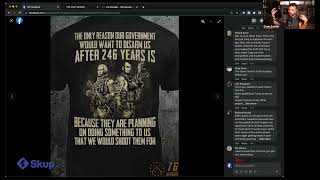
Devin Zander and Matt Schmidt break down how a print-on-demand shirt hit 100,000 shares in five months. They walk through the Facebook ads, pricing strategy, and store design that made it work, plus how to scale from there.
What's up, guys? Devin Zander here. Welcome to the first ever product of the week club newsletter thing. I don't know. We're gonna get much better at this, guys. Don't worry. Matt, what's up, dude? Welcome.
What's going on? Welcome to the newsletter. Happy to be here.
So a quick explainer for everybody. What we're doing here is we're starting a new newsletter. It's free. We might do a paid tier eventually where you get like extra content or where you can join us live on these calls and ask questions and that kind of stuff. But just to give you a breakdown of what this is, is every single week, we are going to look at one product that is selling really well. We're going to break down why it's selling well. We're going to break down how we would launch ads for it, and then we're going to break down ways that this brand could maybe increase their AOV or scale their products and things like that. Now we're going to cover all different kinds of products. Just so you guys know, we're going to do probably some drop shipping, like gadgets every and then, but we're mostly going to focus on things like T shirts, mugs, tumblers, shine on gear, bubble products, which is really our bread and butter. But we're going to do all across the board, all different kinds of products. Matt does not know what the products are going into this, so it's kind of like all off the cuff. Matt will just be sharing from his immense wealth pool of knowledge. Yeah. So that's it. We're going to do this every single week moving forward and I hope you guys like it. Matt, you ready to get rocking?
Let's do it.
All right, I'm sharing my screen and we can look at this first product. Here we go.
I have not seen this up to this point.
Is my screen share working? There we go.
Yeah, I see it working.
Matt is pretty good at the snitch, just so you guys know, but we've got this ad here that was launched a couple months ago, November 22nd.
Am I in the snitch? Look behind me.
I think it's safe to say we're customers of it, but I don't have the sales data for this particular product. But as we can see, November 22nd, this ad is still running today, by the way. And if we look down here towards, like, newest comments, we can see it's like just received comments 50 minutes ago, 52 minutes ago, stuff like that. So this is an ad that's been running for a few months. It's still running. Just based off the amount of reactions to this, I would say they've spent quite a bit of money on it. And just so everybody watching knows, like, one thing you can look at here to see if they really spent money on it or not is just the location of the people who are commenting on it, right? Because if you're seeing like a bunch of Indian or like African names, stuff like that, sometimes people do that because it's really cheap social proof, but they're not actually making sales on it. But as we can see here, a lot of these are actually Americans. In fact, from what I can tell, they're all Americans. So safe to say this is a product that is selling pretty well, making quite a bit of money. So, Matt, what are. What are your initial thoughts, man? Let's just get into it.
I mean, the engagement is off the charts. So we. The first thing I look at is, yeah, likes and hearts are good, right? But in the hierarchy of things, right, Shares are insane, right? So because that actually puts the ad for anybody not familiar a share puts that on somebody's wall and then all of your friends see it. So it's a. Basically a way of you saying, this is me, this represents me. Likes and comments. I could like something, you would never see that I did it, but I share it. It's a big. It's. Not only is it an extra step, but it's like a big part social proof. So if you can achieve that, especially say, if, you know, I shared it with my friends, I got about 20 buddies that probably buy the shirt, right? So that's another thing. That's the growth that you really want. So the engagement is off the charts, but the shares. The shares are extremely impressive. That's my first initial. And then, I mean, the design's really good. It's straight to the point as much as you can. It's a lot of text, but still like very straight to the point, if that makes sense. And then they took the time to do something very creative with George and Abe there. I think that is special. It strikes a tone, right? It like strikes the same tone. I get the. The constitutional feel from it. At the same time, it's extremely modern. So it's a. It's a. It's well done. There's no surprise this one is as viral as it is.
So. Yeah. And, you know, you hit the nail on the head there with the constitutional stuff. As we can see, the name of the brand is 76 clothing. 76 is, I would assume 1776. So the founding of America. And Matt, this is like a niche that you are pretty good at. I mean, why do you think that this design works? Why does it resonate with the audience coming in from like, okay, so objectively we're looking at the stats. The stats are good. But let's get behind the why. You know, why is it that this design resonates? And I think it's good to help our viewers understand that so they can understand the why. Yeah, yeah.
I mean, the obvious thing is it's an extremely controversial political thing right now.
Right.
So it's, it's not. So the one thing about Facebook ads, when you're running Facebook ads, is with a product.
Right.
Is that you have to create intent in a lot of instances.
Right.
It's say like, like something for Mother's Day.
Right.
We're not, I'm not just like always talking or like hearing on the news as much as like some things are about Mother's Day, but not most of it. The vast majority of it's not about Mother's Day. That's just not encompassing your day. The people that this taps into on one side or the other talk about this a lot, and it's on the news a lot, and it's on politics a lot, and it's what they read a lot. And so you're tapping into something that already has intent in play.
Right.
So it's, it's, it's a much, I don't want to say easier line because I'm not going to give discredit to somebody that's got a hundred thousand likes. It's a, it's, it's not easy to get that way or get a design like this, but you are tapping into something that's far larger than yourself and it's actively and consuming the consumer every day that you're showing this into the newsfeed. Which by the way speaks to why the engagement so high. Because if you look through this comments, there's negative and there's positive.
Right.
And which I already know how they're targeting for this. And because you can tell by the, by the nature of the comments what's going on here for sure.
And I think something to keep in mind for everybody too is that niches like this, and you can do it in a lot of different niches or whatever, but. And it works on both sides of the political aisle in America. We can just kind of say that there's two types of politics. If we were to be super general. There's the left and there's the right and they both feel like they're oppressed in some sense. The right feels like they're oppressed by their government or whatever. And then the left feels like they're oppressed by male hierarchy and white men and some other weird stupid shit that doesn't make any sense. But because of that, I feel that people want to be very outspoken about their beliefs and things like that. And when you can tap into niches that people love being outspoken, like they really want to identify with something, right? Like they have values that they stand for and, and they really want to be identified with those values and those beliefs. That's when you, you have something that sells really well. And I think that's something that this did a really good job with. Because if you look at like, right, the right leaning party, right, we have George Washington who was like kind of the father of the Constitution, at least one of the, the fathers. And so obviously the right side of the political aisle really aligns with that because they are feeling like the Constitution is under attack right now. And that's, that's what this whole thing is about. The second amendment, right to the Constitution. And then we also have Mr. Abe Lincoln, who was the founder of the party and obviously an American hero. So having, having those, it's just like speaking perfectly to the audience. I think it's kind of funny. I personally would never wear this. It's. It's not my bag, man. It's a pretty funny, interesting design. And I think that they, they really did. It's like, I think something that you need to realize when you're creating these types of shirts is we're not creating emotions, we're not creating feelings. We're channeling into things that already exist. You don't create markets. What you do. And I mean you can. People who create markets become billionaires, but they're not reinventing the wheel. They're channeling into and taking advantage of emotions that already exist. And then they're rewarded because of it. Matt, I, you know, this is gonna be a really rough guess. Just so everyone knows. I, we obviously have no clue, but I would just be keen to get your opinion. They sell this shirt for 25 bucks, which is crazy by the way. It's ridiculously cheap. But just based off of like that data, do you have any sort of rough sales estimate, like the, just the social data here, based on your own stores and what, how many sales you're at when you have this amount of shares and Likes and stuff.
I mean without like, I mean it's pure ballpark.
Yeah.
But it's, it's, it's well into a six figure item. I mean for me it would be. Yeah. For me to achieve that kind of engagement on, on. I've seen my, my stuff that gets that viral.
Yeah.
Yeah. It's a six figure. Could be close to a multi six figure depending on his conversion rate and what else he's got in the store and everything like that. Yeah. Something to note too is when we're talking about this another thing when I to go into like what encompasses somebody. This is a great reason I sell into professions quite a bit.
Right.
Is because think about what somebody does if somebody's a nurse.
Right.
Everybody knows me for any or follow me for any more period of time before I showed my store and I got absolutely destroyed by copycats at a nurse store. And the reason that nurses were so easy to sell to is because that job not only time consuming but emotionally consuming.
Right.
It would, they would see stuff. They would. Everybody knows that story. I talk about my mom, she said, you know, they, they see stuff all day. I mean everybody, everybody knows that about nurse. Right. So that stuff like takes part of them and then when they get to express that in a certain way this kind of engagement and that kind of stuff happens. So when you're thinking about what niche am I going to go to? If you don't want to go into something like this, think about stuff like that. There's tons of it. Sports, professions, things that people take time and money. I've always said that time and money dedication of it takes you with your brain power or the time spent somewhere or the money that you spend on it. Golf is a super golf. I'm not even that great of a golfer and I dropped like thousands of dollars on golf.
Right.
So it's like it's got part of my soul a little bit.
Right.
So there's, there's lots of different spaces like that that you can tap into with shirts and designs and then the right message ends up being like this. My ads are, are like this.
Right.
It's not even the same space where I have. And that's by the way part of the design of Facebook is the, the, the interest that you go and target. It's like 50, 50. It's like 50 pro, 50 against. Go run a Michael Jordan's the best. You know, Go Target Michael Jordan. Run an ad that says Michael Jordan's the best basketball player that's ever existed. Watch what comments Come after it, it's going to be people that hate Michael Jordan and people that love Michael Jordan. It's everything on social media. Everybody knows it. You just tap into it. And then Facebook uses the engagement, right?
That.
That lowers all of your cost overall because they can't tell the difference between good and bad engagement. Or frankly, caro all that matter. So it's. It's just a. It's a bigger sample point of what this is. It's not just about this. It's just tapping into that raw emotion that somebody has for one reason or another, and the thing that they spend the most time on or money.
And I think one last point, too, about selling these kind of products and something that I want all of our viewers to keep in mind, is that, you know, certain things when you sell in certain niches, right. Some of them aren't, like, super scalable. You know, like, if you were to do climbing, for instance, like rock climbing, you can make a lot of money in that niche. You can make. You can make millions of dollars in that niche, right? But, you know, stores like this can get into tens of millions or even higher because what they're doing is it's literally a percentage of the population, right? So instead of it being a small niche that you appeal to, this is literally like 50% of the country. And part of the, like, side effects that come from that is it makes it really easy to run Facebook ads to this, and it makes it less about the ad. It's always about the product. It's always about the product. But when you can have something like this or a product like this, you really don't have to do any targeting at all. And all you have to do is put the product up there and then everything comes onto how good is the product. And it just removes, like, variables and stuff. And it's the same way with the shine on products, by the way, which is a reason why we recommend that for beginners, is because you're literally just targeting, like, people in relationships, people have kids. Like, it's huge percentages of the population, which takes a lot of the work away. All right, so, Matt, you want to. You have anything to add on that, or do you want to get into the store?
No, it's 100% accurate. It's a very good point. You can make a lot of money in any niche. But we've. We've been telling people for a long time. It's part of the reason we, part of the reason that we suggest jewelry is that you can just tap into These giant audiences, which, by the way, Facebook is heading in that direction.
Right.
And then to reiterate Devin's point, meaning they're heading in the direction of every a. A little bit fewer. And I think Devin and I at SCUP noticed that for one of the interests we use for scub is that it's going away, and then more interest is going away. Eventually it'll just. My theory is, and you can timestamp it on this video, that in six to 12 months, there won't be any interests, and it will be all about the product and all about machine learning. And you'll have to come through with a giant awesome winner or the best possible product that you can get. Which is why we focus so hard on this stuff. Right. That teach you guys how to create the best product. Because those are going to be the ones that win.
Right.
Less about Facebook ads in the future. More about just having a gangbuster product that makes all the heavy lifting done for you.
Yeah, it's like the 80, 20 rule, right? Like, 80% of your sales comes from 20% of your. Or 20% of the equation. I don't know if I'm saying that right. Anyways, point is, is that, like, the biggest needle mover is going to be the product. It always will. So whenever it's not working and you just can't fucking figure it out for the life of you, it's probably the product. Yep. So. All right, Matt, I think you're gonna have a lot to say about this, because I already went through this store, and these guys are leaving a lot of money on the table. So what I'm gonna do is just kind of walk you through their store real quick. So this is the product page. The first thing that I personally noticed is, and no offense to you guys at 76 apparel, and in fact, if you guys want help, I'll help you out for free just with the store design a little bit. But you guys gotta give us a good review or something. So the big thing, the first thing that I noticed is the. They're selling for 24.95, which in my opinion, especially now with inflation, is, like, really cheap. I would assume that they should sell for no less than 30. But the big thing is actually just the type of products they have on their store. So if we look here, we'll see that really all they have are these shirts. And to me, again, that is a lot of money left on the table just relying on shirts. Because in print, on demand, obviously, there's tons of different products you can sell. So, Matt, I think if you want, you can request control of my screen and you can go through it like remote control. Okay, here you go. I just. I'm giving you access. Oh, wait, wait. It won't let me. We'll try that another time. Or maybe I can do it real quick. Let me see. I'm gonna stop sharing real quick. One sec. Oh, wait, I have to share to give you the controls. All right, let me see. This is our. Our first product of the week thing. So we're figuring it out. All right, Share. Help us help you see. Remote control. Give to Matt. Open system settings, privacy and security. Zoom. Boom. And okay, unlock. I think it's going to make me restart zoom. Maybe not. Can you control. Oh, it's waiting for Matt Schmidt to control my screen. There we go. So, yeah. All right, Matt, walk us through it. Walk us through the store. What are your thoughts? How could they be doing better?
Oh, just. It's like a little delayed. Okay, got it. All right, so first things first, guys, is you're probably walking around with a little bit of money in your pocket, right? We had a shirt that's done multiple six figures. Hopefully you're making some profit. First thing I would do is reinvest into some better mock ups. These are not great. And at a scale level, right, that is going to help have that conversion when, when you're getting up there and you're a store focusing on your conversion rate, taking something from say like 2 to 2.5 or 2 to 3 in terms of conversion rate, when you have tons of traffic, which you obviously do with that shirt, is going to make a huge amount of difference, right? Doesn't sound like a lot People overthink it and ignore it because, oh, it's just 1%. But just do the math on it real quick and see how quickly that can add up to make a ton of money. So the next thing is. Is this the homepage? Yeah, so this is the homepage, isn't it? So look like again, it is going to come around like a lot of conversion rate optimization, but also your average order value. A company like this that just. It seems like it's purely shirts, it doesn't. Doesn't give anybody. Let's put it this way. You're trying to sell a shirt in a very passionate niche, right? But you're not taking any of that story or any of that passion to kind of compel people to resonate with your brand. It's only coming. You're transactional here with this kind of Setup, right. We focus heavily on your homepage, your About Us page. Your mission. A mission would be a very critical one in this kind of space, right? Like why are you selling what you're selling? Because then you're starting to take about that. You talk about these people that are getting your products are going to word of mouth that to other people. So the one, the highest return on investment that you can get is word of mouth advertising wise is word of mouth, right? So they get the shirt, they know your story, they tell your friend when their friend says something about the shirt or the product and says, hey, yeah, I love it. I saw this ad, I commented, I got a thousand likes because everybody else was, you know, with me. I got to the store, I resonated with this brand and then, you know, I know their story and it's xyz, right? And then the next dude's like, that's me too and I'm gonna go buy some stuff. Or he's in a group of people and 20 people just bought it and he paid zero on ad spend. So hopefully you're hearing me on this thing. Yeah, I would agree wholeheartedly about your price point. I don't know what you're running, but if that's two, if this is two sides, is it two sides or is that on the front? If that's a two sided shirt. Oh, well, first of all, that's a weird thing to have on your front. I would have that as a front to back and then increase your prices to cover the cost. And you would speak more to the bigger brands in that niche that do front and back too by the way. And you know, just helps you identify more with your customer. You know, your customer, they like front and back and an arm sleeve. If, if you're not familiar with like the big players like grunt style and stuff like that. So that's the first thing. And then yes, let's see what you got in terms of, oh, maybe there are other products. Mugs. It's going to be just like, I have a feeling I know who the supplier is on this just by, just by seeing it.
I didn't even realize there were other products. I had like all, oh, you have my mouse. I'm trying to like move my mouth.
So an easy win for you is like, is knowing your, is knowing your customer, right? What other item would your guys, your customer wear if they are avid gun owners? What does a gun owner wear? He's probably going to wear a hat to the range, right? So maybe sell some hats, get Some decals for the gun case. Think through your. And I don't want to like we're not, we're focused on the second amendment.
Right.
And I just, I just know the space. But think through your customer at any moment in time, no matter what your niche is, think through the situation that your customers are in. A perfect example. I did this. I went out to an event that's in my. One of the niches and stores that I'm in. And I'm walking around and the event was like, it was very nice. There's four or five hundred people there probably and I'm sitting there and I'm, I go this event, four or five hundred of my ideal customers. I don't have a single item in my store that that person could wear. Not a single, anybody at this price. It was, it was nothing in my store could even be shown here. That's a, that's a problem. That's a real problem if you want to grow a brand. I could had if I was selling stuff like I wanted to sell stuff and like I still stuff now. I could have had 30, 40 customers. All which are walking around this event. Everybody else is seeing it and I'm just getting sales off that event. And then you multiply that by the 50, 60, 70 of the same type of events that's happening at any moment in time across the country. So by the way, again, 0 A.D. spend. So you, in this instance, guys, you're the blankets. You got two blankets. Like that's not, it's not a great ad to your product.
Right.
Maybe some garage like if you're going to do home and living, maybe like something to hang up in the garage. Like a sign or something like that.
Right.
The mugs aren't bad. The posters probably super low margin. It's a 20, you got 27 posters but for 25 shirts. That's a, that's an interesting combo there. So I would definitely increase your branding. And then look guys, like I know it's a product based thing but tell a story about your like your banners, your, you know, tell a little bit about why you're selling it, who you are. Fill out your about us page. I think this isn't even a Shopify. Is this a Shopify store? I have a feeling I know who this is. It's like a, it's like a. One of those standalone guys. Yeah. So you know, overall guys, like it's it. There's a lot of missed opportunity. Not to mention. Let's go to the product page.
Maybe it Is there. Can you see if there's hoodie variants?
Yeah, that's what I'm going. All right, so you do have. I got the mo. All right, well, this is a strange. Good Lord. My God. Okay, here is a. Here's a lesson on developing products. Shopify actually has this quite right. So I can guarantee you this is not a Shopify store. This is overkill. Because if you look at this, there is all of these size options, all of these colors, and then all of these other products. If you do the math on how many that is, that's hundreds of products. There's analysis is one word for it, but the, the paradox of choice is a big problem on, on stores where you're providing too many options for people and they just go, I'm out. Like, mentally. Like, they mentally check out. So break this down kind of stuff down logically, guys. And so you can have shirts or, you know, like a type of shirts and maybe even like a hoodie because it's a logical upsell. And then the mugs and stuff are elsewhere. You can have like women's collections elsewhere, long sleeve stuff elsewhere. And break it out in a logical sense to where it's not too much. Like you're going to have people go through here. And when you're driving Facebook ads, guys, there's only so much time people are going to give you subconsciously and they're not going to sit around forever looking through all this stuff. They're going to bounce. That's why you can look at any store on. That drives Facebook ads to a Shopify store and you can check their bounce rates. It's usually above like a healthy amount because people bounce. They get out of there because they're coming from a short attention span place. And then you're driving them. If you ask too much, you're not going to get anything. And I think that's an important thing to note here. So overall, the product page isn't terrible, but again, it's just not. You're not. It's there, it's not. It's just you're not giving a whole lot to a group that is super passionate. It will love and respect you if you just go a little extra step for them. So that's the best advice for the store owner. And. But everybody out there, you know, if you're going to tap into a passionate niche, which you should, there's a, there's a. There's thousands of them, guys. It's not just this, listen to what I'm saying and apply this to your niche. And this goes for jewelry and this goes for pretty much any well done print on demand space. Because that's the beauty of print on demand. You can tap into the passion very quickly, very easy, and give them the respect if you're asking for money in return. And that's probably what I would say about this whole setup here is it's not giving people a whole lot of respect.
And I think two things that I would like to add is number one, I want to touch back on the Facebook stuff you mentioned. And it's, it's super important, you guys watching take that into account. It's called the modality. So like, what state of mind is a viewer in when they're looking at your products? You have to realize if you're advertising on Facebook, it's probably one of the best places if you want people to make a quick purchase, right? Like if you're doing direct to consumer, your product is under like 75 bucks or under a hundred dollars. Facebook ads are where it's at, something that doesn't require a lot of thought. And the reason that is is because you need to consider when most people are actually viewing Facebook, if someone's on YouTube, right, they're there because they have tons of time to spend. They're literally saying, okay, I have a couple hours free and now I'm going to sit on YouTube and watch videos. It's not short form content, but on Facebook people are usually viewing it like when they're stuck at a traffic light or when they're going poop, when they're sitting at the toilet or something, or when they're, they're bored, like at the office in between, like a meeting or something. They're not, you know, sitting on Facebook saying, okay, I have a couple hours to spend, I'm going to spend them on Facebook. So what Matt is kind of getting is like, you know, these people don't have a ton of time. If you're giving them tons of choices. What they're going to say is, you know what, this is interesting. I'm going to come back to it later. And then they'll probably forget. So that, that is something that's super important is just keep that in mind. Like when you're advertising to someone, where are you advertising and where is that person's state of being or mind based on where you're advertising, right? And then the second one, I just want to go back to the price. Like I already know that these guys could be making a lot more money if they just Revisited their pricing which is super beneficial in a lot of ways. But I also feel that the cross sells and things could probably be presented a little bit better and that would create a higher AOV as well. So there's two fronts there where there could be a lot more money made. Now obviously Matt and I are like kind of just guessing. We don't really know what's going on. But another point here is I think conversion rate could go up like Matt said, if this was on the back of the product. And something to realize is when you're selling T shirts and Matt can probably attest to this is what the standard thing is. You usually have like a small emblem on the left breast of the T shirt in the front or a small message, some text. Maybe you could even do your, your logo. If your brand is really good, you'll see that with brands like Grunt Style as Matt had mentioned or first form and then on the back you put the designs and all these designs here. I actually feel like these are more, more so hoodie style designs. Usually when you see designs this big and stuff, it's placed on a hoodie and I think that the hoodies would perform extremely well especially if the design is on the back. So those are just some thoughts.
Yeah, I mean from experience guys when like you have this I, I, I almost venture to say, I mean purely from number stats wise you might be six figure range but you probably could double it with in just a little bit of effort. This is so important to just know this guy in particular by just knowing your customer and knowing that that and knowing how things are are laid out. One product again because Facebook knows this is behind me. One product for example here it's I, I think there's a lot of people who just throw stuff onto products especially if they see success elsewhere. I've seen a lot of these designs now that we've gone through the store, I've seen it elsewhere. The, the big problem here is if you don't know what you're doing and you just grab a design and throw it on something and assume it's going to work, you're setting your stuff up for failure. So back to this. I saw somebody take a flag and put it on a floor mat and anybody that and it looked cool.
Right.
And they're like well it's American flag. Why wouldn't the comments on that one were all negative. And I guarantee that thing didn't sell a single bit of like anything. Right. People probably harassing it more than anything because that's A perfect example of a winning design taken to another product and somebody wasn't thinking through the customer. An extreme amount. No one would ever buy that. If you're looking for the target audience, this is something like that. The, the fact that it's a front design really kind of screws. Or this is just the back. It might even just be the back. And then you have an empty design, which doesn't. Yeah, yeah. So you know, it's, it's not thought through in a sense. And you're probably just going for cost these days. To like racing at the bottom for a lot of guys is a bad. If you're like. So like for shine on, I, I tell people, go with what shine on suggest or gear bubble, go with that. They suggest for the retail price. And then a lot of people are like, well, what if I go 20 under that? And then that'll help me be competitive advantage. What that says to a person like me is that your stuff isn't quality. So a $25 shirt right now for me says this is not a very quality design. And what I buy is going to end up being dog on the other side of it and I don't want it. I'd rather spend a 30, you know, 30. $35, $40 shirt. And it's not just because I have money or whatever. It's just because I know I'm going to buy it less. I'm going to buy more, I'm going to buy less items. It's not going to deteriorate, it's not going to fade if somebody's actually, I'll buy a little bit of a premium. Yeah. This is the company, as you can tell, I buy from most. This is a $90 item that I'm wearing on me, and I wear it every day and it's perfect and it's the most comfortable thing I've ever worn. And it's the same thing with these shirts too. 35 shirt, which by the way, that's how you shouldn't have your shirts look. Look, speaking of the same kind of audience, the front chest, left sleeve or right sleeve technically, and then the back design, that's what those. That speaks to that same audience. And you can get away with the 35 price point because it speaks to a quality product. So don't you know, it's a race to the bottom. You're not Walmart here. You're not. Racing to the bottom is not a winning strategy for you. It's really not even for them either. I mean, look at the we went into the dollar store for, for like party stuff. Like, like little throwaway things that kids could break and nothing's even a dollar anymore. It's like $1.52 anymore. Like, store is just a thing of lies.
Right.
Racing to the bottom does not work out for very long. Yeah, See, nobody, nobody buys that kind of stuff in the levels that they could. When it's just back in an empty front, it looks weird and it feels weird and it's like, what's that shirt? Oh, I don't know. It's on my back. And no one's even going to remember your brand after this thing's delivered.
So you could just put 1776 on the front of this. Honestly?
Yeah, it costs you a little bit more money than you could charge way more for a hoodie. Good Lord, man.
60 bucks. You can charge 60 bucks for a.
Hoodie anyway, so that's, that's enough ranting on that. But hopefully you took some lessons for that on your individual product that, you know. No, take the, Take the effort to understand who your customer is and then give them what they want because now you know who they are. So they should know what they want and they'll return it in kind with a fair price, not an undercut price. I hate, I hate the cross through stuff. I. If there's anything I could recommend that you guys stop doing is the whole compare at. Compare at what? My hoodies aren't $47. Like, what. Who's. Whose hoodie are you comparing at $47? So you're, you're chasing to the bottom here on a. If that's a halfway decent hoodie that's costing you 20 to $25 to get out the door and you're playing with 16 bucks while I'm playing with like 30 or 40.
Yeah. And on a note there with the compare up price, I think some platforms do that on their own. Like ShineOn might automatically apply a. You can just change that off in your product listing settings. Like go to the price, you'll see compare at price and just delete the compare at price. All right, Anything left to add or do you want to just get into the. I'll let you screen share and we can do the ad launch and then we'll wrap it up.
Yeah, I mean, we kind of already hinted at this, what this ad's going to be, but, you know, let's go ahead.
All right.
I passed and I took it. I took the, the liberty of putting it together halfway together. So the ads already kind of up.
Whoa.
What happened here? You see that?
No. What am I looking for?
My ads manager.
Yeah. Oh, sorry. Yeah, I can see your ads manager. I thought something was wrong.
It did like warp it a little bit. That was weird. Okay. It didn't look like that. And then it all. Send it. All right, cool. So we're jumping straight to the case, the point here. So, uh, I'm going to go down. It's a conversion ad for purchase.
Let's.
Let's just get that out of the way website. Let's focus on the targeting. You can say, I'll just do it for, for the people that don't know. Purchase. Maximize number of conversions. Cool. This is how I like to test. Nothing there. You can test something like this, guys. At $25. What's that?
Oh, yeah, I was going to say because of the errors and stuff. The yellow. This is just a test account that Matt has. It's not.
It's literally under my personal profile, so. Yeah. Which you don't do, so. Yeah, I don't. It's my. Somehow this is still in existence on my personal profile. Knock on wood. Don't. Please don't ban me, Facebook. All right, cool. So obviously, knowing our customer, we're not going to target international here. We're not. We're targeting the United States. You can play something like this. I'm going to speak directly to this niche and then maybe what I'll do is I'll caveat it outside of this niche. You can play this kind of stuff quite a bit of different ways. The targeted customer for this is probably say 25 and above.
Right.
And then also men. Okay. So that's highest potential demographic wise. Highest potential demographic wise. For me to get this ad in front of the right people without speaking to interest. If I want to ensure that my ad goes extremely viral and say gets a hundred thousand shares, what I would do is put all genders and 18 and above, because these 18 to 24 year olds are going to comment on. They're going to share their opinions and they're going to make that thing go viral. Yes. In a negative way. More than likely in a negative way. But again, Facebook doesn't know the difference and it's going to see engagement and lower all of your costs. So it's kind of like it's not about anticipating it. Anticipating it.
Right.
And they're going to comment on. On it. And then Facebook's me like, oh, this is a great ad. And then they're going to lower all your costs. You're Going to win more auctions and then it probably, once you start getting conversions, will skew back to the ideal audience anyway. So a little bit of knowing the platform there for if you don't want to, if you don't want to play that game or if you have a less controversial niche, I would go ahead for something like this and just go to the beat. 25 and above is, generally speaking, a great place to start because this is where you should have a job. You should be having a little bit more disposable income. And 18 to 24 is like, they don't have a lot of disposable income, but they love social media and they just click and comment and do a bunch of shit and don't really buy. End up buying anything on a large scale of things, macro environment. So I would say 25 and above. Now I'm not going to target any interest here.
And.
Probably a year, two years ago, there was very good interest that you could target. Now Facebook again is changing, and they're also changing what they prefer. Bigger is better, typically speaking with Facebook these days. And if you've never targeted broad before, let me assure you that your ad is a layer of targeting that you need to incorporate into stuff like this.
Right.
And so your ad is going to get a lot of engagement, and then that engagement is what's going to end up finding you a lot of people. When you're broad, you get the best possible chance to have the lowest cost possible. Best possible chance to have the lowest cost possible. Because, remember, you take a pool of people and then it's an auction. So you're like, all right, where do I go next? If you run an ad where it's only 200,000 people or something like that, like we used to years, like five years ago, 10 years ago, there's only so many people online at any moment in time. There's only so many people that Facebook says these are the purchasers of that pool of people. And then you have to have the people like the product again. So it limits you and then that raises your cost. I'm going to go broad here because what Devin said earlier, he knows that about 50% of the country, one out of two people resonate with that shirt in some way. Are they going to wear it? No. Are they going to resonate with it? Maybe like it, share it, tell somebody about it? Yes. With 50%, one out of two odds, that's a winner.
Right.
You can take huge niches like this, like baseball in the United States. It's the most popular sport, Christianity, most pop, you know, by and far biggest religion you can take. Giant, you know, interests like that. And it's the same way we target in jewelry for. How do I know if somebody's got a daughter or son? Well, you got a 50, 50 shot. So it's not like it's. If you target parents, it's one or the other. I like those odds. The. The odds where it's in trouble is if you're broad and you only have, say, like my first niche was labradoodle owners.
Right.
Very first niche, not labradoodle owners. There's only like 30, 000 Labradoodle owners in the United States or whatever, so. Or maybe it's more popular now, but you get what I'm saying. If it's a hundred thousand people and you target 30 million, 100 million, that's tough. If you target 100 million and 60%, 50% of them are the right audience, you got a winner on your hands as long as the product's good. So hopefully that one is as clear as humanly possible. I like that. And then. Yeah, that's. So that's on the targeting side of things. Hopefully that makes sense.
And just to cover real quick, Advantage plus is what you're recommending to everybody. Then.
I have.
Those are the.
Yeah. So that's your placements.
Right.
And they are extremely good at knowing if something is not right for the placement these days. And they deviated off of there immediately. So I. I just leave it on there because there are some creative things that we can show on the. On the. The ad side of things that they do a little optimizations and it actually makes it. I used to, like, remove some things, but it makes it look pretty good on some of the ones. So machine learning, guys, is where they want to go. And so I tried to feed the beast more than try to hack the beast as much as I possibly can. So go down to the ad. So I loaded this up while you were talking so people can see my desktop so you can see how good and clear this is. I mean, it's a perfect ad for it. Now, if you look back at his stuff, I can tell you why his ad doesn't really make a whole lot of sense. So you have that original thing. Devin, it just said like, love this shirt. I love this T shirt.
Yeah, yeah.
So in this kind of space, they are not trying to get any kind of Facebook man possible.
Right.
So if you. Yeah, See, it just says love this T shirt. Order here. Doesn't say like reiteration of it because Facebook is for a lot of anything that's like super controversial these days. They're trying to stay under the radar as much as possible and not end up on Capitol Hill again. So they kind of make sure that, you know, people tone it down. So I think he's trying to avoid anything like that, which makes kind of sense there. You can do a lot of that thing. Like you. The. What we call here on the. On the connection side of things or on the ad side of things is cic, which is connect, incentivize, call to action. Any variation of that is really good. There's not a whole lot of incentive that you need in a space like this because the incentive is already there. It's pre existing. They want to, they people want to voice their opinion on this thing so that you're giving them the opportunity. So connecting with them is as simple as love this shirt. Like okay, what shirt? And then you go and look with it, right? You could say something like the shirt speaks the truth or this item speaks to like and connect with them. Jewelry, the easiest thing is for like Mother's Day is show mom how much she really means this year. Or yeah, some variation of that. Like show mom how much she really means, tell mom how much you love her. Like that in a sense is or shouldn't. I saw somebody say this the other day, shouldn't mom know how much you love her? And they're like, you're gonna read that. You're gonna be like, yeah, she should. So you already had like a yes, like a duh yes in their head, which Devin can tell you is a good many yeses you can get on the. On the way into the purchase is as good as possible. So just connect with them. It's a reiteration of the ad. And when the ad and the shirt in this instance speaks for itself in such a manner, you don't really need to do too much on it. And then the call to action is as simple as it sounds. Just get them to the site. I look at ads as. And now we're testing this. But at the current moment, 80% of my ads are simply vehicles to get it to the site where the site does the selling. I see a lot of people oversell on the ad and in my experience that doesn't help. That helps when the product needs more explanation or the product is more expensive. But it doesn't really help for a under $100 item when simply just getting them there and owning that now you have them on their pixel, you can retarget it, things like that. You can get them into an opt in. That's where the convincing will be done. And it makes it for the cheapest clicks too, which is ultimate. Very, very important when you're selling low dollar items. So that's how I would run that.
Did you want to write. Just write something up real quick for that and that will. Yeah, you got to share your screen again and then we'll just, we'll call it guys.
All right. So something different than him. The easiest thing in here would be getting an American flag emoji involved. Here's that optimization too by the way. You hear this. I like flipping these on as much as possible. And some music, 3D animation. I've never seen the 3D animation on my phone or whatever but that always works very well for us and it seems to help the advantage. Plus again machine learning. So this is where we're talking about like C I C method.
Right.
So connect, incentivize, call to action down here is going to be your learn more. That's already a call to action. Obviously going to want to change that to say shop now so you can take that out of the ad copy. And this would take, this would take some like understanding your target market is a, obviously a great way to connect with them. So if, if I was thinking real quick how I would run this, I'd say stand up for the truth and put a American flag right there. And then what do I cause them to do? I think they think well, what's the truth? And so usually speaking it goes the ad image, the ad copy and then to the headline.
Right.
Some people do read the ad copy first. So it's like I've seen a couple different studies, a couple of different opinions on it. So if they do read it first you want them. It's basically pre framing them into like what they're about to read on the shirt.
Right.
So stand up for the truth and like what's the truth? And then it goes into the add image. And if you wanted to run a discount again Mr. 76 apparel, you could go higher price and then discount it to incentivize people that need the discount versus giving everybody 25 bucks, you could go ahead and say well no again knowing the interest, the incentive can be a lot of different things. It doesn't have to be a discount. I would say ships if this is true, fast from the United States. Why? Because that's very, very important for people in this niche. So the moral of My story here is you can write generic copy. You could copy me on. On examples and ads. You can copy what somebody else says. But if you take the effort to understand who your person is and understand what they care about, what values they have, something like this Stand up for the Truth ships fast from the United States, that immediately is going to probably get even more reaction than that ad that we saw because it goes above and beyond just kind of the ad image itself. And then the headline is. I would put in like a title for this. Yeah, I would say the only. I don't know, whatever, call, call. Whatever the shirt call is the only reason or something like that are. Yeah, whatever the name of the product, whatever you name this product. I would take a little bit time on the name of the product, but that would be where I put the headline. You just. It's always. I usually do a reiteration of the name of the product simply because I want them to be able to search for it later. Which is a little tip for anybody that's more advanced listening to this. You get enough volume, you want something that's easy for people to remember and go to Google and Amazon for, because that's usually where people are leaving this or even your store. So I usually give them a title and that title ends up being if they don't go to your site but they want to look for you on Google, that headline ends up being what they look for. And that's, that's a little inside tip there.
It's like with their Google stuff and are looking on Amazon, whatever.
Yep. And I've tested that over like hundreds of thousands of spends. What you put in the headline is what they end up searching for. So if they're not, if that's not the name of your product, they're not going to find it and then it's worthless. But if you do it, then your brain search goes like that, through the roof.
I never considered that, man. That's pretty sick. Sweet, dude. Well, do you have any, any parting words on this particular product?
Upper prices. That's it. That's it. Give your people what they want and know your customer a little bit more. And if you're watching this man, you, I mean, you obviously you're tapping into something and you have a way to target it and sell it. It's just a matter of you knowing your customer a little bit more and then giving them what they want and they will return it in kind. And that goes for anybody that's watching. This is like if you want your customer to give you money, then you need to give them the value equal to that and more. And if you can do that, then it's an easy sell for them to give you the $30 for a shirt because they feel like they're getting a.
Whole lot more and just like a little more psychology behind this, since this is targeting the right side of the political aisle. The right side of the political aisle is more than happy to pay more for a product that they know is made in America. And that is something that they typically go out of their way to do. So by having that price low, it might make them question that and actually it might be hurting your conversion rates. Now, obviously, I've just kind of pulled that out of my butt and it could be wrong, but it's just a thought. It's something to test, you know, but awesome. All right, thank you, Matt. Crush it. Our first episode of the product of the week club. A few things, guys. Make sure that if you want more of these, make sure you subscribe to the product of the week club. There'll be a link below this video. We'll be sending out emails and texts around this every single week. So if you want reminders, make sure to enter your name, email, phone number. Also, if you want Matt and I to help you like this with your brand, we do have a program called the Scup Incubator, which is our coaching program where we will directly work with you in a group environment on your store. We do have some one on one aspects. We will redesign your store or build your store from scratch if you need a new one or something like that. So if you're interested in that, go to scup.netforward/call. That's s k u p.netforward/call. The link will also be below this video. Book a call with us and let's talk about how we can get your brand six figures if you're not there yet or if you're above that to seven or eight figures like we have. So, guys, that's it for this week's episode. Matt, thank you for your time, man. Appreciate you as always.
Was my pleasure. That was a lot of fun. Hope you guys got some value out of it and hopefully see you in the incubator.
Hell yeah.
And we'll be back next week, guys. All right, see you guys. See you, Matt.
Deal.