What Gets Measured Gets Improved - FDDTC #17
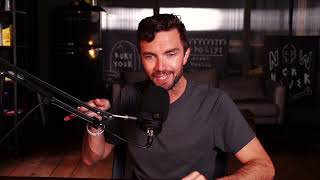
This is a YouTube video titled "What Gets Measured Gets Improved - FDDTC #17" published on April 5, 2023. It features Devin Zander as the sole speaker and host of the From Delivery Driver to CEO podcast. In this episode, Devin shares insights and personal experiences about the importance of measuring key performance indicators in business and life to drive improvement and success, covering topics such as marketing metrics, business growth, personal development, and tracking progress in various areas.
What's up, guys? Devin Zander here. And today we'll be talking about measuring what matters. Hey, by the way, Devin Zander, this is the From Delivery Driver to CEO podcast. These are tales, lessons, stories, how I went from a Jimmy John's delivery driver in high school dropout to the CEO of an eight figure software and education company. So if you want to improve your marketing or your business savvy and get to seven figures, eight figures, maybe, well, you're in the right place. Let's get into today's episode. So measure what matters. And more importantly, I guess a simpler way to put this is what gets measured gets improved. All right? This is something that I struggled with for years and years and years as a new business owner. So I would assume, and I could be wrong here, that a lot of new business owners also struggle with this. They're not measuring what are known as key performance indicators in their business. And with that, they don't know what kind of decisions to make in their business because they're not measuring things properly. Let me give you a few examples. We'll start with a really simple one. Okay. Weight loss. All right. It's very difficult to lose weight if you're not measuring your weight. Sure, you can starve yourself. Sure, you can do, like, workout a ton, but the easiest thing to do is to just work out and kind of eat a little bit less every day. Weigh yourself, and if your weight is going down, you're doing it right. If your weight is going up, then you know you're doing it wrong and you're tracking it. Oh, my God. Crazy. But there's a hidden side effect here, too, which is if you really want to lose weight, it's just. It's not just about measuring it right. It's about facing reality. And when you weigh yourself every day and you see the scale is going up every day, a little bit here and there, you know, 171, 171.5, 173, 1 7. Start to feel like, okay. And a lot of the reasons or a lot of the times when people don't measure things in their business, it's because they don't want to face reality. They don't want to see the reality of their situation. Same reason people don't open their bills, okay, their credit card bills in the mail. They don't want to open it because they don't want to see that number that's staring back. People don't measure things in their business because they don't want to see the number that's staring back the number that's on the other end that's waiting for them. And the more anxiety that it makes you feel to look at it, the more you need to actually look at it. Okay, there's a, there's a scale, there's a. What is it a correlation here? The more anxiety something gives you when you're tracking it, the more fucking important it is to track it. You really need to track it. Okay, so examples, right? Your cost per purchase. Your. If you're in like an education business, similar to up your lead cost. Certain things that are not necessarily worth tracking. Cpm, right? But there's a ton, there's a ton of different things. Your store's conversion rate, okay, you want to track that. How are you going to improve your store's conversion rate if you're not tracking it? And if you're not tracking how changes to your store affect that conversion rate, that's called conversion rate optimization. Right? Your email revenue, for instance. So let's say you send a lot of emails for your store. You should be tracking how much revenue each remote email generates. And then when you do that, guess what? Start to notice little trends. You start to notice that, hey, whenever I send these types of emails, the results are way better. We're getting like a 2x click through rate. Like we're getting twice as many clicks and the average value per Open is like 4x. Right? It's the same thing if you're trying to lose weight, right? You can say, well, man, when I'm dieting this way, like based off the scale, wow, like I'm really losing a lot of weight and I enjoy it and I don't feel like shit or whatever, right? With your ad costs, your cost per acquisition, you don't just launch ads and say, oh well that didn't work. Oh well, that didn't work. Well, that didn't work. Right, you say, okay, that didn't work. Let's take a look at the numbers and let's see why it didn't work. And then you can start to see trends. Okay, these kinds of ads don't work. Or these kinds of products that I'm trying to sell to this niche, they don't respond to these. But because I'm measuring it, I do see that they really do respond to these. So I should stop trying to sell less of this and really focus on what people are buying. Sorry. For those of you who are listening to on podcast apps, I'm doing a lot of like hand movements right now. So, so Sorry about that. But the point is, is what I'm saying is if you measure what kind of products or ads are resonating, you start to see which ones don't work and which ones do. And then in the future, as you launch more ads, you have this big list of shit that didn't work, and you can avoid it at all costs. Avoid it like the plague. Get away from me. Gross. I don't like it. You know, and it's just. It's like this in every single part of your business. And we were really struggling to grow when we were just winging it, right? It wasn't until we really started measuring things in our business that we blew up. So if you look at our Shopify store, 3 million in 2019. We just did an episode on this the other day going from 3 million to 20 million, right? The reason we were able to do that is because we started measuring things, okay? In that case, it was the lifetime value of our customers. So when you stop fucking around. Sorry, I know someone was complaining about the language. When you stop fucking around and, like, treating it as a hobby. Treating your business as a hobby is when you don't measure anything. You're just like, oh, I'll try this, I'll try that, I'll try this. Just trying a bunch of different things, right? When you're not measuring it, it's a fucking hobby. Just call it what it is. You're doing it for fun because you're not taking it seriously. If you're taking it seriously, you'd be measuring everything. Well, okay, Some stuff's not worth measuring. Like I mentioned before, CPM is not a good indicator of many things. It can be a good thing to look at, but it's typically not. But when you start measuring things, then you start building a real business. Then you can start building processes. Then you can start figuring out what does and what doesn't work, what does resonate and does not resonate. You get what I'm saying? Hope this makes sense and it's in everything, right? Just to give you another example from my childhood, I wanted to learn how to do a kickflip on a skateboard, right? You know, you do a little kickflip. That was the weirdest noise. I'm sorry. But, you know, you kick the skateboard and it flips, and I had to measure my foot placement, like where I'm placing it on the board. I realized, like, okay, if I have my foot here, and I would do it in. So, you know, the skateboard has eight screws on the top. I would measure where my foot is in. What is it? What are the word I'm saying? Like as compared to the screws. Right? So I noticed like, all right, when my foot is like on top of the screws, I can't do a kick flip. My foot is too high up and I do not flip the board properly. If I move my foot down about an inch and a half, I get the proper amount of kick while still getting a lot of pop from my back foot and boom. It works, right? I try to measure everything. Listen, if you're trying to break a four minute mile or whatever, a five minute mile, six minute mile, if you're trying to improve your running speed, let's just put it that way, you're only going to do it if you measure it. Okay. And then you try to beat the time that you just recorded. How do you expect to get better if you don't know what better is? If you don't know what the fucking benchmark is, if you don't know what this standard is, how are you going to beat it? You want to do better than you did yesterday. First you have to measure what you did yesterday. You want to lift more. Got to measure it so you know what to do. Got to keep track of it. Got a buddy, actually, two buddies, both my business partners, Austin, Matt, they're Jack dudes. I know, I'm like Jack to check that out. I have huge muscles. I'm kidding. But they're religiously tracking their lifts so they can improve. I got friends who run, they're religiously tracking their running speeds. I have friends who do all kinds of shit and all my friends that are really good are tracking it. I have friends who are amazing at video games. World of Warcraft, League of Legends, what do you think they do? They track, they track everything. Tracking the whole fucking map. It's crazy. Makes me feel bad like watching them. I have friends who are really good at card games. What do they do? They track the cards in the deck, right? They count cards. They're tracking what gets tracked. What gets measured gets improved. This is a hack to being better at life. Okay? If I were to give you things to track for your E commerce business right now, I would say your customer acquisition cost, your roas, you're going to want to track your store's conversion rate, you're going to want to track your email revenue, your SMS revenue, you're going to want to compare it. And when you're tracking your email and SMS revenue, don't just Track the revenue, track what kind of email you sent as well. Okay, so get a little Excel sheet. Write down the email, the day you sent it, how much revenue generated, what kind of angle you took, what was your open rate, what was your click through rate, Boom. Track all of it. And once you start doing that, you can start improving. Okay, if you have an automation, an email automation for your store, track your open rates, track your click through rates, track your revenue, create, split, test, try to improve it. You know, I'm saying, luckily with the emails, a lot of that can be done automatically. So that's pretty easy. And then track what kinds of products are working, track what kind of promotions are working, track which discounts work best. There's a lot you can do. Some of it is more important than others. The big things, just your customer acquisition cost, your customer lifetime value. If you figure that out, you'll really be able to start scaling. Okay, but if you want to improve in your life, start tracking your life. You want to improve your happiness. At the end of the day, write down your happiness level. I'm serious. It works. And then if it's not good, guess what? That enables you to face the cold, hard reality that, okay, I'm not happy. And then what do you do? You write down what you did that day. Why do you feel unhappy? Face it. Sometimes we need to face life. We need to be adults. We need to face life. We need to confront these things, we need to track them so we can improve them. And then once you figure out why you're unhappy or what's making you unhappy, or why something's not working, or why you're not losing weight, or why you're not running faster because you're tracking it, then you can start to improve it and you come out on the other side, a better version of yourself. You make more money, you lose more weight, you're happier, you have better relationships, better friendships, better business. This is one of the keys. Hope you enjoyed. This is Devin Zander, your host from Delivery driver to CEO podcast. Make sure to like, comment, subscribe, leave a five star review. I'm on YouTube, Apple Podcasts, Spotify, all those. So make sure you subscribe. We're publishing every Wednesday and every Saturday morning. And if you want help launching an E comm business, we've launched for ourselves. We've done over $50 million in revenue up to this point. We have three of those stores still. And just yesterday I was looking at the stats, we did like $16,000 in sales. If you want help doing the same just go over to skup.net skup.net there's a lot of different ways we can work together, so I hope you enjoyed today's episode. I will see you on our next episode this upcoming Saturday. Take it easy.