Webinar | AI Marketing Excellence: Building Scalable Channel Partner Programs | May 2025
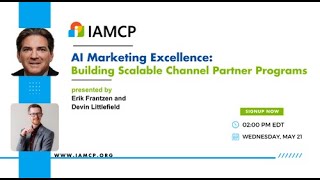
Devin Littlefield, CEO of MarketVantage, leads a webinar on using AI to build scalable partner programs for Microsoft resellers. The session covers persona development, audience segmentation, and tools like Copilot and Apollo.io to improve lead qualification and seller enablement.
Chapters
Hi everyone, thanks for joining us today for another IMCP webinar. Today the topic is AI marketing excellence and we have 3 speakers with us today. Devin Littlefield, Eric Franson, and also Rob Vagan is going to be joining in as well. So with that, I'd like to turn it over to Devin. This is one of those spotlight sessions. This was a session that we did at America's Illuminate back in March. Lots of great feedback on it. Wanted to make sure that we could bring it to a broader audience. So that's what brings us here today. So with that, Devin, let me turn things over to you and you can begin the presentation.
Awesome. Well, thank you so much. And you know, it's an honor and a privilege to be talking with the group today and sharing some concepts that we've learned throughout this year. And I will start by just saying that, you know, from Illuminate 2025, one of the best things one of the things that we felt coming out of that event was just the energy, tons of positivity around the networking, and in particular, lots of direct takeaways. But I'll start by just saying before we even get into the presentation that as you all know and suspect, AI is changing incredibly rapidly, right? Even between when we presented, you know, at the end of March to today, there's been several major technology leaps and bounds since then, including, you know, as many of you probably saw the announcement last week, of Microsoft Copilot for Sales, right? That's kind of the bigger, the bigger announcement, full integration suite. And so one thing that I'm going to just start with and mention right off the bat before we get going is that many times throughout this presentation, I will be talking about a couple specific tools or references, but the bigger focus for today is around the frameworks and the processes that you can bring and then use tools interchangeably.. And as much as we all like and would love to be using Copilot Studio in some workflows or some instances, there may be other options out there. So sorry for all the Microsoft partners, maybe I just scared by saying that, but I just want to make it clear and add that, you know, the tools of the day are seemingly changing. We're trying not to focus necessarily on that today as we are just around the, the process or the framework. So with that, let's get started. So first thing, just for those of you who don't know me, I'm Devin. I run and am the CEO of MarketVantage. Been certainly in this digital marketing demand generation space for, you know, a little over 12 years now. Been pretty successful in terms of what we've done, including being able to focus particularly for Microsoft partners and helping them grow and drive pipeline. And for those of you who also don't know, I now currently sit on the IAMCP America's board as the MarCom chair. So newly, newly added since right up leading into Illuminate. But that's just a little bit of my background just for your knowledge. Yes, that is the same jacket in that photo as I'm currently wearing. Hooray for not having a great fashion sense here. I'll turn it over to Eric to let him introduce himself.
Hi everybody. My name is Eric Franson. I'm a longtime member and board member of the IAMCP. I started off as a Microsoft partner many decades ago and was a managed service provider as well too. A Microsoft Gold Partner, and then I switched over to the vendor side of the house to be a Microsoft vendor working on sales enablement and marketing and still always involved with the IAMCP. And thank you all again for joining.
Awesome. So today we're going to be covering over a number of different things. First is first, state of the channel and marketing. We're going to dive into some setup of AI systems as well as then get in really meaty stuff around AI-powered strategy. Strategies. We'll talk about measuring success at the end and then leave some time for Q&A, which I do encourage you throughout the presentation. If anything is striking your interest or you have a question about it, go ahead and pop it in the chat and then we will be sure to likely address it, you know, as we get in towards the finish line. So let's get started. And first things first, I want to start with— actually, before, before I say to the channel, I do just want to mention a few terms that you may hear me tossing around today. So a little, just a short glossary here. AI agent, that's the one probably term that most people have heard but maybe haven't necessarily had a great understanding of it. The way that I and Eric kind of view this world is autonomous systems that can make decisions and act independently. That is a stark difference from AI automation, which is a rule-based or data-driven process that follows defined instructions, typically on a highly repeatable schedule. So we do put those into two different classifications. I'll dive into why a little bit later. AI-enabled tools. The way that I've been starting to think about this is a bit like in the era when accountants were getting used to running with Excel, right? Excel was the shiny new object people were just kind of getting into, but Excel enabled accountants to become more productive. And now if you're an accountant and you're not using Excel, you're probably crazy. So the idea is that there are tools that have been designed with AI capabilities. We'll talk and share a few of those today, and they are distinctly different from, of course, the other two that we just mentioned. And then chatbots, just so in case it's not clear, we may also refer to this as LLM chats or, you know, AI search engines as an example. But I kind of lump these things together, basically AI programs that we can have conversations with. So many of us have been using it, particularly with Copilot, Grok, ChatGPT, many others, all would be kind of classified as chatbots typically. And then just a couple more sophisticated terms. Large language model being an AI system trained on huge datasets to understand and create text. Machine learning, where we're not going to necessarily dive into a ton of that today, but just a type of AI that learns from data to improve predictions or decisions. And then natural language processing or NLP, it's being able to use human language to talk to technology, which we will also talk about today. So just wanted to get that out of the way. You will hear us start throwing around some terms and we want to make sure that everybody's on the same page. So now let's get into the state of the channel and marketing and, you know, to get things kicked off, I think it's pretty fair to say that, you know, for the most part, especially as Microsoft partners, there's been a kind of a change of pace in the last couple years with things. Often I think most of us are feeling like there's some limited resources that are available, right? Whether we're constrained by staffing, which has been a huge issue historically where we haven't been able to hire and kind of fill in the needs, or perhaps we've had even layoffs and now you're trying to figure out how to do more with less. The story generally is the same, which is there are limited resources that are available for us to actually be able to work with, right? And this is where obviously AI will be able to help us with that. The second is limited personalization. So as we start to think about effective strategies for being able to get in front of the right prospect, talk to that prospect, we often either have to take a hyper-manual approach of one-to-one and, you know, we personally scrape their LinkedIn profile and try to make the best outreach we can. Or in some cases it's the complete opposite. You're sending canned email to everybody. It, you know, personalization of hi first name is not personalization. Uh, yes, there are many clever tricks and tactics you can use to use cold email as an example to try and reach people. But at the end of the day, personalization at scale is generally very hard to do. And then the third and probably the hardest one, I think, for a lot of partners especially, is that limited lead qualification, or even I might even replace qualification with lead volume. I think in a lot of cases there's a lot of partners that are feeling constricted around just the ability to actually be able to get the right leads in the door, have them actually be of interest with their hand raised, And we're, we're going to talk about all these things today and how AI will be able to help us in, in these 3 different categories, particularly with, you know, kind of that marketing-focused support. But I wanted to also just highlight a few other things that are a little bit scary as well. This is specifically employment within software development, and I'll— you'll see why I'm referencing software development roles in a second. But you could see that that hit a peak in 2022 and it's since been a decline. Very generally kind of a scary outlook in that I fundamentally believe that AI has come in and is now actually seriously taking some software development jobs. There's also a ton of data that would help even start supporting that. So this is data from McKinsey. This is potential economic value from GenAI and the share of employees with a positive outlook on GenAI by function. Basically what department feels the most bullish about being able to leverage AI. And I think what you can tell is that by potential of economic value and by the share of employees with positive outlook, sales and marketing and software engineering are sitting squarely at the top. I think generalizing this a little bit more, I think what's becoming clear is that most people have figured out at this point that AI can most heavily be used for software engineering, and sales and marketing related functions. Yes, customer service and R&D are also incredibly helpful, but a little bit lower down the totem pole. Even further down are then things like your HR, procurement, and IT in terms of potential economic value, but they still are aligned in terms of, you know, being positive outlooks. So it goes without saying that from my point of view and kind of how I see the world right now, sales and marketing and software engineering are probably the two functions that are most ripe to be kind of disrupted by AI. And we're already seeing that initial impact as far as even number of software developments, software developers that are getting hired or employed at this point. And so also just a proof point here to kind of back some of this up, as we all saw, Microsoft 365 announced the Copilot for Sales just this past week, full integration with Dynamics, with all of your kind of work products. The ability to be able to actually, you know, pay, pay yet another monthly fee to be able to get into some really interesting AI products and have that kind of throughout your entire Microsoft stack. Just a really interesting, just a really interesting kind of proof point and very timely around how AI will be very disruptive across these industries. And they're clearly kind of picking the lowest hanging fruit in my mind, which is sales and marketing and software dev. So one other, a couple other data points just to help kind of tee this whole thing up here for especially Microsoft partners, something to be thinking about. 75% of buyers say that thought leadership helped them determine a vendor to work with. This was data that was produced by LinkedIn. They have a separate team called the LinkedIn Insights team where they just do research. There was another stat that they put out that I'll also mention here just briefly. In a LinkedIn study that they did, what they found was that at any moment in time, the number of people that are on LinkedIn and in market to buy something was just 5%. 95% of the time, somebody scrolling on LinkedIn is not a viable buyer. So that means that if you are creating content at scale, 5% of the time your inter— your content is interacting with somebody that may be in market to buy your service. The 95% of the time though, they're not. So obviously it goes to show that having a strategic content plan and being top of mind for when that 5% of the market is ready to buy something is incredibly important. And the other thing just to call out here as well is that we've also seen from sources like Business Community, 67% of folks have lost sales due to poor lead qualification and misaligned partner scoring, effectively saying And Rob would probably even have maybe better data around this as well, or more data. We are seeing that if there is a misalignment anywhere in this kind of life, in this lifecycle or marketing funnel, that could severely hamper, you know, the ability to actually close deals. So where does that leave us with AI at this point? I think what it clearly can show, and as the opportunity that we'll be diving into today, is how we can make data-driven decision-making throughout and and have AI help, help us make those smarter decisions. Being able to actually automate simple tasks through AI automations, which we will then talk about, or even more simply, how do we kind of break down and chunk up particular tasks so that way we're able to get stuff done more efficiently? And then thirdly, how can we enhance partner collaboration? So things that we are gonna be able to help share amongst our partners, better enabling better marketing, and certainly better lead qualifications and lead sharing. So let's dive right in. With AI-powered strategies, one of the first things that we think about is the audience segmentation. So the ability to actually then define your audience, make sure that it's clear, and then be able to actually have very concise and strategic messaging, which we'll get into in a little bit. So the way that, you know, we typically would view success for any type of AI that we're going to leverage at this point is that it obviously for now needs a tremendous amount of human input in order to be successful. I know many of you certainly have probably explored even with Copilot, ChatGPT, any of the others, and just said, write me an outline for an email. Right? And that's decent human input, but it's not enough context around how you are actually going to be able to get to the right output. And so that's where we then can enable and have AI support that's going to help us bring these things together. And so what does that look like? That's going to start with, of course, our ICPs and our buyer personas. We want to make sure that we have all of this data consolidated and, and documented for your particular business to make sure that you are set up for the most amount of success. You need to make sure that you have all of these things clearly defined, written down, and available so that way when you are going and informing, perhaps, or working with a chatbot, you'd be able to get to that better output. So things that we would typically want to see or define inside of that ideal customer profile Those are typically going to be things like your company size, your revenue, the type of industry they're in, certainly the geographic market. So the US, Canada, EU, UAE, wherever. And then for your buyer personas, you're going to want to make sure that you have really well-documented information around those personas. So things like what are their typical titles? How much education do they have? What interests might they have? What are common pain points that they might need to address? All of those things, combining those things, you're going to be able to have better information for AI to then be able to leverage. And we're going to talk about specific strategies in a second. Eric, did you want to add anything in?
Yeah, just to chime in, just to some of you Microsoft partners out there, you know, for many years we almost have had like the classic big data problem. So you have the data that's in your CRM, in your accounting software, the data that's in your marketing automation, and then Microsoft, if you're lucky enough, gives you access to this portal and this big spreadsheet that's called Cloud Ascent data. Well, that's a full-time job that I just described right there for any size partner. So when, when we put this together, some of the things that we specifically looked at are how can we help Microsoft partners. You know, there's actual consulting organizations out there that just help you manage your Microsoft relationship, and there are endless number of them. So it just goes to show you, there's a lot of it comes from the data and knowing your personas. I'll say one more quick thing, which is that I feel like Dynamics really made us start thinking more vertically. So prior to Dynamics, being a Microsoft marketer, if you will, almost everything was a horizontal message. We really weren't talking to healthcare and retail. And then, you know, once Dynamics was around for 5, 10 years, we really almost started taking all the Microsoft messaging. And I think that some of the things that we're talking about today really fit in, you know, with your practice to make it more efficient, specifically with unique selling proposition personas and data.
Absolutely, absolutely. And for those of you who are feeling overwhelmed about this process, um, We've created a persona builder tool. It's a simple tool to be able to help you clearly document and define what makes a good buyer persona. There's a link down here at the bottom of the slide. I will, by the way, all of these slides in this recording will be shared out afterwards, so no need to panic. There's no QR code there, but you will be able to click in on this and then go use this ChatGPT tool. This GPT that we've created is specifically trained on on a particular format for documentation purposes for AI to take in some basic input and then be able to produce a decent, a decent buyer persona. I think I'll put out one caveat there. Like all AI currently, we want to make sure that we are careful or sensitive to not just copying and pasting whatever AI produces. You certainly want to make sure that you have a thorough kind of background check on this, but it certainly helps for getting 80% of that workload done. But the beautiful part, and to Eric's point, right, you get large swaths of data. You hopefully have some insights around, you know, any historical deals and where you've gotten, where you've been able to actually get those deals sourced and who are the main buyers in that process. So you have hopefully good starting points already for this. You can then take that information in aggregate and start to throw it into tools like this buyer persona builder, it will be able to then analyze and help provide, you know, what it suggests would be good buyer personas. The whole purpose though, again, is to document this information, get it into a PDF format, make it readily available, and then even do things like upload it into, you know, a custom GPT that you're building or a custom Copilot agent to be able to then have that additional context or that insight for you. Again, without that insight from humans, you know, AI is not going to be particularly good for you, at least currently under its current status. So you want to make sure that every bit of context that you can provide is documented. So another thing, and then, you know, just another, a quick kind of personal example here that I'll share. Whoops. I happen to use Grok. I like Grok a lot, you know, as far as personal, personal kind of chatbots go. I was then able I was able to take a buyer persona that and, and an ICP that we had been, we had been toying around or kind of creating in Markovantage, and then I was able to take it into Groq and help get this kind of documentation going. It should not be that difficult for most of us to kind of get to at least having some basic awareness or basic documentation built out. But you can see it produced a pretty good length of document. Again, this was not taken at, you know, verbatim. We always recommend that you take stuff into account, you know, revise it, tweak it as you need, but this is certainly a good place to kind of get started. This also then included, you know, some other kind of good qualifying and disqualifying kind of details associated to an ICP. So this is really, I guess, the, the foundation, and we want to make sure that, you know, for everybody on this call if you have not kind of documented some of this information, that is the first step is to make sure that you do that because then we're getting into the fun stuff. Once you actually have some of this documentation in place, then we can actually start to use it and get much more informed about our enablement and about our, our kind of down funnel marketing strategies from here. So again, just as a kind of a quick sample here, one of the things that I then did just to give that sample, was I took the ICP information that had been provided or spit out by Grok. I brought it into a business intelligence platform like Apollo.io, which is a great platform. I do recommend it. Put the criteria in on the left side and then was able to get to kind of my, my very specific, very specific account list that all kind of fits that persona. What's even more crazy though is that, you know, talking about AI-enabled tools as a toolset, they also have the ability to run custom AI prompts against the target account list or against even target individuals that you list in inside of your prospecting tool. So what I was showing just for this video example, and I'll just restart it just to make it a little faster in case everybody didn't quite see it, is I was then having the Apollo.io do an analysis on my business, an analysis of the business or the target account that was inside of, you know, inside of my target list. And then it produced detailed company changes, things that have happened, and then it puts up a fit score of how qualified is this account. Should I be reaching out sooner? Should I delay or should I wait for any particular reason? There could be a number of reasons why or why not. It gets to a conclusion. But the bottom line is, as far as a simple process to be able to get more informed about your outreach, this is one example of an AI-enabled tool with taking your existing process, bringing in a tool like this would be able to help you just be more qualified in terms of your outreach. And again, it's providing that insight for you in this case. So this is just one example of how you can leverage this information around your ICP and your buyer personas to make things just a little bit more, make things a little bit more directionally like correct or accurate. Awesome. So now for the next strategy here, we're going to talk about intelligent content. And the emphasis here is on intelligent. There's a plethora of content, all of you know,, and I'm sure you've been seeing it on your LinkedIn accounts as an example, the flood of content out there, the uniqueness of the views, the sometimes cringeworthy content that we see from kind of controversial points of view or controversial language, can definitely have a social effect for sure, but it may not always be the direct effect that's going to drive sales for us. And that's where this next strategy we're going to start diving into here. So keep this in mind, right? And, and Rob, I think even has a similar number to this. There's over 250,000 active global Microsoft partners in the world. I think the actual number is closer to 500, but when you take into account how many are active and actually selling stuff, it's about 250. At least that's from what we heard at Illuminate. When you actually then take into account the cloud solution providers, that number gets brought down to about 8K, at least here in the US. And so what does that mean for us, right? We're, we're, we've got a breadth of competition. There's lots of people that are out there kind of creating content and just putting into ChatGPT, make me a blog post about this or make me a LinkedIn post about that. But now that we have a little bit more clear definition around both our ICP and our buyer personas, we can start to actually elevate that information and the way in which we're building content. So in a minute, what I'm going to have, I'm going to have Rob Fagan come up here and talk about and help kind of walk us through some of this. But, you know, we really think about creating that intelligent content, of course, with the right message, the right audience at the right time, having the ability to be able to have your information consolidated, having, making sure that you are talking to the right person. That is ultimately what's going to help you stand out and be a little bit different from the other 200 49,999 partners that you're kind of competing against in the world. And so with that, I'm going to have Rob talk for a little bit about how to craft your message in the Microsoft— how to craft your Microsoft message.
So Rob, take it away. Thanks a lot. Appreciate it, Devin. And yeah, I think there's a really big place for AI here in our process of creating a message for Microsoft, creating our market-facing messaging. And so, Devin, if you wouldn't mind just moving over to the next slide. You'll see here the, the 4-phase framework. So if you haven't seen this before, it's the Phase 1 is about messaging, we'll talk about here in a second. Phase 2 is selling with Microsoft, and Phase 3 is all about Partner Center and Phase 4 is about the program. So show of hands, has anybody seen this framework before? Just a thumbs up there. Fantastic.
Great.
So we will, we'll talk about the messaging and, you know, Devin, if you wouldn't mind just for a moment recapping on your ICP, some of the things that you talk about or you think about when when you're thinking about a traditional ICP for your go-to-market or your customer? Just a couple points here real quick.
Yeah, I mean, for us, I think, you know, what I would typically want to see is a clear definition around, you know, the size of the company, whether by employee or by revenue. I also absolutely, for an ICP, I want to make sure that they're in the right industry. And the third, I think, most important for, you know, even Market Advantage personally would be the tech stack that they're using. So are they on the technologies that perhaps we can kind of convince them to migrate away from, or are they leveraging the current technologies that maybe they're not getting the most out of? So those are, in my view, kind of the three most important elements of the ICP. And with that, you know, I think that serves as kind of the strong, a very strong and aligned basis for what I would consider messaging and especially within the Microsoft ecosystem.
Yeah, and so what I want everybody to sort of think about there is that that's a very traditional approach. It's how we all try and think about our customers and how we can help our customers. But when we're thinking about how we can help our Microsoft folks, we have to think about what's important to them. So we're, you know, this transitions from thinking about what's important to our customer to thinking about what's important for the Microsoft person we're speaking with. So, you know, although they want to help the customer, they want their customer to achieve their goals, they also have their own goals. As a Microsoft salesperson, I've got a set of goals that I have to achieve. And so we as Microsoft partners need to recognize that and we need to start to think about who inside of Microsoft is going to be our ICP. So not just our customer ICP, but who inside of Microsoft is that ICP and what's going to make them that ideal person for us to work with? So we have to think about now, what technologies do they focus on? How are they compensated against those technologies? What verticals or are they horizontal? Do they focus on? So we need to start to think about inside of Microsoft, what does that ICP look like for us? So You know, it's, it's more challenging. It's another layer that we have to think about to be successful in working with Microsoft. But if you take the time to do it, it's really critical in your success with Microsoft. And, and I do think there's a place for AI to lean in on that. You know, more and more Microsoft is exposing what's important to them. You think about the MCAPS presentations that We've got and we'll have a new set of priorities coming up in July. So we need to think about that and start to ingest some of that into our decision-making framework. And using AI can help us do that. So once we've gone through that process of figuring out who the ICP is inside of Microsoft, then we have to take it down that next layer deeper and say, how do I connect with that person? Or how do I connect with that team of people? And in my experience, there's 5 questions that you need to be asking yourself and asking of your business. And they are, you know, who we are, what we do, who we do it for, how we do it. And I'm not talking about the technical how, more the sales process how. And then finally, what's in it for them, for the Microsoft person. And that's why understanding RICP is so important. And if you can leverage AI to help yourself answer those questions, and Devin alluded to this, I think made the point that don't just take what AI pushes out or delivers for you. It's take that as part of crafting your message. But if you craft a message with those 5 core questions in mind and you align that message to the right ICP inside of Microsoft, it really takes you light years ahead in terms of connecting with people inside of Microsoft and figuring out not only who those people are, but how to connect with them and how to better align with them, which if you step down into phase 2, you know, phase 1 was the messaging, phase 2 is all about selling with the field. You know, one of the places that you're going to find is a great tool for you connecting with Microsoft is LinkedIn. And Devin alluded to the factor there of, yes, we'll see just a ton of messaging flying across LinkedIn, people posting content, people posting articles. And in my experience, a lot of that misses the mark. But if you understand your ICP and your customer-facing ICP, as well as understanding your Microsoft ICP, you can craft some very powerful messaging on LinkedIn, both as content that you share publicly and as information you share privately through DMs or messages inside of LinkedIn. So for me, just understanding those few things, and it follows all the core concepts that Devin's been talking about, and leveraging AI is one of the best ways to scale this motion inside of Microsoft. You think about, you know, they— Microsoft has, depending on who you talk to, 30,000 people in a sales-related or a quota-related position. And we as the Microsoft partner ecosystem want to connect with as many of those people that makes sense for us. So, you know, Devin, that's really what I think people should be thinking about when they think about AI and partnering with Microsoft.
That's awesome. And, you know, one thing that I don't know I was entirely clear about, but I'll clarify it now, and you did an excellent job with this, Rob, is that, you know, the ICP is really specifically the starting point for us to make our targeted messaging around. And And I think you've said it perfectly, right? The ICP of speaking to Microsoft is completely different from the ICP of the end users or the net new companies that we're trying to go after, right? And if you do that correctly, you will have tons of clarity around how, how and what you should say to the right person, right? Because what I'm going to say directly to a Microsoft seller is not exactly what I would say to a business owner, right, that may need to migrate from on-prem to cloud. Whatever the situation may be, right? That messaging is completely different, different pain points, different problems to solve, right? Different priority or different urgency behind it. So it goes without saying, Rob, I think you nailed it. Like having that ICP clearly defined and know who you're speaking to first and foremost is the critical aspect here to then make sure that your messaging is spot on for that person or that group.
Agreed, agreed. You definitely have to understand that and that really is the, the starting point for all partners, in my opinion, is understanding who you're going to align with, who you're going to help.
Absolutely. Absolutely. And it should go without saying as well that, you know, the strat— the tactical— the tactics that you end up then using against that ICP, I think, are also— that's where you start to get a lot more clear about that as well. You know, for an example, if I was trying to target, you know, 19-year-olds right now to sell a t-shirt, my strategy for going after them is obviously going to be very different from, you know, a 30-something Microsoft, ambitious Microsoft seller, right? Like, it's just going to be two totally different worlds. So, you know, absolutely making sure that those ICPs are documented and take the time, go through the exercises, make sure that you have clearly identified all of the potential channels that you would be driving potential leads. This does also include other partners as well, by the way. I think it is perfectly fine to, assign and define your ICP for an ideal partner profile. We'll even call it that, like ideal partners that you can then communicate with and how you change how you message or how you kind of network or strategize with them. Eric, did you want to add anything in here?
No, I just wanted to basically say that, you know, this, I think the messaging, the vertical messaging as I talked about earlier, We've come such a long way. Years ago, Microsoft had a portal called Pinpoint, and I used to spend hours and hours with partners all around the world, basically helping them to blend the Microsoft practice message with their practice. And, you know, that's something that's slowly starting to go away. AI is taking over, and, and it's coming out better. And then when you think of that message, that Microsoft partner, that practice message that, you know, that on Rob's side of the house you want the Microsoft field to see, you want the Microsoft employees to see, and then on a Market Vantage side of the house, you know, you want to be reflected in your partner profile that even comes through on some of those other client-facing websites, like websites that, that talk about Dynamics, and then they point you to a partner locator. That central messaging, the, we call the better together. Copilot does a great job of doing the better together message and then you can take it from there and you can make the verticalized messaging. But I think it fits on the Venvito side of the house and it fits on the Market Advantage side of the house being the end user customer, the partner, and then the Microsoft field, those 3 audiences.
Absolutely. Absolutely. So, you know, as we kind of shift back into that content piece, right, once we've gotten that ICP, the buyer personas, and now some of our key messaging in place, now we get to focus on— I'm using a simple 3-stage marketing funnel. Some might have heard of this as, you know, tofu, mofu, bofu. There's lots of terms for it, but effectively it's awareness, interest, and intent. At that awareness level, now with ICPs, buyer personas, and our core messaging thought through, we can now think about how do we actually go and enable and build new and unique different content. So blog posts, newsletters, those all generally sit in that awareness bucket. Obviously, you know, webinars, resources, and guides will sit in interest, and then intent being case studies, collaterals, demos, or even, you know, interactive tools and resources. All of this is with that key focus of how do we solve the buyer's problems? Or in some cases, you know, even for an example like a Microsoft seller, right? How do we solve their problems? They may not be the direct buyer, but they're going to be an advocate for you. How do we make sure that their problems are clearly being solved by the content that we're producing? So all of this again, now we can feed this in with context into AI. And one example, just as something that we've generated here personally, is what we call the market vantage idea. Media generator. This is specific to MarketVantage, by the way, so I do not recommend— I'll share the link so you can see how it's set up. But certainly it goes without saying that I recommend everybody be kind of working on and developing their own ChatGPT, or excuse me, even Copilot, building your own Copilot agents to help kind of facilitate this. Because when you have your clear ICP documented, you have your clear buyer personas documented, some core messaging foundations have been established. Now you can take that in and be able to get extremely better output as a result from that kind of customized trained version that now has context and additional insights about you. And so honestly, the simplest way to be thinking about and doing this is with just some form of custom agent. So Copilot, Copilot Studio, for those of you who haven't used it, I highly recommend it.. It's a really good tool for being able to give it SharePoint files, give it PDFs, give it your website, all this context, and then you'll get to significantly better output than if you were to just go in cold and say, hey, write me a blog post about, you know, 3 problems you may have in a cloud migration, right? You'll, you'll be able to get to that really refined content ideas. And again, it goes without saying, I, we never recommend verbatim just taking whatever AI says and running with it. You always should be using your own versions of it. And so, you know, as we're kind of getting close to the finish line here, the third and most important thing when we think about AI-powered strategies is really around performance optimization or tracking, tracking the metrics that matter, right? We think about what are the tools, resources, and the understandings that are going to help you make informed decisions. And I think I think, you know, it was this funny saying, there was this funny saying, Brian Halligan, the founder, one of the co-founders of HubSpot, said this a little while back on, I think it was X, formerly known as Twitter. He said in 20, I think it was 2012 or no, 2015, he said, you know, marketers were so focused on growth at all costs. And then it said right below it, 2025, growth at no cost, right? So clearly there's been a tone change, vibes are changing. The focus on how do we do more with less continues to be kind of that underlying theme. And I guess what I'm going to challenge all the partners here on today, and really any business, it doesn't matter whether you're a partner or not, recording is progress. You should be thinking about what are the things that are really going to help move the needle for you and how can we effectively measure performance against the things that matter? Typically, this comes in the form of identifying for you as an owner and an operator, how much you're actually willing to spend or how much you're willing to invest with certain parameters in order to get to the results that you want. And I think there's often a disconnect, at least from what I see in different planning sessions around, you know, here's my lofty 25% growth revenue goal for the year. Okay, but how are you going to get there? How much are you willing to spend to do that? What are the things that are going to need to be assumed in order to hit that growth goal? I don't know, go figure it out. That, that's usually the communications that we kind of end up hearing from partners is, you know, we, we want to grow, not quite sure how to get there. And I think that first kind of exercise that's going to be most helpful is make sure that you can understand how much, how valuable is that fresh new lead to you. If you're going after, say, direct end user customers or other businesses that you want to service, it's helpful to have that understanding of, What is the value of that person coming in the door to me? And that's typically through understanding, you know, what a typical deal size would look like for you. How many typical leads, marketing leads, whether they came from partners, whether they came from Microsoft, whether it came from, you know, your own marketing efforts, how many, how often are you likely to convert those leads into opportunities and then further into sales? We want to then understand that math to be able to make informed decisions around how much, how many leads you need to get in the door in order to hit the revenue goals that you want. That can be clearly and easily mapped out. We happen to have built a tool to be able to help with that, the B2B lead value calculator, which again will be included with the link with the show notes here. But just, it just goes to show that starting with that basis is going to be incredibly helpful. Because then what we're able to do is help get your data sources in-house. So things like, you know, even Dynamics, HubSpot, right? Whatever, you know, perhaps marketing or sales kind of automation tools and CRM you're using, we can then take that data source and be able to push it to your specific marketing channels, like say LinkedIn, or measure, I should say, by those different marketing channels to then determine success. So to give you just a quick anecdote here as an example, you know, I'm actually much more kind of active on X, or formerly known as Twitter, than I would say LinkedIn at this moment in time. And the sole reason for that is because I'm not dealing with a tremendous volume when I say this, but I've been posting very regularly on X. We actually serviced a really nice six-figure deal. Deal that came out of some organic engagement that I've had directly on the X platform. I have not ever kind of been able to generate that, or I have, but not, not in recent months, I should say, uh, with, you know, with LinkedIn as I have with X. And it goes without saying that, you know, I have a pretty clear measurement on the return on investment here. I created some content, got some engagement, then I was able to surface a deal for MarketVantage. I think in the same way, you know, strictly measuring that and being able to identify that return on investment, that's where we can start making those really informed decisions about what channels are working or what's not. And so I think that's really, I think, another piece that I want to leave partners with here today is that if you have not already gone through an exercise like this and measured out, you know, what's the average deal size, what's your deal to, your lead to opportunity rate, opportunity to win rate, and then even changing out some of the metrics like how much revenue do you want to drive, how many leads do you want per month, how many closed won deals do you want per month. Letting those numbers kind of help dictate the picture I think is incredibly impactful, and that will be one of the biggest opportunities that you'll have purely from an effectiveness perspective. But where we then get additional capabilities or capacity to be able to do cool stuff with this info, once those KPIs have been defined, then we can get into more fun things like our predictive analytics. We always want to start and have those bases of KPIs measured because without those, using AI is not going to be particularly useful for any form of optimization. We must have that understanding of what are the metrics that really matter. Once those metrics have been defined, then we can start to have fun with it from an AI perspective. And so one of the things that we do, as an example, MarketVantage, we're a DataBox partner. It has abilities to be able to use predictive analytics so we can do things like forecast out, you know, what's the likelihood that you're going to end up hitting your revenue goal or your growth, your marketing goals? What's the likelihood that you're going to be able to actually hit the number of MQLs that you would like to get for the month, right? With certain confidence scoring, all things that, you know, AI-enabled tool are— is able to help with. It will be able to then take in information from a multitude of different sources, and then we can do things like visualize it, track it, report it, forecast on it, etc. That's the power of being able to have kind of that centralized data in a single spot. I'm not saying or advocating you need to go with DataBox, but just in particular It starts with the basis of having the KPIs clearly defined of what you're looking for, having that all get consolidated, and then we can do fun things like, you know, then visualize it and we can report on it. And it's incredibly impactful once you actually have all that information in the same place. CRMs like HubSpot will typically, or Dynamics even for that matter, will be able to help you to kind of do that out of the box. But if that's not a potential option, you know, one other tool that we've seen work incredibly well for being able to do some, you know, caution here, right? Don't put sensitive data in here, but at a high level, performance marketing channel data, very, very good with ChatGPT and an O3 model. You get some really, really good data ingestion and it will produce some really accurate output. And so personally, that's one of my favorites if I'm doing very specific analysis, like say campaign type performance analysis or ad creative performance analysis, ChatGPT in the 0.3 model is really, really good for that. Of course, there are other tools out there. So another one, as an example, an AI automation to be able to automatically pull data for you on a regular cadence, get it into an Excel spreadsheet or a private sheet, and then run an LLM model on it to then get to the right kind predictive output is a tool like Relevance AI. It's a really great agent builder tool, and you can do stuff like that and set it up to automate, you know, to be automatic, and it's really, really slick. The third, and again, kind of going into that AI-enabled tools, you can use things like DataBox to be able to automatically get a lot of that predictive forecasting done as well if you don't want to go through, you know, some of these other routes. Okay, so as we are thinking about performance optimization, again, just to recap that one piece, we want to make sure that your critical KPIs have been clearly defined, and I would say that they are mapped to your business objectives, right? If you haven't done that step, take the time and do that. It's going to be incredibly important for you. Then you'll be able to actually go measure them regularly, and then we can start making decisions around it accordingly. And I say the word optimize, But effectively making decisions, you know, around whether a channel or a strategy or a tactic is working, that could be done, you know, measured automatically. But ultimately it's up to you as a partner and a business owner to decide, you know, is that something that you want to continue doing because it's driving the results that you want or it's not? And I think it, you know, what may be obvious at this point now is that this, this is still human in the loop. Like this is still clearly human controlling AI to kind of get to better information faster. I don't think we're quite there where full autonomous AI agents will be able to come in and do all this just yet, but I would say keep your eyes and your ears out as there will be more, more and more information, news, and tools coming out that may potentially suggest that AI agents will be able to do a lot of this for you. But I think for now, one critical theme here across all of this is that you need to make sure your KPIs and all of your kind of critical business information is clearly well documented because we can then go exploit that information across different AI tools and use it to maximum benefit. So just a couple things to add.
Oh, sure. I just wanted to add that your business has changed so much. So the, you know, when we go through like the evolution of the channel, we came from hardware, software, networking, data centers, data center. And then many of you who are Microsoft partners, you know, had to make the move to the cloud. That changed your entire business to an annuity business. It changed how you compensate everybody. And now I feel like we're almost in that third phase where it's customization or semi-customization, where you have agentic AI, you have lower code, and then we have even, you know, allowing offers to be put on the marketplaces that 2-3 years ago would not have been because they really weren't an ISV piece of software. And today, with all those tools that we have, anyone on this broadcast right now, your company is probably more like an ISV than it ever was before and functioning that way. And therefore, all of your KPIs that Devin mentioned, you know, have changed because your business has changed so drastically. And we find that sometimes, you know, they're not updated to reflect that.
Absolutely right. I think, you know, Eric, spot on. In my view, you know, this is something that should certainly be evaluated regularly, annually at minimum, but, you know, even quarterly is ideal just to make sure the KPIs are correct. And, you know, look, the bottom line is AI is changing incredibly fast. We, like I said, in between, you know, when we did this session first in March to today, there's already been leaps and bounds in terms of the AI space, and it's going to continue to pick up. I think the best thing that we can do is, you know, Microsoft partners and business owners is keep our eyes squarely set on the ball. The source of truth that we know is that we're running a great business, we offer X solutions, here's who we're going after. And then the tools that we use and the people that we bring on board to help kind of facilitate that tool usage, that's just gonna change and presumably get faster, operate better, and become more efficient as time goes on. So I think the bigger focus for now is have the right ducks in a row, document what you can about your business, make sure that things are easily accessible, and then you should be able to be set up for success here in this kind of quickly changing AI landscape. So just a quick recap: define your ICPs and get your buyer personas in line, focus on developing that quality content, and as even Rob said earlier, right, if we're speaking Microsoft sellers, it should be totally different from our end users. So make sure that you are developing content for those personas that matter, or partners for that matter, right? If we're trying to market to other partners. Thirdly, optimize to win. Have your datasets in order. Make sure that you have clearly even a single dashboard that's in Excel that you check on, you know, monthly or yearly. You want to have your data in-house that's organized is incorrect so that way you can use it and make informed decisions with. AI will continue to kind of oversee all of these different areas. And if I come back and do this presentation again next year, I'm sure it's going to look very different than this one. But all that said, you know, it's reliant on you to be able to kind of get this initial motion going, and that will enable for far better usage and far better output from AI. AI. So just a couple other quick things here before we get into Q&A. I'm doing a little bit of a marketing assessment and I would love your help with it. So if you would go ahead and scan that QR code, one of you on this call who does that survey will be entered to win a $100 Amazon gift card. So we'd love to be able to get your feedback. We are just simply trying to gather data around how people are using AI in your you're marketing currently. It's a really quick assessment, should only take you like a minute and a half. If you'd also like, after you kind of put in your information and you're entered to win, there's an option at the bottom that says, you know, would you like to be a part of a benchmark group? If you would like your data aggregated against other people's, just go ahead and tap on that benchmark report, fill out the additional information that it asks for. And then you— I will make sure to personally provide you with how your business is stacking up against others in this industry. It would be really impactful. And if nothing else, I'm sure you'll find the data fascinating. So if you would be so kind to take that AI marketing assessment, I would love and appreciate that. And then I do have one more for you before we sign off here or before we take Q&A. MarketVantage, we are currently undergoing an exploratory phase right now with custom AI marketing agents. We're opening up applications to be able to have 5 businesses selected to be having a custom AI marketing agent crafted for you at no cost. If that's a program that you're interested in, in getting an AI agent built for you, similarly scan that QR code. It's a very short application form and we'd be, we'd love to be able to help you kind of craft your own agent that you can then use for marketing purposes internally. Again, this is a bit of a it's going to be a bit of a fun experiment, and especially with Copilot Studio coming out and with all of these kind of focuses on AI agents, we're trying to open up the, the world to see how— what can you actually do with these AI agents. So more on that in a little bit. But for now, that's it. I will leave this screen open, and if there's anybody that would like to offer up any questions, now would be a great time to Hey, Devin, it looks like, and maybe this, this is the screen this person needs.
Bala had asked the question, how can I develop my own marketing program with AI agents?
Nice. So, yeah, and, you know, this is probably a good one, but let me just kind of simplify it as well. What we're, what we kind of established today was a bit of the baseline, right? The, the information that you need to have in place in order to be successful with leveraging AI like chatbots or, you know, GPTs or, you know, Copilot Studio to be producing better output for you. The golden era and what we are going to foresee in the future is how do you actually have autonomous agents that are making decisions on your behalf and doing things for you in the background. MarketVantage, we have a thesis around what that's going to look like and the timeline for that. That's part of the reason why we've already created a solution to be able to build out those agents and deploy them for businesses at scale. Right now, I would just kind of point out that this fundamentally comes back to what I would consider basic business practice when it comes to developing these things. So you want to make sure that you've clearly identified your problem. You want to know how you're going to be able to solve it. You need to know the tools or the information that's going to be needed or required to solve that problem. Problem, and then you need to go, you know, build it, test it, and then you can deploy it, right? Very, very simple framework, but that idea, it's the same business process for an AI agent as it is for any other deployment, even if it's, you know, Microsoft licenses in the cloud. Same process, right? We need to make sure that we have all the criteria in a row so then we can go solve that problem. So that, that's kind of the basic version of it. We can definitely follow if you'd like, happy to chat offline and kind of talk a little bit more in depth about Awesome.
And we are about a minute away from the top of the hour. So if there were any other questions, we can take those offline. I'll make sure to get them to you, Devin, Eric, and Rob as well. I just want to thank you guys for presenting today. Great presentation. We'll look to have you guys maybe back in the future for maybe for an update or another subject around AI marketing would be Great. Thanks again, everybody, for joining us. And Devin, Rob, and Eric, thank you so much for the informative presentation.
Thank you, everybody. It was great to be here and appreciate you all. Hope you have a great rest of your day and good luck out there.
More from Devin
How to Track Paid Ad Performance with HubSpot & Databox | Data Snacks | Reporting Tutorial
How to Create a Marketing Scorecard in Databox | Step-by-Step Reporting Tutorial