Do you have what it takes to be a Digital Nomad

Dina Ramadan breaks down whether you're ready to be a digital nomad using a six-question self-assessment and four core pillars: mindset, money, logistics, and community. She covers remote income options, emergency funds, travel insurance, and networks like Nomad Cruise and WiFi Tribe.
Chapters
Hey everyone, I'm Dina from Digital Nomad Coach and I'm also the founder of this group, Digital Nomad Lifestyle. We are freedom seekers. I've been a digital nomad for around 10 years and I've been a coach for about 11, 12 years. So I've been in this space a very long time and I can really help almost anybody achieve their dream of becoming a digital nomad. The only thing that I will say is that you have to be motivated. You've got to be determined and you've got to make sure that you have all the knowledge and know-how of how to succeed as a digital nomad. That means managing your finances, managing your work ethic, and managing where you are in the world. Where do you want to be? Where do you want to see? So yeah, I help people become digital nomads and this is my gift to the world, helping people figure out whether they are ready to, to live their best life and to be able to work for themselves and travel and do all the things that are easy to do when you know how, but then also give you the, um, give you the freedom so you can go and enjoy the life that you want, whether that's having no base and just living out of a suitcase or having a base in Brazil and Portugal and the UK, or having, you know, you spend 9 months of the year in one country and then 3 months of the year traveling. So there are so many different ways of figuring out what, how to be a digital nomad. And yeah, today I'm basically going to talk about Do you have what it takes? Are you ready? Are you mentally ready, spiritually ready, physically ready, um, just ready in general to go and become that digital nomad that you've been longing for for so long? And it is so close. So yeah, that's where I'm going to start today. So whether you're flirting with the idea of becoming a digital nomad or not, um, this is just an interesting talk to just find out what you need to know to become a digital nomad. And I'm sure if you're already a digital nomad and you've managed to just stumble across this video, you had to think about these steps too. So maybe it'll just be, um, a blast from the past thinking about all of these new stuff today. And I highly, like, I'm highly thankful and very grateful for those of you who are logging in today. And if you do have any DMs or any comments just send them my way and I would love to hear from you and help you on your journey. So what I've firstly done in this episode is just a short quiz. So the amount of questions answered is about 30. It's, um, it's, uh, 6 questions going from 1 to 5, 1 being low, 5 being high. And just bring a pen and paper, have one handy, just go and grab one now. And I will ask you the questions, give you a little bit of a brief of what the question means, and then I want you to write between 1 and 5 where are you ranking for each question. Okay, so I'm just going to wait a couple of minutes to see who needs a pen and paper and who's interested. Okay, great. So yeah, this is a fun self-assessment, as I said, and it's just going to ask you to rate yourself between 1 and 5, and then I will see how, uh, and then we'll have a look at what you where your blocks are, and we can have a one-to-one call after this if you want, and we can really go into detail with what you need to become a digital nomad. So the first question is, can you earn your income entirely online? So if that's no, you have to be in the office, you have to be in, in a bar, in a cafe, in a law firm, in anywhere really, you might be a 1 because you have to be in the office 5 times a day. If you're a hybrid, you might be a 3, and if you're somebody who can work entirely off— offline— just, well, online but entirely remotely, then it would be a 5. And I'm a 5, and as you can probably guess, so That is so necessary when you're becoming a digital nomad, to be able to work entirely online, because then you're able to work from anywhere in the world, anywhere with a Wi-Fi connection. So it is really important that you have something that you can do online and you have something where you don't have to be in an office. And if you are at a 1 or a 2 or even 3 and you want to talk about it, I'm here to talk to you and help you find the right business, the right remote job for you. And I have a career assessment that we can do that will help you find the right, the right career path for you that would help you on your way to becoming a digital nomad. Okay, I'm sure you all have an answer now, so I'm going to move on to the next one. Do you have at least 3 to 6 months of living expenses saved. So obviously if you're living paycheck to paycheck, it is very difficult to get yourself up and running as a digital nomad, just because when you're starting out— well, not even if you're just starting out as a digital nomad, it's wise to do this anyway regardless of what type of job that you have. You should have at least 3 to 6 months' savings already there, so then if anything goes wrong or doesn't go to plan or you need anything, you have that ability to pay, pay your way and pay your lifestyle, whatever that looks like to you. So yeah, if you're 1, then you're living paycheck to paycheck, and if you're 5, you have at least 3 to 6 months saved. So yeah, write that down. Okay, now on to question 3: Are you okay with living out of a suitcase or having your things distributed between different countries that you live in? So for instance, I had a friend who, um, she's based in Vegas, she's also based in Bali, and now she's just moved to the UK. And she has her stuff distributed in storage, storage places where you can put your storage and, and have your stuff looked after while you're away. She also lives out of a suitcase because she travels around the world frequently, and that's something that she's happy with, knowing that she has containers full of her stuff in different parts of the world and she also has her main essentials in a suitcase that she can travel with. Me, at the moment, I have a base, but then I do travel a lot, so I'm living out of the suitcase, but then I also have a place where I keep all my stuff, so that really suits me. But then when I was traveling full-time and I didn't have a base, I just had two suitcases with me and I was fine with that. So I would say I'm pretty much maybe a 4 out of 5. So I am happy to be minimalist, I am happy to live out of a suitcase, and yeah, I'm really— I would say I was a 4 because I have a base now, um, that where I keep my things. I would say that stops me from being a 5. So are you okay with living out of a suitcase? Please rate that 1 to 5. Okay, now moving on to the next question. Do you feel confident navigating familiar places solo? So the question is, have you ever traveled solo? Have you ever traveled on your own? Is that something that you, you feel excited about and you feel experienced in, or is it something where you feel a little bit worried or scared, you're not sure what's going to happen, and/or you think that you might not enjoy it. Because I will say that when you're a digital nomad, yes, you are surrounded by people, especially if you go to digital nomad events and you go and stay in hostels, for example. You'll meet a lot of people and you won't be on your own. But then, even though that's the case, you still have to be responsible for yourself. You still have to travel from destination to destination. And there will be times where you're on your own and you don't really click with, with everyone, and you're going to have to manage that. So how easily, how easy do you feel traveling solo would be for you? Okay, next question: are you disciplined enough to work without a boss or office? So yeah, obviously you're a digital nomad or you want to become a digital nomad, so you will be working while you travel. It's not just a traveler living for the moment. You have to make plans, you have to do meetings potentially, you have to do the work to get the money in so you can sustain the lifestyle of being a digital nomad. So yeah, how disciplined are you? Write that down from 1 to 5. Okay. Have you ever researched countries that support digital nomads? So what do you know about visas? What do you know about safety? What do you know about cost of living for being a nomad? I will say that general basic info is on most blogs, especially by other digital nomads who want to share this lifestyle just like me, I have a blog on the digitalnomad.coach website. Um, yeah, what I want to know is how researched do you feel? Do you feel like you've got a lot of knowledge there to know how visas work? Do you know, do you have a lot of knowledge understanding what countries are expensive, what countries are really cheap to live in? Spoiler alert, Asia is really cheap. Western countries tend to be more expensive. So yeah, it's just knowing that knowledge. So 1 would be you haven't got a clue about anything to do with living like a digital nomad and prices of places and visas and whatnot. 5 being you know everything and you, you've just bossed it, you, you've done your research, you know everything and you know how to live this lifestyle. Like it's easy for you. So yeah, okay, so yeah, if you've— uh, last question, I forgot this one. Can you let go of your current lease, job, or responsibilities for at least 3 months? So this question came to me because I was thinking to myself, a lot of people want to try out the lifestyle before they actually commit to doing 4 years like me, living out of a suitcase, or somebody who just wants to be a nomad for a year or just test it out for 3 months, but they want to have a career while they're, while they're traveling. They don't want to just take the time off. So this question came to me because I was thinking people need to figure out without completely destroying what they've already built. So if you just take 3 months where you maybe sublet your flat or apartment or house or whatever, so you have an income coming in from that, and then you also tell your job that you want to take a sabbatical for maybe 3 to 6 months, or maybe a year, see if they will accept that you, you still working for them, or because there are a lot of companies who are saying, yeah, you can take 3 months off as long as you do this amount of work and we'll keep you in the company. Other companies, like my friend, she works at a very famous insurance company in the UK. She, she was able to take 6 months unpaid leave from her work. So you could potentially do something like that. But one thing I will say is, while you're planning all of this, maybe set yourself up for a side hustle just in case you want to spend more time traveling, and just to make sure you, you're, you're covering your expenses and you're not losing too much money. So yeah, if you've thought about all of this stuff maybe put a 4 or 5. And if you are able to, um, if you are able to, you know, temporarily move out of your apartment or take some time away from your job, you know, maybe put that as a 4 or 5. And if you're a 1 or a 2, you know that your employer may not let you come back to work for them after your travel, or you don't really know what you would do if you decided that you wanted to come back and stay in your current residency and you don't want to be a digital nomad. So that would be maybe a 1 or 2. Okay, so yeah, if you, um, got 30 or more, count up all of your answers, and if you got 30 or more, then, um, you are ready to be a digital nomad and you have all the knowledge and you have what it takes. And if you're under 20 or maybe under 15, it just shows that you haven't done you're not ready yet, but that doesn't mean you're not going to be ready ever. So if you need any help trying to figure this out and you want to have a chat with me to see how you could get ready and prepare for this lifestyle, if that's something that you've chosen to do, I can, I can definitely help you with that, and that's what I'm here to do. Okay, so for the next part of this Facebook Live, I'm just going to talk about 4 key areas that will really help you on your way to becoming a digital nomad. Okay, the first one is mindset and motivation. This could potentially cover feeling like the fear of unknown, so you, you know, you want to travel, you know you want to see the world, but you're actually scared scared that something might go wrong, or you might get in trouble and you wouldn't know how to help yourself. And it, or it could potentially mean imposter syndrome. So you don't feel like you're worthy enough, you don't feel good enough, and you feel like if you try and become a digital nomad, you might fail, or something might go wrong and you might embarrass yourself, or something like that. And a last challenge that might come up for you is a fear of no security. So what's the worst-case scenario? What about if I lose all my money? What about if I get robbed? What about if something bad happens to me? Which kind of goes back into the fear unknown, but it's more fear of security, fear of, um, of, of not being able to, to survive when you're a digital nomad.. And all I can say is when you think like that, when you think about these challenges— fear of the unknown, imposter syndrome, and fear of security— there are ways that you can help yourself. So one thing I will suggest is practicing meditation and mindfulness, and breathwork is another one as well. That will just help you control the fear. I also recommend doing some journaling. So why are you afraid of the unknown? Why are you afraid of no security? What's the worst that can happen? What would that look like, feel like, smell like, sound like to you, to be in those— in that situation where you feel a little bit like, I don't know what I'm doing, and I, I don't know how, how to overcome these limiting beliefs. If you journal them or maybe speak to a coach or a therapist or someone, they can help you overcome these fears and get to know who you are really and what your fears are trying to protect you from. Because fear could be— could have come potentially from your parents when you, when you were younger being overprotective or telling you that money is bad, or having all of this like stress around like traveling the world, or, um, all the news. For example, your parents always making you watch the news, then you see all of these bad things, and then you think a bit more pessimistically about the world. So journaling will really help you figure out what you need to do, and speaking to a therapist or coach. I'm happy to have a quick call with you to help you find out what you need and overcome any of these limiting beliefs. So yeah, just get in touch. Another thing that you can do is save money for emergencies, which goes back to what we were talking about when I was doing the readiness quiz. Um, so having money, enough money in your bank account that you can catch your quickest flight home and not have to— not get stranded, or nothing bad can happen with you. Also putting your money in different places, so a couple of hundred in your bag, a couple of hundred near your passport, maybe some in your pocket, maybe on various different credit and debit cards. So just being a bit savvy with your money and distributing it in different places. Also building a business before before you go is another good one because that'll give you consistent income, so then the fear of no security is non-existent because you do have security, you have a business that you're taking with you. It'll also give you a bit of routine and discipline having a business, so you're not going to be— you've got that steadiness there, you've got that consistency, that routine. And also one thing that could potentially help you overcome your fear is know that there are 35 million people doing it in the world. There are 35 million digital nomads, so if they can do it and hardly anything goes wrong for them, then you can do it and hardly anything will go wrong for you. So why don't you follow some other digital nomads, people like me, people, people online on Instagram, on Facebook, and just see how they're doing their travels, maybe reach out to them and ask them for any tips and tricks, even though I'm giving you quite a lot in this Facebook Live. Okay, so one quote that I wrote was, "You don't have to be fearless, you just have to be willing." So everyone gets fears, everyone gets scared of, of the the unknown, but then you do it anyway. You have to be willing, and then you'll start reaping the results that you've always wanted. You'll become the person that you've always wanted to be. Okay, the next area that I would like to talk about is money and income. So you can either have a remote job, you can pick up freelancing gigs, or you could potentially run a business. A remote job, a remote role, is really hard to get, having a company that will allow you to go and travel the world while working. Most companies that allow people to work remote expect them to stay in the same country as they are a citizen, so I wouldn't really recommend becoming a remote worker. Some people have it really good, but I think it's more rare. While freelancing gigs, you have a bit more freedom and you're, you're just giving your time for money, time for money, and it can be good, but it can also be unstable and there's no real business brand there. So people just have a skill that they want, they hire you, and then you go and do your job and then that's it. While the third, building a business, is where you have a brand, you have a website, you have social media presence, you have clients, and you can nurture those clients so they stay longer with you, and you can, and you create a process. So you might have people who partner with you, people who do affiliate for you, people who talk about your brand to other people, and all of these are habits around being a business owner, and that's what I help people with. I mean, I can help you try and get a remote job, I can help you with freelancing, but what I would say is best is to have a portfolio online under business, so a business that makes you money and you have a niche and people know why they would come for you. So I would say my personal advice is become a business owner, but also before you do that, you can get a remote job or you can freelance so you can improve your skills. But I would say learn on the job, run a business, learn how to run a business, and then help other people run their businesses as well as and helping them with the skills that they come to you for. For instance, that could be graphic design, coaching, consulting, nutrition, wellness, marketing, data analyst. It could be anything. Business could be endless. You just have to provide a good service that people want. As I've said before, you can, you can always make sure that you have an emergency fund before before leaving, um, your 9-to-5 job so you have that preparation. I can't highly suggest, suggest anything more important than making sure you have enough money to sustain yourself. So I wouldn't recommend leaving your business, you know, leaving your company, your, um, your job until you have enough money to sustain yourself for a few months. And I have mentioned before. And there are also tools for global banking like Wise and Revolut. So that'll just make transferring money to people and sending and requesting money a lot easier internationally. I also recommend Nomads List for cost comparisons in the digital nomad world. So It's a big database full of different, different accommodations and tips and tricks, and you can find the cheapest and most cost-effective, I should say, things that you need on there. And also budgeting apps like Mint are very good for making sure that you have enough money. So now I would like to talk about logistics. So what do you need to— before you go and travel? Say that you have your emergency fund, you have your business, you have, um, your mindset, you're certain that you want to do this. So now I'll take you to logistics. So international health insurance from SafetyWing or World Nomads are a great way to make sure that you have your medical and health insurance when you travel, just in case anything goes wrong. I also recommend taking some backup gear when you're, when you're traveling, like a portable Wi-Fi, cloud backups, have insurance on your laptop and iPad, so then if anyone anything happens to your, to your things, you can get a laptop as quickly as you can, um, which is so important because obviously you are traveling and working, you're not just traveling. So, um, if you could get insurance for your laptop, then at least if something does happen, you're covered. And also have essential documents like digital and printed copies of your ID, your passport, um, your insurance, your vaccinations. Some countries will expect you to be vaccinated against yellow fever and various different illnesses, so it's good to have a backup of those as well, just in case anything happens, and you can make sure that you can get into the countries that you want to get into. And also, I would recommend having a a few different credit cards and debit cards, just with, as I was saying earlier, have your money distributed in different areas. So then if something happens, you always have a backup. And I wouldn't just say just have one backup, have a few. So have like maybe 2 credit cards, maybe 2 debit cards, and then have money distributed everywhere. And lastly, my favorite is community. So there are so many good digital nomad communities out there in 2025. My favorites are Nomad Cruise, and I'm going on the one from Seattle to Sydney later this year. I've just come back from Nomad Base, run by the same people as Nomad Cruise. There's online communities like the Digital Nomad Lifestyle We have Freedom Seekers Group, the group that you're all a part of. And yeah, um, you can also find communities in co-working spaces, activities like sports activities, dancing, etc. Um, you can find community in co-living spaces like WiFi Tribe or Remote Year, even though I'm not sure if Remote Year are still running. I've heard things, but but they've been around for years, so they, um, they were one of the best, uh, for remote working and traveling and co-living together. You're not doing this life on your own. There's a whole world of people, 35 million digital nomads in 2025, so you will find the right tribe for you. You are not alone traveling this world. Okay, so now I'm just going to just do a live Q&A, see if I've got any questions. Let me see. I've got to say, I'm not really sure how to check if I've got any questions, but I feel like I've done a lot of talking. So if you just write there in the DMs, any questions that you have, or in the comments, I would be more than happy to answer your questions, and we can book a one-to-one discovery call to see how ready you are to become a digital nomad and how we can get you there faster. So if that's something that you're interested in, just say, uh, in the comments or email me on Dina, D-I-N-A, at digitalnomad.com. Coach, and what I'll do is we will book a call and we can chat about it.
More from Dina
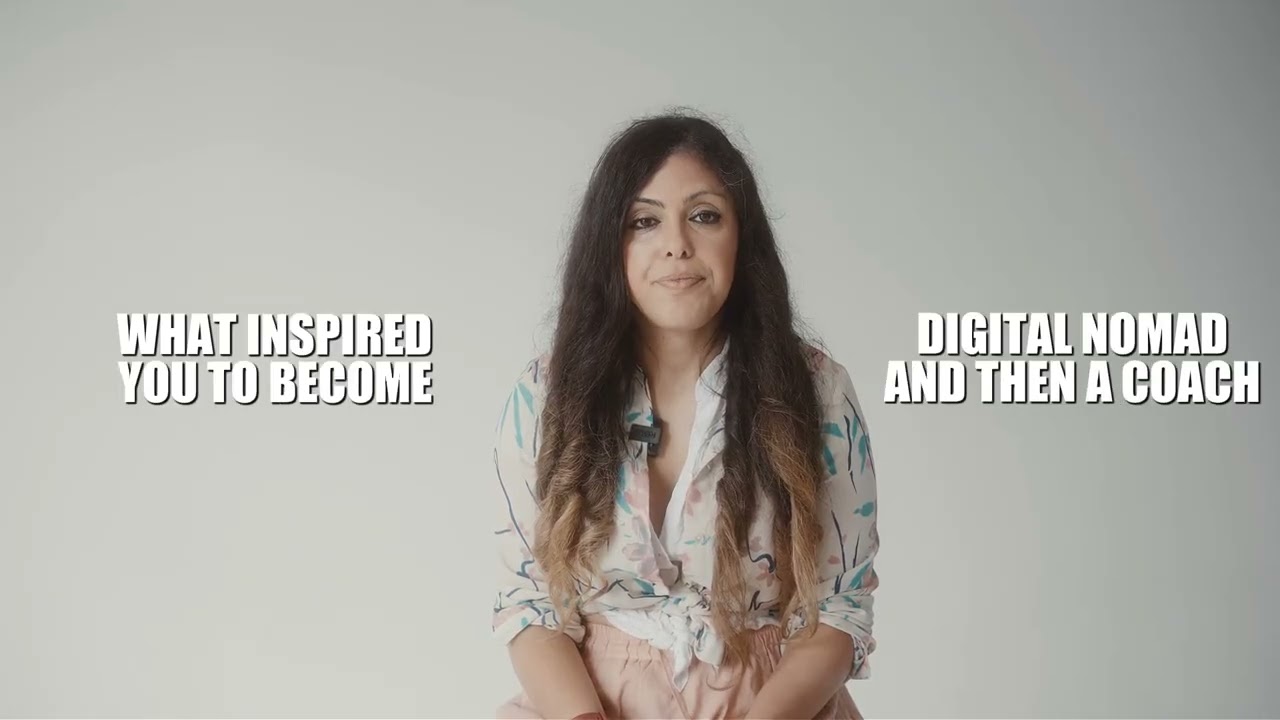

Dina and Gabriel, talk about remote work, travel, and creating freedom on your own terms.