Unlocking the Mind: The Unique Magic of NLP and Hypnosis with Joe Doc Vanore
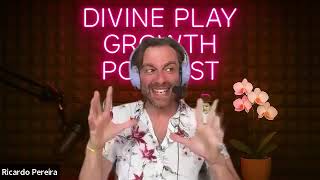
Joe Doc Vanore explains NLP and hypnosis as behavioral technologies that work faster than traditional therapy. He resolved a misophonia trigger in 20 minutes and cleared wedding anxiety by uncovering a childhood memory, contrasting NLP's pattern-based approach with conventional diagnosis-focused treatment.
Chapters
Hello, hello, hello, my delicious viewer. Ricardo Pereira, the Divine Play Guide, here, and welcome to Divine Play Growth Podcast, where in our episode today I'm bringing a dear friend. I would call this dear friend someone, an expert on certain topics. But I'm pretty sure that he would laugh, that he would laugh by me calling him an expert. He's a very fun and entertaining one for sure for me to have conversations with. He's been a good friend of mine for about a year, and I met him on a place that has got to do with what we're going to talk about today. So, as you may or not be aware of, Divine Play Growth through the Divine Play Guide is where we assist or guide other men in how they can expand their own personal growth, how they can connect more meaningfully or in healthier ways while also having greater impact in their own clients. Because these men, they may be just like you already, personal growth facilitators, therapists, mentors, or guides in some shapes or form. So for today, the surprise I bring you here is going to be around topics that have got to do with altered states of consciousness, but specifically in a behavioral technology called neurolinguistic programming and used with hypnosis. How that can be again used— what about this— to expand not only your personal growth, not only your impact, your communication, but also to do so in a way that feels overall, general, so much more comfortable, pleasurable, and fun. So without much further ado, I will start drum rolling here. I'm pretty sure that our guest is already ready to have some fun. And please, Mr. Joe Doc Fanore, bring up the light in the studio. Good to be here. Thank you, thank you, my friend. So now we already usually have fun in our conversations, but today we're going to an avenue that we already— it's been about time that we're doing this, right?
Right. Okay.
Yeah, because we, we had talked about this for a few times. We had the— we already knew that we had cool stuff, valuable stuff to bring in our conversations. So I'm so delighted to have you here, uh, on our podcast today. And let us know in a different way than you are used to, in a way that you would not usually do. Who is Joe?
Joe could be considered a mind hack specialist sometimes.
A mind hack specialist.
Maybe a mind hack aficionado. A mind hack aficionado. Always looking for the shortest and easiest and simplest way, like Occam's razor or something, to get results, to get effective, workable results with the minimum, with minimum effort and maximum result. That's just like bathing in the thought of that as a basic thought and then creating from that.
So tell me a little bit more. What makes it of you an aficionado? Because to me, when I hear the word, I hear fascinated, something along the terms. What makes you someone like that regarding the mind and what you just said?
Well, I'm thinking and making this up right now is that when I could visualize, create, conceptualize, put together mentally in the here and now something that is exciting and I know is going to stay in a positive vein. It just like makes me feel good that I could share this excitement that I have with somebody else. And it's like I meet somebody else, we get together, and we're both spiraling up. And if there's many people there, it's like, wow, me and the group, we're spiraling up. And also, I feel as though some of the things that I create in this here and now also, like, inspire others to use— well, they're— I don't want to say God-given. I don't want to get into a religious segue, but yeah, but you use whatever word.
I mean, they're just words. Yeah, they'll use them.
Okay. Yes, there's a— I like to put people in touch with the, uh, the gifts they have with inside themselves and to bring that out, express themselves in such a way that they're enjoying their life more and more every day, and they can't wait to get up and enjoy their life. And, and always with the— in the back of their mind, like a basic thought is I'm enjoying it now and it's great, but the best is yet to come. And I really—
just saying that, that makes me feel good. By the way, Joe's voice is one of the smoothest, slickest, and most pleasurable ones that I've had the privilege of hearing. So, okay, sometimes He may bring those lower tones because we're also going to talk about hypnosis today, NLP. That's where I initially met Joe, was at an educational experience, an adventure in learning with Dr. Richard Bandler, who is the co-creator of NLP. But before we get a little bit into NLP, hypnosis, and altered states. Now, circling back to the beautiful voice that I hear from Joe, but I also understand that there are certain traits in our voice that we can learn how to use it for creating the kind of positive and exciting changes that Joe was talking about. And then kind of circling all the way back to what Joe was saying, Like when I hear Joe, the excitement, I think that was the word you used because enthusiasm, it's kind of the similar word to me of excitement. I think the origin of the word enthusiasm, the Greek or something, the Latin origin is something about, you know, do you recall that? I just had a blank, but I usually know, but it's got to do with feeling, uh, being filled with God energy, something like that. I don't recall the exact— or— and, and isn't that fun in the sense that we are talking, yes, about personal growth here. We are also talking about specific ways of making growth and even impact the ones of us that like to be on these kinds of games with others. More fun, but we're also talking about stuff that is feeling more of the enthusiasm for life, more of the excitement. And I mean, these may be words used here and there without feeling the electrical cable with the substance. I love your smile. But when we're really connected to what we're saying because we're doing this kind of of work or practices, it feels so real and alive.
Yes, I agree with that. Enlivening. It's the infusion of God. I think that's what enthusiasm is. You feel it in your heart and you can't wait to express, to fully self-express and feel the aliveness that's available to us, the feeling of really being a human human being. Being— I actually love to use words on itself. It's like being present to the present.
Yeah. And we can do cool stuff with that as well when we're doing trances, right?
Yeah. It's like it may not mean stuff to the person that's critical and But the other than conscious knows exactly what I'm saying. If I say being present to the present, I'll just say I believe you.
Okay, so Joe is someone who, from what I recall in the beginning when I asked who's Joe, is someone who enjoys definitely inspiring others. And enjoys it doing it in this way that brings more of enthusiasm, more of excitement in a positive way is definitely part of the essence of what I heard. And I mean, life these days to me sometimes is so much simpler. I mean, there's all these techniques and let's please jump a little bit into some of the basics like what makes neurolinguistic programming different and powerful when compared, for instance, with the regular therapy or other kinds of coaching and stuff like that. But staying with that simplicity, I mean, these days when I speak of the wonder and the magic of life, And that is a real feeling that gets me out of bed and through the day and sometimes even having a harder time at falling asleep because of being that connected to the adventure, to the, to the mystery, to, to wanting to have more of the fun and to share that with others. Because I don't know about you, but sometimes to me it seems and feels such a waste that we can indeed experience what we are talking about here. Still sad that many people don't seem that engaged with life, but that's okay, that's part of the game, and we understand some of the rules or the reasons why that's it. So please, let's dive a little bit in your longer journey through learning neurolinguistic programming, hypnosis, altered states. Feel free to bring some cool stuff together with that so our viewers understand what's some of the powerful differences or main differences with these behavioral technologies that we're talking about in psychotherapy or like regular therapy and some other stuff along the lines for personal development, healing, or personal growth?
Okay, fair question. And I don't have a pat answer, but I created an analogy that I'd like to present, and I just thought of it right now. Let's take, say, for instance, math and algebra. Okay, with math, we have so-called specific numbers. There's a 1, a 2, a 3, and there you have multiplication, division, there's that and all the other things. When you look at algebra, you have an A, a B, a C, and a D. These aren't real numbers. These are abstracts. However, with these abstracts, We know we could do any kind of manipulation to them and get the results that we want. So rather than— I could say that I'm not really an authority, even though I've had a lot of exposure into the areas of behavioral therapists and things like that. They deal with a specific concrete issue that the person is dealing with. And that's more or less like, okay, this is the number. And they have the DSM-5 that has like hundreds of different of these specific things that they deal with. It could be, I forget some of them, but they have so many.
Yeah, if we're talking about the DSM, it keeps getting bigger and bigger from what I've heard.
Yes, yes. And they keep changing it too. All right, they deal with those specifics. It's like a doctor. You go in with this disease and they look at their book and say, okay, this medication takes care of it. And they use their DSM-5. They say, okay, this person has this behavior and all that, and they got this thing. They give them a label. They deal primarily with labels, the specific, like this is number 88, this is number 10, which— and they get results. I've seen where just one condition that I worked with, with a person, It said, okay, this person has to be desensitized over a 2-year period. And yeah, they get their results, but they have a specific methodology of doing it. Okay, so now when I get back to math, that's the math. When I get to the algebra, now we have— we deal with concepts. And when dealing with issues, you go into What are the thought processes? What are the emotions that lead to a certain behavior? And we could sense the responsibility that whatever the behavior is, is something that the person is creating. So we don't want to know why they're creating it. That belongs in the, uh, the mathematic part of it and not the algebra part of it. We want to know how they do it. We want to know conceptually what's going on. What are they feeling? What are they doing with this feeling? How are they thinking about it? How are they using their— I want to get into the way they sense and make thoughts with the vision. What are they seeing? What's visually happening? What are they saying? What are they repeating that somebody else said? That's the auditory part of it. And how is it showing up in their body? Are their faces grimacing? Are their posture getting violent or something like that?
Oh, I love where we're going with this. Keep going. I'm already having some pictures coming with where you started.
So it's bringing a lot of self-reflection. It's giving the person the control of what's happening so that they know what's happening. And once they get that Even I worked with a depressive one time, or person that wasn't feeling up to par on a regular basis and had been to many other therapists before. And we got to how he created his depressive feelings.
So again, the word how is coming up a few times.
Now once we got the how, He sensed how he was in control and creating it, and somehow it got dismantled. By the end of the session, he forgot what he came in and what he was depressing himself over.
So let me mirror a little bit of what I'm hearing to make sure that also someone who's not as practiced with neurolinguistic programming is getting. Well, at least let me do my best to assist with that.
Okay.
What I'm— pardon— what I'm hearing is using the analogy that you brought between mathematics and algebra, as in mathematics being the dealing with the numbers where we get to the specificity of it, including know which amounts are in the equations, but basically a greater focus or emphasis on the numbers themselves. And, and then I also heard the, the, the comparison of algebra as dealing with the concepts where you get the letters and they don't have to have the specific numbers of it, but still you get to see— I'm going to use a different word because I think that'll help those who are seeing or listening to us. So in the algebra view, which would be also neurolinguistic programming as the analogy, you get to see the shape, you get to see the container, how it's kind of being created, whatever the challenge may be. And when I was listening to you, it came to me along the lines of these analogies— geometry. So like, I'm picking up with what you brought in a very cool, surprising way. So the geometry is like, let's say that someone comes in and says they're feeling unmotivated. Let's say that they're saying— let's use a different avenue. Let's say they say they either procrastinate or they can't get enough discipline or determination or momentum in a way that creates more consistency. Because I know that I've been there where, like, I was just going and stopping, going and stopping, and it feels so good to be able to, in an enjoyable way, in a way that we get our resources connected to the fun and to the juice, including the pleasure, creating that ongoing momentum where we get to do stuff like this and even more. So in that situation, like, NLP would look at the shape of what the person was bringing. It would kind of look at it— the person using NLP would go, let's see if this person is bringing this up with these numbers, but I don't really care that much about the numbers. Let's see if it's bringing this up In a triangle, in a pyramid, in a circle, or an X something drawn? Is it something like that?
Yeah, I really appreciate how you evolved right into geometry because now, and you mentioned the word container.
Yes.
Now we're dealing with the the, what is it called, the—
So we had the shape and forms.
Now we have the context. The context.
Got it.
Yes. Now you brought context instead of content. And that's where we get the enlightenment. That's where once we learn the context and the shape of it, no matter what the issue is, and if it fits one of those shapes, we know exactly how it's getting resolved and it does get resolved. And that can be set up automatically once the awareness is shown to the person, once the concept gets identified.
Okay, so if I'm— again, if I'm hearing that correctly, in this case, the coach, the mentor, the master practitioner, whatever it is, by using NLP, they would kind of help the person know how they are doing, which is, again, I'll use a known term in NLP, the process. They would help the unconscious process become a conscious one, so then it also can be changed, because that's part of the fun of the game that we're talking about then. Because a lot of therapy, I know, because when I was going through that very dark period of my life, 10 years long with psychiatric medication and a lot of mental instability, something for a different conversation, but still I did a lot of regular therapy at that time and it just felt like nothing was moving in the right direction. And there's even one added risk I would bring as part of the, let's call it, more regular therapeutic process. I believe that without other resources or strategies, the regular therapeutic process can become endangering And I'll tell you how I experienced that, and that's with all respect for the initial and original positive impacts of regular therapeutical processes. And that is, I realized that I was becoming aware of stuff which was challenging about myself. Or even some past memories, but without the specific tools to be able to change them, and I did not find them that easily in the regular psychotherapeutic process, it felt like it was magnifying. And this reminds me of a quote, I'm not sure if it's Tony Robbins or something like that, that where your attention goes, energy flows. Like my attention was becoming magnified in why I was screwed. And still then, I felt more screwed and more in that downward spiral. So how does the behavioral technology— and I'm using these words because that's how I learned from Dr. Richard Bandler that it is. It's not a philosophy, it's not a therapeutical process. He calls it a behavioral technology, and I get, I think, some of the reasons. How then does NLP help making those changes faster and more powerful? Please give some specific examples. I feel like I'm speaking with AI and say, okay, AI, how does blah, blah, blah? Please give me 3 specific examples.
Oh yeah, go back to an experience that I did have with somebody. And, uh, this person came to me and, uh, she was about to get married, and she had a quirk that her fiancé just could not tolerate. And that was that every time that she went to a restaurant with him, that we go out for dinner, that every time there were— that she responded nervously and erratically to the utensils being used.
And that sounds like a philosophical issue.
Really upset her tremendously, and it would destroy the conversation. It was an unusual quirk. I had never really heard of that particular quirk, but she later told me it was called the misophonia. Okay, and again, with misophonia, it's desensitization over several year period and whatnot. Well, I didn't deal with the label. I dealt with, you have this behavior. We probed the behavior that she had. And how she constructed it. And we got into the how. And once we got into the how, she saw that she was responsible, and that she was creating it. Now this, I had earmarked her for an hour. We got this in about 20 minutes. So what else can we talk about? And I just happened to play the psychological game going into archaeology. And I says, what was the relationship with your mother like around the dinner table? She said, oh, yes, that's where it came from. I remember Richard Bandler talking of a person that had something similar that every time somebody chewed gum, she'd go into nervous spasms. Yeah. And it was related to her father holding her out on a Ferris wheel, chewing gum, and she's screaming her lungs out. And I said, wow, here's an example. So here's something that could take— could take the other therapist 2 years to resolve, and we could have done it in 20 minutes. I felt so good about that.
Of course.
Wow, this is directly from the NLP and Richard Bandler directly. It just bang, bang, bang. And anything that's learned there just sets up, and it's so easy. I tout myself on let's get it done now. There have been times when I have to spend 4.5 hours with a person, but I am of the mind of let's get results today. I don't want you back for 20 years.
Yeah, and that's something beautiful regarding the attitude. And I really learned that also from Dr. Bandler, which is the way I see it and look the way I see it and my eyes went— that's some basic stuff that we also learn through NLP is how, again, it's how you are accessing information because When then you get to understand again the how, the process, not necessarily the content, you get to change it more easily. And so the attitude again, NLP, the way I learned it, and I think you may have as well a lot, is we get, what's the word, injected with this— what am I gonna— what should I call it? Should I call it— let's keep it at attitude. An attitude of this is not something that should take long. Okay, if it didn't work now, what can I do differently? But this is not something to be taken as an ongoing journey like the Therapeutical Original Processes. Like, even when I think of the— what's the term where they usually put people in the couch laying down and not even looking at the therapist so that the therapist would influence? These days we already know even scientifically that that does not have a way of happening, not influencing. So we get to understand a little bit of how some of the origins of the therapeutical processes had some— what's the word— advancements, had some results, but some of them needed something more for us to be able to freaking evolve faster, get to the fun part faster. Yes. And so please do tell us, Joe, on that specific example, I mean, you don't have—
you, you—
I would love that you could get a, a, an example for someone who doesn't really know about NLP. What would be a kind of a strategy so they understand a bit of the difference? Because some therapeutical processes, you go Okay, so why do you think that happened? And how do you feel? And when the person answers— I know because I did this stuff, by the way. I was trying to help people, and for some time I had my heart in the right place, don't get me wrong. And but I would kind of go through the feelings as if something would necessarily come positive from there. And that did not necessarily happen. So what would be an example of a strategy of how you help that person so they understand a bit of the difference of how this works?
Well, a person that might come in and has, has difficulty in a career path or functioning the way they want to. The primary thing that I deal with when a person comes in is What's it? What's the problem that they're having now? And what's the problem? And how, how is that a problem? And I want to know, I want to get what the problem is. And then I would get, well, if you have a problem, what would you like to have instead? And we work going forward. We don't have to go back. Let's go forward. What do you want? Now, what stands between where you are now and what you want? And then we build a bridge from now to what the person wants. We go after exactly specifically what they want. We make them feel it. We make them sense it, make them visualize what they want. Use visual. What are they going to be hearing? What are they going to be feeling? Who's going to be there? It's like them having it already. It's almost like using manifesting technology. You get the person with their head forward, not looking into the rearview mirror. Only look into the rearview mirror to find an asset, to find a resource. If you look at any of your failures, they are not failures. They're all learning experiences, something that screwed up in the back in the past. You just look at that and say, aha, going that way screwed up. If I go this way, I'm going to get what I want. I don't want to go back because yes, you wind up focusing on where you're focused. That's where you go. So you wind up focusing on stuff that didn't, didn't ever materialize. So you just turn the head around and say, look forward, go after what you want. And we start on the journey today. And we change whatever thoughts have to be changed because we're always one thought away from being excitedly on the mark towards our target. One thought away. It's that simple. It's not 20 years of therapy.
So I want to start heading to wrapping up our episode of today. How does NLP or access to the unconscious mind with hypnosis and altered states— and we'll leave this for further exploration in other episodes, because this is a whole world of, for me, of wonder. How then do you get to make such a change in the thoughts? Because again, we, we know that it's not through the conscious mind for those things. So how, in a very simplified way, how does that work differently than regular therapy?
Number 1, worship the unknown, the unconscious. My theories and my research has brought me to is 9 million years old. So we have stuff happening in our thought processes when we close our eyes and go to sleep, and that unconscious does this, it does that. And as we're talking to a person, we get this quirky feeling. We got 9 million years of stuff that has implanted in our DNA and in our genes that we must deal— we don't have to really deal with it, but these are the things that affect us. We get affected by stuff that we're totally unconscious of. So with the hypnosis, it's getting to just relax all that stuff and don't even really concern yourself with it. When stuff pops up, okay, it's popping up. And with the background and basis in that is that you learn best and you function the best in silence and calmness. That is the biggest strength that people have. And that's natural. The body, the human organism here craves that silence and calm. It's there, it wants it to emerge. And that's all hypnosis is doing, is making life easier for you immediately, because you're working with the thought creating this good feeling, and you have good feelings, and you can't help but have good feelings. Ultimately, don't we all want to feel good?
I think a lot of us do want. Yeah, for sure. So whoever is listening through, we'll leave this bit of Pandora's box to explore on another episode in some shape or form. Those were part of the words and part of the differences between the behavioral technology of NLP and hypnosis, and the access to altered states. And picking up on Joe's words, whatever then happens by tapping into this unknown that is the marvelous of our unconscious mind, which is also from my awareness where most of this stuff is happening, and most of the change can happen so much faster through fun and more and more comfort and pleasure as well. We'll leave that for another exploration here. Go ahead, Joe. You wanna, you wanna say something? Yes.
I just wanna make as much as that 9 million years has its little quirks here and there to pop up. It also has the resources and all the answers too. So it's a— it's— yes, yes, it's— yes, it's a resource, it's an asset.
Yes. And that's the thing, it's about then through some of these very specific strategies that, from what I learned, this may sound weird from Dr. Bandler, some of these were created through mathematical functions, the strategy. So you get very specific strategies, and then we learn to adapt them, as always. Um, some of that wizardry— let's leave it like that— some of that wizardry we will keep exploring. Joe, um, what a pleasure. We went a few minutes beyond my initial idea, but I understand that we're getting warmed up. Um, what a gift, my friend, what a gift. Thank you for being here today on this conversation. I'm pretty sure that whoever heard us or saw us got also a lot of value and fun as well.
All right, I appreciate it. I enjoyed your encouragement and how you run things, and you really tapped into— you made me tap into what was most beneficial for all of us. Thank you.
Yes, oh, my pleasure. And, uh, Please, please do keep yourself curious close to me on this ride because it's only going to get more fun and better.
Okay, great, great.
All right, everybody, ciao ciao, um, and see you soon as well, brother.
Love you all. Thank you.
More from Ricardo
Gaining Clarity in Darkness: the Power of Failing and Movement in a Dark Night of the Soul #shorts
Why VS How To Questions in a Dark Night of the Soul - How To Change Your Thoughts (#shorts 1)
What Attracts Us In a Romantic Partnership - Podcast (episode 2, #shorts 2) #darknightofthesoul
Myth “Ego is bad” in a Dark Night of the Soul (DNOT month 1, #shorts 1) #darknightofthesoul
Healing Childhood Wounds in a Dark Night of the Soul - Podcast (episode 2, #shorts 2)
Healthy Relationships and the Dark Night of the Soul - Podcast (episode 2, #shorts 1)