In this bite‑sized lecture, Dominic Furniss (Climed project) explores how everyday human errors arise from common cognitive frailties and how proactive resilience strategies can mitigate them, especially in medical‑device contexts. He introduces the crowdsourced “Error Diary” (a UCL website where people tweet #errordiary) and illustrates that seemingly disparate mistakes – confusing grapes with olives, mis‑using CC vs BCC in email, a chemistry student mixing gum with explosives – share underlying psychological principles such as similarity‑based confusion and risk‑awareness failure. He then links these insights to his work on medical devices, citing real‑world confusions like sub‑cutaneous syringe drivers with similar colour‑coding and packaging warnings that still lead to dosage errors. The second half of the talk presents concrete resilience tactics: physical cues (umbrella‑by‑door, card‑holding), habit‑forming reminders (placing gift cards together, using bracelets for breast‑feeding), and organisational tricks (separating laundry for delicate items). Furniss introduces the “big R” (innovation of a new strategy) and “little r” (adoption by others) framework, illustrated with a personal anecdote about opening a Fray Bentos pie without spilling its contents, which later became a shared practice. He concludes that while human error is pervasive, systematic, user‑centred design and shared resilience repertoires can reduce risk, urging adoption of both big R and little r approaches in clinical settings. Acknowledgements are given to Professor Anne Blanford, Jonathan Back, and the PiMed project collaborators.
Chapters
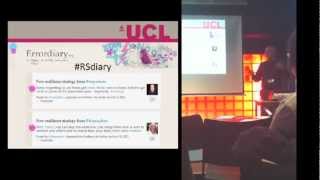
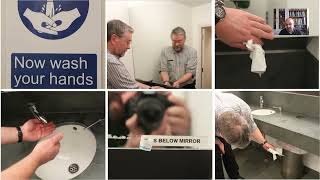
I'm on the Climed project, which is about making medical devices more user-friendly, and my role on the project is to go out to hospitals, talk to nurses, and watch them use these devices and see if things could be designed better to improve their performance, basically. So sticking with the comedy of human error, I thought I'd try and make a tenuous link with the original Shakespeare play, which apparently was one of his first plays. I only read up briefly about this yesterday, but the, but the, um, it's a story about the confusion between two twins that are leading very separate lives and they don't know of the other's existence. And this is an area that I'm going to return to a bit later on confusing things that look the same but in very different circumstances. So the two parts of my talk are basically going to be about the pervasiveness of human error and the frailties of our cognition, and then we're going to move on to resilience, so looking at those proactive strategies we might adopt to reduce the errors that we make. Like any good story, I'm going to try and weave in some drama, some humour, some tragedy, and even a bit of romance as well, just to keep your interest. And these pictures were all inspired by an error diary, which is something that we've been developing at UCL. It's a website where people can tweet, use social media to tweet their errors every day. And they used the hashtag #error diary, and we collate them, and that's publicly available if you'd like to have a look. But up in the top left-hand corner there, we've got someone entering a phone number, but they actually got the numbers mixed up. Someone pouring orange juice into their cereal rather than milk. The old red sock in the washing machine trick is That can be really damaging. And going to work with different shoes on. So hopefully you'd be able to relate to at least some of these things. One of the things that I really like about error diary is when you're collating all of these errors, you can start to analyze sort of the underlying psychological principles of these different errors and see that actually the same principle falls can underlie funny, frustrating, and even fatal errors. So it's a bit small, so I'll read these out. The funny one is a girl that confused grapes with olives when she was preparing her lunch, and she put them on her hummus. And the interesting thing about that one is that she said, oh, I knew this was going to happen. So she was aware of the risk, but she carried on doing it, and sure enough, she ended up making the mistake that she thought she might. One that was in the news, which was reported by someone, was that the police sent victims each other's email addresses. So basically, the person cut and pasted all the victims' emails into the CC field instead of the blind copy field. And so every victim could see every other one's email. And just as an aside, you might think a bit about this in terms of a technological intervention. Like, what circumstances are there where you want to share hundreds of emails in a CC list? Maybe the email program should have warned the person, you know, you might not want to do this, you want to put it in the blind copy field. But we haven't got that yet, and these mistakes continue to happen. And then the final one is the unfortunate case of a chemistry student that was chewing their gum and dipping it infrequently into a bowl of powder that had a sour taste to her gum. But she also had a bowl of explosives as well, and she dipped it into the bowl of explosives and actually blew part of her head off. So, I mean, these are the, these are the same underlying psychological principles, and we see that they can have funny, frustrating, but also very tragic consequences as well. So how does this relate to my day job, which is thinking about medical devices? Well, there are confusions in practice And getting a quote from the New Zealand Medicines and Medical Device Safety Authority, they actually point out that the subcutaneous syringe driver here, which is programmed to push an injection very slowly over an hour, can actually be confused and has been confused with the, um, its sister model, which is over 24 hours. Its system model is green instead of blue, and it's got a big 24 here instead of an hour. So you might think, you know, that's quite easily perceptually different, you know, how do people mix this up? But then if you think back to the olives and the grapes and the blind CC field and the CC field and the bubblegum, we know that people make these mistakes. Our own safety authority, the NPSA, National Patient Safety Authority, they've released guidance on medication error as well in the Rapid Response Report 19, if that might mean something to some people. But basically they send out alerts every now and again when there's a trend in accidents to alert people to them so they can take take corrective action. And that, that rapid response report was actually alerting people to the confusion between doing calculations between millimeters an hour and milliliters an hour, and also between prescriptions over 24 hours and hours. And they actually advised that this should be reduced so people don't make these sorts of mistakes. And this is a photo that I took recently as one of my studies, which is still ongoing. And it was basically in a small box on a crash trolley. So when nurses need to revive someone, this is part of their kit. And there's a warning label on one of the boxes which says that some drugs in this box have similar packaging. Well, is that enough? Like we've already seen with the the grapes and the olives and the bubble gum, you know, these things do happen. They've recognised the risk here and they've taken some initiative to warn people, but could more be done? So turning to the second part of my talk, so we've covered like the pervasiveness of human error and basically, you know, how it's important in our everyday lives, and to turn to resilience. Now resilience to human error is about the proactive strategies that we might develop and adopt to try and keep systems safe and to try and avoid making accidents. So if we go over some examples, does anyone leave anything by their front door before they go to leave work? Yeah, so typically this might be an umbrella, but you could imagine that we could adapt it to to be sort of work reports or something similar. And that's us recognising that cognitively we're quite frail in terms of remembering things when we're busy, and so we can adopt this strategy to prevent us from forgetting things. This is a photo of a chip and PIN card, and there was a study carried out by one of our MSc students who noticed people adopting various strategies to stop them forgetting their card. So when it's in use, they might stop multitasking and just concentrate on the transaction. They might hold on to the card or hold on to the machine or even leave their wallet out as a cue to remembering the card. And without this, we could imagine that without these strategies, people would forget their cards more often. So on the Error Diary website, if you go and have a look there, we've also got a resilience strategies section as well where people can report their resilience strategies that they use. This one offered by this user is about the threat of her forgetting to use her Boots Advantage card when she goes to Boots. So she actually was planning to put the Boots gift cards next to the advantage card so she remembered to use it. It's a bit like tripping over the umbrella as you go to work. You're placing something to remember in a procedure, and so it brings itself up at the right point. And also someone pointing out that you can get bracelets to remember what breasts you need to feed your baby from. So you don't forget. So presumably you swap these things around. I haven't got much experience of breastfeeding babies, but I've got it on fairly good authority that when you haven't been— you haven't slept for 2 days, you're awake at 4 in the morning changing nappies and things like this, it can be hard to know sort of whether you're coming or going, let alone what boob to use next. And here's another one as well, and it's one I thought of. I bought these jumpers, but they were cold wash jumpers, so it's a bit irritating, but I got them on— it was a good deal, so I thought I'll get them. But then you have to remember that you've got to treat them a bit differently to normal clothes, so rather than chucking them all in the same laundry basket, I thought I'd keep them. Plastic bag, and then on entry to the laundry basket, I could put them in the plastic bag to prevent them being forgotten and put in with the rest and ruined. And we've actually had someone comment on that one saying it's, you know, a good idea and they'll adopt it in the future. So to start developing the way we talk— think and talk about resilience I'd like to introduce some more concepts that we can use to do this. So coming up with the strategy, we like to think of as a big R. So that's that moment of innovation where you might come up with something. And then the little r is maybe someone else seeing you or reading about the strategy, and that's the little r. So they're taking your innovation and adopting it for their own practice. And what I'd like to do now is to introduce you to to go through this story, which is the romance part of my talk, and it's about the Fray Bentos Pie. And hopefully this will really color sort of like our conception of resilience, and you'll be able to think about this later on in the day. Has anyone come across the Fray Bentos Pie before? Yes, some. I've actually brought some in for those who want to look at them. So if you could pass that round. And there's— because when I've mentioned this before, people are always intrigued at how you get a pie in a tin. And so I thought I'd bring some along just to look at. But basically, this is a story back when I was at the University of Warwick doing my psychology degree. And we were settling in for a night, me and my girlfriend. For a romantic meal. It looked much like this, except no champagne and no candles and no Chianti either. So it was slightly different. But I was sat in the corner and she was preparing, starting to prepare the meal. And she took the first step and she took off the lid of the pie. And then she was ready for the second step But to access the second step, you might notice a problem as the pies are going around. The instructions are actually on the bottom. So as I've looked over, I've seen her go to raise the pie above her head, and I've shouted over and I was like, "No, no, no!" And I managed to stop her just in time. And I thought, there must be a better way of doing this. And I paused for a second, and then it hit me. I thought, well, rather than handle the now open pie, we've got some more in the cupboards. So he put the open pie down, went to the cupboards, and accessed the instructions from the back. And this saved the evening. I ended up with my dinner, and I didn't have a very angry girlfriend with pie all over her face. And we had a nice evening. So that was the big ask. That's the creation of the strategy reducing the risk. And this now performed part of our resilience repertoire. So that's the things that you can activate to use. So a week later, she did the same thing. She opened the top, she needed the instructions, but without any intervention from me and without battering an eyelid, she went straight to the cupboard and retrieved the instructions from there. So that was the little r, she had adopted one of the strategies that we had come up with. And so we can use these concepts to try and think, think about human error threats and resilience a bit more. When I've been in hospital, relating this back to my day job again, I've noticed that nurses often organise treatment for their work by counting things and assembling things on trays and trolleys. And we think this really helps their monitoring. And I'd like to relate this back to assembling IKEA furniture. And I recently assembled one of these with my girlfriend, and what we did before we started was to separate everything out, count everything, make sure we had everything. We actually had an extra bit, but we knew that from the start there. So if we got all the way to the end and had an extra bit, We might have been really quite worried about that. But thankfully that all went okay. It was probably the biggest test of our relationship so far, but you'd like to know that we got through it and managed to solve it fairly well. So just as a summary of the talk, we've covered that human error is pervasive and is a problem and something we need to think about. Quite well. But we don't just need to submit ourselves to human error helplessly. We can develop these resilient strategies and we can improve our resilience repertoire against these threats. And we can use the big R in terms of creating these strategies anew, or we can use the little r so other people can adopt them them. Just to acknowledge my supervisor, Professor Anne Blanford, and Jonathan Back, in having extensive discussions and work with these ideas, and also others on the PiMed project that have been involved as well. And that's it. Thank you.