In this ten‑minute recorded talk, Dominic Furniss (Human Reliability) introduces the "human factors trifecta" – the coordinated use of design, procedures, and training to improve human performance and reduce risk in safety‑critical socio‑technical systems. He briefly recounts his academic lineage with ChiMed, highlighting work on distributed cognition, resilience engineering, and medical device usability that underpins his current consultancy focus on oil, gas, chemical, and pharmaceutical sectors. Furniss then outlines the SHERPA methodology, a detailed step‑by‑step task analysis that links activity types to potential failure modes, consequences, likelihoods, and improvement ideas. A concrete pharmaceutical manufacturing case study illustrates the approach: a hierarchical task analysis identifies green (low), orange (medium), and red (high) risk steps in equipment preparation, bagging, and sterilisation. Specific interventions are proposed for each element of the trifecta – redesigning a screw‑in arm to prevent wrong orientation, correcting procedural images for stopper tubes, and formalising training/competency assessment to address inconsistent knowledge transfer. The combined changes would shift many red/orange risks to green, demonstrating the practical value of systematically applying SHERPA across design, procedures, and training. The talk concludes with an invitation to contact the speaker for further discussion.
Chapters
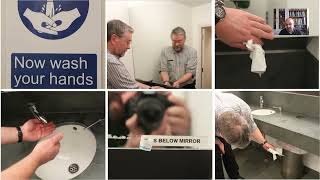
Hi everybody, it's a real privilege to be able to give this talk as part of Anne's Festdrift. I hope you're all having a good time and continue to have a good time there. Sorry I couldn't be there in person. I had intended to be there, but my wife's just tested positive for COVID. She's okay, but we couldn't get alternative childcare, hence doing this recording beforehand. I've only got 10 minutes, so I wanted to keep this fairly short and simple and wanted to talk to feature around this idea of what I'm calling the human factors trifecta. So thinking about how we balance and manipulate, intervene in design procedures and training to improve human performance and reduce risks. Currently work at a human factors consultancy called Human Reliability. A lot of the work we do sort of centers around this sort of area, looking at critical tasks for organizations like oil, gas, and chemical companies, trying to reduce the human factors risks and stopping things blowing up and nasty stuff being released into the environment and things like that. And so I'll proceed with the talk. Okay, so I was looking back at some old pictures and found some early ones from ChiMed. Onze van here and part of her extended academic family that I'm part of and many of you are part of as well. And we've got Anne in the middle, Michael Harrison, Rim Vidas, and Richard Young as well. I can't remember why they're wearing silly hats and signs, but I'm sure it was part of a productive afternoon of team building or something towards the beginning of ChiMed, which we had lots of fun on. But I go way back with Anne. Around 2003, I did the MSc at UCLIC She was teaching applied psychology, applied cognitive science at the time. Around that Christmas, we had a chat over a glass of wine and decided to do a project on distributed cognition in the London Ambulance Service control room. Then we, as a result of that, we came up with DICART. I then did a PhD with her, and over about working relationship of about 15 years. Did a couple of postdocs as well with Chimed and Eclipse. And so we looked at a fair amount across that period— distributed cognition, resilience engineering. We published some books on qualitative research in HCI and did a lot of work on research into usability of medical devices. And I suppose the thing that ties all of that together is improving the performance of socio-technical systems, and that theme is something that I continue with today. Also, while looking back at some of those early photos from KeyMed, I found some photos that I took of Harold in the gents toilets. My initial thought was, well, that's really weird. I do hope that Harold gave me consent for these, otherwise that would be quite an awkward situation. Taking pictures of someone in this sort of context. But then I remembered we actually took these photos as part of a digital stories exercise, and we were thinking about the difficulty that we found in the venue where we were of finding the paper towels, the hand towels to dry your hands after you wash them. So we've got a sign instructing you what to do, you wash your hands but you can't find them, then you find they're actually hidden on the underside of the mirror. Now there's a weakness in the design there, it's not obvious where they are, so they've put a little label, so some information in the environment to guide you where they were, but even that label had its weaknesses. You can see that you can't read it properly. We had trouble finding the bin, and you can imagine lots of people walking around with wet hands after leaving the the toilet. But that gets us thinking about this idea about how information is distributed in the world, and this resonates with our work on distributed cognition a little. So if there's deficiencies about how there's implicit signals in the world that shape your behaviour, then that will have to be supplemented and compensated in some way, perhaps by some rules or labels, something that you can read. And we have this idea that there's knowledge and information in the world. You can have it in your hand in terms of instructions or actually stuck on something, and you can have training where you actually put knowledge in your head. Now, if you're considering a walk-up and use system, generally you couldn't— you wouldn't really expect to have people read procedures and follow rules or do training you just want all of that emphasis just on the design. But where I work now with complex systems and professional systems, and particularly safety-critical systems, um, quite often you need the design working really well, you need the warnings and risks highlighted in the procedures, and you need people to be properly trained and competent to run these systems properly. And all of that working well together to reduce the likelihood, likelihood of something bad happening. Now, we predominantly follow a methodology called Sherpa, and there's a reference at the bottom there. This is, I think, really practical. I've been quite impressed with it since I've joined the company and used it. We do really detailed task analysis once we've selected what we want to look at. We do really detailed task analysis down step-by-step level. The activity type of those steps then trigger certain failure modes to consider. We can consider the consequences of them and the likelihood, look at the factors that might be driving them, and then think about improvements. And generally, we'll be thinking about the design about whether procedures can be improved and if there's a role for better competency management as well. Predominantly, we work in the oil, gas, and chemical sector, as I said, but I want to present a case study very briefly looking at a pharmaceutical manufacturing task. Now, this is a task where someone needs to prepare bits of equipment, clean them, dry them, bag them up, put them on the trolley, and they're then ready for a sterilization cabinet to be used in a sterile environment where people have to sort of walk in slow motion so they don't disturb the, the air. And they make things that might be injected into you and things, so they definitely don't want any contaminants in there. But you can do a hierarchical task analysis. This one just shows the, the top-level sub-goals. I've hidden all of the detail underneath, but you can go through each one and you can highlight where the risks are. So we've got very little or no risks with the greens, medium risks with the oranges, and then things that we're really concerned about that perhaps might have gone wrong before or might be more vulnerable to going wrong in red. And so thinking about these things in a bit more detail We've got things to do with procedures. So some items, 80% of the items are double bagged. These 3 items here at 4.2, 4.3, and 4.8 need to be triple bagged. So there's a stronger likelihood that you're going to forget at 4.8 that this should be triple bagged because it comes in a sequence of double bagging everything. So we could change the task so those triple bagged items are all put together at the front, for example. Um, these are called stopper tubes. It's really important to get these the right way around when you put them in the bag. Problem is the procedures which instruct you what to do have the image the wrong way around, so you can see that there's a bit of an error trap there. That's easy to fix. We can improve the procedures and the task and reduce the likelihood of those particular errors. On the design front, this bit of equipment on the left, on my left here, is an arm that you screw into a disc. Problem is you can screw it into either side, but one side is wrong and one side's right, correct. So why not just constrain the design so you can only screw it in the right way around? These are bowls, they come in different sizes. Trouble is that the markings to tell you what size are underneath the COVID once you cover it up, so that prevents critical checks. On the training front, we were talking to operators and they said that there's, uh, the training's not very consistent, it's all sort of passed down from one person to another. Following this methodology, we can actually elicit the knowledge and skill requirements for the individual task steps, make that training much more systematic. So the problem here is that people will tie the knot too tight and they will put things in the bag slightly wrong. So we can actually sign off people for being competent once they've got the right knowledge and skill requirements for doing these particular tasks. So we need to consider the design, the procedures, and the training together to try and reduce these errors, the chance of error. So this is the original sort of risk assessment, sort of the hot spots that we identified. If we introduced all of the training, all of the changes— some of the ones I haven't been able to cover in this presentation, then we can turn more of those reds and oranges into greens and make that risk profile of this critical task, you know, look, look a lot better. So just in summary, this is a novel application of the SHERPA methodology. We don't know of any other cases in pharma manufacturing that have been shared. We've identified a number of ways where we can improve this task in a very practical sense. Part of the value of this methodology, I think, is going into that detail and systematically going through and identifying these things. And we've got this focus on the human factors trifecta, so thinking about design and that implicit or explicit knowledge in the world. Procedures, more the, the knowledge and information in the hand or actually stuck on things in the world, and training, so that systematic approach to recognizing the knowledge and skills required for people to complete those task steps successfully. I hope you've liked that quick presentation. I'm not there for questions, and so direct any difficult ones to, um, Anne and Michael, etc. Um, if you've got any questions for me, then please reach out via email. And just to thank Julie as well for helping me with this work, and she's got lots of experience in pharma manufacturing. I've overrun a little bit, but hopefully, uh, that's gone down okay. Okay, thanks. Have a good day, everybody, and sorry I can't be there. Take care.