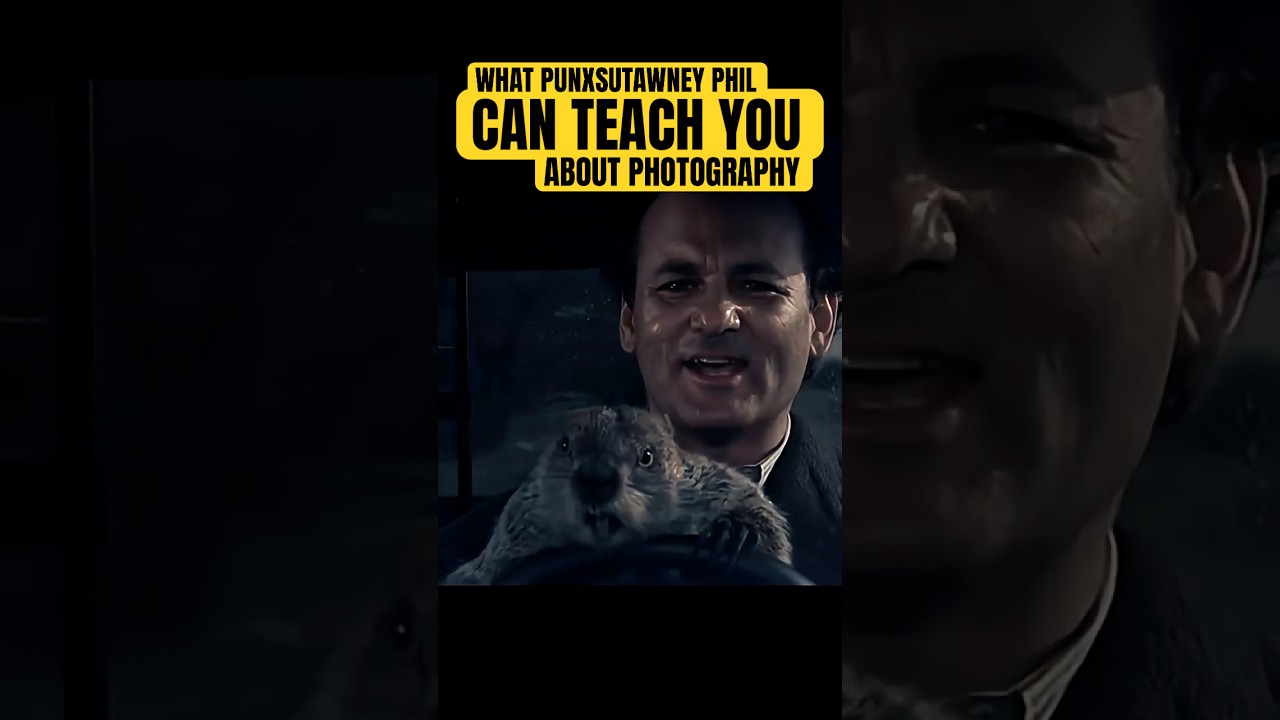
A photographer explains how to create contrast by managing light and shadow. Place your subject in bright light with a dark background, then underexpose the shot so the subject stays properly lit while everything else goes dark. This spotlights your subject and works around the camera's limited dynamic range.
Chapters
Do you think Punxsutawney Phil knows more about photography than you do?
That's not bad for a quadra-pin.
Well, he might not, but he does understand that you can't see your shadow if you don't have a bright enough light source. If you saw my recent video about how important contrast is to getting people to pay attention to your photos, then you might be wondering, how exactly do I control that contrast? A bright light source is absolutely critical to do so, but our cameras don't make it easy on us. In fact, our cameras are only able to capture a limited amount of detail between the brightest highlights and the darkest shadows. We call that our camera's dynamic range.
That is fantastic.
If the light is too bright, the camera is going to struggle with getting detail in those highlights and those shadows, and it's going to try its best to split the difference. If you take that to the extreme, your shadow details become absolute black and your highlight details become absolute white. So you've got that bright light source, but what do you do with it?
Come on, make it fun!
We need to make sure that our subject is in that bright light and that the background is much darker than them. Then we can underexpose the entire photo so that our subject is properly lit, but that the background is even darker than it may be to our own eyes. This will sort of spotlight our subject and make them much more interesting to look at. So if you're trying to learn more about photography, then make sure to like this video and follow me here where I'm offering lots of tips that will help you improve and become a better photographer. I'll see you next time. Bye-bye.