Agents of Change Project, Madrid 2017
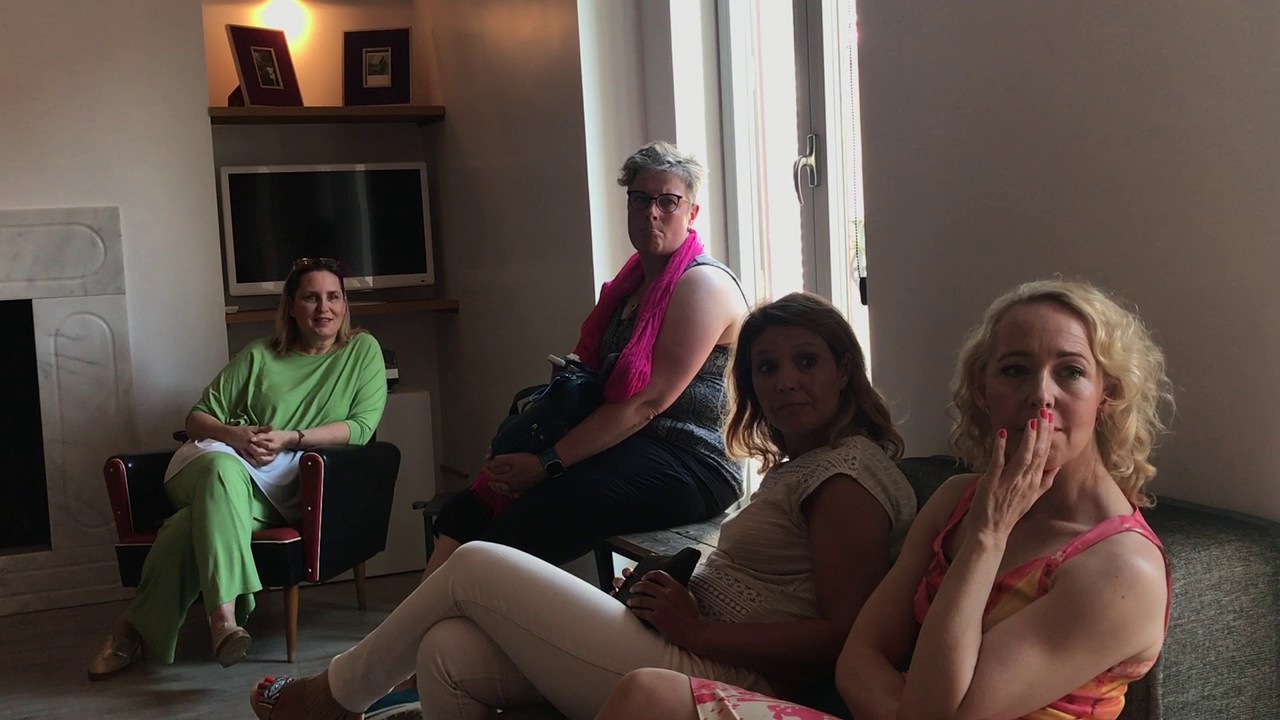
In this workshop segment, Donna Brown and participants discuss how to make charitable fundraising more effective and trustworthy. They share concrete examples of turning donations into tangible outcomes (e.g., a house, bicycle, school supplies) to motivate donors, and argue that presenting clear, measurable results is essential. The conversation references the book Leaving Microsoft to Change the World (about the charity Room to Read) to illustrate how a corporate‑style mindset—using signatures, specific monetary goals, and transparent reporting—can build donor confidence. Participants raise concerns about trust and due diligence, especially in contexts like Italy where charitable fraud is feared, and stress the need to research charities before promoting them. They explore how social‑media groups and online communities can be mobilized for fundraising, suggesting tactics such as donation‑per‑member pledges, voting on causes, and sharing impact stories. The discussion also touches on the “pay‑it‑forward” philosophy, emphasizing personal connection (looking donors in the eye) and the emotional power of happy‑ending narratives. Finally, they reflect on the broader potential of cross‑border networking among entrepreneurs to support each other’s causes, while warning against superficial corporate‑social‑responsibility displays that lack genuine impact.
Chapters
But it can change every time. Somebody else did something interesting. They they said, you know, when you join my Facebook group at the end of you know at the end of each year, I'll donate a dollar for each person who's in my Facebook group. So when when you join, you and you know bring your friends and know that we're raising money for for this cause or that cause or whatever. There's not a lot of lights here. Am I on?
It's my own.
Okay, she just told her.
Oh, that's right.
Yeah, yeah.
So there's a little bit of exercises there as to sort of, you know, thinking about how it is you want to act and what it is you're interested in. And then you can speak to— I think it's nice though to have a contact if you can start some sort of a conversation with who you gave money to, just because people love to know what happened. Like when you know when there was the big tsunami, a friend of ours, Chef Amagascol, she was running having these sort of you know in Milan with very much the ladies who lunch crowd. But they would have a lunch like this, and everybody would give $100 or $150 or $200. And in this room, we would have raised enough money for one family to have a home, a bicycle because that was the only means of transportation. radio because it's their only means of communication with the outside, like to know anything that's going on, and everything they needed, like, you know, beds and like just a basic kit, like not just a house with nothing in it but everything. So she would walk around and have these lunches, and it's so easy to do something like that. And then they're right, it doesn't take— it wouldn't have taken much for us to do something like that, right, had we had anything in mind. But, um, hi! Hi! Hey, come on in. Hi. Come on in. Oh, my goodness. So, you know, but it's like— what did you do? Nothing. Oh, okay. It's really, really nice to be able to, to see what, you know, what happens with, you know, with the money that we give. So when you can, uh, like you said, even, even from the Malala Foundation, they, they send a card. We've done this with it or done that with it. Or if you know that, you know, the Thistle— with this, what is it called— Thistle Foundation, that's, you know, $5,000 will get a woman out of You know, sort of sex trafficking, and then we'll set them up with this, this, this, this, and this. So when you've raised $5,000, you know what you've done. It's nice to have sort of like a result. Come on in.
Can I say something about this?
Yeah.
Because I read a book. I read about this specifically about telling people what you're doing with those money. I read the book. of Room to Read, like how to change— I Left Microsoft to Change the World. And in this book, he was a Microsoft top executive, so he started to run his business based on Microsoft kind of standards. And he wrote in the book that because in his signature he would write, donate $200— no, I don't remember the numbers— but, and he would open a new school. $300 and you will give a free school to one girl in the year. And he said that just because he was talking this corporate mindset, people would— that he would— his network was all people in banking and in corporate that could understand that kind of mindset. And they say, oh yeah, so I'd like to give one year of scholarship or 2 years of scholarship. Can I ask you a question? He was talking about the fact that charity usually, because they're run by people that don't have corporate mindset, so people say, okay, yeah, I give you this, and then what happens? And because people don't trust, so because it's really intangible. And for example, I come from Italy, so there's been so much things about people like you give and then disappear in the hands of who knows. So the fact that He was writing that the fact that in his signature he would write exactly the goals.
But just think of this is what we do, but this is what we're always taught. Sell the results. Sell, you know, the results.
Exactly.
Yeah. The benefits and not the features, right? So it's kind of the same thing. It's like, if you give this much, this is, you know, this is why we have the drive. Like, you'll get a home, they'll have a bicycle. And I still remember that. I also remember the amount of money that we had to raise. But what I really, what I remember first is The home, the bicycle, pots, pans, you know, beds. This is like just the basic of it. And there was a list of what was going to be in each house.
So it's really interesting. That's though because we're studying this persuasion and benefit and importance, but other people that are not so aware, or maybe you didn't become aware, like, you know. And that guy, when I read it like 10 years ago, like, I was like, oh my gosh, it's so true, you know. And so I wanted to bring it up because The book Room to Read. I don't know if you ever read that book, and to me it changed my life. I wrote everywhere, leave Kerry, that was the company I worked for, to change the world, you know, he left Microsoft. So, and it's an amazing book on how he used charity and his skill set to create this huge charity. So if you have time and you're interested, it's an amazing book.
Well, that'd be nice to get some good books too. I'll put that, I'll add that in.
Yeah, it changed my life, this book.
Oh, that's nice.
What's
the name
of the book? No, the book is Leaving Microsoft to Change the World, but the charity is Room to Read. That is exactly like what she supported, and it's an amazing story. It's like really an amazing story.
Who's the author?
Hey, Joan something. Joan Wood, probably.
I've worked for Microsoft.
Yeah, he left in the '90s though. Oh, in the '90s?
Okay, no, no, no.
He left, I think— no, no, no, no, sorry, just after the big— yeah, 2001 or 2002. And he was the top executive of Asia. He's an Asian— I don't know, but he's American, but he was from Asia. And he's based in San Francisco. I mean, when I read the book.
But it's really nice to be able to have a tangible goal. Everybody loves to do that, right? Yeah. And this one, you know, I would go to this big Christmas party and everybody was just over the top, over the top. Please don't bring presents, just donate, make a donation to this, to, you know, they had a house in Haiti and they wanted to support a local school and a local hospital and things like that. And I asked her, she of course she was Italian, so she got all touchy about it. It was just like, oh, so what did you do with it? She's oh because you want to know what I did with the money because exactly what she said because with all the earthquakes of your being anyway like million tens millions and million so much so much right just completely just so
yeah so
but so her reaction was I was like no I just really want to know like I just want to know the happy ending right everybody wants the happy ending we all want a happy ending. So, like, what happened to it? What did I change? Where did my money go? It's almost like completing the cycle, telling people what happened with the money, right? We saved 1 dog, 3 hamsters, and a goldfish. You know, we got schoolbooks for 5 kids, or whatever it is that we did. I think it's really nice to be able to say, every time we do this much, this is what happens, because it's easier also to imagine that, right? Giving money is kind of like an imp— because money itself is really just sort of this energy and it ends up in nothing that we don't get back. Like, for example, this school that my son went to, they were raising money for a roof in, I don't know, somewhere. Something somewhere. I don't even remember what it was. That's how vague it is. But I remember the house and everything that was in it. Yeah. And I said, but the kids aren't going to relate to that. Like, why don't you change the life of a bunch of other kids? They don't— I mean, everything needs doing, so why the roof? And why not adopt a bunch of kids or something like that? And so that another child knows that they're helping another child get an education. That to me is more relatable. They get a phase or something, but who cares? Like, oh, I bought this much of a roof. It's like, okay, like what kid cares about that? You know, I just think it's also interesting. So, you know, involving your— the people who follow you in some way. And asking them what they're interested in and, you know, voting on stuff and saying, you know, what is it— there's so many different ways to involve people, to make people feel involved in not only in the process but also in the result. Because people love happy— who doesn't like a happy ending? Like something that feels good and feels positive and know that you've changed something. It feels great.
But the only option— well, objection I have, because I did a thesis, I told you, on corporate social responsibility at university, and then I worked for a big multinational. And in this multinational, where we were treated like slaves, kind of, but then it would have in the financial report, there would be the part of corporate social responsibility. And so, and to me, sometimes I feel also online that some people do it just for showing off that they are doing it, and then I've been in a situation where personally I was there because the workshop or whatever was for charity or whatever, and then actually it didn't, you know. So I— because I'm Italian, so also my culture, you know, I have a bit of, like, my own personal experience. For example, I prefer to help people that I know, that, like, okay, this person is there begging for food, and I go and buy a piece of whatever, bread, like, because sometimes, like, my fear is that it's all just propaganda and those monies don't go there. Like Room to Read, I trust it because I read the book, you know, and so I feel part of the story. But then how do I know if I give money to the refugees? Yeah, right. I wish, but then now in Italy there is all the problem of the refugees that they get money and they're stolen, you know what I mean? Or whatever it is happening, you know? How do you treat that? How do you feel about that?
But I think that also really— okay, so we— I think on the one hand you have to do your best to be informed. Like, that's— there's no way around that. So if I'm going to take the responsibility of saying, let's all, you know, like, oh, we're all sitting in this room Let's raise money for something, okay? For whatever, something here. I have that responsibility. I have my own pers— I have my responsibility to you as a group. So just think of the group leaders, just think of Bushra. Her responsibility to— let's use her as an example. Her responsibility to the people that follow her is not a small thing. Because it will really, it will, um, what can I say? These things do come out. People do find out that you know that this whatever charity was sort of a hoax, or that even if even if let's say I don't want to talk about her. Let's talk about me because I don't want to get give anybody the wrong impression. But let's say I choose and I don't I don't choose well. Well, first of all, I have to I have to own up to that and say I didn't do my due diligence. So you need to do your due diligence for sure for sure, and to the best of your knowledge, which is why it's interesting and why so many people when it was very interesting when Bushra did that thing. I'll donate to your— I'll 10x your donations. Everybody chose a local charity. Nobody chose, or I think almost nobody, if we go back to that post, almost everybody was local. So they know that this one specific place, one specific hospice does amazing things. This shelter does amazing work. These people do amazing work with autistic kids. These people do amazing work for— The homeless. something else, whatever. It was really interesting that there were organizations that may be statewide or something like that, but there weren't that many that were national or international. It was very, very interesting because people chose very, very— things that they knew, right? That's really up to you. So if I'm— so if you're involving as a group leader, I can do my due diligence on the charities that I propose. If I'm going to open up the conversation to, let's say, okay, Everyone in this room, everybody choose something, you know, a donation. There are 12 people in the room, 12 months in a year, and every month we'll, you know, we'll do something that raises money and we'll donate to, you know, we'll pull a name out of the hat and that will be that. That person has to guarantee that that money is going to the right place. Like, the group leader, I think, would have to work with— let's say, I'm going to look at you because you're right beside me. You got your mask. No, I'm just teasing. I'm just kidding. But if one of us, if you, Martha, were going to suggest something to me, I would have to have some kind of a talk with you about who these people are and what is it, because you can't just say, okay, and all of a sudden you realize that the charity really is my vacation fund or something, right? I really need a vacation. It's like, I'm so worthy, I'm so worthy, right? But this is, it's kind of like common sense in a way, and you have to do your best. So, you have to start from the, you know, supposition that you're going to do your best, and the people that you follow, that you're going to give your money to, are doing the best. Like, do you want to give your money to, let's say, you know, Bushra as a group leader, or somebody else as a group leader? You will have been watching that person for a while. You're not just going to show up and all of a sudden fork over a bazillion dollars to somebody you don't know, right? And generally, because we're working on a large group effort, we're not even asking for large sums. Which doesn't mean that it's not important, it just means that, you know, I just think it's a lot of common sense. I mean, when you give money to a person on the street, so do you give money to every single beggar you see on the street, or do you try and figure out— Exactly. So not even every single one, even though you're spending it, whatever, we won't go into that. But we tend to even choose amongst the people who are begging who yes and who no. Kind of a weird thing, and it can be arbitrary, very arbitrary sometimes. It can just be a sensation that we have. But, and the charities, of course you're going to go into it a little bit further. That's so cute, those kids behind you. But that's something that, you know, you're going to have to answer to your, to the people who follow you with, you know, the money that they give, you give them, right? Or they give you, or whatever. I think it's kind of The other thing is if it's, you know, the corporate social responsibility thing, as I said, it's very distant. You know, if we're all asking, we're trying to come to, you know, well, we're gonna— Rebecca has this thing that she's been very involved in, she knows them very well, she speaks for them. We can also do research on these, on the charity, local charity, and sort of find out a little bit more about it. And then decide what we want to do about it. I think it really depends on It just seems it just seems common sense to me, but due diligence and common sense, to be honest. You know, and as you say, it's really nice when you when you know where exactly where it's going. Makes it feels different, doesn't it? Yeah. What is it they say? There's this expression: You should tell an expression that um, che tu si fa la carità guardando negli occhi, guardando la persona negli occhi. That you should be you know that charity you should look the person in. It's actually a Buddhist concept that you're supposed to actually look the person in the eye. So the closer you are to the person or, yeah, the situation that you're helping, the better it is. Like, to look at them and be like— and not just give money without looking. Like, to not throw money in the hat as you walk by or whatever, but to look at the person and give them money. It's a very different feeling. It's interesting.
Yeah, what you're saying is beautiful. This has a similar concept in Pay It Forward. I don't know if you have seen it.
Yes, yeah, yeah.
The movie. So just help 3 people and ask them to help in return. They should also help 3 more. And in the end you get a whole movement and you started it with nothing because all you gave is your time or something really small from yourself. And that's exactly when looking the other person in the eye and asking them, okay, so how can I help you move forward? How can I help you do something? And it's beautiful when it comes back. So sometimes you get a mail back one year later from that person and says, listen, you know, you gave me 30 minutes of your time and we just talked, and just the fact that you He believed in me, and he just said, "Hey, you can do it. Continue." And one year later, they achieved something, and they think about you, and they okay. I will I will pay back to that person now, and I will let them know that hey, what you paid forward now it's it brought its fruit. So. I think that it's looking in the eye of the other person. That's very important. You want to reverse it?
No, I think I got an answer from Reka here.
Scusa, vuoi rifarmi quello che stavi dicendo prima?
No, non importa.
Perché stavo spostando il robo.
No, non ti preoccupare, giusto.
Questa roba qua del guardare negli occhi non la vuoi pulita come inquadratura? No, devra ni inte. Kacha.
Thanks.
Sorry, camera stuff.
Technical stuff. Anyways, does anyone? That was really it. It was just really to share and get people to think, to start, you know, just to plan to see about what we can do and how we can look at our businesses differently and these communities that we, as I said, like we're amazing people. We've met so many cool people. It was really funny because young kids use social media very differently. My son is 21, my daughter is 25, but I told my— when I started telling my son about online communities and online business, he was like, that's creepy. Literally, that is so creepy. I said, no, it's amazing, you have no idea. Like, yeah, there's some— we all know of the bad stories, but there are also amazing people. Like, this room is— let's look at the people that came here just Just to work with somebody who comes from Pakistan and lives in Saudi, do you know what I mean? It's amazing, really. And when we realize that, that sort of networking that we can do in other ways as well, I think is super, and to be able to support each other. If somebody has something going, it's like, oh, you know, let's just start this little network of people who say, well, what are you working on, or what are you interested in, or would you mind telling people that I'm doing this, or that I'd love to— I'm doing this. Doing something to raise money for this, and just start sharing. I mean, I don't know, I really just wanted to get people to start thinking about things and how to use their business and their social media followings and their social media platforms and the bandwidth that we have, because we are listened to more than we think. And everybody says, oh, don't, you know, just keep publishing and just keep posting, people are listening. And if you don't know they're listening, right? And if that's true, then we can say a lot more than we're saying. And not just say, you know, three truths and a lie. So that's kind of it. Unless anybody has anything that they want to talk about their own business or ask any other questions, it's really thank you for coming. Thank you. Yeah. Thank you. So what are everybody's plans for this evening? Mark is tired.
And my my flight.
My stop. Skudde mi. Jeg stopper på en gang.
More from Donna





HEART OF BUSINESS: Business as the New Frontier of Personal and Spiritual Development