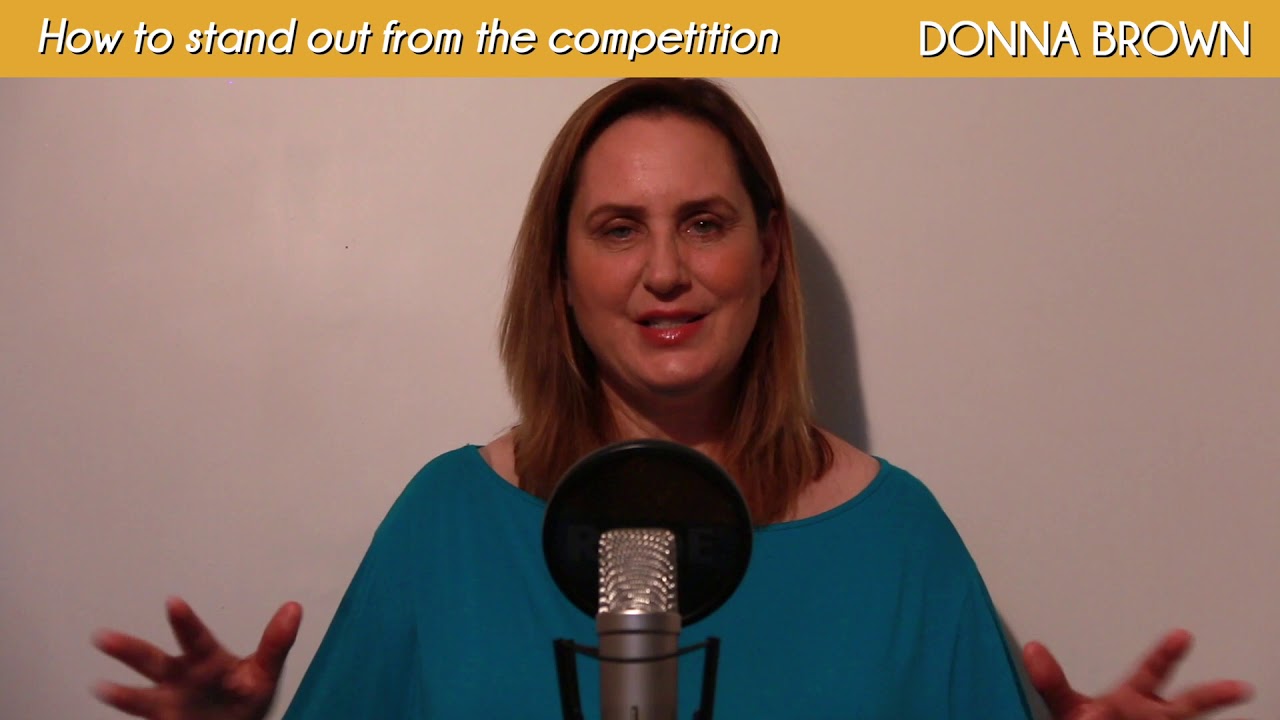
We are Agents of Change by Donna Brown. EPISODE 1: Bushra Azhar

In this inaugural episode of "We Are Agents of Change," host Donna Brown interviews Bushra Azhar, founder of thepersuasionrevolution.com and creator of the 60 Second Persuasion Facebook community. Bushra explains her background as a corporate social‑responsibility consultant and a persuasion strategist who teaches small businesses how to use psychology ethically to position offers so prospects say “yes.” She argues that modern business now requires a “license to operate” grounded in transparent values and measurable social impact. Bushra shares how she embeds charitable giving into her business model—10 % of all revenue is pledged to causes, a fact she now displays openly on her sales pages. This transparency has generated a ripple effect, prompting customers to purchase because of the charitable pledge and inspiring massive community‑driven fundraisers, such as raising $11,000 for Syrian refugees in 24 hours. The conversation then shifts to the dynamics of her Facebook group, where she maintains a “secret‑identity” profile to foster vulnerability, builds trust through clear donation processes, and combats online distrust. Bushra describes several experimental cause projects she is testing: supporting street children in South Asia, building a well for a religious‑minority village in Pakistan, and a stitching school for girls to create sustainable income. She also contemplates launching her own nonprofit. Throughout, she emphasizes that a community is not a marketplace; its primary purpose is shared values and collective impact. The interview closes with practical information on how listeners can find Bushra online.
Chapters
Hi everyone, it's Donna Brown. I'm an intuitive business mentor and strategist, and I have decided to interview a bunch of people that are so unique on social media with their businesses and with the way they communicate with their tribes about this untapped resource that we have, which is our social media followings, to really convert them into a much deeper sense of meaning of what community is and to leverage them for social change and for causes, shared causes, our own causes, and different ways that we can impact the world through our business and just through this very special thing called social media. And I couldn't have anybody else for my first interview than Bushra Zahra, who is such a special, wonderful bundle of energy, intelligence, insight, jokes, typing errors, and the biggest heart I've ever met. And if anybody— I can't believe there's anybody who doesn't know who she is, but for those very unlucky few, she is the queen of the art of persuasion. And what that— I guess it might be better if she were to explain, but basically she draws in an amazing crowd of people who want to learn how to communicate with their clients, their customers, in a way that is authentic and that really communicates the values of their business in a way that is absolutely non-icky in any way, shape, or form, and generally a lot of fun. So Bushra, tell us in your own words a little bit about who you are and your background. And yeah, just a little bit about your background.
Oh, thank you so much, Donna, for having me. And this is— it's such an absolute honor to be here. And oh my God, I'm like blown away by all your really nice words in your really nice way of saying it. I'm like, I should record this and share it with my husband. Play it for him.
It is recorded. It is recorded. You can just take a soundbite.
And then share it with him. He doesn't take me seriously. But I, my business is thepersuasionrevolution.com. I am a persuasion strategist. I teach business, small businesses, tiny businesses, how to use psychology of persuasion in their communications, in their websites, in their copy, in their positioning, in their client communications. Really, the idea is to not get into this whole idea of being pushy or chasing a sale or kind of twisting other people's arms. Instead, to understand what the other person wants and then basically position your offer or your communication or whatever you want to sell, position it in a way that makes her say yes. So, and I think the reason I am so drawn to the idea of persuasion, the reason I attract all such great people like you who are brilliant and generous and just absolutely filled with integrity. I think the reason I attract those people is because that's exactly what I wanted to do in my business. So apart from what we do in terms of how we give back to the community, which is, you know, which is obviously a strong element, and we're going to talk about this, but I think more importantly, what you stand for is what you attract. Really, that's what it boils down to. And if you don't really stand for anything, then you will attract all sorts of psychos, which I attract psychos too. I'm a psycho. This one is a psycho. But you're the right kind of psycho. You are the psycho who lives and dies by their principle, who have highest level of integrity and who just want to do the good, want to stand for good business. And really that's what matters most to me.
Thank you so much. That's a beautiful explanation. I would say it's really on point. And I also believe that the online world is changing and is going through another evolution. It's a next generation, I think, of way of doing business that is extremely values-based. I don't want to say that it wasn't in the past, but now it's become a condition, like a conditio sine qua non, like a condition without which you cannot move forward. And that is exactly how people will be attracted to you, by what your values are. Because as most people in the online space are individuals, and by bringing— you have to— you can't hide who, you know, a part of who you are. It's like hiding one of your arms or one of your legs or something. So I think it's really important for everybody to include this, include everything that they are in their businesses so that people can also really identify with you and say, you know, and correspond and share values. But I'd like to know a little bit about your past, your dark past. No, I'd like a little bit about your corporate past. I know you were involved in not really fundraising, but charitable activities. Can you tell me a little bit about that?
Yeah, it's funny because what you said about value-based businesses and about what license to operate and kind of we use the, the term we use in corporate is license to operate. And my background, okay, I did a gazillion things. I'm not gonna talk about those, but I'm gonna talk about just one which is most relevant to this conversation where I was, the last position that I had before I started my own business was I was working as a corporate social responsibility consultant. Now a corporate social responsibility consultant is someone who works with large corporations and they work with them and consult them on creating their own community programs that have a sustainable impact, right? That was my job. And I was working with some of the biggest Saudi companies. I'm based in Saudi Arabia. Some of the biggest Saudi companies on developing their own community service programs. And one of the things we realized early on is that, like you said, consumers are becoming more and more aware and just having a good product is not enough. It is not enough in corporate. It is not enough in online. Now people want more than that. People want to see your values. People want to see how you, what you stand for. People want to see how you give back really. So it is, it used to be a nice to have, but I think very quickly it is becoming, it is becoming a must have. It is becoming a license to operate. It was always this case in corporate, but now even in online business where there was a point where if you had a good product and you were a good teacher and you put on a good show, you could sell anything, right?
Yeah.
It's not the same anymore. Now people ask you, what do you stand for? And right now we're going through this kind of political change in the US, and a lot of my clients are in the US, and I can see people demanding your stance and your values on where you stand. Yes. And that's what it all boils down to. It's not just a political statement. Instead, it
says,
what do you stand for, right? How do you show up in the world? People are demanding this. It is not a nice to have anymore.
Exactly. Absolutely. I agree 1,000%, more than 1,000%. So, and how is that showing up in your own personal business? I know that, I know you do have a lot of things that you, that you work on and you have your own particular causes and special business practices. Would you mind sharing those with us?
So, so yeah. So it's, so this is something that I've always done. Now, in our religion, there is this mandatory charity percentage. So everyone who, Every year you need to give away 2.5% of your wealth. That's mandatory. You have to give it. And ever since I started earning, and when I started earning, I was earning $20 a month. That's what I was earning, $20 a month. And I still used to give away 10% of that, which was only $2. But, you know, in my country, it's still, you know, not substantial, but it's still something. So because I wanted to go beyond that 2.5%, right? I didn't want to just, because 2.5% is mandatory, right? So if you're giving something that's mandatory, it's like paying taxes and saying, oh, I'm doing good for the world. You're not. You're just doing what you're supposed to do. So I'd always given that. Now, and I continued doing that. I continued doing that when I started working, started making 6 figures as a consultant. So, but it was never a big amount, right? Even when I was making 6 figures, for example, it's not really a substantial life-impacting amount. You know, it's $10,000. It's not that big. But when I started my online business and I started making all this crazy amount of money and I was like, oh my God, this is just the amount of money that 10% represents is just mind-blowing to me. So, so in the beginning I didn't share it honestly, because that's something I've been doing for so long. I've been doing it for the last 18 years that it didn't even occur to me that that was something that is a part of my brand. It was just something that I did. I knew that this is what I had to do. And then I think one of my products, I actually put a very small footnote at the bottom after I was already in business for a year. I just put a small footnote at the bottom, 10% of all revenues, and it's not profits, it's revenues. 10% of all revenues from this program and all my programs goes to, you know, I just talked about this. And people were, there were people, I still remember someone emailed me and it just, I was blown away. She said, Bushra, I cannot afford your program, but I would still want to donate to your cause just because I'm— and I'm like, how bloody lucky am I? You know, it's, it's not only does that, um, does she, does she want to contribute to a cause that I believe in, but she's doing it regardless, despite the fact that she does not have the money to invest in the program, right? So, so that's when I realized that I don't need to hide about— I don't need to hide it. I don't need to pretend that's not a part of me, right? The reason, and I think the reason a lot of people are scared of sharing this, I think I think easily about 90% of the people I know, they do some sort of charity. But the reason they don't talk about it— some sort of charity, big or small— but the reason they don't talk about it is because they don't want to seem pretentious. They don't want to seem like, oh my God, Miss Goody Two Shoes. And that was my fear too. But what I realized was that the moment I started talking about it, it started kind of creating that ripple effect. And I will lie, and I don't want to lie, so I, I would be lying if I said that it did not impact my business. It did impact my business. There were people who wrote to me and said, we bought because of that PS. It was a PS at the end of the sales page. They said, I bought because of that PS. So absolutely, it impacted my business, but it also opened my eyes to the possibility of our influence. We really underplay the power of our influence. We think that our influence is just getting people to open their wallets and pay us, right? But our influence is so much more than that.
Yes.
And we just underplay it, and I was underplaying it, and I'm so glad that I stopped underplaying it. And now it's just unbelievable. Now the kind of things that I've seen in my community, the way people rally up, the way people will— we raised $11,000 for Syrian refugees in 24 hours. That was, to me, unbelievable. $11,000. And it may not be a massive amount, but you have to keep in mind This is just a group of what, 11,000 people at that point? And 11,000 people and we raised $11,000. And I remember, Donna, we had this conversation and you said that to me. You said, I know a group that has 30,000 members. If every member contributed a dollar, that would be $30,000. You said that to me. Yes. And, and I saw it manifest in my own group. We had 11,000 members. And we raised $11,000 in 24 hours. And that was just unbelievable to me.
That's fantastic. And your relationship with your community, I'd like to talk about that a little bit more because I'm part of that. I'm happy and a proud member of that community. And it's a— it is a very, very special place. People, they do, they do absolutely mirror your model and you're an amazing model. So it is joking, there is sharing, there's a lot of business done and a lot of advice given and a lot of support. But how do you see your— how do you see your relationship with this community developing over time as we're making this move, as you've made this move into more than one initiative? That's just one thing you've done. I know you did another, something else for your birthday where you matched people's donations to their own favorite charities. People went crazy over that. And I know that it was just a very, very special thing because people could choose their own their favorite charity and you would match, you actually 10x their donation. So I'm going to say that because you might not want to say that. But what was so special when you were saying it and you were telling people about it and announcing it, you were so excited. It's like, this is so, it's so wonderful to give. Why would I just do it by myself? I want to involve you. And I thought that was a really key moment. And I saw the ripple effect of that as well. A lot of money was donated that day and everybody was so excited and talking about their own, their own heart projects, the things close to them. And that was beautiful sharing. But also I saw people afterwards, somebody donates now $1 for every member of their— once a year, $1 for every member of their Facebook group. So as they have a smaller business than you do at this point in time. And so she's doing this once a year, but she once a year will, you know, and she's saying what she's donating it to. Somebody else was saying, I'm 31, you know, can you help me you know, with $31 towards a new well and things like that. So I've seen more and more people talk about it. And the reason I decided to have this series and start basically this movement is that I want people to aggregate around, to find a place to congregate because what you said is true. A lot of people are doing this. So it's not something necessarily new, but I think it's important to pull together. And culturally, we're all brought up to not talk about the charitable works we do, right? Because it does seem— You know, then you're doing it for ego. You're doing it for, look at me, I'm amazing sort of thing. Uh, but I think there also comes a time when it's like we can all pull together and make a really big difference. And yes, so I'd like to see how do you feel that your, your relationship with your community, how do you see that changing over time? Do you have any—
Oh, so that's interesting because my relationship is, it's a very weird, uh, dynamic to the point that I really do not want any of my real life people in that community. I probably— a few people probably slipped in while I was not looking, but I really don't want— because a lot of the things that I share in that group, we still have that. Like you said, we've been brought up to, you know, not be— not talk about these things, not to be— even something as simple as, you know, if you donate to a cause, I will 10x it. You know, even that to me is really hard for me to say because—
That's why I said it.
Yeah, it may seem to me, it may seem like, oh my God, she's saying she has so much money, but that's, that's not what it is, right? No. So, so I'm very protective of the community in the sense that I, I'm very careful of not, not bring my real-life people, a lot of my real-life people. There are still few in there because the way I treat them is I treat, I treat my Facebook group as my alternative Facebook profile, right? So I have a regular Facebook profile which has my friends and my family and my in-laws and my cousins and my students, students from when I was an assistant assistant professor. So, so that's my regular Facebook profile. And then I have a Facebook profile which is my secret identity where I can totally, completely be vulnerable. I can, I can share poop stories, you know, and I don't feel fear being judged. And I think when you do that, when you, when you share that raw side of you with your community, they also begin to see you in a more human form. So you break that celebrity shell, right? I'm not even a celebrity, but they break— you break that celebrity shell. And I think that really has worked has allowed me to come to, come to a point. But that said, that said, unfortunately there is so much, um, distrust online because people have been wronged multiple times, right?
Yes.
And there is so much distrust online that you still need— I still feel like I need to, I need to do something to make them trust me, which is a stupid thing, but I feel like I owe them that. And One of the fundraisers that we did about the Syrian refugees. So when I was posting it, I wanted to say, okay, so that was a course that I was selling for $2,500. And I said, if you donate $1,000 to the Syrian refugees, I'm gonna let you into that course. Now that's a course that's like a more than 50% discount.
Discount.
But I didn't tell them to buy the course from me. I said, go to the site, Donate there, forward me the receipt, and I will add you. And the reason I had to do that was because I know people who have, who have broken people's trust where they would say, oh, you know, send me the money and, you know, I will donate to a certain— 100% of the proceeds would go to a certain cause, and they don't do it. And I understand if I, no matter how much people love me, if I'm going to go on and tell them, you know, if you pay me $1,000, you know what they're gonna say? think— it's so sad, but they're gonna think, oh, her program is not selling, so she is discounting it. She doesn't want to say she's discounting it, so that's why she's— I know it. I know for a fact. Yeah. Because that, unfortunately, that's what internet has become. Not everyone is doing it, but in some ways, this is something that a lot of people, you know, they have, they've gone through this. So yeah, even though I feel like I have a great relationship, I still feel like I need to earn that trust.
Yeah, I also think it's really interesting. That was an amazing initiative, by the way. And I— and it's very special. And you do have people's trust. I think anybody in that— anybody who didn't trust you left the group really easily. Like, it's a very— it's a very personal— it's a very personal space, even though it's quite a large group. You've managed to keep it extremely personal. But I think there's something else that we always discount is that people love to share in the results. Like, I was always invited to this very sort of swanky cocktail party at Christmas. It was just amazing, an amazing event. And they asked for donations for this one thing that they were doing in Haiti. And I said, I would love to know what you do with it. And I was really sad because the person said, basically answered almost on the defensive, like, you don't think, you know, you want to see that we're not just taking your money. And it's like, well, First of all, I would never think that, or I wouldn't have given you the money in the first place. But if people really do want to share in the joy, I said, no, it's nice to know. It's lovely to see, like, that's the school, that's the house, that's the well. That's— it's— there is that. So I think that shaming people about, or this sort of— it's generally from religious communities, right? That this not talking, speaking about the good works that you do. And I do believe there's value in that as well, but I also believe there's value in in sharing and celebrating and owning the power that we have as individuals and as a collective to make real impact and seeing the result. It's like giving all the ingredients for a cake and never seeing the cake. It's like, so what did it look like? What did it look like? And it's great to share that. And I think we all have to make a little bit of a step forward in that sense. And that I think we can really start speaking about things openly and so that people are also encouraged because quite often You know, the climate now isn't the most positive, but we're being all called to stand up and stand up for what we believe in. You know, make the impact that we that whatever impact we can, big or small, because even if we do something very small, if we all do something small, it's still big. And by sharing the results, it's very empowering for people, I think, to to see the results. And it's also watching these social media communities. I just think this Facebook communities have so. so, so much potential. You see them rally around people who have personal disasters or personal problems that are very serious or celebrate huge successes and all the funny weird stuff that happens in between. But it's also great. It's also really, really encouraging to look outwards and to behave, to act as a group and, you know, stand together and be a proud member of that group. I'm proud to be a member of your group. Thank you. And I am.
Oh my God, thank you so much. That means a lot. But it's a very interesting point that you made. And I agree. I think the potential of Facebook groups to make an impact and become a tighter group is far more than the potential of a group to actually sell. A lot of people are positioning a group as, and I keep saying this, your group is not a marketplace. Your group is a community. It's not a marketplace, it's a community. It's not a marketplace, It's a community. And even though, yes, I allow people to sell in my group, I sell in my group, but that's a nice to— that's kind of nice added benefit. But at the end of the day, it's not a marketplace. And the potential of a community is far more when it comes to bringing a positive change into the world than just selling 2 extra courses, right? Yes. So it's funny because someone asked in my group today this question. She posted a question. She said, what would you like to learn about community building from the top business owners? Right? That was her question. And I responded to the question. I said, I think that's an oxymoron. We should not be learning community building from business owners. We should be learning community building from community builders. Right? Yes. The way you would build a community. And yes, I understand. I'm a business person. I understand. But When I built that community, I'm not a business owner. I do— I'm a business owner second, a community builder first. So when you say something like, allow me to teach you how to build a community, uh, because I have a successful business, that right there is an oxymoron. Yes.
Yes.
You probably know how to do it, but not because you're a good business owner. You know it because you're a great community builder. You're great at bringing people together. That's your strength in that particular area. Recognize that it's a great strength. So yeah. So I think communities are group of people rallying up or kind of collecting because they believe in certain values. Give them those values. They're not just there to buy from you. Nobody's stupid enough to join a community just so they can buy from you. No. So yeah.
I agree with that. The— I also think that if you just imagine all these communities, like your community is big enough for a decent-sized town if we were to all physically be in the same place, right? 13,000 people it is now, 13,000, 14,000 people. That's a town. That's big. It's a good-sized town. And if we think of— I know it's like Bushreville. I don't know that I want to see that, but still. But if just thinking of all these layers of interconnecting groups, if we realize that we're so much bigger, that all these collectives, like bigger or small, even like a group of 200 people and a group of 15,000 people and a group of 30,000 But all these groups of— these groups are all interconnected because the Facebook community is big, but it's also small in some ways, right? They all have their areas of interest. And within those areas of interest, you kind of get to know each other. And just thinking of the amount of impact worldwide, I just— that we could make just by doing some of those things is—
Absolutely. I agree. It's just mind-boggling.
I know. And we didn't really— and we haven't realized it. And as I said, this is why I'm going to push this a lot in everything that I do. And it came up more and more often in my business strategies and long-term visions for people that this was a big part of their own messaging. Somebody that I know, when it came up for her, she was supposed to really include the fact that she does a lot with, you know, for dogs and dog rescue as part of her, as part of how she presents herself online. Also because there are so many people who do sales, so many people who do coaching, so many people who do web design. So what else do they choose you from? I mean, the quality of your work, but they also choose you, and we all say they choose you for who you are. So that is also who you are. So I think that's really, yeah, it's now become really an integral part of people's business plans. And we're at the events, you know, in Dallas and Orlando also made me reflect a lot on the fact that this was something that really needs to be Given a voice and given a— yeah, just given a voice. And so that people really start talking about it in a very open fashion. I would love to know, what are your pet projects? What are the things that you most care about? And I can— I'm cheating because I know a couple of them, but I want everybody to know because they're very special and very beautiful things.
So, um, it's very interesting because I do have some pet projects, but But I like to think of, you know, just as we get all these crazy brilliant new ideas for our business, right, and we like to try new things, I like to also try new things with the causes that I support. So when I started, I was primarily focusing on street children. So our part of the world, which is primarily the one, the countries that I have contacts in is India, Pakistan, and Bangladesh, and both countries, all 3 countries have It's really unfortunate, but we have just way too many people, children on the streets, which means they live on the streets, they sleep on the streets, and they are exposed to just mind-numbing risks. So I was working, I still am working with a lot of NGOs who particularly work with street children, kind of taking them off the street, giving them a good education, meals, basically everything. So that was one thing that I was always been, and I feel strongly about it also because I have children. You know, we are always drawn to causes.
Of course.
So, um, but, but only recently I started looking into other areas, and one of those areas kind of stems from this idea of— I think the bigger umbrella is religious intolerance. I think that's really the bigger umbrella. Mm-hmm. So I, unfortunately, my country, religious intolerance is a real thing, right? Anyone who's not of your religion— and also I live in a country where it's a real thing— so anyone who's not of your religion does not deserve your support or your respect or your help or your any financial support. So that leaves a lot of religious minorities in extremely, extremely horrendous situations, especially if an earthquake hits, for example. So one of the things that I wanted now that I'm experimenting with is I have a project where I'm— we just actually, we just got it done and I announced it in the group. We built a well for people who are in an extremely rural part of Pakistan.
Hmm.
And the reason they have no water, they have no, no support, nothing in the middle of the desert is because no one wants to help them because they're not the same religion. So that's one of the things that I want to experiment with. And I think, I think you need to do it when you are of the religion who is discriminating against others, right? If I were a— if I'm a Muslim, but if I were a Christian and I would support Christians, it would not— it would be, it would be a normal thing to do. But if I'm a Muslim and I'm supporting Christians and Hindus, then that's give— that gives the right message to the people that yes, we need to do it for others. We're all humans. Come on, just shut up. So, so that's one of the things I'm experimenting with. I also realize and recognize the importance of doing work or charity or support that's sustainable. So even though charity is the easy way out, it's not really sustainable. So another project that I'm experimenting with is a stitching school where I'm bringing in girls who are, you know, who are just sitting at home because they are treated as their only kind of bred to be married off. So they're just sitting home waiting to be married off. And we basically bring them in, we give them stitching classes, because in Pakistan, India— also India, Pakistan, Bangladesh— most people don't wear ready-to-wear clothes. Yes. They wear stitched clothes. Bring in the fabric and they stitch it. So we bring them in, we teach them stitching, and once they're done, we basically give them their stitching machine. And then it becomes a constant source of income for them and their families because now they have that asset and they have the skill. So there are all these different projects that I'm experimenting with. But again, I am absolutely— I can't believe how lucky I am that I have so much money to spend on these things. When I say I have such a gift, it's so— it sounds so wrong when I say I have so much money. No. But the reality is that it's just— I can just experiment with 10 different causes and then kind of measure the impact, right? Like we do it in nonprofits, you do an impact assessment. So you can't just keep throwing money, you need to do an impact assessment, see how your money is helping people, and then choose to scale one of those causes. So these are the kind of different things that I'm experimenting with right now to see which one. I'm also looking at starting my own nonprofit because again, the, the kind of funds that I have right now, it makes sense to start my own nonprofit. So that's also something that I'm working on. So many different things. I'm testing waters and testing ideas just as we do for a business, right? We test out different And things. And that's exactly what I'm doing for my, for my causes.
They sound amazing. This, I would, as part of your group, I would love to, because you have a very unique and organized and structured way of analyzing a business and breaking things down and putting them together in a sort of very consumable and doable step-by-step form, which is why you have such a massive following and are able to sell to millions because we're just because the products are so incredible. It's beautiful to see the way you apply the same process to your charities, and I know that people would love that. I know. So I'm going to put out the request now as a community member for you, as you do these experiments, we would love to know that because I'm sure there are other people that maybe don't have the same amount of funds, but they would be able to choose— they would learn a different way of approaching things because quite often Again, we're afraid of just giving money to a charity where most of it goes to sustaining the charity itself rather than on the end— well, the people are not— I don't want to say the end users, but the people who are supposed to actually benefit from the activities. And a lot of individual things, if you don't have the personal wherewithal to follow a project yourself, you're not always sure that you're doing the right thing. So I think it would be wonderful if you could actually share that in the future as things become clear to you, like, you know, the way you share other things, the successes and the failures, And things like that. And I'm— it's very interesting what you said about religion. The latest, sort of, the latest book of the Dalai Lama is called Beyond Religion. And everywhere he goes— and so you're Muslim, I'm Buddhist— and but everywhere he goes, he, in all his public talks, this is what he talks about. And he made this really nice metaphor, and I love it a lot, and that religion is like tea. Not everybody needs tea, but ethics is like water. Nobody can live without water. And so, yeah, and I think this is a beautiful thing. And to bring these common values, right, back to something that is really very, very secular and everybody can help everybody, as you said, because we're all human beings. And that's just the bottom line. So that's lovely. And I think it's time to wrap this up because I know that you have another appointment and I wanted to thank you for Blessing us with your wisdom and your humor and that just all your amazing is wrapped up in one big bundle. If somebody wants to find you, where would, where would they want, where would they find you? Where would they hunt you out on the internet of things?
So 2 places. Thepersuasionrevolution.com is my home base. That's my website. But again, if you want to talk, if you want to talk causes and if you want to talk about positive change, then my community is a great place. It's called 60 Second Persuasion. It's on Facebook. It's free. Donna is a part, so I would love to have you join the community.
So thank you. Thank you, Bushra. And I'm so honored again. Thank you so much for sharing with you this, your vision and your unique way of being, doing business and making an impact in the world. Thank you again so much.
Such an honor. Such an honor. Thank you.
More from Donna





HEART OF BUSINESS: Business as the New Frontier of Personal and Spiritual Development