ED Explained The Hidden Damage Behind Losing an Erection

In this segment of her YouTube explainer, Dr. Anne Truong addresses a viewer’s question about how to differentiate erectile dysfunction (ED) caused by poor blood flow from that caused by reduced nitric oxide production, and how to recognize endothelial damage. She explains that the most common presentation of ED—being able to achieve an erection but losing it during penetration—reflects endothelial leakage. The endothelium, a thin lining inside blood vessels, can develop holes (damage) that allow blood or toxins to seep through, impairing proper erection physiology. Dr. Truong emphasizes that ED itself is a sign of existing endothelial damage rather than a separate condition.
Questions this video answers
Dr. Truong explains that the most common ED presentation—being able to get an erection but losing it during penetration—reflects endothelial leakage. The endothelium is a thin film inside blood vessels; damage creates holes that allow blood or toxins to seep through, indicating that ED itself signals existing endothelial damage rather than a separate cause.
Chapters
More from Anne




Refractory Period Research? Most of It Is on Rats #RefractoryPeriod #MensHealth #shorts


Slow Recovery Could Mean Early ED or Diabetes #ErectileDysfunction #MensHealth #shorts


Stress and Aging: 2 Causes of a Longer Refractory Period #RefractoryPeriod #MensHealth #shorts
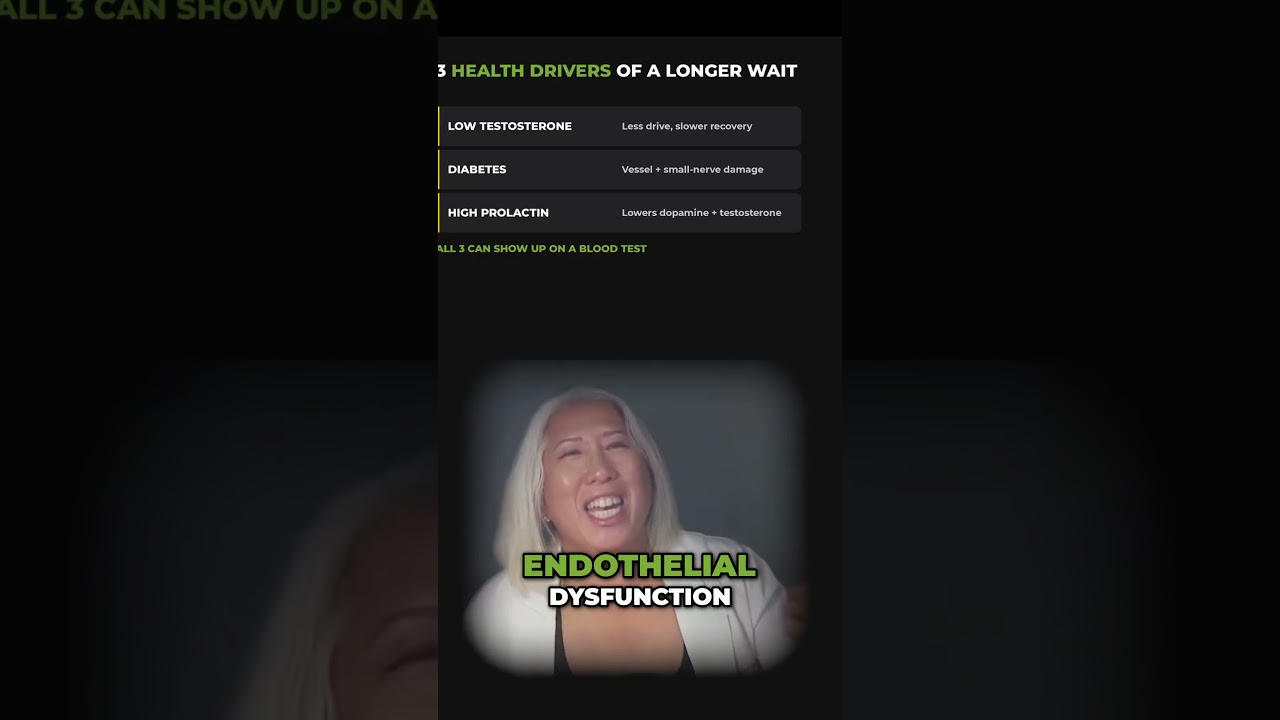
3 Health Conditions Behind a Long Refractory Period #LowTestosterone #MensHealth #shorts

Does the Refractory Period Get Longer With Age? #RefractoryPeriod #MensHealth #shorts