🆕happiness Health And Wealth ▶ How To Protect Your Health And Wealth From Economic Collapse 2020
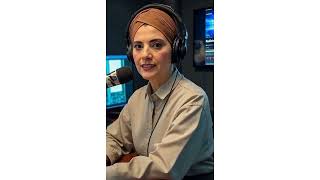
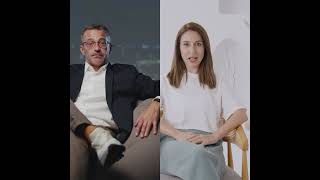
In the fifth episode of the "Second Chances" show, health‑entrepreneur Dr. Hanan Selim interviews mindset coach and "Smile Strategist" Rukaiya Khan. The conversation introduces the SMILE framework (Silence the mind, Manage attention, Identify intention, Let things go, Energize possibilities) as a practical tool for navigating uncertainty, trauma, and the post‑COVID world. Rukaiya shares her personal journey—including the loss of her father and the challenges of becoming a mother—illustrating how acceptance, gratitude, and self‑forgiveness can transform grief into growth. The hosts discuss the fluid nature of “normal,” the impact of perspective on biology (referencing chronic biodestructors and Dr. Bruce Lipton), and the importance of environmental stressors on health. Interactive exercises, such as a thumb‑clasp awareness drill and guided breathing/stretching, demonstrate how embodied practices can shift mindset. Throughout, both speakers emphasize curiosity, kindness to oneself, and the biochemical benefits of genuine smiling. The episode concludes with a quote from Dr. Selim’s book: “We cannot teach people anything; we can only help them discover it within themselves,” reinforcing the theme of self‑empowered discovery.
Chapters
Okay, so we're live. Let's bring in Hi everyone and welcome to the 5th episode of the Second Chances show where we're going to be featuring amazing stories, amazing individuals and professionals that will share their life, really, experience and also their knowledge and know-how and their wisdom in order to get us through these unprecedented times of change, if you will. And today we have a great speaker with us, Rukaiya Khan. She's leading from chaos to clarity, and boy, do we need that at this time, right? She's a smile strategist, a mindset coach, catalyzing shifts and breakthroughs to impact herself and the lives of others, which is amazing. Now we're going to be talking to her in just a minute, but I want to give you an introduction of why we're doing this show, why it's called Second Chances, and who am I. And I'm actually your host today for the fifth episode. My name is Dr. Hanan Selim, and I said, as I said, I will be chatting with, uh, with Rokhaya Khan. Um, she has been the editor of two magazines. Uh, she's done a lot of PR work for Dubai Shopping Festival. Summer Surprises and Global Village. And she has written a lot of scripts for TV shows and managed content for marketing communications department at Knowledge and Human Development Authority in Dubai. Now I'm your host today. My name is Dr. Hanan Selim. I'm a healthpreneur, CEO, and founder of Healology. I'm an award-winning author, international speaker recognized by the Global Health and Wellness Gurus as the most influential thought leader in health and wellness. I've actually been dubbed the pharmacist of the future because of that, and because I inspire, inform, and instruct a lot of the corporate leaders and healthcare professionals on how to prevent disease, protect your immunity, and potentially reverse chronic conditions like diabetes, cancer, through a natural and measurable turn turnkey system that I call Healology. Now, this will allow, you know, the people I work with are usually entrepreneurs or corporate executives that have a lot of stress and under pressure or demands, and in that way relieving what we call the chronic biodestructors from the system. It makes an impact, allows them to accelerate their career and leave a legacy. Now, the reason, as I mentioned a minute ago, I started Second Chances is actually, it's after my book, Second Chances, and it's all about giving people options and perhaps tools, some ideas and food for thought, if you will, to see what they can do to start taking control over their health, their wellbeing, and their life. And as we've seen, you know, sometimes when you're going on a road, you know, life, life happens. And we are sometimes left vulnerable to situations where it's under, not in our control. And we're giving you this show or this platform to start giving you some understanding and bringing awareness of how you could start now taking control over these situations that we find ourselves in. And this show also leverages and answers certain questions like, what is mental— what is the mental— is mental health the cornerstone of physical health? And how does mental health impact human happiness? Can preventative and lifestyle changes end global health issues? How can governments and companies communicate and contribute to promoting a healthy lifestyle as part of a social culture, and I believe that's very important during this epidemic. And what is the role in ensuring the safety of individuals by providing reliable information, especially on the stats and information on the COVID situation, and not necessarily leaving it up to the media and the news? And other things like modern diets, slimming techniques, sports, and dietary supplements. So as a matter of fact, there are now some guidelines that are being updated to create some behavioral change therapies, including social psychological theory, behavioral economics, in addition to developing other content that encourages individuals to positively contribute to community development. And this is really why I started Second Chance Show, is to give that leverage and information and the science and ideas an innovation perhaps that for anyone who may be listening as an individual, as a company, as an organization, or as the government. So without further ado, I want to introduce, um, Rukaiya Khan. She's a very good dear friend. We keep seeing each other at different conferences and events, and we clicked from day one. And that's why I've asked her to bring on what she calls the Smile Strategy, and we're going to be talking about that right now. Um, Rukaiya, you are with me. Hi, Rukaiya, how are you? Hello, hello, I'm good, good, good. So I, I hope I've done justice introducing you, but why don't you tell us about yourself and how you got into the Smile Strategy advocacy?
Super, thank you so much first for having me on board your show. It's a, it's a privilege honored to share the platform with you. And about my— oh, my introduction. Yes, you did do all this. It was, it was lovely. And how I got into the, to the SMILE strategy is through a TEDx talk. So in 2016, I did a TEDx talk called The Art of Possibility, and I just was in that space where, you know, people are constantly complaining about everything under the sun and not taking ownership. So I said, what is it that I can give people as a tool to get from feeling stuck to unstuck? So I said, you use acceptance and gratitude, and acceptance comes when you smile. So that's where the smile strategy was born.
Yes, I've actually been on a couple of platforms recently, and including, you know, some pharma companies as well as a global platforms for healthcare professionals. And the first thing I tell them is before you, you know, don't worry about the tie or the suit or the lab coat that you're wearing. The most important thing that you could wear for anyone to give them hope and focus and, you know, positive energy is wear that ever, you know, smile. That's like the most important thing. Amazing. Okay, so I want to, you know, talk to you as well about what— I mean, you have SMILE, S-M-I-L-E, as an acronym, and I want to understand what that stands for and how do you actually use this strategy with people.
Okay, so S stands for silence the mind, manage your attention, identify the intention, let things go, and energize the possibilities. So how you use this is, what are the things that you're thinking when you're in a stuck situation? When you have a challenge ahead of you, what are you thinking? What are the thoughts that come to your mind? So you silence it, you shift your focus to what are you paying attention to. You identify the intention behind what you're doing. Why is it important to— for you to get from point A to point B? And of course, let things go. I've done this presentation in different countries. It's not just in UAE, in India and Singapore, Egypt, UK, Kuwait. And each time, L is the one that has people rolling their eyes the most because When I say let things go, they say, but it's not my fault. So let things go and energize the possibilities. You know, you, you gather information, but until you put it into action, until you put energy into it, you're not going to get results. So that's the smart strategy.
Very nice. Okay, so a lot of people say we, we couldn't predict this COVID-19 epidemic. So do you believe that no matter how prepared you are, life will always surprise you and you need to stay curious? I like that last point, stay curious. What do you mean by staying curious?
Okay, so it's kind of like, yeah, I mean, as much as you prepare for an exam, for anything, sometimes a question pops out that you hadn't prepared for. You know, there can be incidences in your life that suddenly turn up out of the blue. There can be people who suddenly show up, but you weren't ready for them. You know, uh, you might have a loss, you might have a failure that you didn't expect because you had put in your 100%. So stay curious. So just stay curious of how that situation feels to you. Just stay curious of how that person vibes with you. And if it's a failure, just stay curious and stay gentle with yourself in terms of understanding where this could lead you. So yeah, that's what I'm, what I'm talking about.
So we have a similar story actually. You have lost your dad, uh, you were very close to your dad, uh, and I thought, you know, the, what you mentioned there, if lose someone special, that really has an impact on your life, and it did have on mine. As a matter of fact, it had such an impact that it actually affected my health and well-being. So what would you say to anyone who's gone through or going through some kind of trauma or unable to deal with a loss? Because a lot of people also could have lost their job They could have lost, you know, traveling and being with their loved ones, or they feel isolated. In this situation, when any kind of loss or traumatic event that you feel is unbearable, or you can't really understand or wrap your head around it, what would you suggest as you've been through it personally yourself?
Yeah, so 2017, when it was time for the children to leave the nest and go off to university, uh, the person that I am had decided, oh great, now they're leaving the nest, my role as a mother takes a backseat, and I can now focus on myself as the coach. I thought I would do this, I would do that, and then life surprised me. Just when I thought it was hard enough to deal with them leaving the nest, I also lost my father. And I went in this place of silence. It just felt very tedious to start to speak again, to start coaching and writing again. Um, but I think what pulled me through was just being more, more and more aware. I think the more I became honest, honest with what I'm feeling, the more I was able to come to a place of acceptance. I think most often we, we tend to brush our feelings aside or we tend to keep them away for another day. We tend to want to address them at a later time. So if you've had a loss or if you've— it's as you rightfully pointed out, travel, pay cuts, losing a job, loss of a relative, a loved one. All of these are things that come across as really, really difficult to come out of. Very often people around us rush us to be back in normal again. What, what I feel is it's, it's not important that you, you know, are normal again, because what is normal at the end of the day, right? What's normal for you might not be normal for them. To feel that grief, to feel that loss, is also normal. So just, just being gentle with yourself in this situation and just not feeling that pressure to be okay with it. It's okay to not be okay.
It's interesting when you say normal. So I did, like I mentioned, several trainings with corporations and pharma companies and the sort. And the first thing I started out with to get people involved and get their feedback, I kind of take like small polls at the beginning of the presentation. And I ask people always a simple question. So how do you feel after the COVID Is everything going to go back to normal? Is it, what is normal exactly? How do you feel things will be after we move, hopefully sooner than later behind us this epidemic? I mean, a lot of across the world, we're starting to get into opening businesses businesses again, and we're trying as much to, you know, slowly but surely get back to quote unquote normal. So what do you feel about this post-COVID situation? Do you think we will ever get back to normal, or do you feel, you know, it's something that it's— this normal is going to be something totally different than we're used to and might as well be prepared and having the mindset for it and be ready.
Okay, so I'm going to answer your question with a question. So what's the guarantee that what we were living pre-COVID days was normal? I mean, there was— there was— yeah, it's a perception, right? And there was so much of everything. There was this overflow of deadlines, overflow of traffic, overflow of expectations from life. And then suddenly that life said stop. Because the only way to come outside of a flow or a loop is to break it, right? And you can break it only by, by something else that you introduce into it. So life suddenly introduced for us a lot of silence. Life suddenly introduced for us panic, a lot of uncertainty. It incorporated new ways of thinking which probably were there pre-existing but we— but they never got into our attention because we were so busy with everything else. So, and now to answer your question, uh, would we ever go back to another level of normal? And I say another level of normal because that's how I see it. We're always evolving, and I think, uh, it's, it's, it's, as you said, a matter of perspective. So to see the possibility that it will be another level of normal is also perspective.
Absolutely, it is perspective. And I believe actually perspective affects biology, as Dr. Bruce Lipton always says, right? So it takes a different kind of perception, if we lead into that, to make the world that we see it as, right? On many levels, right? So with respect to people and yourself, what is it that people need to understand and how, how they can start, you know, realizing that this, this tool of seeing through a different lens or perception can be implemented? Like, how would you start giving advice to people seeing this as perhaps something positive rather than something negative. Because some people, they, with the COVID they say, oh, well, look at the rise in divorces, for example, that's happening because of COVID And other people are like, no, no, this COVID gave me a whole new perspective or a whole, you know, it stopped the engine for a while to stop and listen. Perhaps that I haven't seen or I haven't looked at or realized, and now taking that information and making certain changes in one's life. So you see, people, you know, have different perspectives. So how do we now, you know, take this time to end on analyzing and seeing the new perception moving forward and using it for, for for our life, not against our life.
Okay, great question there. So when you say there's been a rise in marriages, and I know you're quoting it as an example, but you have one view which says there has been a rise in divorces, and then there's the other person who says, you know, there is people who have bettered their relationship. So my question is, between this and that, is COVID the reason Or is it the strength of the relationship itself, which probably couldn't withstand being in each other's space for so much? Yeah. So what are certain things that you need to address within yourself to empower yourself, you know, to kind of build that muscle of resilience? So it's easier to push the blame on the situation. But how about taking ownership? How about taking ownership and just realizing that while it's, it's a phase, you're, you're more powerful than that because your mind is more powerful than that. And it's also a lot to do with the kind of questions you've been asking. So as you said that I've been, I've been writing for the last 20 years, um, it wouldn't have happened if I wouldn't have asked asked myself that powerful question: is there more to life than diapers and dishes?
Yes.
Had I not asked that question, I wouldn't have found my answer. Had I just been standing at the sink that day like every other day and just, just wondering, why is my life like this? I would have found more evidence for why my life was like that, and that's how it would have grown. It's just about asking the right questions so that you find the answers.
Right. So a lot of the things that I've been talking about in my book, Second Chances, as well as, you know, bringing something called Healology to people is one important tool to use to leverage or improve one's health and well-being. And what I mean by well-being includes health. And I mean, I'm talking includes mental health and physical health and spiritual health and financial health and all that, right? Because, you know, but we have to get to the root cause and we have to heal it, right? So you come from that perspective of healing, right? So how would you, you know, because a lot of— we are our worst critic, right? I always say, yeah, if people would criticize us, it's more— it's easier than us criticizing ourself. And we never forgive ourselves, we never let go, and we just, you know, if we slip and fall like you say, then we analyze and we never like— and we— it's like a replay event happening. And how could I do this? Or how could that happen? Or how foolish? Or I'm not good enough, I'm not smart. You know, those— all that chatter and that self-talk, right? Right. So that always requires healing.
Right?
Yes. Would you say to people who need to heal that and forgive themselves and get over it and move on and not getting stuck in the past or in mistakes or in the fall of quote-unquote failure? Because I don't believe failure. I believe in feedback always, even in this and health and everything, right? So how do people now start analyzing and seeing that they need to heal and move and take away what the feedback was to improve the situation.
Okay, uh, so when I say, uh, feedback, like I said, I've done this several places, and L, which is let things go, is the one that everybody rolls their eyes at because it's so tough, right, to forgive. And the question to ask here is, who are you forgiving? People think that forgiving the other person, but I think first you need to forgive yourself for holding on to that for way too long. Yeah, for holding on to a hurt, for letting that hurt affect you enough to, you know, to throw you off guard, to have you out of balance in terms of your state, in terms of your mindset, in terms of what you're feeding yourself, uh, in, in the head. So silencing the mind And, and no, I'm not taking you back to the smile because that's what I love doing when somebody gets stuck on L. I say, okay, let's start over. You've been a bad student, let's start over with silence. And having said that, we're so great at taking criticism from people. How, how often or how easily do we take appreciation? When somebody compliments you, you always have that space of being courteous and humble and saying, no, no, it's all right. So we kind of push away appreciation and then we absolutely hold on to the criticism. So what's that going to do to you on the inside? Just imagine you have that experiment by Dr. Emoto, and I'm sure you know, right, where thoughts and the effect of thoughts on water, and our body is made up of water. Imagine the effect it's having on our body, our thoughts. So when you're, when you're giving something attention, when you're saying positive affirmations to it, the way the water changes and crystallizes so beautifully. And when you are speaking negatively, or when you're ignoring something, how the water changes, how the crystals are so ugly and deformed. And, you know, so imagine what is— what you're doing to your body by doing that.
Yes, and actually I give that example on something that I've done a long time research on called chronic biodestructors. So there are certain environmental stressors, like you mentioned, that are, you know, whether it be negative talk or negative self-talk or the environment that's affecting you on your biology. And the accumulation of that would actually lead to what we call chronic conditions or chronic diseases that we're now facing across the world. And now adding on to that depression, anxiety, and fear that also fuels that process even faster, as you know. So how, how can we reduce those environmental challenges that— and look out for them and see them besides, you know, coming to analyze and, and go through a fine-tooth comb to see what's in our environment every single day. So what is your perspective on that? How can we now, you know, change that vibration or that environmental stressors in our life to bring it down to reduction? I mean, I've had other guests on and they were very big on, you know, spirituality. They were very big on, um, meditation and yoga. What would be your tool in a situation like that.
Okay, so what I'm going to ask you to do right now is to clasp your hands. Okay, would you do that? So just notice which thumb is on top of the other.
Uh, the right one.
The right one. For me, it's the left. So now when I say 1, 2, 3, we do this again, but make sure that you put the other one on top of the other. And, and if there are people watching, just, just play along with us. So I'm going to ask you to 1, 2, 3, clasp. So it just has to be a very conscious effort that the other one, you're doing the flip.
Yeah. So I did it.
1, 2, 3.
It's very difficult. It's difficult, right?
So it's by default, it's the one that's supposed to fit in. So if you did it a couple of times, you'll get the hang of it.
Of course, yeah.
The message I'm driving home is when you're getting into a new way of looking at things, it's going to be difficult, right? So where is— for, for example, simple thing is I have to very attentively pay attention to how I'm feeling in this moment, you know, just be very aware of, of my feelings, be respectful of those feelings. To do that, you have to be aware of which thumb goes where. And initially it might not happen. It might happen that your habit is going to take over. Yeah, but just, just being allowing of that and learning that it takes time to learn something. So whether it's meditation, as you said, your previous guests spoke of meditation, they spoke of, uh, heat, anything, breathing exercises. Breathwork is a big thing now. So all of this will take time. Just being gentle, just being kind to yourself, because as you said, we are our biggest critics. So if that should go wrong, we tend to beat ourselves down over it. So instead of doing that, what if we gave ourselves that room awareness and acceptance to just be, give ourselves some breathing space.
And I have to ask you about the TEDx talk. That was a unique experience. So what would you— I mean, I remember you did this exercise and I think, you know, this is where it all started with the smile strategy that you've created. Okay, so tell us about that. Experience and how you felt on stage and, you know, what was the, you know, stepping off that stage, how did you feel and did you feel more empowered? What was the exact, you know, accomplishment for this one?
Yeah. Thank you for asking. When I decided to do a TEDx talk, the intention was purely to help people take ownership. The Art of Possibility is why I titled it that. And the exercise I did was a lot to do with mindset. So I started off with the students. I was at a school when I did the TEDx talk. So I started off with the audience doing an exercise of stretching and then plugged in my message and then we stretched one more time as evidence because the human mind likes evidence. So if I could see those people in the room see how far they can stretch, by just thinking about it. For me, that was achievement. The TEDx talk for me was a stretch because that was the first ever structured talk I had ever done on a stage. Not many people do first structured talk as a TEDx talk. Yeah, but I think I was just so driven by that message, um, and so full of gratitude that the first word I said when I came up on stage was alhamdulillah. I didn't say hello, I didn't say good morning, I just said alhamdulillah because every pore in my body was so, so grateful to be there. So yeah, just, just, uh, letting myself be in that moment. Did it empower me? It definitely did. It gave me my smile, but I didn't realize of that empowerment until I needed to put it into use. You know, I was invited by a university to do a session, a guest lecture on stress management and happiness. And, and I was wondering, why is this invitation coming on? And then I remembered, hey, I have a SMILE strategy. Perhaps that's why. So I went in and I did that. That was the first time I'd ever presented at a university, and I It just felt very empowering. Between the TEDx talk and that first lecture I did, I didn't feel much. But coming out of that room with all those students who were latched on to every word I said, for me felt like, wow, this is powerful, and I want to continue doing that. That was my empowering moment. And then after— that was in October, and soon after that passed, and I had to take some time. But when I got invited by the Happiness Carnival, the Prime Minister's Office Ministry of Happiness, they invited me to speak at the Happiness Carnival. And again, I started speaking about the SMILE strategy, and I saw people's faces light up. I felt, wow, you know, if something as tiny as this can make people feel looking forward to the challenges they had and feel empowered, then who gives me the right to hold it back? And I started to serve and do more of the smile work.
Amazing. So, I mean, I feel that a lot of people are ready to just, you know, throw in the towel because, you know, I've seen people start saying, oh, you know, it's the It's the Day of Judgment, it's our destiny, you know, Khalas, get ready, you know, this is the end and things like that. Because, you know, to get into a negative state or negative mindset is, I must admit, sometimes it's easier than, and giving up is easier than to, you know, fight or see the positive, especially if the situation, you know, is getting worse and worse by the day and you're trying to protect protect yourself and your family and things like that. So what do you say to those people who are just ready to throw in the towel? I mean, you know, unfortunately, we've been hearing a lot of suicides and a lot of people getting into depression and giving up on themselves, and they have families also. So how can we encourage people to, you know, start, you know, not throwing in the towel and start, you know, focusing on what they can do to improve their situation. I mean, we started out with, you know, the traumatic mindset of losing a job or losing a loved one. Now, you know, what do you say to people who are ready to throw in the towel and give up on— Not yet.
Just, just not yet. Just a little bit more. Because imagine what can happen. What What would happen if they didn't throw in the towel? And imagine what would not happen if they threw, threw in the towel. Two different questions. But ask yourself that. What would happen if you threw in the towel? What would not happen if you threw in the towel? Let me also add another question there. What would happen if you did not throw in the towel? And what would not happen if you did not throw the towel in? So 4 questions there to ask yourself. What is it that needs to happen? I mean, yes, it feels overwhelming. It definitely feels overwhelming. I'm not gonna tell you that no, I mean, it's, it's difficult. I understand it's difficult. Yeah, but not yet, not yet. We were, we were, uh, we were driving to the Petras in, in Ajman, and, uh, the roadway, you know, it— there was this one point in the road that I so distinctly remember. I couldn't see the road ahead. I could just see, um, the, the village below because we were at a very high point. I could just see the village below And I knew that the GPS told me that there's road ahead, but I really couldn't see much, maybe because of the angle, or I don't know what it was. It was just about trusting the GPS and keep driving forward. So this, I feel, is that moment where we're at that high point of uncertainty and chaos and panic, but all you have to do is just trust the GPS, trust that there's a road ahead, and keep going. Could be a rumbled road, But there's a road ahead.
Yes. So we have some lovely messages here from— I'm sorry if I don't pronounce your name. Can you help me?
Prabhakaran Gopalan.
Thank you. He's saying hello. Yoko as well, she's saying hello. And also she's saying it's okay not to be okay. Absolutely. Totally agree with that. I love that, Yogel. And if you want to do something, stop doing, be in the silence, yes, find the right moment to start doing again.
Not yet.
Not yet, exactly. And just like any other relationship we have, it's always evolving, life goes on. Absolutely. So, you know, we have lovely people here that are very positive. So happy you guys have joined us today. I appreciate your feedback. So if anyone at any time has any questions, I will post it here that Rukaiya or myself can answer for you while we have the last few minutes of the show. But in the meanwhile, I do have— I always end with a quote from my book. And I was just speaking to Rukaiya right before we got on the show, and I said it's actually, you know, by chance that I picked up the quote from my book. And it was— it's really interesting that it's right on, you know, the quote really ends well on the end of the show. So here's one. Okay. And it's actually— look, look what it's entitled.
It says, The New Way.
Oh wow, isn't that interesting? Wow. So here's the quote: we cannot teach people anything, we can only help them discover it within themselves.
Whoa, beautiful. Wow. So is— isn't that what we do as coaches? So yeah, exactly, we open windows of awareness, you know, where people are stuck in this closed room where they're not letting light in. They're just stuck in their story. And then you— we as coaches walk in and we open the door and let some possibilities in. So I think, yeah, because you have the resources within you, you have the thoughts within you, the negative as well as the positive. It's just a matter of understanding which ones you're paying attention to and which ones you would like to work for you. So yes, you can't teach anybody anything, actually. Exactly.
So that kind of, you know, I love the way, you know, it just by chance and it happens and it is and the quotes are equal to, you know, just wrap everything up for us. So we do have a couple more minutes. And do you have any last words? Rukaiya, before we start answering questions? Because we have one question here that we're going to answer in just a second.
I think what I really, really would like to lay emphasis on and use this platform to really lay emphasis on is the fact that people need to be kind to themselves, not to be rushed up, and to be very in the now, you know, because now is normal. It could— it's the normal of today. It's, it's the— it doesn't have— you don't have to compare the normalcy to anything, actually. Just be— know that the normal of now is the normal you have, is the only normal you'll ever have. So appreciate the moment, be in gratitude, and, uh, not yet. Just keep swimming, as Dory would say it.
That's my favorite movie, by the way, Finding Nemo.
Dory is my favorite.
Yeah, she's— she is. I love Ellen too, to begin with. She's a wonderful comedian. So it's actually Yoko here. She had actually— she was having a comment. We can't help the people, but help people to discover within. Absolutely, absolutely. So I guess that aligns with the quote that we were talking about earlier. So anybody else have any questions right now? I have one question actually for Rokhaya. Can you just show them the exercise? It was— I really loved it the way you did it on the TEDx. And it was just showing to people how once you stretch, I mean, it has on many levels on understanding of how once you stretch yourself, how further you can go. And people will understand that in a minute once you show us the exercise.
Well, I would love to, but again, like I said, it would have had to have comparison, right? So we don't essentially have a comparison. So how do we do this then?
So what you did was in the exercise, you said people should put out their finger. But there are two ways of doing it. So see how far they can go, right? And then they make sure they notice the spot, right? Where they were able to stretch. And then what you showed is that people could take a deep breath and imagine seeing themselves and telling their mind, go further, go further, go further, go further. And with their mind, Let's, let's—
you've stretched just now, so I invite you to close your eyes. You've stretched just now, and everybody's seen how far you've gone. So now, Dr. Hanan, would you please close your eyes?
Okay.
And as you close your eyes, I'd like for you to just hush out everything that's going on in your mind. And if you see or feel any thoughts coming, just, just let the pass by as if there were clouds in the sky. And as you do that, take a deep breath and notice at the many possibilities that lie ahead of you. Identify the intention that you have in doing what you're doing with this amazing show, the many lives that you're touching, the pharmacist of the future that you are. Let go of anything that holds you back. There's nothing that's ever gonna stop you. You're like arms of a clock moving from 6 to 7 to 8 to 9, all the way around. And with your eyes closed, I want you to bring your hand forward and once again stretch. Keep your eyes closed. And stretch just one more time and open your eyes to see where you're at.
Oh my God, they can't even see it on the screen because I've stretched. Yes, I've, I've broken my own, uh, my boundaries, right? Yes.
So it's just a matter of mindset. Thank you for doing that.
Absolutely, absolutely. And that's the driving message that I wanted everybody to take away with, is that if you really put your mind to it and, and really bring your focus and your energy on that which you do want and not what you don't want, you will be able to accomplish anything, anything whatsoever, whether it be a goal, finding a new job, improving your health, your well-being. Everything is within your hands, within your capabilities. It's just a matter of getting around and focusing on that, what you would— you do want, because it takes the same amount of energy to focus on the negative and as much as the positive. So instead of focusing on the negative that's going to pull you back, look at the positive that's going to move you forward. Amazing.
And if nothing else works, just smile, because when you're smiling, you end up short-circuiting your mind, and your mind says, hey, it doesn't look so nice, but she's smiling. So what is it that I can look for, evidence of why she's smiling? And there you find it.
Yes. And actually, on a scientific level, smiling, you know, really changes the chemicals you're producing. Because, you know, your physicality, your inside will follow your outside, right? And the same thing with your mind, your mind, your body will follow your mind. And if it's positive, it will release happy chemicals, positive chemicals. And if it's negative, it will do the same. So everything aligns with the mind. And that's why we talk about the mind-brain organ. Connection in philology. It's been an absolute pleasure, Rukaiya. Thank you so much for joining me today, and I appreciate your time. I love your smile. Keep smiling, and the world will smile back.
Absolutely. Thank you so much, Dr. Hanan, once again, and thank you everybody for watching in. And thanks, keep smiling.
Let me just see if there's one more question Yes, Yoko. Oh, beautiful. Thank you, Yoko. You've been such a positive inspiration. Yes, smile can change lives. Thank you so much.
Thank you. She's my coach.
Oh, is she? Oh, wonderful.
Amazing person.
Wow. I have another comment. Yes, Prasad. Hey, Prasad, being in the present is a challenge with all distractions, self-created as well as from the environment. Yes. And we just said focus on that which you can control and not which you cannot control, and that will make a huge stepping stone in the right direction. Absolutely. Exactly.
All right.
Wow, we're just right on time. Perfect timing, I must say. And I want to end with thanking you and thanking everyone who joined us today. Tune in next week as we bring you a lot of the, you know, experts and wisdom from fellow professionals and to give you the winning advantage, if we can say, on how to come out of this COVID-19 and any epidemic or any challenge that you might be experience in your life. You could follow us on drhananselim.com. We're always posting the videos and recordings as well, and we also giving a lot of the free talks as well as webinars and, and, you know, support any way we can. So please follow us and tune in for next time every Wednesday at 3:30. Thanks again, Rukaiya. Signing off.
Thank you so much. Thank you.
Take care.
Bye, everyone.
More from Dr.


Deep Shifting Method to Clear Problems For Paying Clients (and for yourself) in 10 Mins or less!