In this keynote, Dr. Hanan Selim, a former chemotherapy pharmacist turned patient and wellness entrepreneur, shares her personal health crisis and the insights that led her to question why modern medicine, despite its advanced technology, fails to cure chronic diseases like cancer, diabetes, and cardiovascular conditions. She argues that disease is driven more by the environment—physical, emotional, and psychological—than by DNA, citing epigenetics as evidence that lifestyle and stressors shape health outcomes. Dr. Selim introduces the concept of “chronic biodestructors,” silent daily stressors that act as root causes of disease, and explains how the body possesses an innate healing program often dismissed as the placebo effect. She advocates for a mind‑brain‑organ connection approach, emphasizing prevention, self‑empowerment, and holistic interventions over reliance on surgery and pharmaceuticals. Throughout, she critiques the conventional medical model for focusing on symptoms and diagnostic tools rather than addressing underlying environmental triggers, urging the audience to recognize and harness their internal resources to achieve lasting health and financial prosperity.
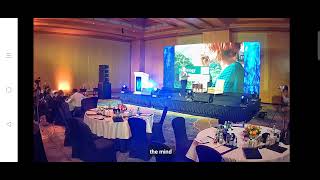
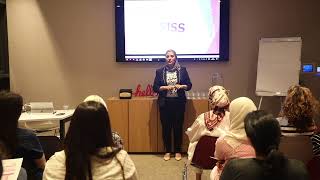
Our next keynote speaker is an amazing lady, Dr. Hanan Selim. She's the CEO and founder of Philology Wellness, and her topic is about mental health for financial prosperity. Let's give her a very big round of applause as she comes up.
I can't stand it when recording comes so short. You won't see me. Thank you. My name is Dr. Hanan Selim. I'm an international speaker, award-winning author, recognized by Global Gurus as one of the most influential thought leaders in health and happiness. I shared the stage with people like Tony Robbins, the DA, these nichols, everybody from, you know, the secret chamber. But it didn't start out that way. So I used to work as a chemotherapy pharmacist and on something called P&T Committee, Pharmaceuticals and Therapeutics Committee. So we were the, uh, group of healthcare professionals that people went to for hard-to- diagnosed, hard-to-treat conditions like cancer, diabetes, and the sort. We would see patients who were doing so well come through the hospital, and we had to look at them and say, you have gangrene because of diabetes, and we need to cut your toe off. Or the cancer patient who was doing so well, giving them the great news that you have 6 months to a year to live. So it was always in the back of my mind, why is it we have the best technology, the best research in the heart of New York, the best team, but we're not able to have the best cure or solution for our patients? Well, fast forward a few years later, and that The main question popped up when I was on the cancer floor, when Nurse Mercy walked in, black hair, deep blue eyes, and she looked at me and she said, Dr. Hanan, I never thought I'd see you on this side of the bed. What she meant by that is I was then the patient. I had pre-cancer, pre-cancer cells in my ovaries. I had endometriosis. I was 30 kg heavier than I am today. And as she looked down to me, prepping me to go into the operating room, she said, it's gonna be okay, you're gonna do just fine. And I remember those words because I used to look at my patients and I said the same words, it's gonna be okay, you're gonna be just fine. And handed me the paper to sign on the dotted line to go into surgery. I signed on the dotted line, but it was to sign myself out. And to answer that question of why is it that we cannot give the cure to cancer, diabetes, cardiovascular disease with all the amazing technology, the research, and the medicines that we created. Just to put things into perspective, it used to be that— it used to be 5 years ago, it was 3— 1 to 3 patients that developed cancer cancer. Today, it's 1 in 2 patients that develop cancer. Just to bring it home, that means everyone here sitting in the crowd, if the person next to you is not going to develop cancer, the chances are you are. Let's just settle that thought in for a minute. So I went on to this life-saving journey, delved into alternative, delved into research. And the thing is, it's not your DNA that predisposes you to the disease. It's your environment that you surround with physically, psychologically, and emotionally. You know how I know that? Because Dr. Bruce Lipton, the best researcher in modern medicine, says epigenetics I'm not sure if anybody heard of that, epigenetics. But what epigenetics says, again, it's not your DNA, DNA that predisposes to disease. It's the environment you surround yourself physically, emotionally, and psychologically that predisposes you to disease. That means the way we've been approaching these conditions is totally wrong. Think about it. We don't walk around physically carrying our brain. It's one unit. Yeah. Where I come from, medical medicine, we treat the symptoms. We give you the diagnostic tools, we give you the lab tests, we give you the X-rays, we give you MRIs, and we give you, based on that, the protocols, the first line of therapy. And when we treat the mind, we give you these psychological protocols. When in reality we need to bring the best of both worlds in order to approach these conditions that are growing by the numbers worldwide. I remember watching, and I'm sure this example is resonating with everyone in here, with an interview that was done by where they had Bill Gates and Warren Buffett, and they They asked a really interesting question. They said, what is the one thing to your success? And both Bill Gates and Warren Buffett said it in the same breath: focus. How do we get focus? How do we get energy to get to our goals? And it's just that— focusing on the root cause, focusing on what started the disease in the first place. What is it that we're surrounding ourselves on a daily basis that's triggering us on this journey of disease? I like to call it, in fancier scientific terminology, chronic biodestructors. What are chronic biodestructors? These are the silent stressors that you surround yourself on a daily basis, that compound leading you on the journey to disease. Just the terminology. There's something not ease happening. That's why we call it dis-ease. Let's dive a little bit further. I'm sure you could— you've heard this before. There are three things: things you know you know, things you know you don't know, and the things you don't know you don't know. And these are the exact things that we've become comfortable with on a daily basis that we don't really see happening, triggering us in our environment, that's leading us to disease. So it's important that we find what is it on our mind that starts the whole process. What is the story? What is the emotion? What is the trigger? What is what I like to call the tiger Because imagine if there's a tiger, what's going to happen? Fight, flight, freeze response is going to happen. And when that happens, you're going to release cortisol, norepinephrine, otherwise known as inflammatory chemicals, and they're going to target and go straight to the weakest spot in your body and organ and attack it. And that's how we develop the disease. Root causes will not be found on lab tests. It will not be found on x-rays. It will not be found on MRIs. But these are the tools we use on a daily basis to diagnose you, to treat you, and then we go into this trial and error leading to see our patients 6 months down the road, giving them the grave diagnosis of gangrene amputation, 6 months to a year down the road. And then we, very smart in conventional medicine, when people heal themselves and choose not to take the chemo or the medication medication or do the operation or go under the knife. What do we call that? The placebo effect. We can't measure it, it's not in the medical books, so it's just by chance. The placebo effect. How can we research this phenomenon called the placebo effect? How can we measure it? How could we research it? What tools do we use? And that's exactly what I went on a journey to find. What is this research called? The placebo effect. And I learned there's a program, an innate program. Everyone in this room has this program. You were born with this program. You were born with the innate resource to heal itself. I'll prove it to you. Anyone have heard of the antibiotic called Augmented? Augmented. It's used for throat pain, it's used for skin infections, it's used for gut infections. I'm I'm sure everybody's come across Augmentin. A doctor has prescribed Augmentin for one thing or another. When you take the pill, the Augmentin, you don't say, okay, go to my teeth now, clear the infection. You don't talk to the pill and say, okay, go to my gut and clear the infection. Go to my skin and clear the infection. It's a given that when you take the pill, you are 100% ensure your body's genius, your body's program will do what it needs to do to heal itself. And that's the same program that we could tap into the holistic, natural way, otherwise known as the placebo effect, that we can now take back control of our health and well-being. But today we're dealing with things that we never thought we would need to deal with. The coronavirus is a wake-up call. Things from 1922 medicine is not going to help us with what we deal with today. Vaccines are temporary answers. We need to prevent before we recover. I grew up in the US and we have a really, really great saying. We say an ounce of prevention is worth a pound of cure. That means don't get the disease in the first place and that's your cure. We have the power. You have the inner resources. You have the choice. Instead of medicine or going under the knife, you have the choice to control your health and well-being. It's called the mind-brain-organ connection. Just think about it. When did this condition start? What was happening? What was the environment? What would be the trigger that started that in the first place? Think about it. We're so trained to run to the doctor. Give me medicine. Give me the pill. So in my case, even though I come from the medical background, I went to 4 surgeons and they all said hysterectomy. Think about it. You go to a surgeon, what is he going to give you? Surgery. You go to a drug dealer like me, and I'll give you drugs. You go to a carpenter and they'll give you the carpet. So before you go for your second opinion, third opinion, fourth opinion to a surgeon, think about it. And it's not that these doctors are giving you to make money. Yes, some are, but But that's what their toolbox has. It's what they know, they— what they've learned, what they've been spoon-fed. So you need to be aware and listen to your body, listen to yourself. And when you're taking that prescription and walking out of the doctor's office and you have that gut feeling, this isn't going to work for me, I need to find another solution, I need to look in into perhaps a holistic solution. What can I do to help even the doctor or the prescription to heal myself and be back on track? Everyone that's here today, right now, even after lunch, you guys still stay. It means that you guys needed to hear this. It's no accident that you're here right now, sitting here, waiting and listening to me. Thank you.