Hoda's Happiness Club
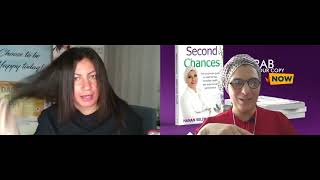
In this Instagram‑Live interview, host Hoda welcomes Dr. Hanan Selim, award‑winning author of Second Chances and founder of Healogie, to discuss her holistic approach to health that minimizes reliance on conventional medicine. Dr. Selim recounts her background as a clinical pharmacist and P&T committee member, describing how personal health crises led her to investigate the hidden, cumulative stressors she calls “chronic biodestructors.” She explains the “3 B” brain‑training technique (counting backwards) as a caffeine‑free way to raise energy and mood, and links it to gamma‑wave activation and the release of oxytocin, dopamine, and serotonin. The conversation moves to intermittent fasting—particularly Ramadan fasting—as a means to give the gut a break, boost natural antioxidants (immunoglobulin A and glutathione), improve immunity, skin elasticity, and longevity. Dr. Selim emphasizes the gut‑brain axis, noting that 80 % of serotonin is produced in the gut and that gut health underpins mental well‑being. She critiques one‑size‑fits‑all nutrition, advocating personalized nutrient analysis via epigenetics testing and her “Healology” prescription system, and shares practical food guidance (the Dirty Dozen vs. Clean Fifteen lists). Weight‑loss is reframed as achieving “DNA excellence” rather than chasing a scale number, focusing on balanced immunity, sleep, and stress reduction. Finally, she offers her personal happiness formula: authenticity achieved by stopping pretending, proving, hiding, and defending, which aligns perception, relationships, and environment to create lasting joy.
Chapters
Mura, Mura, we had the headphones from my, uh, from my computer bag. Oh my God. Hello? Okay, do you see me? Yes, I sent to her already. Is she in? Yes, she's in now. Okay, okay.
Yes, hi, Dr. Hanan Selim.
Hi, how are you?
So now, how we share things, I will, I will open my Instagram.
Okay.
So I hope you can— I don't know if this is okay. I hope that you can see us now. I would like— it is not very clear, but anyway, you are recording the talk, Dr. Hanan?
Yes.
Okay, so you send me the record after it, then I will put it in my live. I don't know, should I hold the mobile like this, or it is not— it's okay, I don't know.
Do you see— do they see me on Instagram?
It's okay. Now we are on the live, right? Is it okay for you? Please tell me if it's okay for you.
Do you hear me clearly?
I hear you clearly. The problem is that with the live, shall I keep on— I talk normally and then you put it in the live better?
Uh, okay, I'll put it myself on the live.
You can put it on Instagram Live, but that's the problem, right?
I can't go on in live.
Okay, so, uh, you think we, we record it and then you send me the recording?
Yes, it's recording now, by the way.
Okay. I don't know if I— because if I hold the mobile— I don't know if I should end the live.
Okay, just tell them in a few minutes you'll post the video, no worries.
Okay, in a few minutes I'll post the video for you. Thank you for joining in, and give me just 30 minutes and we put the video live.
Bye.
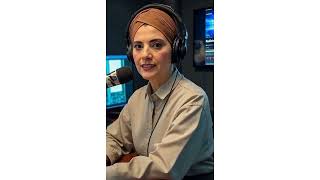
Okay, so welcome to the Cultural Forum, the Happiness Club. Today I'm really happy to be having with me Dr. Hanan Selim. Dr. Hanan is a dear friend and we started our authoring journey together in 2017, so it's been a long journey now. Today I will discuss with her the concept of health without medicine and her book, Second Chances. Here it is. She's an awarded author and she's the CEO and founder of the Healogie. We will talk about many interesting topics, especially during Ramadan and the fasting. Dr. Hanan, I'm so glad to have you today in the Cultural Forum, the Happiness Club. It's every Thursday at 4 PM Dubai time, and I will let you introduce yourself now.
Thank you so much, Hoda, and I really apologize about the technical difficulties, but I hope we can solve it and put it in, in the live recording. Yes, inshallah.
You can send it to me after the recording, then I will try to upload it in my life.
All right, and I will upload it mine as well. Sure. Um, thank you so much. It's an absolute pleasure. And like you said, we started, uh, we a long time— I have known you for at least 2 to 3 years now, and we started our journey together, uh, becoming authors and launching our books and connecting on, on many levels. And, um, I want to introduce myself. My name is Dr. Hanan Selim. I am an award-winning author, international speaker, and recognized by the World Health Gurus as the most influential thought leader in health and well-being. And I started this journey as a clinical pharmacist, where I still am a clinical pharmacist. I have a PhD in pharmacy, and I worked for a long time in the hospitals in Manhattan on something called the P&T Committee, Pharmaceuticals and Therapeutics Committee. And what this committee was in charge of was to become— come up up with the formulas and the protocols for those cases that was not doing well, including cancer, diabetes, obesity, and things of the sort. I was actually in charge of doing chemotherapy at that time, and what I always had in the back of my mind was these patients who were doing so well on these, uh, formularies that were created by amazing experienced healthcare professionals would be coming back with advanced cancer, like given 6 months to a year to live. The diabetes patient would come back with gangrene, needing amputation. The obese patient who was starting to lose the weight would actually come back having difficulties to breathe, needing to go on ventilators, and so on and so forth. So fast forward 10 years later, I became the patient. So this question was in the back of my mind, came front and center of why is this happening? And then, of course, I went to what I knew best, my own formulas and my own protocols in healthcare. And unfortunately, nothing worked for me. I had precancerous cells in my ovaries. I was 40 kg heavier than I am today. I had something called endometriosis, borderline diabetes, and all these other chronic conditions. And my professionals that were on my team along with me all said hysterectomy, which was a very invasive measure that I didn't want to take at the time because it would lead to other health side effects like menopause and things like that, early menopause and stuff, and hormone therapy that I didn't want to go on, especially if you have precancerous cells. And actually, my cancer indicators at that time went from 70 to 700 in 3 months' time. So I knew something was— I wasn't— we weren't addressing the root cause. We weren't addressing the problem. It wasn't the medicine. it wasn't the doctor's formulas, it wasn't that I wasn't going to the right doctors or anything like that, is that the issue we were addressing was wrong. So if you have a problem and you give it a wrong problem and you give it the right solution, it's not going to work. So this led me to understand this root cause, something that I did research on for 17 years called chronic biodestruction, and it's those environmental stressors, those small undercurrents that really you don't You don't see them on lab works, you don't see them on MRIs or X-rays or anything like that, but they do have an effect on your health and well-being, especially when they compound on top of each other.
So this led me to write my book, "Second Chances." That's the, the inspiration and the cause that you want really to help people because you saw this, the pre-sickness yourself and how you handle it. And how you stayed away from medicine and you went for the natural healing process. Yeah, I did.
Coming from a science background, I didn't, you know, natural healing and all that wording and all that was like woo-woo to me. It's like, if it's not scientific, I don't want to hear it. Yeah. And 25 years in healthcare, I mean, and I've been accomplished healthcare professional. I was like, no, no, I know my tools. I know what I'm doing. I know my protocols. But nothing happens, nothing bad happens for a reason. Everything happens for a reason. And the reason was, I look back now, is like I needed that. I needed that wake-up call, like, okay, Hanan, you're trying to help people with their health and well-being, but you're using the wrong tools. Or at least you're using, you need to give them more options. And it's not just the 3 and that's the only option. It's more than that. It's getting to the root cause. That can be emotional drivers, it can be vitamins that are missing, it can be, um, your environment, like social environment, um, and so on and so forth. So these are what I call chronic biodestructors.
Yes, so you are trying to get rid of the side effects of medicine. You are trying to get rid as well of the side effects. Yes, exactly. Okay, so now in this era where we all feel there is a general lack of energy, people are sitting most of, 90% of their time in front of TV, in front of their laptop, having the mobile in their hands. They are not doing any movement, they are always staying. And there is a general feel that we really lack of energy, we don't have energy, we don't have vitality. What is your elaboration in this subject, and is it— does it have to do with only exercises? It has to do with the nutrients? It has to do with vitamins? What's the problem? Why we as a generation, we really lack energy? Even if you are 100% a healthy person, but you are not fit, you feel that you don't have the energy to do all the things that you have to do. On a daily basis even. What is your elaboration on this topic, Dr. Hanan Selim?
So it goes again back to my research. I actually started— the reason I did this, expanded the research, it was first opened by a scientist in the U.S. and he wanted to find out why certain populations were living over 100 and beyond. That scientific research is called the Blue Zone research. So the Blue Zone research shows that it's certain eating habits that these people or populations— by the way, these are not advanced cities in the world. One of them was Okinawa, Japan, and farmland area in California, and so on and so forth. So this led me to ask another question. It's not just their diet and what they're eating. It's also their environment. How is it that their environment is influencing their health? And this led me to understand what is in these countries like the UAE, like the US, Europe, and even Egypt. So without— they didn't have all the— so one of the things actually I mentioned from that research in the book is something called intermittent fasting. So intermittent fasting is that giving your, your system, or— well, actually now in Ramadan we're doing full fasting, fasting. And the reason we need to give our digestive system and our gut a rest to recuperate from all the unfortunate pesticides, the hormones, and the pollution and everything else that we take in. So we need to give it a rest, have it rejuvenate by bringing up its natural resources and its good bacteria that protects us actually and boosts our immune system that helps us for the rest of the year. And it also helps in our focus, by the way. And the reason— the way you can get over lack of energy, to get back to your question, Hoda, is something I call the 3 Bs. It's not about going for your coffee. It's not going for your tea or caffeine. You could actually do something called brain training in the morning that boosts your focus and boosts your energy and your activity level. And that brain training is just as soon as you get up in the morning, you count from 100 to 1 backwards for the first 10 days. The second 10 days, you count from 50 to 1 backwards. And the last day, you're counting from 10 to 1 backwards. And what this does, it releases— puts your brain in something called a gamma wave, and it releases those happy chemicals. That we call healing chemicals like the oxytocin, dopamine, and the serotonins. So this is a natural way that you could actually boost your energy without, you know, breaking your fast or reaching for coffee or caffeine.
And this got results with you?
Yes, actually. People now, you know, it sounds simple, And one of the things, all the things that I mention in my book actually are very simple, but they have a huge impact. But a lot of people when they come back to me, they say, "Oh, Dr. Hanan, it's not that easy." I say, "It works." Yeah, because you have to do it in a habitual way. But once you start doing it, especially after the 30 days, people swear by it. They're so energized and they're so more focused and they're always getting up. And what's great about this is because we're during the COVID-19 and under lockdown, it keeps your brain on a positive pathway. Because it's a universal law, your brain cannot be happy and sad at the same time, or can't be excited and calm at the same time. So this keeps your brain on a certain path and brainwave to be on the positive side. So it doesn't— you don't allow yourself to do the negative self-talk and be in a negative mindset and fear or anxiety.
They're asking me now to put it on the live, so I will give it another chance, maybe just to listen to the, to the talk. I don't know if they will see us or no. Okay, so just maybe I will put it like this. I have another question for you talking about weight loss. I don't know if it's distracting us or what shall I do, maybe I put it on something or Yeah, yeah, I don't know how to do it actually. I don't know how to do it other than to— let me give it a try. Maybe like this, but I also have to carry it. I don't know, let's continue, maybe the voice will do, and then we will be putting the recording. Okay, my other question to you, I want to know, talking about weight loss, I always say that to be healthy is better than the number you will have over the scale. So if people, they go into very unhealthy procedures to get the, the body of a model. Even I heard models say that before we go to stage, we stay for almost 48 hours without eating, without drinking. So they go for very unhealthy, um, procedure and stuff just to have a very healthy body look, which is not healthy at all. So, um, what do you think about this? Is it a number on the scale, or is it being healthy, being really healthy? I'm not saying You have to be fat. Of course, you have to lose weight and you have to try always to keep slim, but in the healthy way. Not just to have the weight, I don't know, of 50 kilos over the scale or 60 kilos over the scale, but really you have to have a healthy body, not just a look, a fake look. What is your collaboration in this topic, please?
So there's a reason.
I will check meanwhile how things going on, and we'll keep it like this. We'll see.
Okay. Hi everyone, so I hope— I'm sorry about this mishap. It's a learning curve. Every challenge has an opportunity. So maybe someone out there will figure this out and say, oh, maybe we can combine Zoom and Instagram together and come up with a new app.
Yeah.
So creativity comes by accident. So this is a good— for anyone out there who is looking to do an app, you know, this is a great opportunity.
Yes, yes.
To your question is, yeah, so the reason you people, when they go in for these invasive measures, the reason for that is basically there's a lot of side effects that might not appear right after the surgery, but down the line you will— there will definitely be side And the amount of people who come in with all these surgeries that they have to redo because something going wrong. We already have innate resources and idea— your body's already working for an ideal weight that we all are programmed to be on. There's no number that you need to achieve or have to be on to have to be healthy. Being healthy is having that immune system, having your body functioning, what I call DNA excellence. DNA excellence is already a program to make the, the whistles and the adjustments and the automation or autoregulation of your body to be in balance, in harmony. So just because you're 5 kgs heavier or just because you're, you know, not that ideal weight, that BMI, doesn't mean you have to achieve that to be healthy. Absolutely not. But on the other hand, you do have to eat well, sleep well, um, here in, in UAE or Dubai or Middle East, actually, just, uh, taking care of your body. Like the, um, I mean, no, it's a, it's an old saying, take care of your body and your body will take care of you. But it's so true. Just take care of it. Get out of all the stress and it will do what it needs to do to keep you healthy.
Okay, we got a good pick on that topic, so now I understand what you mean exactly. For the— I have another question. You, you talked about fasting, and I know that you are a strong advocate of intermittent fasting. Does it really— is the best thing against aging— is intermittent fasting the best tool to use for the skin complexion and for the aging process and for the health. Not only it's a tool for weight loss, but maybe it can be used as a tool for, for getting more energy, for being really healthy, and for the complexion of face. I even heard that it's the one thing that can get you looking younger. Is this true?
Yes, absolutely. And it's a scientific truth. It's not just me saying or because I wrote it in my book or whatever. But intermittent fasting is going to release two amazing natural antioxidants that already exist in the body, and that's immunoglobulin A and glutathione. These already exist. The only thing you need to do is boost more of it. And it's not— and I'm not saying that so you could go out and have it existing. And what you can do that is when you eat green leafy vegetables, When you— fermented food actually boosts the immunoglobulin A and glutathione. And these are the most— Hoda, I can't assure you more than this, that these are the most potent antioxidants. And when we talk about antioxidants, we're talking about anti-aging and longevity. The statistics show that in the next 30 years, we're going to live longer. But doesn't mean we're going to live longer. So you want to boost these glutathiones and immunomodulators to get your body ready to be able to live not only a long life but a healthy life. That means, um, boosters or hormones or things like steroids for osteoporosis when we get older. These are ready going to take care of all that, boosting your immunity and boosting your body's function to live a healthier, longer life. And it does great on the, like you said, the anti-aging, the elasticity. It works on many levels of your anti-aging process.
That's very good. Let me just a second, I will open the light because I'm doing now the live as well on Instagram.
Okay.
Anyway, this is better. I never forget a quote from your book that I liked very much, and I always reflect on it. You said, anytime you are eating out, you are getting nutrient-depleted food. Till now, whenever I go out to eat, of course not in these these conditions of the lockdown, but whenever I go out to eat, I think 10 times before I go out, after I heard these words. To which extent are these words applicable? And it's really, it's a scary statement. It is. We have to eat at home. We know the sources of our food. We know how we cook and we know everything.
Yes, and this is— that quote comes from, again, science, evidence-based, and research. Again, refers back to something that I call chronic bio-disruptors. And one of those things is in your food. We think we're getting all the nutrients. You know, as a matter of fact, some people come to me and they say, I'm eating avocado a lot. Yeah? And yes, it has healthy nutrients, has healthy fats. But they're actually— their body cannot digest it. So just because, you know, a lot of the nutritionists or a lot of the fad diets call for, you know, eat this and eat that, you have to— your body is not one size fits all for just taking foods when they might not be agreeing with you. So actually, I had one, one lady, she, she does eat, she ate a lot of, um, eating right, but are you, are you taking the foods for the right reason? You have to be able to support your body with the nutrients it needs, not what everybody thinks it needs. So we're all— I loved Dr. Bruce Lipton's quote. He always says that perception equals or affects biology. What that means, that each one have our own perception, have our own ideal programming that you have to tailor one-size-fits-all medication or one-size-fits-all therapy. You have to get a benchmark of what your body needs and what he recommends for everybody else and just take it.
Okay, great. I always talk about hormones, which is the serotonin. Serotonin is the happiness hormone, one of the 4 happiness hormones in the body. And actually, the interesting thing is that 80% of the serotonin exists in the gut. Yes. And it is governed by our state of hunger. So how can we boost our gut health to maximize our inner power nutrient? And how important is our gut health to our overall well-being? And of course, our well-being and happiness in general. As it is a happiness hormone. And I just knew that recently that it starts from the gut.
Yes.
So serotonin starts from the gut.
Yes. And it's actually, they call your gut your second brain. That's why you call your gut your second brain, because it does release the serotonin and those happy chemicals, especially like you said, you're absolutely right, the serotonin is is produced in the gut. And there's actually a specific research that they've done that people who have depression or have, um, depression, um, they always correlated with a bad gut. So this is my exact point. Before we start people on Prozac and antipsychotic, antidepressant drugs, why don't we just see their gut? Why don't we see what is happening on a— at the root cause that is creating this havoc.
I'm with you, I'm with you. Just checking the light. I'm with you. Yeah, that's it.
I mean, you're right, absolutely. Serotonin, the second brain, is your gut. And, and to answer your question, how do we boost more of the serotonin, is again the green leafy vegetables, the same things that you would need to boosting your glutathione and immunoglobulin A Those as well will boost your serotonin in your gut.
Very good. So it is important to eat vegetables, green leafy vegetables, and fruit as well, fruits as well?
Yes, yes.
Vegetables and fruits are really the golden word for health.
But I want to recommend something that I would— if the best way to get the most out of these fruits and vegetables is that you have to eat them separately. What do I mean by that? You have to start with the easiest, most digestible foods first, your salads, and then you go on to your vegetables, and then you go on to your proteins, and the last is your carbs. So if anyone's looking for a diet, if they just do that, just eating what's the easiest, most absorbable food first, And by the time you come to the carbs, or by the time you come to the proteins, you're already full. So automatically you will have a high protein, low carb diet if you're looking to lose the weight. Plus it brings up the glutathione and immunoglobulin A, plus it helps digestion and improve the serotonin levels in your gut.
Very good. I have a question regarding stress. Can really Sorry, just stress. I talk about stress. Can stress really deplete vitamin in our bodies?
Yes, it depletes a lot. Yes, but when we, we use stress like as a general word, but there's a lot of different stressors, if you will, and I call stress as the ultimate Quantum. If you have, for example, by the way, you could have not only anxiety and fear as being the stress, or your boss, or your, you know, family, or the school, or the homework as being stress. These are actually in your physical environment, but there's other stress that, like we just mentioned a little while ago, is food. The stress from digesting the food that you eat is also on your stomach as well, and you don't absorb the nutrients. And as a matter of fact, you even become hungry a few minutes later. If we take the fast food chains, the reason they upsize everything is because you want— they want you to spend more money, because the more you eat, the more you're hungry, the more you spend with them. And they understand this psychology very, very well, and they leverage it in a very good way for them to profit from the situation. But yet you're the one who's losing on this end, because then your health and your well-being is affected. Yeah.
Yes, I totally agree with you. And since I knew that, I really stopped eating outside.
Yeah, it's— I mean, if you eat at home and you eat the right foods and eat it the right way, automatically your body will take care of you. Your system, your immune system, and everything will kick in because of that automatic program that we already have that I call DNA Excellence.
Yes, and my question now is how to replenish essential nutrients in the body through diet and food.
Through diet and food, okay. So like I said, that example with that lady of eating you know, so much avocados or so much of this or that, you need to do a benchmark of what exactly the nutrients that you need. Because you might be eating the right foods and taking and doing the right diet, but still the essential things that you might need, you might be missing it. For example, I do something called the epigenetics test with my clients. Now the epigenetics test, when you send it out, it comes back. It could be— it even measures emotional stressors. And measures, for example, one lady, for example, she came, she wanted to lose weight. And she's been starving herself. She's been doing all these diets. And she came back, it wasn't her metabolism. It was her enzyme missing that's breaking down protein. And she's having an issue with something called protein synthesis. And once we replenished and gave her the diet or the food that got that enzyme going, she automatically lost the weight. And it wasn't a miracle. It was just we were addressing the issue that her body needed to get to the goal that she wanted to achieve. So I'm a scientist at the end of the day, so numbers mean everything. So for me to flat out say eat this or do that without any benchmark or without understanding what your body needs, I would not suggest. That's why I have something called Healology prescriptions. So once we, the people go through the process, the 6-step process in Healology, we do give you a prescription and it has nothing to do with drugs or invasive measures and it has to do with the customized understanding and awareness of what your body needs and just implementing that. It's as simple as that. We don't need to overcomplicate things for ourselves and just do with the basics and simplicity.
Yeah, I also would like, if you allow me, I would like to tell to the audience the list of the Dirty Dozen versus the list of the Clean Fifteen. So if you allow me to read them for them. Absolutely. And the concept, you explained it very well, it's the Dirty Dozen is that you need to buy them organic versus the Clean Fifteen, these are the list have the least pesticides, so you can buy them as they are and no need to go for the organic. So if we start with the Dirty Dozen, which we should buy organic food out of them, these would be strawberries, spinach, nectarine, apples, crabs, peaches, cherries, grapes, tomatoes, celery, potatoes, sweet bell peppers, and hot peppers. And for the list of the Clean 15, which has the least pesticides, pesticide. So it is, it is not very important to buy them organic. It is okay to buy them as they are. These are 15, as the name implies, Clean 15. It is avocado, sweet corn, pineapples, cabbage, onion, sweet peas frozen, papayas, asparagus, mangoes, eggplant, honeydew melon, kiwi, cantaloupe, cauliflower, and broccoli. And you can find them on the internet if you just try it on on Google, the Dirty Dozen or the Clean 15, you will find them. And this is very important, and it is also among the valuable information I got actually from your book. You encourage everyone to do the nutrient analysis test. What is it? Where to find this test? Is it available in Dubai? Is it available in Egypt, in Cairo, or in Egypt in general? And what is the importance of this test to the health of everyone, since you encourage everyone to do it?
Yes, I just spoke about it actually. It's called the epigenetics test that I actually provide, and you could actually, um, in Egypt, um, you provide, you provide, I provide, yes, uh, as part of the, the, uh, the Healogee process. And it's also very important because it brings back the data Okay, so data is important. You are not like— you're a unique being. You're not like everybody, even if you grew up in the same household, you have the same parents, you grew up in the same city, you will definitely have a different perception on life, on health, on your— and that perception will affect your biology, and your biology will be different in, in the end. So what I'm saying is, if, if, if my— me and my sister, we, we have the same DNA, right? Similar DNA to our parents, everything. Just because we have that doesn't mean our biology is absolutely the same. So we have to— she, she— her perception created a different program, or her experiences created a different program in her biology. So it's very important to understand you exactly you, what your body needs, in order to give it what it would— and provide what it needs. So I'm very— I'm very— it's very critical for, for anyone to, before you go and pull a vitamin off the shelf, or before you go and, and go on a diet, make sure you understand what your body needs and go for it.
Yes, yes, it is always crucial. I believe that we have to do the test before taking any vitamin. You know, I make tests for vitamin D, vitamin C, vitamin E before I go and grab that vitamin from the pharmacy all by myself. Yeah, it is very important. Yes, as you said. At the end, I would like to ask you the standard question for the Cultural Forum, the Happiness Club. I ask every author guest. This question is: what is your formula to happiness? What is your equation of happiness? In general, in your personal life and in general?
Happiness for me is authenticity. And authenticity is just 4 things. When you stop pretending, when you stop proving, when you stop hiding, and when you stop defending, when all that melts away, you are your authentic self. And when you're authentic self, your perception on life, and that's, I think, what happiness It's your connection, your relationships, and everything in your environment will create that happiness for you. And it starts with you. It doesn't start with the family or the environment that you are. You are a reflection of that environment. So it's very important that you be your authentic self, and that will have a ripple effect in your total happiness.
It's a very good point. When you, when you live freely, you are not pretending, you are not— you are just being you, yourself, as is the raw self, I believe that you would be more happy, you would definitely reach a stage of true happiness. That's true. Well, thank you very much, Dr. Hanan, and we really apologize for the technical problem that happened in the beginning. Dr. Hanan will save this, this Zoom, and then we'll be putting it in my live and in Dr. Hanan's live on Instagram immediately, I think, after we finish and after we close now. Yes, so thank you again. Thank you. It was really good, valuable information, and thank you for the valuable book. And happy Ramadan to you.
Ramadan Kareem. Thank you so much, Habibti. And always a pleasure connecting with you. Thank you. Thank you.
Thank you.
Bye.
More from Dr.


Deep Shifting Method to Clear Problems For Paying Clients (and for yourself) in 10 Mins or less!