The Roles of Vitamins in Human Health and Immunity
In this 2022 webinar, Dr. Hanan Selim educates an international audience of pharmacists, students, and healthcare professionals on how vitamins and minerals influence immunity, overall health, and performance. She frames the material around the "3 Ps" – Prevention, Program, and Performance – and stresses that pharmacists must understand vitamin classifications (water‑soluble vs. fat‑soluble), absorption pathways, drug‑induced depletions, and stress‑related deficiencies. Dr. Selim advocates a "lifestyle eating" approach: consume foods in separate categories (salad/vegetables → protein → carbs) to maximize nutrient absorption, favoring a high‑protein, low‑carb diet sourced from whole foods rather than generic supplements. She reviews common medications that deplete specific vitamins/minerals, outlines signs of micronutrient deficiency, and provides practical tips (e.g., timing of water‑soluble vitamins, using glutathione‑rich greens, brain‑training countdown). The session concludes with actionable take‑aways for pharmacists to counsel patients on diet, supplementation, and stress‑management to boost immunity, prevent disease, and enhance personal and professional performance.
Chapters
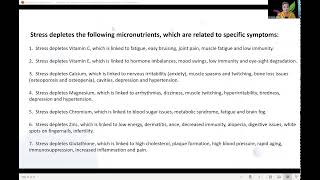
author, speaker, and recognized by the Global Gurus as the most influential thought leader in health and well-being. So I'm also a speaker, as I mentioned, and I always love speaking from the stage, and I always love, you know, the energy and the feedback. But unfortunately, we, we don't really have that kind of, uh, relation here on the webinar. But nonetheless, I want to keep the energy high, become more engaging and interactive like we always do. And, uh, first off, I want to to see who's on the call today. If you could just give me your name, where you're calling from, are you a student, are you a pharmacist, are you a healthcare practitioner, are you a toxicologist? We had some toxicologists on the last webinar, which is really interesting. So we have Donna here from Kuwait. Hi Donna, thank you for joining us. Iman Azem from Lebanon. Wow, okay, welcome. I think it says Fatma from UAE. All right, I live in Dubai. Uh, Abdulmanam, I think, or Menem. Uh, welcome. Wow, it's, it's the, the, the chat is really going. Tanya, a student from Philippines. Hi, Tanya, thank you. Islam from Egypt. All right, my posses are on here today. I'm from Egypt as well. Uh, I think it's Muhammad, right? Or Mulham. Sorry. Forgive me for pronunciation. That's like the worst thing. I'm not very good in pronouncing names. From Syria, welcome anyway. Dr. Sonia from Bangalore, India. Hi, PharmD. Okay, wonderful. Assistant Professor Lily Kami, I think that is. Pharmacist from Lebanon, welcome Lily. Thank you for joining us today. I think this is Lul from Yemen, medical student. Wow, okay. Anan from Egypt, okay, wonderful. Last year in pharmacy, good choice. Parao, I think that is a pharmacy student from Kurdistan, very nice. Fatma as well from Ras el Khaimah. Fahd, I think, is from Pakistan. Welcome, Fahd. Rahab from Tunisia, all right. Wow, we have an international group today. Noural, I think that is Noural from Malaysia. Welcome. Oh, student, very nice. Omar, are you a pharmacy student? Um, Noural, okay. Omar, Omar is a pharmacist from Saudi Arabia, right? Muhammad is, um, I think it's Tosef, pharmacist from Bahrain. Uh, Hannah, Hannah Gergis. Okay, from Egypt. All right, Abdel— Abdel— Abdelmanel. So bad. From Oman, medical laboratory technologist, Ministry of Health, Oman. Wonderful. Okay, Dr. Hanan Selim Selim. Yes, Israa Okta, from a community pharmacist from Egypt. All right, a lot of Egypt on here, Egyptians. Devendra India. Muhammad Abdelaziz. Okay, I like that easy name. From Egypt. Tala Osman, pharmacist from Lebanon. Muhammad Abdelaziz. Yes, thank you. Welcome. Hassan Sudanese living in UAE. All right. Kausar, I think. Tunisian pharmacist. Hoda Helmi. Okay, from Egypt. All right, uh, Nihat, Sudanese physician from Saudi Arabia. All right, uh, Hoda Helmi is a pharmacist. Noural, uh, pharmacist student. Okay, thank you for sharing. Undergrad, I am Hamad from Egypt. And Dr. V is on with us today. Good evening to everyone. Good evening to you, Dr. V. Muhammad Rawadi, pharmacist from Egypt. Uh, Kaima— Karima, sorry, so bad. Uh, hi, how are you? Okay, welcome today. I am Hamad from Iraq. Uh, Ibissem, I think that is Ibissem, Ibissem from Algeria, PhD. Okay, Mustafa, student, pharmacy student from Egypt. And Aya saying hi, hi, hi everyone, thank you so much, let's keep up this amazing energy. Yeah, Karima, she's saying nice to see you again. Nice to see you, Karima. Thank you. Well, nice that you're on. I can't see you, so nice to have you on the call. All right, amazing. Yeah, that's amazing. Thank you so much for interacting, getting on the call, letting me know who's on there, on here today. I really, really like this interaction. I actually love it, and this is part of the reason why I love, uh, speaking on stage and interacting with everyone. So nonetheless, let's keep up the energy. Have any questions, please let me know. If you can't hear me, if you can't see me, please let me know as well. I'll be touching in, uh, based on the chat to make sure that everybody can hear me and see me. So I have some more chats. Uh, Suleiman Al-Awadi, Hussein, hi, good evening. Ahmed Hussam, uh, student last year in pharmacy, welcome. Dr. Naz, hi. And we left it off with Karima. All right. How are you? From Algeria. Oh wow, I love it, I love it. Absolutely amazing, everybody from around the world today coming in. All right, so we have a lot to cover, uh, let's get started. Hopefully technology will be on my side today, uh, everything is working, everybody sees me, hears me. All right, so let's get started. As I mentioned, my name is Dr. Hanan Selim, uh, speaker, author, uh, awards and all that lovely stuff. Anyway, The roles of vitamins in human health and immunity. And this is quite an important topic. And it's very— I mean, as pharmacists, we're all about pharmacovigilance and side effects and diagnosis, prognosis, prescriptions. But I think really, really we should— I saw some community pharmacists on here. Especially as a community pharmacist, and especially if you want to help your clients perhaps boost their immunity, especially that's the hot topic, right, with COVID and everything. Everybody's looking and wanting to boost their immunity to protect themselves really from getting the virus, as well as if they do have the virus, be able to fight it off easily and quickly. So this is really an important topic that as pharmacists, as healthcare professionals, really, really should have it in their toolbox when they're trying to help their clients and their patients. That's why we'll be discussing the many important vitamins that are crucial to one's health and immunity, because I feel they both go hand in hand, and many of which are available in natural resources, which we'll be discussing through food and nutrition and the way— perhaps we should call it lifestyle habits, the way you eat, we'll be discussing with having to be with your diet and certain groups of foods as well. So it's not, I mean, we will get into supplements and vitamins and the difference in the types and what's best for what, but also we're also going to be looking at food as resources, a certain diet that you might want to recommend to your clients and your patients as well when they're looking to boost their immunity. But our focus actually today is going to be on the many challenges is, for example, that us as healthcare professionals is not really being equipped with proper resources and knowledge to help our patients that also include a natural adjunctive therapy. Meaning that while we're giving the medication to our patients, we want to also think about perhaps what this medication, what vitamins or supplements that this patient might need to supplement because of these medications. Might be depleting as well. So we want to create a balance and harmony so that we equip not only the patient with the right medications to get the results and the therapy, but also to boost the immunity as well as compensate any vitamins that might get depleted because of it. Which is really, um, one of the, the major things that I want to also point out and focus on as healthcare professionals, because You guys need to be aware of certain medications, if you will, or certain prescriptions that might actually, while you're giving it to your patients, might actually be also depleting certain vitamins that will get all in, in, in all of that as well. There's a lot of takeaways today, a lot of information, a lot of knowledge. So my suggestion, if you guys don't have any kind of pen or paper ready or handy, this would be a good time to grab it while we are in the beginning. Okay, so So really, really, if everybody— I see Karima and Dr. V and quite a few that always— thank you for showing up on my webinars. But if you guys have noticed, and the newcomers as well, is that I always like to create acronyms so that people, when you go away from the webinar, you're like, oh, OK, what did she say? OK, 3 Ps. OK, what are the 3 Ps? So that it makes it a little bit easy for you to recall the information and be able to actually implement that makes sense as well. So what are the important 3 Ps— here we go— of vitamins and as well as immunity? So the first thing I really, really look at vitamins and supplementation use is actually prevention. So we've always heard that people who are really highly stressed, vitamin D is a good source. Or actually, people from this part of the region like Dubai and Saudi Arabia and all that, and Bahrain, we really hot regions, you would assume that, you know, we have so much exposure to the sun, we don't need vitamin D. But it turns out that actually a large percentage, I mean, the numbers up there like 70%, 80%, is that we as, um, from the Middle East or MENA region, we really are depleted in this really important resource of vitamin D. So, of course, we should always, not only for stress but just because we're in this sunny area of the region, doesn't mean we have enough vitamin D. So, the first one is prevention. Prevention is actually a method that we should look at as mitigating the risk but not participating in that things that would actually predispose us to certain situations with this vitamin depletion. So as the saying goes, I grew up actually in the US, is that prevention is the best cure to any disease, right? For example, if one situation avoiding, for example, antibiotics and like we've always heard, well, actually we were doing with the COVID situation, rather be able to boost the immunity in a natural way rather than go towards antibiotics at the get-go would actually be more beneficial Because as we know, the better the immunity for these viruses and the pandemic, the better the patient will come through against this situation. Of course, resistance to antibiotics, and of course, we want to boost the immunity through natural resources like food, diet, and of course, vitamins, which we'll get into deeper as we go through the webinar today. Also, what's really interesting is a natural way of absorption, because it's one thing to take the vitamins and, you know, the right vitamins, even get like, you know, a vitamin screening test, whether we're talking epigenetics, which is through the hair follicle, or actual blood work. And another thing to be taking this, doing all the effort, taking the vitamin, and then you don't have the proper absorption of the vitamins, right? So there's a certain way and a certain program, perhaps, that through natural resources, like we mentioned, through foods and diet, that we could get the same absorption, if not better, than to go straight away to vitamins as well. That we'll be talking about as a program or as a way or a lifestyle habit that you could start using and even implementing and giving it to your own clients and patients. At the end of it all, what are we doing all this for, right? Why are we taking all these vitamins, boosting our immunity? And it's of course the performance. We want peak performance not only for our body but our focus, our energy, our mental health. That will also not only boost one's body at its maximum or full potential, but it also be, uh, um, worth noting that this is going to create the productivity, whether we're talking about, you know, finances, whether you're talking about boosting your career or your business, business and moving forward, because the career or your functioning in your job, for example, is always going to be based on your capabilities and productivity, right? So might as well boost your body, boost your mind, boost your productivity in order to excel in your career as well as in your business. So vitamins are actually really essential. They're non-caloric, they're organic micronutrients nutrients, and they're actually— they're energy contained in the chemical bonds of vitamin molecules. But our bodies don't really sometimes make the enzymes to break these bonds down and release their energy. Instead, vitamins serve actually as other essential functions in the body. And this is why it's important to say that the best resources, or the best, yeah, resources to get your vitamins and nutrients from is actually actually from your diet and your food because your body will easily recognize it, first of all, as it's— yes, this is something I could use. Yes, this is something I can break down. Yes, I have the enzymes for it. And yes, I could absorb it. And the body can use and function with the micronutrients through energy metabolism and so forth. Now, with these certain vitamins that a lot of people— unlike medications, so In medications, like if you use Amaryll 2 milligrams and the active ingredient glimepiride, right? Whether we call it Amaryll or glimepiride or any other brand name, and if it's 2 milligrams of this active ingredient and 2 milligrams in the same active, we as healthcare professionals and pharmacists say, okay, they're equal, right? Now with vitamins, unfortunately, just because you have the same milligrams, it's the same nutrients or active ingredients, but not all vitamins actually are created equal, especially when there are certain salts, there are certain additives, there are certain other inactive ingredients that actually might even decrease the absorption and the use of these vitamins that are made that don't actually— are not recognized by our body. And of course, we don't have the full absorption, 70%, 60% of it, and the rest, of course, is excreted out of our body. Like I mentioned, an ounce of prevention, I love this quote, is worth a pound of cure. As we know, the best cure out there for any of these conditions that we're familiar with that are leading unfortunately in the death rates around the world like cardiovascular disease, diabetes, high blood pressure, cancer, and so on and so forth. Actually, these particular conditions, even obesity, The best is to prevent them in the first place rather than have them and try to address them with certain protocols that we use in healthcare. And then of course we get the yo-yo results and then we have issues with trying to manage the condition in the long run. So there are actually two classifications of vitamins, and that is water-soluble and fat-soluble. So quite a few points that I want you guys to understand about vitamins. Obviously, these two classifications, and actually, another point is whether vitamins are water-soluble or fat-soluble actually can affect their function and their site of action. So, water-soluble vitamins often act in the cytosol of cells, meaning the fluid inside of the cells, or in the extracellular fluids such as the blood. The white fat-soluble vitamins play roles such as protecting cell membranes from free radical damage or acting within the cell's nucleus to influence gene expression as well. So in a nutshell, I guess if you guys have any, you know, your phones ready or anything, if you want to take a quick picture, this kind of lays it out easily for you. And you could see that when we're talking vitamins, we're either talking water-soluble or fat-soluble. So with the inclusion of the water-soluble vitamins, these are primarily your B vitamins, your B1, B2, which is your riboflavin, niacin, B3, biotin, pantothenic acid, vitamin B6, folate, and vitamin B12, as well as vitamin C. With your fat-soluble vitamins, these include vitamin A, D, E, and K. But there is one major difference between water-soluble that you should consider and fat-soluble vitamins is the way they are actually absorbed in the body that we mentioned earlier. Actually, water-soluble vitamins are absorbed directly from the small intestines into the bloodstream. The fat-soluble vitamins are first incorporated into what we call the lipoproteins, along with fatty acids and transported through the lymphatic system and then to the bloodstream and then onto the liver. So even their pathway, not only in absorption but in functioning to get the benefits from these micronutrients, are very, very critical, whether we're talking water-soluble or fat-soluble vitamins. And you'll see in a minute when we talk about the way we take these vitamins in through diet and food resources, is important that we actually separate what we call the categories in order to get the best absorption of that particular food. And we'll talk about that in a minute. So here's another information chart that is worth noting for you guys. So water-soluble vitamins, like we mentioned, are B vitamins and vitamin C. And these absorption is right directly into the blood. They are trapped, they travel freely, and they circulate freely into water-filled parts of the body, hence the bloodstream. The kidneys actually detect and remove them, the excess of it, into the urine. And of course, the toxicity levels— and possible to reach toxicity levels when consumed from supplements rather than from food and diet, which we'll talk about as well. And the requirements are needed in frequent doses, perhaps 1 to 3 days to have a loading dose, if you will, and then, you know, continuous use to get the full effect of the vitamins. The fat-soluble vitamins, as we mentioned, is the vitamins A, D, E, and K. These are first introduced into the lymphatic system and then to the blood, right? And they actually require protein carriers. They're stored in the cells and they're associated with fat. And less readily excreted in the body, excreted out of the body, I should say, and tend to remain in fat storage sites and likely to reach actually toxic levels, of course, because of the inability to excrete or remove it quickly from the body, especially in the fat storage sites. And it's needed in actually periodic doses, perhaps weeks, or even months to get the, again, the full effect. Minerals is actually worth mentioning because a lot of the vitamins or supplements, if you will, will always include vitamins and minerals. Also, there are two categories in the minerals, which is the major minerals and the trace minerals. The major minerals include the sodium, the potassium, the chloride, the calcium, the phosphorus, magnesium, and the sulfur. And the trace minerals include the iron, the copper, zinc, selenium, iodine, chromium, fluoride, manganese, and molybdenum. I can't pronounce that. Something today with me and pronunciations. Let me just check the chat. Everybody hear me, see me? Karima says, can you repeat the fat fat-soluble ones. Sure. Yeah, I'll, I'll— let me just move on. If any— if you want me to repeat anything, I could always go back to it. Okay. Hi, it's Matt Nagy from Egypt and Hajar from Algeria. Also, Donna wants, can you give an example of the vitamins for fat-soluble and water-soluble? I think you asked that question, I think, before I mentioned the list, so I think I already took care of that, right? But it's right here. Yeah, so water-soluble, like the B vitamins and vitamin C, I already mentioned, and the fat-soluble vitamin A, D, E, and K, right? So, and the minerals. Okay, so minerals actually are water-soluble and do not require enzymatic digestion like we mentioned with the fat-soluble vitamins. They are absorbed directly into the bloodstream just like the other water-soluble vitamins we spoke about. And although some minerals need the assistance of transport proteins for absorption and transport into the blood. So again, the classification of minerals is that minerals are generally absorbed, again, from animal-based foods. Plant-based foods often contain compounds that can bind to minerals and inhibit their absorption, like oxalates and phytates. If I saw variables. Let me see, there's someone. All right, I'll get into that, uh, Suleiman. I just saw your, your question there. Okay, just let me go through the, um, the presentation. I'm sure when we go through it, a lot of these, uh, questions will be answered for you. Okay, now, um, in most cases, if the dietary intake of a particular mineral is increased as well, also the absorption will increase. Why? Because like we said, minerals are water-soluble, hence they are absorbed easily into the bloodstream, and again, the absorption will be increased. So some minerals influence the absorption of others, actually. For instance, when you have excess zinc in the diet, it can impair iron and copper absorption as well. Conversely, certain vitamins enhance mineral absorption and actually hinder some other absorption. You have to be careful with the combinations. Of course, the pharmaceutical or the vitamin company will have done their diligence and made sure that they're compatible. But just something worth noting and for you guys to have as food for thought consideration when you're looking at these vitamins and minerals mixtures together. Another thing is vitamin C actually boosts iron absorption, and vitamin D boosts calcium and magnesium absorption as well. As in the case of vitamins, minerals also absorption can be impaired by certain GI disorders and other diseases such as Crohn's disease, kidney disease, as well as the aging process. Thus, people with some malabsorption conditions and in the elderly also are at higher risk for mineral deficiencies. Okay, so these are just food for thought, if you will, when we're talking about minerals and vitamin mixtures as well as considerations. So this one is actually quite, uh, is very important for you guys as healthcare professionals, especially, uh, the pharmacists on here. So consider perhaps taking a, a quick photo, photo of this particular slide, is because It lists actually certain drugs, certain prescriptions, if you will, that will create a decrease in nutrient deficiencies and might be food for thought for you guys to consider to also recommend to your client or your patient to take certain vitamins. Like here we have the antacids and the ulcer medications. Like Pepsid, Ranitidine, Pravacid, or pantoprazole, or any of that, they actually have nutrient deficiencies with vitamin B12, folic acid, vitamin D, calcium, iron, and zinc. Of course, the potential health problems is, of course, anemia, depression, tiredness, weakness, cardiovascular risk, birth defects, of course, if the, if the child, if the mom is pregnant, and of course the list goes on and on. So make sure you take a quick snapshot of this because it's really important when you understand that there are certain drugs or prescriptions that will deplete certain vitamins, and at the end of it might create more harm than good if the patient doesn't supplement these particular vitamins. And again, antibiotics, especially neomycin, streptomycin, cephalosporins, penicillins, tetracyclines, and gentamicin. Again, the nutrient deficiencies for those is vitamin B vitamins, vitamin K, calcium, magnesium, iron, vitamin B6, and zinc. The cholesterol drugs, Lipitor, Crestor, Zocor, and other statins, if you will, will also decrease coenzyme Q10. Antidepressants like, um, uh, Pamelor or nortriptyline, a lot of the, uh, Thorazine and other, uh, serotonin antidepressants also will decrease coenzyme Q10 and vitamin B2. Female hormones like birth control pills, actually estrogen hormone replacement or oral contraceptives will decrease vitamin B6, folic acid, B1, B2, B3, all of your B complex, if you will, B6 and B12, as well as vitamin C, magnesium, selenium, and zinc. And in the long run, you know, this is where if the depletion and the patient is more susceptible to, for, for example, depression, then you compound that with the depletion of these vitamins and then the hormone pills of course, you're going to get the deep depression and other side effects we really don't want our patients and clients to experience. I like this, what I call a predictable program. This is what I call a lifestyle eating. Why do I call that? Because when you have the natural resources, obviously, we've been mentioning that through food, through diet is the best way way to get your micronutrients. And the absorption, of course, is going to be a lot better than through vitamins and supplements off the shelf. I mean, you know, when you consider, for example, organic, when you consider, you know, certain brands like Solgar, where they do their diligence to make sure that the absorption rate of these vitamins are up to par, that is actually, you know, that— I'm not talking about those, but I'm talking about, you know, other perhaps generic vitamins, if you will, they might have the milligrams, they might have the name of the vitamins on the labels, but actually more time than not, the absorption rate will be very low. And actually the patient will be benefiting from a small percentage rather than the full milligram that's mentioned on the label. And of course, at the end, absorption is key when it comes to these vitamins and nutrients that we need in our body. So I kind of hinted it earlier in, in the beginning of the webinar when I mentioned that absorption is key, and then when you want to have the maximum absorption, you need to separate the categories. What do I mean by categories? Well, salads, veggies, protein, and carbohydrates. These are the categories I want to mention because when you start with the foods and you eat the foods that are highly easily digestible, you will actually absorb the maximum nutrients from those foods unless you mix them. So our gut actually is built not to eat sandwiches. It's not to mix the carbs and the proteins in one sandwich like going to McDonald's or Burger King And the thing about that is that what this sandwich with the carbs as the bread, the salad, which is the lettuce, tomato, and the pickles, the sauce, and then you have the protein in the middle of the burger, and then you have your dairy or your cheese, and then at the bottom you have your final piece of bread to make that burger, if you will. When you eat that, it hits the gut. It's not— your gut is not made to be hit with all these different categories at once. At once. So then your gut gets confused. It doesn't know what to absorb first, and it tries to take out, you know, oh, salad, I recognize salad, I'll eat that, I'll absorb that first. And then the gut is like, oh, oh, okay, I recognize the pickles and the tomatoes and the lettuce, I'll absorb that next. And then, oh, there's the burger, there's the protein, I'll then absorb that. And then, oh, there's the bread part or the cheese part, I'll absorb that. So that's what your gut is literally doing or saying to itself is like, oh my God, what do I do with all this at once? So our gut is not designed to be eating all these categories at once. And they're very smart. These fast food, uh, chains are very smart, and they know the psychology behind this. Because when you mix these categories together and when you eat these foods together, it does two things. It triggers more hunger And second of all, you don't get the full absorption of the foods, hence you want more, right? So that's why in McDonald's you upsize everything, right? If you, instead of having a small and liter of, you know, small, uh, Coke, you want to upsize that for, you know, in the U.S. we have it for a dollar more and you get the bigger one, or the burger and getting the double cheeseburger, or you want to add fries with that, right? Because then McDonald's, instead of, you know, they advertise as having $5 meal, by the end of, you know, because of the triggering in your mind of the mixing of the foods, all these different categories, it triggers you to buy more, have the dessert, have the milkshake, have this and that. And hence, by the end of it, you go in for a $5 meal, you're leaving with a $15, $20 purchase that's not going to do any good for your nutrients, obviously. So it's very important and it's key that you eat these separately and you start with the easiest absorbed food first, meaning you start with the salad and then you go on to the veggies and then the protein and the carbs are last. And if people in— I mean, people, clients or patients come in and they have an obesity issue and then again they have the diabetes, for example, you might recommend, you know, something like this because because when you— by the time you get to the carbs, you have eaten the salad and you're already full. The absorption is done. Your food— your body is actually benefiting from the nutrients, hence the trigger of the hunger and eating more and upsizing and all that is kind of brought down to a minimum, right? So sometimes people say, well, I don't— maybe I don't have all 4 categories in one meal. Okay, like let's take the American meal, right? And, um, uh, what do you call it, uh, eggs and bacon that they— we— they have. That's actually beef bacon as well. So in that case, you have the eggs and then you have the bacon. So you would have the egg first and then, you know, the, the protein or the, uh, the, the bacon second. And if there's a toast, you would have that last. But what do we do, especially, uh, Arabs? We have, you know, the, the veggies, we put it on top of the rice, or we have the pita bread with the food, full with tahini, you know, and it's very, very not healthy. And then of course at the end you don't— you're not full, and then you don't get the proper absorption. So actually this has been posed as the best way to eat and be able to get the maximum absorption from the foods that we eat. Okay, so I have quite a few. Um, Devandra is laughing. Dr. B is very interesting. Okay, okay, that's very, uh, what? Get well, get well, uh, Suleiman. Um, just let me know which get well you're talking about. So the risk of toxicity is more related to fat-soluble vitamins as our body can not. Yes, yes, uh, Peter, I think that is. So, Dr. Hanan Selim Selim, vegan or plant-based diet, people need to take minerals in pills or something? Okay, so, um, so it depends, right, on their, uh, the plant-based diet, right? Because it's really general. So if they're going to be focused on, um, high energy-producing, fast absorption diet, plant-based diet, then I've seen people who are just on plant-based diet are doing really, really well with their immunity. So that, that is a bit general there. Uh, why abs decrease? I don't understand that question. All right, so guys, um, Let me move on. Generic vitamins can be harmful in our body if we take it. Okay, that's a big jump, Donna. That's not what I said, but I'm just saying you have to do your homework. Make sure that the, um, you know, certificate of analysis as a healthcare professional and all that back end, you know, and the tests and, and the, the analysis information, um, is there for you to make that judgment. Okay. But I know for sure certain organic vitamins, they do their diligence to create that which is mostly absorbed as supplements. Tanya saying marketing strategy at its best. This is very interesting information. Absolutely stay away from that. Okay, let me look into that. Uh, Raneem is saying a lot of people believe that you should consume protein with carbs to reduce insulin spikes. Uh, no, it's— I, I would definitely not mix anything protein with carbs. Okay, um, I would definitely— the— okay, because the body and the gut is actually made to absorb and break down one food at a time, not all different categories at once. And vegan, being vegan harm your health because you're not getting all the nutrients? Nope, it cannot harm your health. But then again, your food choices should be what you need, and you're of course to, for energy and your body to function and its organs to function at its maximum. Okay, there's a lot of questions here. Team members, thank you, Dr. Hanan Selim. For conducting this session. Thank you so much. All right, so, so this is— so the, the, the moral of the story is, is that eat what you can easily absorb first, what your body can easily digest first, before you move on to the next category. And hence salads, and then veggies, and then protein, and then carbs is your last, um, option in the categories. Okay, so another— I get a lot of this question as well, so I might as well mention it because you're probably thinking it. So how long between should I, like, do I need to give a space between each category before I eat the next one? And I say no. Just like your regular eating your meal, you finish your salads, you move on to your veggies, you finish your veggies, you move on to your protein, you move on to your carbs last, okay? It's not, there is no proper timing or spacing in between. Is that, you know, by the time you're on to the next, your stomach is already doing its job doing absorption of the, uh, the first category that you did. And actually, it speeds up your metabolism also. And it's once your absorption is, is, is focused at one thing at a time, of course your micronutrients is at its max as well. All right, so here's also, um, this might answer a lot of everybody's question, which is the vegan versus plant-based paste versus, you know, uh, protein versus this or that. I think this will, um, answer everybody's question, which is pretty much what you should look for is a high protein, low carb diet. Okay. And since we're talking about vitamins and immunity boosting, uh, foods, and, and of course using that category, um, lifestyle of eating, then this would actually go well hand in hand, and this will actually put everybody's mind at ease. And that is you want to focus on bodybuilding foods, meaning protein-rich foods that are involved in growth and repair of the bodies. And this could be from ground nuts if you're a vegan, or if you don't, if you don't eat any meat, or you could have meat, eggs, fish, milk, and beans. Okay. So you want to also look at energy-giving foods that are rich also in fats that produce energy for our daily activities, okay, which is wheat, rice, millets, potato, yams, arrowroots, and fats and other natural oils. And then also you want to look at protective foods. What do I mean by protective foods? These are the certain foods that have the vitamins and minerals rich foods that build up the body's immune system, like fruits and vegetables. Okay. So if we combine this high protein, low carb diet with the way we're going to eat these foods in the category separately, then your body will absolutely love you because they will, it will get the nutrients it needs, the energy it needs to actually optimally function all the body's organs and keep you alive. All right, so what are the, um, on our last P actually is we talked about protect, uh, preventative, we talked about, uh, the program which we discussed how to eat and what foods to focus on, which is the high protein, low carb diets. And this is our last P, which is the benefits of high performance. And this is important because When your body is at its optimal performance, hence through the absorption of the nutrients that it needs, then your actual productivity, your vitality, your energy, your flexibility and tonality of your muscles, you— it becomes more painlessness. You have flexibility. Your body is able to rest and rejuvenate easily and quickly, including the cells. Your focus and mental clarity Peace and happiness will be there. Disease prevention and reversal of any— or recovery, I should say, of any disease. And of course, fat loss and increased flow, meaning the blood flow and the, the absorption flow and, and the nutrient flow going through the body, so that again, your body is actually functioning at its optimal. So what are the— one of the major things that kind of also affects and depletes our body is stress. And we've all been through it. We recognize stress, but it's worth mentioning because there are 3 compounding situations that we get into once we allow this stress to go on for a long period of time. And of course, it's energy depleting, weight gaining, and of course, disease causing factors. And this actually, because whether we like it or not, whether you're living in, you know, a low pollution area or a high pollution area, toxicities in our environment are around us every day, whether we like it or not, whether we're talking through our Wi-Fi, the electromagnetic fields because of the Wi-Fi and everything else, and of course the car carbon dioxide and all that. These are all in our environment, so we're all susceptible to the toxicities. Not— that's not even including— we're not even talking about the food hormones and the preservatives and everything else that's actually being produced in everything we eat. Okay, and of course, once we compound that now with the deficiencies that we have in our bodies because of whether it's through the health— eat the lifestyle eating habits that we're using, you know, combining all these different categories together. We're eating more carbs than the high protein, that our body is not getting all the energy sufficiencies for to produce the immunity that we need. And of course, the poor lifestyle strategies that we spoke about— McDonald's, fast food, and things like that. Okay, and mahshi for people who are like me who love a good plate of mashi. So stress depletes the following micronutrients. And actually, if you're under a lot of stress, you might be, or a lot of your clients or, or, or customers, uh, who, or even friends and family that you see that are stressed, might want to consider to increase these micronutrients in their diets. Okay, and these are actually real. You will also notice certain symptoms And these actually symptoms will actually let you understand that perhaps I should increase my vitamin C. If you're feeling muscle fatigue, joint pain, you get easily bruising, which actually I'm one of those. I don't even— sometimes I see bruising on my body, I'm like, I don't remember how I got this, where I got this. But, you know, this is one of the things that actually I'm taking as well and trying to, you know, through natural resources, like orange juice and things like that, getting my vitamin C in season. And of course, fatigue is also a big sign linked to this vitamin C depletion. If you have vitamin E depletion, this is usually linked to hormone imbalance, mood swings, of course, low immunity, and eyesight degradation. Is a depletion in calcium. This is also linked to anxiety and nervous irritability, muscle spasms, twitching. You might have bone loss issues, and if in the long run, like osteoporosis, cavities, depression, and hypertension. Stress also depletes magnesium, and, you know, and it also— the signs in this would be arrhythmias, dizziness, muscle twitching, hypertension, and of course chromium. And it might be depleted, and this will be a sign in blood sugar issues, metabolic syndrome or issues, metabolism issues, fatigue, and of course brain fog. Stress also depletes zinc, and if you have a depletion in zinc, you're going to have low energy, dermatitis, acne, decreased immunity, alopecia, digestive issues, white spots— these white spots that you get on the fingernails— and of course infertility. Stress also can deplete something called glutathione, and it's not just for making your skin whiter. I know who's on here from the Philippines, right? You love— you guys love glutathione, right? Um, which is linked— actually, if you have a low, um, glutathione, it's very actually— glutathione is very, very good antioxidant and anti-aging, uh, supplement. And it's also, uh, if you have a depletion in, in that, you're going to have high cholesterol, uh, plaque formation, high blood pressure. Of course, like I said, it's anti-aging. So if you don't have enough of it, you're going to have rapid immunosuppression, and of course increased inflammation and pain. So in conclusion, I wanted to mention that by applying the lessons and this information, I hope everyone was able to, you know, take some photos, write some information on this that really, really is important. This is the minimum that you guys should have to have in your toolbox while you're helping your clients and your patients, especially if they have any secondary conditions like diabetes, and then they need to look for certain vitamins to help them with their, you know, their immunity as well as their eyesight and everything else that goes along as secondary symptoms, if you will, from the condition. So we have identified on the webinar today, and by capitalizing on the 3 Ps, using preventative measures and leveraging on the lifestyle program that we spoke about to get the nutrients we need and the fastest and most absorption of those nutrients, and supplementing the body due to stress, what, uh, certain vitamins you should consider, especially if you have a condition or under a lot of stress, and how the symptoms— you could understand from the symptoms what actual certain vitamins that can be depleted that you could supplement. And we also learned from our experiences that vitamins and boosting your immunity, especially during the COVID pandemic, as we mentioned, can optimize your health goals into reality. Very key here is that you need to have sufficient nutrients, and we're not talking just nutrients from vitamins or off the shelf and things like that. You could actually get the resources that the body easily recognizes and easily absorbs at its maximum to boost the immunity, overall well-being at all levels, to prevent and perhaps recover from disease. Your high performance will also optimize your career, even your physical health across all of your life. You need to develop the proactive control over your mental health and physical health by taking precautions and proper vitamins under stress and beyond. So thank you so much for everyone on here. I know there's a lot of, um, a lot of questions here on the chat. Oh, there's one that they wanted me to go back to, I think. Um, let me know if this is the chart you're looking for. Um, who was it that was asking to review the chart in Arabic? It was Says I have multiple questions. Sure, Rowan, shoot away. Can you repeat the thing that will help with anti-aging, please? Anti-aging, uh, glutathione. So glutathione is actually produced naturally in your body. Body. And the way you increase it is through, um, green— all green foods, uh, and vegetables. Okay, um, like, um, a green leafy, uh, fruits, uh, vegetables, I should say, um, that like— and even avocado is very good. So what— while you might have a depletion in the glutathione in your body, don't try to buy it off the shelf, the glutathione, because it's really— I don't want to say, you know, it's bad, but it's, it's not going to be as well as the natural producing glutathione you already have. And all you can— all you have to do, just eat more of these green vegetables or leafy vegetables, and this will automatically boost your glutathione in your body, creating the anti-aging properties, the elasticity of the skin, you looking younger, and of course of course, being able to— the cells to regenerate quickly and recuperate. Is there a correlation between vitamin intake and weight gain? Yeah, I heard that a lot as well. Certain vitamins are going to, right, as they say, or open your appetite, if you will. So, look, I would not go with those rumors of because I don't— it's not the vitamins that are going to create weight gain, it's your habits. Okay, let's be honest and truthful here. So if you're going— and I think it's just an excuse for people to eat, oh, it's the vitamin I'm taking that's making me eat, right? So it's always easier to blame the vitamin than to blame your appetite and your diet and your lifestyle of eating. So actually, I believe that if you go with the program that we spoke about, the lifestyle program with eating the salads, the veggies, the protein, and the carbs last, that's going to— forget about any diet out there, forget about, um, you know, the New Year resolution, trying to avoid the chocolate or try to avoid this or that. Just in that, I've seen many, many people lose the weight, and they were easily able to implement this lifestyle program without the psychological, you know, thinking like, oh, I'm on a diet, no, no, I shouldn't eat that. And then of course, when you crave that which you don't want to eat, you're going to eat more of it, right? So this avoids all the psychological habits that we get into when we're on a diet. Just go make it a lifestyle system that you're going to use and be able to implement, and then you forget about any diet or any confusion or any situation where you get into blaming vitamins for eating too much, right? So Marwa says, thank you so much. I have applied the stress release technique, counting backwards from 100 to 1 before my interview, and I was calm and did well. Thank you. Oh yes, okay, so you were on our last webinar where I was talking about the 3 Bs. All right, very good. Thank you for your feedback on that, Marwa. Thank you. Donna says, is it good to take vitamins for the skin? Yeah, Yes, vitamin E is very good. Glutathione is very good. But like I said, try to use the foods that— through the vitamins and the micronutrients through your foods rather than— and then unless you're actually getting good vitamins like the ones I spoke about with the organic and absorption rate is better. So, the main relationship with COVID and vitamin and zinc. Yes. So, so, I mean, I, I did mention about the immunity and COVID, uh, is it's really whether you call it the immunity diet, sometimes I even call it the COVID diet. So just to show you how important it is to go on that, which is the protein, high protein diet, um, sorry, high protein, low carb diet, um, is really, you should be your focus rather than just focus on one particular vitamin over another. But yes, vitamin zinc and vitamin D, of course, they are all helpful because of the stress on the body in case they have COVID. Abdullah says soluble in water, should it— should take it before food? Yes, so an hour before food or 2 hours after food. So it's best if we take it on an empty stomach. I think this is what you're getting Ismaheel Hussein is saying, could you show me the two slides before that chart? Okay, two slides before that chart. So let me, let me see. I think you guys, there's so many charts. So two slides. So I'll go through the slides, you guys, if you want to take a picture really quick, right? So here we're talking about the three Ps. Prevention, um, program— the program, the lifestyle program we talked about, and the performance. Um, here we talk about the water-soluble, fat-soluble, everything that we spoke about. What are the differences between the two? Here's the chart of the breaking down the, the vitamins from water-soluble and fat-soluble, and it lists the vitamins for you. Okay, um, and again, we have here this layout that makes it a bit simple, uh, the, the route of absorption, um, you know, all the toxicity, uh, the transport, and of course the requirement of the vitamins. Uh, we spoke a little bit about the minerals, uh, the two types of the minerals. I even gave you a list on that, as well as the, um the difference of certain minerals and their classification, how they're absorbed. Plant-based foods contains that can bind to minerals and inhibit their absorption. We spoke about the phytates and oxalates. So if you want to take a quick screenshot of that, it's for your reference. Um, this is the very— I think it's a very, very important chart for pharmacists and healthcare professionals for you guys on here to consider if certain patients are taking antacids and ulcer medications, antibiotics, cholesterol drugs, antidepressants, and of course hormone replacement for female hormones like oral contraceptives and birth control pills. These would be considered to be given to them if they are taking these certain medications. And of course, we talked about the, um, the program and the reason for it and the absorption and why the gut doesn't mix, uh, doesn't like the mixing of these categories because then you're hungry. And of course, you don't get the full absorption of the nutrients of those foods. Um, this is what we talked about, the what I call quote-unquote the COVID diet or the immunity boosting diet, whatever you want to call it. And it's all pretty much, it's just a high protein, low carb diet. And you should all not really focus. I think there was a few questions about vegan and plant-based and all that. If you just shut all that out and just focus on these groups of foods or categories and then implement them into the different categories without mixing them would be ideal and get the sufficient nutrients that you need. And of course, the reason behind the last P that was worth mentioning is not just about boosting your immunity, protecting your body from the virus or disease or any of that, but also it has many, many benefits for your body. And then that includes anti-aging. We spoke about energy, vitality, strength, mental focus, and of course peace and happiness, which means that that once your body and your mind has its optimal vitamins boosting, then you will have less of the depression and all these mental health issues. And of course, toxicities, deficiencies, and you compound all that, it's going to give you a lot of energy-depleting, weight-gaining, disease-causing factors. And here's the list I think you were interested, maybe perhaps you guys were looking for. If you want to take a snapshot of that as well. Um, and it shows you the different, you know, vitamin C and the symptoms, um, and what stress, uh, especially stress, can deplete actually these vitamins. Let's see, there's more questions on here. Mustafa says, thanks, Doc, for your efforts. Welcome, Mustafa. Thank you. Vitamin, vitamin B7, biotin, is, uh, yeah, Yes, preventing hair loss. Abdullaziz saying vitamin B5, biotin, is good for hair loss. Okay, so you guys have your own discussions on here. Yeah, so listen, glutathione, anything that's anti-aging, vitamin E also, a lot of the antioxidants as well are great for hair loss. Vitamin B7. Yes, a person can gain weight without— so Rehab, right, is saying a person can gain weight without eating. Huh, is it due to what exactly? Oh, I don't understand that. No, you eat, Rehab. What I'm saying is don't overeat. So okay, I think what you're trying to say is eating, eating, overeating is, is going to gain weight, I guess. Yes. So what I'm saying is without thinking about any diet or anything like that or worrying about what vitamins is going to make you want to eat more because we were discussing that, it's really just focusing on this lifestyle program. I promise you, if you want to lose the last 5— I lost 30 kgs. Wow. Just so you know, I lost 30 kgs in 6 months just from this lifestyle program. It's very powerful. It's simple. But believe me, when you start doing it, it's a bit hard. You're like, oh, but full bitahme, you know, how can I not have full bitahme, you know? So, or like, uh, bedu bastirma, you know, like Egyptian foods and stuff. Stuff because I know, I know, but, uh, try it. It really, really works. I know it's a— it's going to be difficult in the beginning to remove your Busturma from your eating, you know, but, uh, it's really worth the while. Your, your— just your focus, your energy, you— once you try it and once you get the benefits of it, trust me, you don't want to go back to any other way of eating. It's going to be difficult at first because you love certain foods in a certain Okay, let's give it a go, give it a try. I think it was, what is it, one of the ladies on here really tried my, or Rehab, was it Rehab that tried the 100 to 1 backwards? And it does, I mean, it sounds simple, right? But really these tricks or techniques really, really work, you guys. And they're not just me telling you it, I mean, there's a lot of behind-the-scenes testing and measuring and researching science and evidence base that goes into it before I even come out to you guys and speak about it. So whatever I tell you, promise you that it does work, and it's very quite simple, very easy to implement, and it does the trick. Mustafa says vitamin B1 and B2 can increase appetite. Okay, so a lot of people say B-complex, right? Increases appetite. All right, so, all right, so here's the thing. Is it the vitamins that are increasing your appetite, or is it the brand that's increasing the appetite, right? Because, um, yes, B6 and, I'm sorry, B1 and B2, they— and even the whole B complex, it does give you energy, it does increase your, um, metabolism, and perhaps you might think it's actually increasing your appetite. But I think I would consider using a different brand before I make that assumption and jump to that conclusion. Okay? And at the end of the day, what I've been saying all throughout the webinar is more about through resources, through diet and food, rather than any supplements that you can purchase over the counter. And one of the biggest ones, again, is the vitamins B complex, as well as the glutathione. Any antioxidant You're really going to benefit if we do this lifestyle eating, focusing on high protein, low carb foods that we've been mentioning all along. All right, so I think I went a little bit over time. I really, really wanted to answer everyone's questions. Thank you so much for joining me today, keeping up the energy. Uh, what is the 100 backward? Okay, okay, now this is the last one. So on my last webinar I was talking about— we were talking about mental health, how to avoid getting into this pathway of getting depressed or getting fat or any of that. Negative thinking is what I was— we were really focusing on. And I gave my 3 Bs. One of the Bs was the brain training. Brain training is in the morning before you reach for your caffeine or do anything, you want to count from 100 to 1. Backwards, 100, 99, 98, 97, 96, 95, 94, 93, like that, right? And what that does, it releases happy chemicals as well as relaxing chemicals, calming chemicals, and what these do is they— and healing, healing chemicals. So what this does is it really, really focuses you at the, uh, what is at hand, create the solution for the problem and create— makes you more focused on what you're trying to deliver at that time. So I forget who it was, and they tried it, and they said that when they were going in for a meeting, she was really focused and she was able to do well on her interview. It is powerful. It's amazing. Do it every morning. It's going to be really giving you the focus and energy throughout the day. And just follow the tips we talked about, and then you're unstoppable moving forward. All right. Okay, thanks a lot. You're welcome, Suleiman. Thank you so much for joining. Jessica, Esra, everybody, thank you so much for joining me today, and seeing you guys on the next webinar. Take care. Bye-bye.
More from Dr.



Deep Shifting Method to Clear Problems For Paying Clients (and for yourself) in 10 Mins or less!