Emergency Docs Get Back to Broke - MtoM Podcast #186
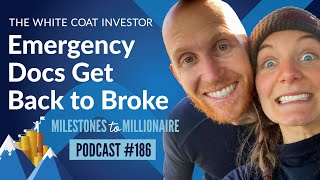
Ellen and Tom, emergency medicine doctors in Sacramento, talk about climbing out of student debt and building wealth while raising a family. They discuss mortgage strategies, the cost of living in California, and balancing hobbies with financial goals.
This is the White Coat Investor podcast Milestones to Millionaire. Celebrating stories of success along the journey to financial freedom.
This is Milestones to millionaire podcast number 186 emergency docs get back to broke. Resolve is the number one rated physician contract team, reviewing 1,000 plus physician contracts every year. They empower physicians with location specific compensation data, which leads to unparalleled leverage during the physician contract negotiation process if physician contract lawyers included can negotiate on your behalf, alleviating the stress that can go along with reviewing complex legal terms. Flat rate pricing and flexible schedules are designed for a physician's schedule. Use code WHITECOAT10 for 10% off@Whitecoatinvestor.com Resolve. All right, we've got an event for the few, the financially empowered women. Christine Benz is coming on. She's gonna be on September 11, 5:30pm she's gonna be talking about investing 101 and this is a treat. Christine is the head of the Bogleheads board. She is like the head guru of personal finance at Morningstar. She's been in this space for a long time. She knows what she's talking about. She gives great presentations. This is really a treat to have her on one of these events for the few. So sign up for that whitecoatinvestor.com Few that's F E w financially empower. Join the community and you'll get that event as well as other events. It's totally free and these events have been wonderful. They're well attended and we get great feedback on them. But I think this may be the very best one yet, so don't miss it. All right, we got a great interview today. Stick around afterward. We're going to talk for a little bit about paying off mortgages and a few reasons why. Maybe the more well to do you are, the less beneficial it may be to drag that mortgage out and the better off you might be paying it off. So stick around afterwards. Our guests today on the Milestones podcast are Ellen and Tom. Welcome to the podcast, guys.
Thanks, Ashali.
Thanks for having us.
All right, tell us what you guys do for a living and how far you are out of training and what part of the country you live in.
So I am still in my clinical fellowship. I'm an emergency medicine fellow in Sacramento and so just started the fellowship, so I'll be done with training about a year.
Okay, very cool.
And your fellowships in health policy? I finished training last year, so I'm one year out and we're in Sacramento, California. I work in two different sites.
One's a little Bit more rural up.
In Auburn and another in Roseville, which is a little bit more higher resourced.
Very cool. So one of you, you're out. One of you still in training. You know, it's not San Francisco, but Sacramento's not a cheap place to live either.
Yeah, it's true. Northern California is kind of. The whole of Northern California is moving that direction.
Yeah.
Yeah. So how do you feel about your tax bill? The first. First time you paid as an attending. Did you like that?
Oh, such a delight. You know, there's Christmas and then there's getting your taxes. I don't know which one's better.
Yeah, so we actually. Yeah. Putting aside 30% at least from his paycheck every month has been a huge. Yeah, that was a. And very strange realization. But, yeah, it's what needs to be done.
Very cool. Well, you guys recently hit what I consider my favorite net worth milestone. You just got back to broke, so congratulations to both of you on that. Let's talk about your net worth. Tell us about your debts and your assets and how it all stacks up.
Okay, so our approximate net worth as of today is $30,000. Our liabilities include around 350,000 in student loans. So 150,000 for me and then about 200,000 for Tom. He ended up going to a private medical school, so it was a little bit more pricey. There is. We also have 120,000 in a 0% down payment loan from Tom's parents because we actually were planning on staying in the area and we ended up buying a duplex when we first got married and we weren't anticipating the 20% down payment that that required from multifamily home. We had the 10%. But then when it required the 10%, a little bit. It was a little bit off putting. So we have. They are very generous. It's a huge blessing that they were able to do that for us. And so we're still paying that down. And then we have 470,000 on our primary residence mortgage. For our assets, we have around 108,000 in high yield checking savings accounts, plus a little bit of cash, about 150,000 in retirement savings at Pavilion Schwab. And that about 40,000 of that is in Roth IRAs. And then the house worth is around upwards of 700,000 right now per recent appraisal. And then we have about 30,000 in, scattered in the width of our cars, some silver that Tom got from his grandfather growing up, and then some I bonds as well.
Very cool. So a hodgepodge of assets, a hodgepodge of debts. It sounds like pretty typical physician story, Right? Doctors tend to start their journey with significant debt but high income and hopefully are able to rapidly start getting rid of debt and building assets. And it sounds like you guys are in the middle of this, a very real physician story we're hearing here. So what made you decide you want? I mean, here you are on the Milestones podcast, Right? At some point, the two of you have made a decision that finances are important to you, that you want to be financially successful. Tell me about that conversation when you had it and what it was like.
I think. I mean, our first conversation about finances was like on our second date.
Second date, you know, we would stand up paddle boards.
Yeah. We went stand up paddle boarding. And we were like, please, email finances. And so let's get real for a second. Yeah, we had that conversation early on. We both grew up in really spritzy households, and we knew that not having a lot of material things around, but being able to facilitate spontaneity in our lives and not spending our whole lives at the hospital was really important for us. That's why we both chose emergency medicine as a specialty in the first place. One of the many reasons. And so that's been. Yeah, so it's been kind of a natural progression since then. I'm definitely a lot more interested in finances than Thomas's.
Yeah.
I have to confess, I might only be here so we can talk about ice hockey for a little bit.
Yes.
All right.
That's why he joined. Um, but it's been a good mix. Like, he. He is fine to go along with whatever I kind of want to do, and I have. Yeah, like, I'm excited to. To work out different plans. I'm not a die hard hobbyist, but I definitely like to do a good amount of it. Diy. Um, so, yeah, it's been a fun journey.
Very cool. Well, it sounds like you promised Tom we could talk about hockey. So, Tom, are you playing on an adult league team or what?
Yeah, played last night. We're in the playoffs, so, you know, we've got the championship game, a couple weeks we're hoping to make, and then. Yeah, it's just such a good community. It's really fun. I'm excited to see what goes on in Salt Lake City for you guys. It's gonna be the Yetis or the Blizzards, whatever you guys decide to name your team.
But, yeah, yeah, we're pretty excited to have hockey here. Except they stole the ice. Time for my league to Practice. So one of my leagues is actually shutting down because they lost their race. There are side effects of bringing an NHL team your city, but that's okay. I'm playing on three different teams right now, so I still three, so.
Nice. Yeah. Ellen was gracious and said I could put two nights towards hockey next in this next season. So I'm happy. Yeah, very cool.
Well, here's the tough part though. As an emergency doc. As you know, more people come to the emergency department in the evenings than any other time of day. And so just by its nature, you tend to work more evenings. So how has that limited your ability to do things like playing on teams, coaching, going to, you know, kids activities? These are all the things that docs get limited on when they're emergency docs. They don't work that many hours, but the ones they work tend to be in the evenings. So how are you dealing with that?
Yeah, that's a great question. I think sometimes joyfully, sometimes painfully, depending on what night of the week we have a one year old and another on the way. So that has complicated our lives a little bit more before. My group is fantastic regarding schedule requests. So whether it was a weekend night or a weekday night, usually I could get one or two nights off a week that I'm requesting for date night or for hockey. And so that's actually worked out well. You just can't have, I think, too high of expectations that you're saying you kind of have to expect the swing shifts frequently. But we did get an au pair when we about six months into our first kid and that has changed things significantly. So yeah, I think just having flexible childcare actually opened things up. The constraints of the ER job we were kind of used to, but it was, it's still better than residency. I mean, I think that's kind of what I had to remind myself of. You know, I still get more requests off residency, see, and I'm slowly starting to adapt to realize this is probably the rest of my career. And so I've actually started to think a little bit more about either a fellowship or transitioning to family practice. Just depends if I decide that evenings and having some more stable schedule is important for our family. So yeah, it's challenge. It's always kind of a conversation.
Very cool. Now, Ellen, you guys are in California, right? California is a tough place for doctors to do well financially. Right. It's easy to tell when I talk to somebody from Indiana or wherever, Oklahoma, they've got low cost of living, relatively low taxes, sometimes they get paid More than the average because they're in a medium size or small town or whatever. You guys have decided to stay in California where the tax bill's a little high, where cost of living are definitely high. Sometimes pay is not awesome there for doctors. Depends. Tell us about that decision and what sacrifices you feel like you've had to make to do that and how you've managed to live both where you want to live and still be financially successful.
Yeah, I think that for us, geographic arbitrage just wasn't an option because both of our families are in California and we love our families and we want to spend a lot of time with them. Our communities are here, so it just wouldn't make any sense to live anywhere else. I think that it's also. It's also wonderful to keep in perspective, like, how we grew up. And the amount of money that we're making now is just bonkers compared to the amount of money that either of our parents made growing up combined. And so even as residents, when we were pulling in, either, both of us were making about 70,000 each. We were making more than, like, either of my parents had ever made combined growing up. And so that, like, to keep that in perspective and say, okay, we are incredibly blessed to have these huge shovels already during residency. Yes, we have a large amount of debt, but there are plans for us to figure out how to make that work. And so it was never really a big source of anxiety because, yeah, we just have these huge shovels and like, the magnitude of the shovels compared to our parents, it's just. Yeah. Keeping that in perspective.
Yeah. Very cool. Now, you mentioned your house was about $700,000. Now, a $700,000 house in Sacramento is not a mansion. How many square feet is your house?
It's 2000. So the. On the bottom where we live is a thousand square foot home. So it's two bed, one bath. So we'll see. I don't know how many kids we're going to have, but I think that will probably be the limiting factor in how long we can stay. But we're planning to stay for at least seven years. And then we have the two bed, one bath on top as well that we rent out. Well, right now we have the au pair living there, but then one of the rents we rent out to a local researcher.
Yeah. Okay. Now your net worth is just a little more than positive. Now, what was the nadir? What's the lowest your net worth ever was?
The nadir was right when we graduated from med school. So it was negative $350,000 when we graduated.
Negative $350,000. Wow.
Yeah.
Okay, tell us how you've been so successful, right? I mean, you've gone from minus $350,000 to now a positive net worth. And only one of you is even out of training yet. So tell us your secrets to success.
I think one of the big things is having hobbies that really don't cost that much money is an important thing. So starting out with that, we like to go white water rafting and backpacking and he likes to play hockey, which the dudes are a little bit more expensive now, but they're nothing like, I don't know, getting into really fancy cars or getting into really fancy restaurants. So I think having cheaper hobbies and then also really valuing time with family and friends. Instead of going on really luxurious vacations, we usually end up driving down to Santa Barbara, which is one of the most beautiful places in the world, and visiting our brother to sister in law and aunts and uncles. We'll go up to Reading to visit our family as well, and occasionally out to Colorado to visit his sister in law. So there are local things that we're doing and really valuing that time with family and friends, I think has been huge.
Yeah, yeah. And then another, you know, standard tip that is important is just making a budget that you both agree with because reasonable and sticking to it. For us, we had a lot of conversations early on in our marriage about, you know, where we can be more flexible or less flexible than budget and just being really honest about that and saying this. Well, our grocery bill actually isn't. It's not reasonable to. For both of us to eat on 200 bucks a month. Let's increase it, you know, oh, it's not reasonable to read on $300. You know, so just having that conversation fluently about all of your budget and then that's been helpful. And then having the same values. We both know that. Yeah, I'm not worried about Ellen going and splurging it. Nordstrom, you know, a thousand dollar dress or something. She's not that kind of woman. And you know, I love her for it. But yeah, having the same mind regarding what your values are and what's worth money and what's not worth money.
And I think going forward, two of the things that I think have really set up up well are not only meeting with somebody from a student loan repayment advisor. And so we met with Andrew and he, we figured out that we saved about 50,000 bucks by consolidating my LDs. So the loans for disadvantaged students, we consolidated those with federal loans and put me in a different IDR program. And yeah, is going to save us 50,000 in the long term. And it's definitely nice to have him on board. And also we're with Aptos Financial. And so having both of those folks on board just as sounding words. And then also places to ask questions when weird times come about. Like right now when save is on hold, it's good to have those experts and a little bit of a board of directors to go and ask questions too.
Yeah, it's nice to get a little bit of help. And the beautiful thing about it is it's not all or none. Right. You don't have to. To turn everything over to an advisor or do it all yourself. You know, there. There is a middle pathway there, which is. Which is pretty cool you guys have discovered. So, Tom, what did she say when she found out hockey sticks cost 300 bucks and they break awfully easy?
It's a great question. Some things you just don't talk about. No, no, no. So the way we've decided to balance kind of the more expensive hobbies and still give some financial freedom as we, we created a monthly fund fund, and it's a no questions asked. You can spend whatever you want, but you can't go over. And so I think right now that's again, with flexible conversation, you. You can front load your fund fund up to three or four months in advance. So I do get to pay for my hockey dues and if I break a stick, you know, and hopefully it's not two sticks in one month.
Yeah, yeah.
And Facebook Marketplace is a great place to find some old, cheap sticks. And you just, you gotta learn to play with what you got sometimes.
So, yeah, you know, what I discovered recently is they can repair those carbon fiber sticks. There are places that repair them now for 75, 80 bucks, you can get your stick repaired. So. Worth it. Yeah, it's my new frugal, Frugal thing. So I have a couple of them repaired recently. All right, well, very cool. You guys have done awesome. You should be very proud of yourself. Thank you so much for being willing to come on the podcast and telling your story to inspire others that they can work together with their spouse to be financially successful. They can get back to broke even if they live in California. And we just know you guys are going to continue down this pathway and continue to have more and more successes and look forward to hearing about other milestones you'll Hit in the future.
Thanks very much. We appreciate being hosted on the show.
All right. It's always great. I love doing back to broke milestones because it's the first milestone, right? Really in the pathway of a physician's financial life. They've still got student loans. They're just in the middle of where do we put our money? We got all these great uses for money. We're not sure where to put it. They've got struggles, young kids, high cost of living area, still figuring out jobs, doing fellowships, but still taking the time to do finances. Right. And become financially successful. Right. It's interesting. We see people that are five years out and 10 years out and 15, 20 years out and that are super successful. What did they look like when they were a year out or when they were about to come out of training? This is what they look like, right? Because they're paying attention to finances, they're making sure they're saving. They've checked the financial boxes. This is what it looks like in the beginning, right. And then a few years later, all of a sudden they're on here talking about having $5 million. You can do this just like they're doing. No, it's not easy in the beginning. There are lots of difficult decisions to make and some sacrifices to make. But it is almost always worth it when you frontload, taking care of the finances in your life. And you can still play hockey, right? And go rafting and do all that kind of fun stuff at the same time. That's the important part. Okay, I told you we were going to talk about mortgages. And you know, most people understand the math behind a mortgage, right? You figure out your after tax interest rate and you look at the risk free rate in the market, what you can go get in a CD or in a high yield savings account or a money market fund and you go, well, if I can earn more elsewhere, maybe I shouldn't pay off the mortgage and I should carry it out. That's the way the math works. If you can make 5.3% in the Vanguard Money Market Fund and you're paying 2.5% on your mortgage, you can make a mathematical case for dragging out your mortgage, at least for a while. Most mortgages coming out today are 6% and 7%, so you can only make 5% in the money market fund. It doesn't necessarily make as much sense to drag out your mortgage right now if you've just gotten one. But if you picked one up during those low interest years, you can make a mathematical case. There but there's a few things I want you to think about, particularly if you're relatively well to do. Some reasons why you might want to consider paying off your mortgage early. The first one is that if you're wealthy, you're probably maxing out your retirement accounts. So you are now comparing investing in a taxable account to paying off the mortgage. Right. I mean, if you can max out another 401 or Roth IRA or something, that's often a better use of your money than paying off a mortgage. But now you're investing in a taxable account, right? There's going to be tax drag on that, particularly if you're investing in lower risk stuff. You know, it may not come out ahead of what your mortgage is, and you might be better off just paying off that mortgage. Another thing that higher earners have to deal with is higher tax rates. We mentioned this on the podcast, right? They're putting 30% of their money toward taxes, and that's probably what they're actually paying on a 2 physician income in California, they're probably paying 30% of their income in taxes and every additional dollar they make is probably 50%. That's just the way the progressive tax brackets work. But the higher your tax rates, the lower the actual after tax yield is going to be on your taxable investments. And so that makes it more likely that paying off your mortgage is going to be the right move in comparison. Okay. Another thing that the wealthy deal with is that there's a lower marginal utility for extra wealth. Now this is an economic term, right? Utility is like the benefits from, from having more money when you're very poor, a little more money makes your life a lot better. When you're pretty wealthy, a little extra money doesn't make your life dramatically better. And the more you have, the less marginal utility of investing at 5% and paying debt at 3% is going to give you. It just doesn't move the needle after a while. And so you're more likely to simplify your life, pay off your mortgage, et cetera. All right. Another reason why it can be beneficial to pay off that mortgage early is it's kind of a little bit of a luxury. Good. I haven't had a mortgage since 2017, so what's that, seven, eight years now? I never have to make a mortgage payment. I don't have to worry about it. I don't have to worry about the bank coming after my home. My house is paid off. I get a brag to you that I have a paid off house. It's a luxury in some ways, but in a lot of ways it's the ultimate luxury. Good. It's the ultimate status symbol. Paid off mortgage. No, I don't drive a Tesla. I did rent a McLaren, but I don't drive a Tesla. I don't drive a sports car regularly. But I got something that's maybe in some ways a little more of a status simple. I don't have a mortgage. Okay? Another thing that debt gives you, debt gives you inflation protection, right? If you have fixed rate debt, especially at a low rate, right? Let's say you got a mortgage at 3% and inflation goes to 9% like it did a couple of years ago, well, you're now paying back that debt with deflated dollars. That's some prediction. But you know what? The opposite happens too. If there is deflation, you start earning less, your money's worth less, et cetera, or your money becomes worth more. Well, you still owe the same nominal amount on your mortgage, and so paying off that mortgage actually gives you some deflation protection. You lose the inflation protection of having the mortgage, but you get deflation protection. Now, while deflation is not as common as inflation, it's not like there's no value there. And finally, one reason why it can make sense to pay off your mortgage is if you are paying advisory fees to a financial advisor, right? If you're paying an asset under management fee, they're generally not including the value of your home, right? And so if you had $500,000 in a taxable account that they're managing, you're paying them 1% a year, that's $5,000. You're paying them for that money. Whereas if you took that $500,000 and put it toward your mortgage, it comes out of the assets under their management. You're no longer paying fees on it. You just saved $5,000 in fees. And that makes it so the break even calculations a little bit different. Now, obviously, you got to run the numbers, you got to see what your goals are. You got to decide how much leverage risk is worth taking. You got to decide what your goals are when, if ever, you want to be mortgage debt free. But keep in mind that there are lots of great reasons to pay off your mortgage, even if it's possible to earn more than your mortgage rate on your investments. All right. Our sponsor for this episode is Resolve, the number one rated physician contract team. Reviewing 1000 plus physician contracts every year, they empower physicians with location specific compensation data, which leads to unparalleled leverage during the physician contract negotiation process. A physician contract lawyer is included and can negotiate on your behalf, alleviating the stress that can go along with reviewing complex legal terms. Flat rate pricing and flexible schedules are designed. For a physician's schedule. Use code WHITECOAT10 for 10% off at whitecoatinvestor.com resolve all right, we've come to the end of another great Milestones to Millionaire episode. I hope you enjoy listening to these as much as we enjoy making them. We are here to serve you. We want to know what you like about it, what you don't like about it. Send emails to editorwhitecoatinvestor.com and we will make changes. People are like, we don't like this. Well, we get rid of it. The show you're listening to now is the way it is because of feedback we've received over the years. So we appreciate those of you who have given us that feedback, as well as those of you who have volunteered to be on this podcast. You can sign up@whitecoatinvestor.com Milestones all right, we'll see you next time. Keep your head up, shoulders back. You've got this.
The hosts of the White Coat Investor are not licensed accountants, attorneys or financial advisors. This podcast is for your entertainment and information only. It should not be considered professional or personalized financial advice. You should consult the appropriate professional for specific advice relating to your situation.
More from Jim










Physician Takes a Youth Sports Team to the State Championship - MtoM Podcast #236
