Heroes of My Life, Part 2 - WCI Podcast #393
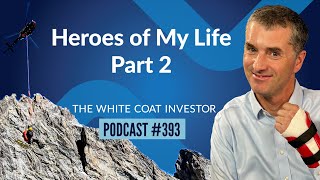
This is a YouTube video titled "Heroes of My Life, Part 2 - WCI Podcast #393" published on November 14, 2024. It is an English-language podcast episode featuring Jim Dahle and several other participants including Katie Dahle, Christian Feinhauer, Ken Kreiss, Mick Shane, Clint Van Hoff, and Brandon Kelly. The episode recounts Jim Dahle's serious climbing accident on the Grand Teton, detailing the rescue operation by park rangers and medical personnel, the helicopter extraction, and subsequent medical treatment. The content is a detailed conversational narrative involving multiple speakers discussing the incident, rescue logistics, and medical care.
This is the White Coat Investor Podcast where we help those who wear the white coat get a fair shake on Wall Street. We've been helping doctors and other high income professionals stop doing dumb things with their money since 2011.
This is White Coat Investor podcast number 393 the Heroes of My Life Part 2. This episode is brought to you by SoFi helping medical professionals like US bank borrow and invest to achieve financial wellness. SoFi offers up to 4.6% APY on their savings accounts as well as an investment platform, financial planning and student loan refinancing featuring an exclusive rate discount for med professionals and $100 a month payments for residents. Check out all that SoFi offers at whitecoatinvestor.com SoFi loans originated by SoFi Bank NA NMLS 696891 advisory services by SoFi Wealth LLC. The brokerage product is offered by SoFi Securities LLC, member of FINRA SIPC. Investing comes with risk, including risk of loss. Additional terms and conditions may apply. Our quote of the day today comes from Shelby Mc Davis who said, invest for the long haul. Don't get too greedy and don't get too scared. I like that quote. There's, you know, it applies to climbers just as much as it does to investors. Don't get too greedy, don't pick up too big of an of an objective, but also don't get too scared while you're trying to accomplish it. Thanks everybody for what you do out there. As mentioned in our last episode and in this one, I've had a lot of interaction with the medical profession in the last few months. I'm very grateful for those who have taken care of me and I've really gotten a front seat view as a patient into what it's like to interact with our medical system. And so thanks for all of you out there who've dedicated so much of your lives, so much of your time now to providing that care to people like me. We appreciate it. Okay, those of you out there who are first year medical, dental or other professional students, please sign up as the White Coat Investor Champion for your class. You can do this@WhiteCodeInvestor.com champion. All you have to do is receive a couple of boxes of books and pass them out to your classmates. You can put it in their boxes or whatever, it's fine. Okay, take them to class and walk around and pass them out. That's all the Champions program is, is giving away the White Coat Investors Guide for Students to first Year Medical, Dental, et cetera. Students that's it. And if you'll do that and send us a picture of classmates with the books, we'll even send you some WCI swag. More importantly, if they apply this stuff in their lives, you might save them literally millions of dollars over the course of their career. And that makes you a true champion. So thanks. For those of you signing up to do that, this program will run through about March, but don't wait that long. Let's get this into their hands sooner rather than later. Whitecoatinvestor.com Champion is where you sign up if nobody else in your class has done so yet. Okay, I assume that most of you listening to this have already listened to podcast number 392, the one that was released last week. If you have not yet done that, you should probably go do that first before listening to any of the rest of this episode. In fact, if you really want the full experience, you should watch this on YouTube. The YouTube version of this includes not only a video of the people I'm interviewing, but it includes some videos that we're taking, as well as some still shots taken on the climb and during the rescue. So there's more to see than just what you're hearing on this podcast. So if you're listening to this on the drive to work or something, keep that in mind. You may want to check it out later. Okay, let's recap a little bit for those who haven't heard anything about this in the last week. As you'll recall, we left you in a bit of a literally a cliffhanger moment when we last left you. I was hanging on the side of a cliff, a 2,000 foot tall cliff, the north face of the Grand Teton. Christian, my climbing partner and I are at about 12,000ft. I've had a terrible fall. I've fallen over 30ft sideways upside down, smacked my head. I've got a serious head injury. I was hanging upside down, leaking fluid from my nose, covered in water from the burst camel, back in my backpack, bleeding all over the place, with breathing that was not normal and hanging upside down. Christian tied me off at the belay, soloed up to me, turned me over, got me conscious again, and then guided me back to the belay and stabilized me there by tying me into the belay, sitting up on this one foot ledge 300ft above Teton Glacier, 5,000ft above the parking lot and below, almost 2,000ft of relatively loose rock raining down from time to time upon us. And he has pressed the panic button. He has pressed, called 911 and reached out to the rescuers. And in today's episode, we're going to find out what they did as well as the aftermath. Now, obviously you know the very end of the story because I was the victim of this situation and here I am recording the podcast for you. But there's a whole lot that happens in between where we left off last week and me recording this podcast today. And we'd like to bring you up to speed on some bit.
My name is Ken Kreiss. I am a Ginny Lake climbing ranger in Grand Teton National Park. You know everybody. When we heard the call for a rescue on the north face of the Grand Teton, everybody's ears perked up and everybody kind of paused and was like, oh, it's game time.
So I'm Christian Feinhauer, I'm an ER doctor.
Okay, so you talked to the Jenny Lake rangers and what was your sense of this discussion you had with the lead ranger that day?
Well, I mean, I could tell they obviously knew what they were doing. My thought was to convince them that I knew what I was doing. I guess trying to give the best description of where we were and what had happened and, you know, you feel a little bit powerless. I just give them all the information and hope that they can make a pretty quick rescue. I started out on your phone, but then when it was apparent that we could just talk, I gave them my phone number and they would call me back and forth several times over the next hour or so, giving me instructions as to how to facilitate this rescue. They said they were going to send a helicopter up to just kind of make a surveillance and find out exactly where we were and check the conditions so that they could decide what the best strategy would be for them to rescue us.
Okay, so every now and then you got off the phone with them and you're just sitting there with this concussed person asking the same question over again, leaking CSF out his nose, covered in blood in a very remote place. I mean, there's nobody else up there. You couldn't even see anybody else. And what do you think about where you were at and the situation you were in at that point?
Less than ideal situation. Yeah, I mean, we were up there. At least we were in a safe place. I mean, I had seen a little bit of rock fall here and then even while we were climbing earlier on the route, but we weren't like in a shooting gallery where rocks were just coming down non stop or anything. The biggest issue was that we were in the shade and you were wet and we were just sitting there not doing anything. So we started to get cold and I kept asking you, are you cold? And you said yes. So I first put your fleece on you. I dug into your backpack and pulling out all your extra clothes, put on your fleece. A few minutes later, asked if you're still cold. You said yes. So then I put on your puffy jacket that was in there. That should help quite a bit. After a while you said you were still cold. Then I put your hat on underneath your helmet. Took your helmet off, put that hat on. Maybe that was my effort at stopping.
The bleeding too a little bit.
Put your helmet back on and then all the way to putting your shell on finally. And that was about all we had to try to keep you warm. Other than that, I just kept answering the same questions over and over about what are we doing here. I tell you there, I've contacted Search and Rescue, the rangers, they're coming for us, but I don't know when.
My name is Mick Shane and I do a bunch of stuff, seasonal work as a Jenny Lake ranger for Grand Teton National Park.
Now let's go back to that morning of August 21st when this call came in. What were you doing when you first heard that we were having a problem on the north face? And what were your initial thoughts?
We there was about maybe seven or eight of us, if I remember. Kind of a mix of seasonal and permanent ranger staff at the rescue cache in Lupin Meadows. And our plan for the day was to do a helicopter based training, a short haul training, which was very lucky as it turned out, that all those resources were there waiting when this call came in.
You were literally already at the helicopter, standing around the helicopter, ready to do some training with the helicopter.
Yep.
It's funny how that happens. There's been a few of those examples this summer. Very similar. So it's ironic how sometimes that happens, but we do a lot of trainings. I'm very thankful for our program to be able to set aside resources and time to stay up on these skills. I was also assigned to be.
One.
Of the duties that most of us have is being a SAR search and rescue coordinator for the day, which is a 24 hour shift. And you're basically the person who takes a call and organizes a rescue. If you've done any work within that field of rescue, you call it the incident commander. The ic, a guy by the name of John Paulides was training to be a SAR coordinator. And so he and I were put together I've been doing that, taking that role for three or four seasons now. And John's been around for 30 plus years. More as a paramedic in the park, less so as a climbing ranger. But he's kind of joined our group and he's one of us these days. So he was training and I was overseeing. And the phone rang at the rescue cache and we saw John disappear. It was probably his third or fourth day shadowing someone who's SAR coordinated for a few years. And when that happens, you disappear into a room, but there's windows and we're all watching to see is this something about to happen. And somebody walked in and took a look over his shoulder and saw that he had scribbled down north face of the Grand. And if I'm remembering right, I think what caught his eye was unconscious. 10 minutes, possible head injury. Some of this stuff was just scribbled on a little piece of paper. So that guy came out and announced to everyone that we had something going on and that we were gonna divert from our training.
And what were your thoughts? You thought somebody's up there on this loose wandering route you've done before, but maybe think nobody ought to ever do more than once or twice?
Yeah.
With, with the head injury, what were your thoughts?
Well, you know, a few questions come to mind right off the bat. One is, boy, I wonder where they are. Because that makes a huge difference if you're 100 or 200ft off the ground and you've just started the climb, or if you're right near the top, or if you're right smack in the middle and there's that particular route has some pretty extensive traverses. So it could be, it could be really complex if, for example, you were right smack in the middle of the north base. So that was one of my first thoughts. I wonder exactly where this is. And then weather plays a huge role whenever we're talking about accessing somebody in terrain like that, being able to use the helicopter. And if weather doesn't allow for that because of wind or some other weather limitation, then yeah, going down the road of a ground based rescue on a, on a wall like that, that's, that's a whole different story. So.
Yeah. So what happened next?
So John Paulides basically was acting as the SAR coordinator and his job at that point was to just collect as much information as he can. So finding out where you are, finding out what happened and then, and then, you know, as I said before, gathering resources, we kind of had that box checked already. We were all There essentially ready to go, minus some of the climbing gear. So we, we just sort of. I think regardless of what those bits of information were going to tell us, there's a bunch of things that we all could do just to get ready anyways in terms of switching our clothing around and getting some climbing gear together. So we, those of us that were waiting to hear more details are just kind of getting busy gathering some equipment like that. And then John came out and briefed the team and assigned roles. And that's kind of typical for how a big rescue goes.
Yeah. Now, just for the sake of those listening, I know what this is, but I think a lot of my listeners may not know what short hauling is. Can you give a brief definition of what a short haul is?
Yeah, it's basically moving humans on a fixed length of rope below the helicopter. It's usually 150 or 200 foot fixed line. And it sounds kind of crazy if you've never seen it before. It's obviously something we do a lot of training with, so it doesn't feel risky, relatively speaking, but it does allow us, you know, if you picture the helicopter on the ground and then taking off, hovering about, you know, 200ft off the ground. So now the end of the rope is just hanging off the ground and a ranger or two clip into it, and away you go to all kinds of different sites. I mean, one question going back to your question before bring that into it, was, you know, your specific location. If you're going to drop somebody off on short haul, then one thing to think about is that you have rotor clearance so that as the helicopter is coming in close to the mountain to get the rangers to your location. Of course, you don't want to have the rotors be anywhere near the cliff. So that's, that's an issue if you're on a very steep wall. Ironically, we were talking about doing exactly that kind of training that day, like picking a spot that was what we call typical terrain, like real mountain terrain. Not going to a parking lot or a gravel pit or like going up in the mountains and doing the real deal. And we've done that many times.
Okay, so you've been. The team's been picked. What happened next? Let's hear the rest of the story.
So the first thing that always happens is we do a recon of the site and get eyes on you and see exactly where you are and what we're dealing with.
Okay. So after an hour, you hear a helicopter. And what did they do?
They were just, you know, they Came in, they were kind of circling, you know, it's kind of like a big cirque, you know, formed by the other mountains there, Mount Owen and Teewinot. And they kind of circled around looking for us. And then I got a call that they were having. Actually before that, they had sent me a link to my phone where I could somehow enable my location so they could track. Track us on gps. But even with that, I guess I couldn't see exactly where we were. They asked also what clothes we were wearing so they could look for us and had to give them a little update that you were not wearing your T shirt anymore, that now you were wearing a blue shell. And then I actually put on my shell because it's red. I thought that would be easier to see. And I was waving my arms around trying to see if they could tell where we were. And eventually they said, oh, yeah, we see where you are now. And then the helicopter just left and we're alone on the ledge again. And I'm like, well, they know where we are.
How did that feel? Right? The rescue's right there and then they're gone, right? They're gone. You can't even hear the helicopter running anymore. It's out of sight and out of mind. What went through your head then?
Well, all I can do is trust that they know what they're doing. And I'm thinking, I hope they can short haul us, because if they drop a team and they try to lower us and go down to the glacier, that could be a really long process. And I like to get Jim to some medical care as soon as we can.
So we spotted you. I would say there was a little bit of relief seeing that you were relatively close to the ground, you know, 300ft or so off the, off the glacier. And then, you know, that's also when you're flying around over the site, then you. That's when you get the best information as far as weather. And things were looking pretty good at that point. So next step is to come back to the rescue cache. Typically, we'll shut the helicopter down and from an outsider's perspective, it might seem like, what's going on, why you guys need to be racing out the door, you know, burning building. And it's like, you know, we debriefed these rescues at the end as well, and everyone was really happy that we still decided to shut the helicopter down and have a solid briefing. Some of the big questions at that point were, okay, if Ken and I were short hauled in, then what's it going to be like getting right next to you, you know, what kind of a ledge are you on? Can four of us beyond that ledge and what kind of anchor do you guys have? So plan A was for Ken and I to short haul in together. And it sounded like you did have a four or five piece solid anchor. And the ledge that you were on.
Was.
I wouldn't call it a hanging belay. You know, you, you could stand on it, you certainly want to be clipped in. It's not a ledge that you would want to be walking around on unroped, but, but you're not hanging off the gear. So that sounded, that sounded pretty good. So yeah, plan A was to both of us come in and be inserted right next to you. If we didn't like anything as we were coming into, you know, I was calling distances from the, from your belay spot as we're being inserted, you know, 50ft, 40ft, 30ft, even as close as 10ft. I was eyeballing the anchor and the ledge to see if it was the way it had been described. And everything was looking pretty good as we were coming in slow and steady. So we touched the rock and clipped into the anchors and unclipped from the helicopter and away it went.
So what were your thoughts when you got there? I mean, now you're on this ledge with us, 300ft above Teton Glacier, the helicopter's gone at least hovering off in the distance, and you've got two climbers on that ledge. One of them doesn't look very good.
Yeah, well, again, from the trainings we've done, it works pretty well if you delegate tasks and kind of stay focused on the things that you've been delegated. Ken is a park medic, so his focus was you and finding out if there were immediate life threats and thinking about packaging and getting you out of.
There as.
Time efficiently as possible. And my focus was the operation as a whole, just what, what the anchors are like, what the conditions are like, and just kind of the nuts and bolts of moving around in that space and making sure things aren't tangled and communicating with the helicopter.
Okay, so you, you arrive on the ledge with us, clip yourself into the anchor, unclip from the short haul line, the helicopter goes off to hover. And my understanding is Mick was in charge of kind of the operation and the anchoring and all that. And you were in charge of patient care. So what did you think of your patient when you first arrived?
So, you know, I got there and honestly I was pleasantly surprised to See you, you know, and I could see this even while we were flying in, you were kind of leaning back on the ledge. Your arms were just kind of crossed, and you were just kind of sitting there, you know, moving basically normally, obviously protecting and supporting your own airway. And just you looked like a bit of a mess. Your face was all bloody and all that, but, you know, you were not crumpled on the ledge. Like, you looked like you were doing okay. So I was pretty relieved to see that.
Yeah. So what. What did you do as. I mean, upon your arrival, you. You become in charge. And as emergency physicians, we know this in the field, right? We know once the medics get there, we get out of the way, even if we're on a car scene or something like that, because their experience with out of hospital medicine is. Is significantly more than ours is. And so I'm. I'm confident Christian's just like, okay, I'm not in charge anymore. And you're now in charge of patient care. So what did you do?
Yeah, so, in short, not much. So just for perspective and kind of framing things, my training, I am nationally registered advanced emt, and within the Park Service, we have a bit of an expanded scope of practice and some additional training that allows us to do some things that are in a lot of systems, more paramedic level, narcotic pain control, some sedation and benzos, Versed, ketamine. I actually just finished up an ACLS course to do a little bit more of the cardiac meds under that program. But, you know, in the backcountry, particularly on a kind of technical scene like the north face of the Grand Teton, we don't do much, you know, in a lot of ways, we're just a transportation service. Because the reality is, like, for whatever our training in ems, we're not. There are very few problems that we're going to fix in the field. We need to get the patient to the experts who can actually fix the problems. You know, I think of like one of our longtime paramedics who is actually the incident commander on this, John Politis. He has a good phrase. He's one of the best paramedics I've ever met. Excellent instructor, and he has a good phrase. He says, you know, often or sometimes, great medicine can be bad tactics. You know, just imagine, like if I'd been.
We're.
We're on the north face of the Grand Teton, you know, at whatever 10 or 11,000ft on steep wall. We have to be anchored to the wall just to safely be there. Without being at risk for falling off. Like, imagine if I'd try to start an IV and hang a bag and like you're just. Then it's complicating anything else we want to do. Like, clearly the standard of care in the emergency room or even in most paramedic ambulances in most places in the country would be like, every patient is getting an iv, if not two, probably hang some fluid fluids like blah, blah, blah. But at the end of the day we need, I'm not going to fix your basilar skull fracture. Like we need to get you out of there. So in the phrase of another of our senior rangers, you know, probably the best medicine for you was a big dose of jed, A, you know, scoop.
And run, as we often call it.
Yeah, for sure. And so we train for and are kind of prepared hopefully to manage, you know, what we call the immediate life threats. We go through our X ABCs or whatever mnemonic or algorithm you want to use, but it's basically those immediate life threats, essentially massive bleeding, airway problems and basically that kind of stuff. Like those are the only real problems that we're going to solve or attempt to solve in the field in the case of a really severe accident before we are going to try to extract the patient. And even in those, really, that's only to buy us time to get them to the experts. So back to your initial question. What did I do? Not a whole lot. I was, you know, I was really, as I say, happy to see from far away that you looked like you were doing okay, you were sitting up, you're protecting your own airway, you're not bleeding out. And so I knew that from, even from far away, like this patient does not look like they're actively dying in front of me. So really it was just what do I need to immediately do for this patient? They're not actively dying. No immediate life threats that I can identify. Not bleeding out, airways protected. I put a C collar on based essentially on your mechanism of injury, taking a big fall, hitting your head, worried about potential spinal injuries and then.
Well.
Probably, I should say probably. The first thing I did actually really was, you know, my standard, hey, how are you, what's your name? And which is always great to hear. You responded, you know, gave your name, knew basically where you were and basically what happens, and then run through my rapid trauma assessment, make sure there aren't any other glaring life threatening injuries that aren't obvious because an emergency physician had already done all this. I didn't get any surprises. And Then, yeah, put a C collar on you to protect your cervical spine, and we put you in a screamer.
Suit.
Which is basically kind of a big diaper harness, and we got ready to get you out of there. That was what you needed, was to be not there.
Not there is exactly where I needed to be at that moment. This is the video of the helicopter lifting Ken and I from the ledge that Christian had secured me on. As you can see, it's a heck of a ride. In this video of me leaving that ledge, I'm in a C collar, and it looks like what I believe SAR people call a scream suit. Is that right? Was that the packaging?
Yeah, it's basically a big diaper, if you can think of it that way. It's like a bag that you just sit in and that clips to the end of the short haul line. And so Ken and you were extracted first all the way back to Lupin Meadows, which is, you know, five minute flight or so. And then. And then I spent my time just again cleaning up the gear, making sure nothing's going to get tangled as we're being extracted. And then, you know, 10 minutes later, your partner and I got extracted.
Yeah, he. He describes it as a pretty wild ride, something you do routinely. But to fly 150ft below a helicopter at helicopter speed is. Is apparently fairly exciting. I have no memory of it, of course, but I understand it'd be a wild ride to drop 5,000ft and fly five or six miles down to Lupine Meadows from there.
Yep. Yeah. No, it still is the first short haul training I ever did. I was probably in 1998 up in Denali, so I've been doing a lot of trainings and rescues, like the North Face rescue, but it's. It's still. It's still exhilarating.
Now, I don't remember being short hauled off this base, Christian, so we're gonna have to rely on your account of what this feels like to be short hauled from 12,000ft to under 7,000ft over the distance of what, five or six miles, I suspect, as the crow flies. Tell us what that was like when that chopper came back and attached to you and pulled you off the mountain and flew you to the base of the mountain.
Well, so, you know, they dangle the rope down, we grab the edge of it. It's got a big old ring that's kind of the clip in point. And I've got a Dyneema sling that. I know those are really strong, but it's like 1cm wide. And it's girth hitch to my climbing harness. And I've got a locking beaner on the end of it that I clip into that anchor point, lock it all up. I thought about putting a second one on, and the ranger said, oh, no, no. They like things to be really clean. No messy webbing going all over the place. So one line is attaching me to the rope on the end of the helicopter, and then it just lifts.
And this line is a centimeter wide and what, 2cm thick?
It's.
It just looks like a little string.
But I know it's.
I know it was brand new and I know it's or nearly new, and I know it's really strong, but it still looks pretty puny when you're thousand hanging off the end of a rope. So we go straight up first and then we start moving and you just feel that wind rushing through your hair. You start to sort of drift a little bit behind the helicopter as it picks up. Speed, speed. And then I look around and I'm in just the most stunning place you could imagine. I mean, I'm looking up the east ridge up to the Grand Teton. I'm looking down at these lakes. It's just gorgeous. I remember looking down at one spot and seeing a little backpacking tent in the trees. Somebody was camping down there or bivvying, but it was exhilarating. I mean, you're just flying, basically. You know, you think of all the roller coasters you go on, and this kind of puts them all to shame.
So this was the greatest ride of your life? Without a doubt. I mean, obviously the circumstances are terrible and somewhat terrifying, but pretty incredible ride, it sounds like.
Yeah, it was pretty amazing.
Okay, so we get transported to the rescue cache there by Lupine Meadows. And what happened next with your patient here? You've now got some other people there to help.
Yeah, absolutely. I was glad for that. So we actually had an air ambulance there in the meadows waiting already. The flight crew was there, and one of our senior paramedics in the park was there with the ground ambulance. And they were ready and waiting when we landed. We basically landed right, kind of between the helicopter, the air ambulance helicopter and the ground ambulance. And that crew was ready and waiting with all their trauma shears to cut all your clothes and your harness off and start doing all the things that, you know, we would like to do in the field or, but can't for logistical reasons. But yeah, we landed. I think you basically just went down on the ground into kind of a supine position. Just laying on your back and we got the screamer suit off you, and they immediately started cutting your clothes off. And, you know, going through all the. All the full assessment, trying to figure out what your injuries were and getting you ready to go in the air or ambulance.
Okay, so what was going on when you finally got to the ground? They dumped you in the meadow there at Lupine Meadows.
The temperature rose dramatically. It was pretty cold in the shade. You're up in the air and then you come down and it's nice and warm and toasty. And the helicopter just hovers there and slowly lowers until your feet hit the ground. And then you. I just unclipped my beaner and we walked away. As the got out of the way so the helicopter could land, me and the. And the ranger together, and they've got a little cabin there, that's their little search and rescue headquarters. And I go over to the front porch and I look over and there's another helicopter and they're actively like loading you on a stretcher and putting you in that helicopter as the helicopter that brought me out is landing. So I just got a little glimpse of you as I put you in the helicopter. And then you took off. Right after that. I called your wife.
So this, it cannot be a phone call you were looking forward to.
No, I'm just like, well, how am I gonna really break this news? But you know, your wife Katie, she's level headed, so she took it all in stride. Obviously very concerned.
Shortly after the rescue, or shortly after the medevac helicopter left the rescue cache, you received a call from Christian. Can you tell us about that?
Yeah, so I had actually just parked at the airport. I was going to pick up a friend's son and he needed a ride to an hour south to be dropped off. He was driving in from Texas. And I just pulled into the parking lot at the airport and I'm in Jim's truck. And on the screen pops up Christian and Rose. Fine hour. And I said, oh, that's not good. And then I was like, well, maybe it's his wife calling because she has a. Has a question about something they're doing today. Knowing I'd been up there on the mountains and, you know, of course it was Christian on the phone and, you know, he said, hey, Katie, Jim's taking a fall. They're flying him to the hospital right now. You know, he's complaining he's got some cuts on his head that are bleeding. He's complaining about his right shoulder hurting and his left wrist he's awake, he's talking. You know, he lost some consciousness and made it. Maybe it was mine being a bit naive or I think he downplayed it a little bit, not wanting to freak me out. And so. But of course, never. It's the call you want to get that your loved one is being life flighted to a hospital. And so he gave me a little bit details. You know, he was on his way to the hospital. I said, call me when you get there, because this hospital is three and a half hours away from home. I'm now trying to figure out what I've got this obligation to take care of this kid. And so trying to figure out what to do and waiting for really more information to know what I needed to do. Do I need to run, you know, rush to the hospital. It sounded like he was doing pretty good. Shortly after I got off the phone with Christian, about three or four minutes later, I get another call. It's a flight nurse from the medevac flight. And said, you know, Jim said, he's with the ER doc now. He's doing really well. He's awake, he's talking. You know, they've made it sound like he's. He's doing pretty good. And the reality is we really didn't know the seriousness of his injuries till probably the second day in the ICU when the docs were rounding and got a little bit more feedback on really what had happened and the extent of his head injury and his skull fractures.
Okay, so let's talk about before that second day of the icu. At a certain point, you start driving to Idaho and eventually arrive at the hospital to find out your husband's in the ICU and looking an awful lot like a patient in that icu. What'd you think then?
You know, I mean, it was. So ultimately I ended up taking the skid and ourselves dropping him off. I was waiting to hear from the ER doctor to sort of get a better sense of really what was going on. Once they had done scans and it had been an hour and a half, I still hadn't heard him. And so I called the ER and said, hey, my husband's been flown in there. Can you tell me what's going on? And so they got the nurse that was working with him, and he got on the phone and sort of gave me a heads up of a little bit more of what was happening, but still not to the extent, and just said, we're admitting him to the icu. And at that point, I'm like, hey, I'M on my way. And so I had a five hour drive because rush hour traffic had to stop by home to pick up some clothes, not knowing how many days I'd be gone. Luckily my parents were in town and so they could take care of the kids and I could just walk out the door, not really have to worry about what, what needed to happen at home. So that was a huge blessing and miracle. And really I just had the miracle of having just profound peace on that drive because I didn't know what I was going to go and find at that point. And I had a lot of people I had to call and just sort of let them know what was going on. I, you know, call some family, let, let Jim's parents and siblings know what was happening. I had to get a hold of his work because he had some shifts coming up in the next couple days and just say, you gotta find somebody to cover these. He's not gonna be working for at least a little, little while. And so, but I had a lot of peace during that drive and, but still the concern of like, what's the long term consequences of this, you know, it's, it's definitely more serious than what had sounded up to this point.
I'm Dr. Clint Van Hoff, I currently live in Idaho Falls, Idaho, work at Eastern Idaho Regional Medical Centers and I work in the emergency department. So I'm an ER physician now.
A number of weeks ago you got a call that there was an incoming helicopter with a trauma patient. Tell us the story.
Yeah, so this patient came in as a designated trauma from pre arrival. And so then when they rolled through, they kind of went into the room there and I just followed it right in and kind of known as a trauma. We got a little bit of the heads up of what it was and that it was this, you know, this male who had fallen off. They didn't, they just said fell off the Teton, the Grand Teton, which is a very large mountain. So I didn't know the extent of, from that, but, but yeah, I just followed him and followed you into the room and kind of as a trauma, I just started going through my, you know, the trauma mind, trauma algorithm, so to speak. And so the first question I just asked what, you know, what your name was to check the ABCs. And once you said, you know, I'm Jim Dally, I recognize your voice and the name. And I was like, oh, okay, I know who we're dealing with here. And so, but then going through that, I mean your, your primary survey was yeah, it was good in that the ABCs, your GCS was a little bit lower, but you were, you know, as we discussed your injuries, I mean. Yeah, you'll see why. But the secondary, I mean, there was some definite, like you had a deformity on the wrist, some lacerations, your FAST exam, everything else was. Was good from that sense, though. So then after that, we, you know, sent you over to CT scan and.
Then once you pan scam scan at this point.
Right, exactly. Fall off the grand tson. That's, you know, want to see what all there is.
You get everything scanned at that point.
Exactly.
I'm James Summers.
I do some trauma general and burn.
Surgery in Idaho Falls.
I met you in the trauma bay here at ERMC in Idaho Falls. You came in initially as a partial trauma or upgraded a little bit to a full trauma.
Partial trauma is all I got. Flown in on two helicopters and all I got was a partial trauma.
Partial trauma is what you got.
Unfortunately, you did really well on scene.
Where you not only survived the golden hour, you got yourself off the mountain during that golden hour and then were hemodynamically stable, blood pressure normal, pulse normal, interacting with the flight crew. But 50ft sound a little bit much to us. So that's why you got the upgrade to a full. When she hit our doors.
And so I met you about 2 o' clock in the afternoon, what sounds like about three hours after.
After the accident.
Yeah, it's actually pretty remarkable how quickly they got me there, considering where I was.
Absolutely.
So, yeah. So once you're on the scanner, though, I was kind of back in the control room and I saw the images popping up. I instantly saw the, you know, the air on the brain. And so at that point, and kind of with your GCs, as with 13, 14 or so, it was kind of like waxing and waning at times. But I called neurosurgery and kind of got them involved because there's obviously going to be some sort of communication going into the brain to cause that. I didn't see any blood or anything initially when I was looking at it, but the neurosurgeon was aware. And then I had also, at that time, I think, I believe, spoke with the trauma team. So they were kind of on board while you were still on the scanner. And then once we brought you back, they had kind of come in as well at that point. But then we'd done all our extra. The imaging. So, like your wrist, we had X rayed that and there was a few injuries with that. The balloon 8 dislocation, and then also some fractures, I believe in there. And so then we'd also. That from the imaging part, we found that you had a lafort, I believe it was a three fracture, if I recall. And then the wrist findings and the pneumocephalus, which kind of mentioned before. And so we had ENT as well. And then hand surgery kind of let them know they didn't come down in the ER at that point, I was just the neurosurgeon, trauma team, and myself.
Now, some of the people listening to this, many of them will be doctors. Some of them are not doctors. For those who aren't, can you describe what a LeFort 3 fracture means?
Yeah, absolutely. So it goes. So it goes 1, 2, 3, 3 being the worst. And it's just kind of the bones that it involves. And so it's kind of a fracture. You can kind of tell it by bedside a little bit, too. But if you move the maxilla, the bone here, if it's just the mouth that moves, or if it's the nose, or if it's like the whole face that's moving out with it and the fort three, is he kind of fractured everything around there as well. So your whole face was kind of mobile, considered an unstable fracture there.
Yeah, so I basically detached my face from my skull. Probably a fair way to say it.
Those are layman terms. I would agree with that.
Now, pneumocephilis is, you know, air brain. Right. I mean, if you break down the roots of those words, there's air around my brain. And I just saw this scan about five weeks after the fall. I had not seen my own head CT scan until I went to follow up with the neurosurgeons. I mean, it looked terrible. It looked terrible to me to see that much air around my brain. And, you know, I mean, I've taken care of lots of trauma patients. I can't remember ever seeing one with that much air inside their skull in my entire career. And so that was a bit short. Shocking to me. But this whole time that you're seeing this CAT scan, you're having conversations with me. So I imagine you weren't maybe as worried about it.
No, I mean, I don't disagree in the sense that, yeah, there was a significant amount of air in there and the level of consciousness that you had, because you're able to answer everything appropriately. And while I was giving care to you and everything, you kept saying, thank you, thank you, thank you. You're just extremely grateful. Just kept repeating that over and over. But you know what was also kind of surprising, too, in the sense we see traumas all the time with bleeds. Intracranial hemorrhage in some form. But it was kind of surprising to have that extent of pneumocephalus and that extent of an injury with no bleed. That was a little bit surprising, for sure. But. But, yeah, no, I agree. It was basically with the Le Fort 3 fracture. You had plenty of air that was able to get up in there, and.
All right, so you had a little bit of work to do on me. You had some lacerations and a deformed wrist. What else did you do in the ER before admitting me?
So, yeah, so starting with the face, ones kind of go down. I guess you had. I believe it was two or three decent sized lacerations there that required layered closure. And so. And I remember with that, knowing, with your LeFort 3 fracture, trying to be just kind of careful in that sense, but you kept looking away. I was like, at bedside here, and you kept looking away, and I was like, you have to keep looking at me. And you're like, okay, sorry. Thank you, thank you, thank you. And you kept saying thank you over and over. But then I would, like, put it. I would throw a stitch, and then.
You'D look away again.
And then I just. But after cleaning that out really well, and we did the face and then the wrist, the couple things with that, with the fracture and the dislocation, I actually just did a hematoma block with it. And so it was a posterior dislocation. And so just kind of right in that area. Just kind of numbed it up with some lidocaine. And I remember asking you, like, hey, can you, like, feel anything? Can you feel that kind of touching it just lightly? And you're like, nope, it feels. I can't, you know, feel my fingers either. Thank you. Thank you so much. Again, you said thank you over and over, but. But once I was all numb, I mean, you didn't move or anything with that? I was able to kind of just push that, pull that back on top of the carpal bones, line those up a bit better and splint that. And then the knee as well. Wash that out and then right on the knee. Put a couple horizontal mattress sutures in there.
And yeah, at that point, it was time to send me off to the icu. It sounds like. Yep.
At that point.
Yep.
Our trauma team neurosurgeon had seen you at bedside. I've spoken on the phone with our hand. So Specialist. And he was aware of the wrist, I think trauma had spoken with ENT for the LeFort fracture. And then, yeah, at that point we're, you know, at least from the ER standpoint, we had found the extent of everything. And luckily there was again, kind of surprising. No bleeding anywhere. But.
And yeah.
So we were able to send you upstairs to the ICU at that point.
So as I was admitted to the ICU, I had been diagnosed with a LeFort 3 fracture of my face, basically detaching my face from my skull with pneumocephaly, meaning all the fluid that's supposed to be around my brain had leaked out and been replaced by air and a CSF leak. Right. The cerebral spinal fluid was leaking out my nose, basically the zygomatic. The right cheekbone on my face had been broken. I had facial lacerations on my forehead. If you're watching this on video, you can probably see this, the scars on my face now. I had a knee laceration. I had bilateral first rib fractures. These are ribs that are underneath your collarbones and your scapula. They're pretty well protected ribs. But I'd broken it on both sides. I'd separated my acromioclavicular joint on my right shoulder, basically had a pointy shoulder on the right. I had broken a transverse process on my C7 vertebra, which is basically not terribly important bone to break in your neck. I had broken my scapoid bone in my left wrist and dislocated a perilunate dislocation basically next to that bone. Had contusions all over and had this weird little, not really painful bursitis on my right knee, suprapatellar bursitis, which is still there. I'm still trying to figure out what to do with that. So quite a list of injuries, but certainly could have been dramatically worse, given what happened.
My name is Brandon Kelly. I'm a neurosurgeon in Idaho Falls, Idaho, and I take call at a level two trauma center. And I have a general neurosurgery practice. And I also do complex spine reconstruction.
And can you tell the listeners about when we first met?
We met in the emergency department at Eastern Iowa Regional Medical center where I work. And you were transported after having a pretty bad climbing accident. You were sitting calmly, relying Tom Lee on a stretcher. I knew that it was you, that you have some fans in the ER department here. And they told me that it was Jim Dolly. And he. I said, was a climbing accident? They said, yes. So I knew it was you before I came over.
Your. Your foresight is remarkable, but I guess not terribly surprising given my hobbies and habits and the part of the country you live in. I don't recall seeing my initial head scan until my follow up with neurosurgery about five weeks out. And I thought it looked terrible, but I'm curious what your thoughts were when you first looked at it. Since you look at a lot more of these traumatically injured people's head scans than I do.
I thought it looked terrible, as you said, you know, it didn't show any parenchymal injury was great. You know, you didn't have any big bruises to your brain and you didn't have any big blood clots between your skull and your brain, which was great. But the amount of air that you had in your head and corresponding loss of spinal fluid was impressive.
Now, I don't know, I've looked at a fair number of head scans with pneumocephaly. I don't think I've ever seen that much pneumocephaly on a head scan in my career. I imagine that's probably not the case for you given what you do for a living. But was that a fairly large amount for you or was that a small amount?
That was probably about as much as I've seen in somebody who looked good. I mean, I've seen that amount of air and people who are very. In very poor shape. But you were in pretty good shape. You were just sitting pretty relaxed on the stretcher when I came, introduced myself to you. It was a relief because when I saw that film I was concerned you were going to do poorly.
Now you decided to manage my condition non operatively. Was that decision challenging to make or was it a totally obvious no brainer to go ahead and manage non operatively?
Totally, obviously no brainer. Spinal fluid leaks are frequently seen after a head injury. Rarely do we see that much air. But jostling and transport and things of that nature can cause CSF to leak a bit more and as a result you end up with a lot of CSF leaking and air replacing it. The thing to do really though is to stay calm and see if there are any obvious ongoing leaks and then just do the conservative care. And conservative care is very simple. It's just raising the patient's head so that the head is higher than the spine so it takes pressure off the top part of the, the spinal fluid column with the brain at the top of it and then just try to keep that person Calm and comfortable and keep getting constipated so it doesn't strain or cough heavily or things like that to cause the leak to reaccumulate. It's pretty unspectacular neurosurgical management.
What was it like taking care of somebody you'd been listening to for years?
It was somewhat humbling in the sense that, you know, you're someone who's helped me a lot without ever having met me, and I was hoping that I could do at least return the favor. And there's also a little bit. Reminds us we're all humans, you know, you're somebody who's been a great resource and help for me and a lot of my colleagues, and there you are acting just like a human being. Is that a decent head injury? You're a little bit disinhibited and not yourself, but you're in the hospital, and it's our job to support you while you get better.
You know, when I got there, I mean, he was pretty bashed up. You know, it's a little bit. Bit of a shock to watch walk in. I mean, his face was black and blue, his eyes was swollen shut.
What. What should I tell him? Someone walked. He was all messed up. What exactly happened?
You fell.
Christian tells me that the holes came off with me and I fell, what, 30ft? Yep, 30ft. Smacked my head, my ribs, and everything else, and they had to fly me off the north face of the Grand. Thanks so much, man. I appreciate that. Wow. You're doing amazing, and I'm sure they'll get it all figured out, but I. I can't believe you're thinking so clearly. You got the best nurse in the world sitting right here.
Okay.
And. But, you know, he was alive and he recognized me. I mean, that was huge. But I was just, you know, I was glad he was. He was alive. And, you know, mentally, he seemed to be doing fairly good, all things considering.
And you're in the icu, basically, for the next three days. And I think this is a. A pretty important part of the story for a lot of the doctors on this podcast to hear. You know, what it is like to literally live in that ICU room for the next three nights, four days, essentially. Tell us what that was like.
Well, it seems like, why didn't you go stay at a hotel? And I was like, well, you didn't know when people were going to come and round and just get more information and to understand more what was going on. And so I had come prepared, knowing that I probably was going to Be sleeping in the hospital. You know, this ICU just had a reclining chair and wasn't awesome. But I didn't have any other desire to leave the hospital at that point, to just be there with Jim, to sort of be, you know, get up to date as much as I could as to what was happening, how his condition was, what was going on. I mean, Dr. Kelly, I think that first day we saw him at 7:00am and then 9:45 that same night. And so you just never knew when you would see a doctor and sort of get updates on what was happening. And so just that way, I just wanted to be there, to be able to be there to help him out as he needed. I mean, obviously, you know, our nurses are amazing, but they have a lot going on. And so sometimes Jim needed something and, you know, I was able then to just jump in and help him instead of having to track down a nurse or figure out what they were doing and help manage his care a little bit, because obviously he was a little worked out and he couldn't really communicate best what was happening that he'd be, you know, I could tell when he was in a lot of pain because he couldn't get comfortable. And, you know, but he couldn't always express that just with his head injury. And so sometimes advocating for what he needed and being there to help him with whatever he needed assistance with, whether it was just getting comfortable or going to the bathroom or needing help eating or something to drink and just helping him manage what he needed to have done.
Did they ever try to, you know, push you out of the hospital, encourage you to leave or tell you visiting hours were over or anything like that?
No. And I had asked when I got to the icu, and I just said, you know, what's the. Is our visiting hours. What's the situation? They said they could have one person in the room at all times, that I was welcome to stay. They let me know where the closest restroom was. But the nurses were amazing and very welcoming and, in fact, I think really appreciated my help that I could help with some of the more unpleasant things of helping you go to the bathroom when you couldn't get out of bed yet. And a few of those things, they were great and very helpful.
All right, well, you were actually my attending during my hospital course, right? I mean, you were in charge of this whole show. What. What thoughts did you have about my hospital course while I was there with you? In charge is a loose term, but.
Yeah, I got to round on you.
Every day and see how Things were.
Progressing, which you did very, very well. Fortunately, if you're going to catch yourself from a fall on your face, then come out relatively minimally injured, all things considered, well, that was the way you did it.
And you recovered very well.
You were groggy, obviously, we expect that. But you woke up, answered questions appropriately, and by about the day three or four, you were ready to go home and keep recovering back at your local place.
Yeah, as I understand it, I was asking to be discharged pretty much every day I was there. Was it hard to tell me no every day when it totally was inappropriate for me to leave the hospital? Fortunately, no. You have a remarkable life. If there's two people that are responsible.
For all of your recovery, it's going to be Christian and it's going to be Katie.
Yeah, absolutely. Hands down. Absolutely. I totally agree with you. You know, I spent three, three nights, most of four days in the icu. And, you know, I mean, I was on the trauma service, but the main reason I was there for that time period was due to the problem. You were managing my head injury. And I understand I was trying to negotiate my way out of the hospital the entire time. How did you decide when I was actually okay to go?
Yeah, the thing is, for us is I wanted you to be at least leak free. No active spinal fluid leak that you could report or we could observe for at least a day. And I felt that would be a reasonable amount of time for you to go home with a good likelihood of not having to be readmitted for ongoing spinal fluid leaks. So usually a day or two of someone being dry. And also, you know, you're. You have reasonable family and you have good access to medical resources. If you went home, had to be readmitted, I didn't think you were going to be lost following.
So Saturday morning, Dr. Kelly rounds and decides, hey, you know, you can probably go home now. What do you think about that? I'm sitting there in an ICU under the care of multiple doctors, multiple nurses monitored to the gazoo, and you're going to take me and put me in your bed at home. What were your thoughts about that?
By that point, I wasn't really concerned. Jim had been asking for every day prior to that about when he could go home. And, you know, they were talking about the things they needed to look for and what the concerns were. But I'd been with him 247 for those days prior to helping with his care. And so I wasn't really concerned about taking him home because I felt we could Manage what care he had been provided so far at the hospital that we could continue providing at home. As far as the assistance that you needed.
Now, Dr. Kelly told you not to trust my judgment for a while. Do you trust my judgment yet? Am I back to normal? And we should mention tomorrow is nine weeks out from the fall as we record this.
I think you're probably 95% of the way there. There's still some things that I'm like, really? There's still some memory issues occasionally, but you're doing really well.
All right, let's talk a little bit about finances. I mean, this is supposed to be a financial podcast. Obviously, most of the last couple of podcasts have not been about a lot of finances. But did our comfortable financial position provide you any reassurance or comfort while dealing with all of this?
Oh, absolutely. You know, I mean, it's. You know, you're faced with a stark reality of what would happen if my spouse passed away today, which very well should have happened, could have happened that day, based on the fall that he had. There's a lot of people that haven't survived similar falls. And, you know, so there's a lot of, like, wow, what. What would I have done if that had been the outcome? But it was a huge blessing to not have to worry about, you know, how are we going to pay our bills? Or. Because knowing we were financially independent, I'm like, I don't even have to worry about money. And even if he passed away, I wouldn't have to worry about money and how I'm going to pay for a funeral or any of those things. And so that was a huge thing that, you know, when I called the medical director and said, jim's going to be out for a while, you know, can somebody cover his shifts? We didn't have to worry about where income was going to come from. And so that was a huge blessing. That was a huge relief to not have that aspect to have to worry about.
My name is Brett Stevens, and I am the COO of the White Coat Investor.
Now, we've talked in the past about the Jim Gets Hit by a Bus plan for wci. What in your mind, was that plan prior to this incident?
Well, now, just so you know, everyone talks about it as the gym falls off a mountain, but the plan and the concern was always what will happen? You know, Jim, you're such a key part of everything we do here. And from the day that I was hired, which is almost five years ago, the concern was, how do we change that? So if Something did happen, or sort of, you decided to make a change in your life, that the good we're doing could still keep happening. And there's a bunch of different areas where your face and personality and, and beliefs stand so, so true and are so important to our readers. One of those is on the blog, and the other key one is on the podcast. And so those in those areas we've put, especially on the blog over the years, we put a lot of effort into making sure. We had other writers making sure that if something happened, we could. Wouldn't be pretty, but we could at least extract, you know, the gym dolly from, from what we were doing now on the podcast. That's something that's been harder. And we have, you know, we've struggled to. To have success with. You just do too good of a job, and it's hard to overcome that. But, but those were the types of plans that we, We've talked through and we're working towards. And unfortunately, this was a chance that we had to test that plan, especially in the immediate aftermath when we didn't know what the. Your condition may be in the future.
Yeah, well, let's talk about that immediate aftermath. I mean, Katie's driving to Idaho. I'm sitting in the icu. Right. And it's now your job to guide WCI through this period. You've got some news to break to some employees and some guidance to give. Tell us what you did to guide WCI through those first few weeks.
You know, the first thing that happened for me was very much personal. You're a good friend of mine, and the concern was for you and your family and your life. But shortly after that, we quickly changed to the discussion and what we need to do with wci. I reached out to a few of the key members of wci, our executive team. I reached out to Megan and reached out to others who would have to deal most with the challenge of either you not being there in the short term or long term. And we made plans and we have such a great team. Megan does such a good job with the podcast and understands well what we're working on. And that was our biggest challenge that with Megan. We sat down and we decided, okay, how can we get through this today? How can we get through this next week? How can we get through this next month? And if it comes to it, how can we get through this long term? And honestly, we didn't work all the way through the long term plan. We got through what we needed to for a week, and then a couple weeks and then a couple months and at that point it appeared that you were going to be back and not too silly in the head and able to continue what you were doing and continue the mission. So we didn't ever have to get all the way into that long term plan. But with the great input from others, we were able to quickly come up with solutions and it's gone well. Our plan got us through the month of September and October and involved bringing other guests on and we're all bringing up and pulling back to a couple of podcasts from the past and it's gone smoothly and the audience has been understanding and taking that well and, and it's worked well. And on the, on the written side of things on the blog, you know, we planned that far enough in advance that getting through a two month lull like this really was no change at all. We tweaked a few things, moved a few articles here and there, but in the short term that was, it was pretty simple.
Yeah, you know, I felt like I was kind of back with it and frankly ready to go back to work. About two weeks out from the fall, you know, that was about the time I was recording the introduction of the, to the first podcast people heard. You know, that was out of the ordinary. And so it's, it's interesting that way to think about the plan. And I felt like, I remember the first thing I thought was, shoot, we got a plan laid out for the next couple of months. Let's just do it and see how it looks, you know, and see how the audience reacts to it and what they think of what we're doing. And so we ran a couple of interviews I'd done in the past. We ran them again. We had a few guest hosts on the show. We had Josh, our content director, doing some interviews for the Milestones podcast. And you know, the end of the day, after a couple of months, we didn't hear any complaints about it. And the plan seemed to go pretty well. I thought some of the episodes that were recorded while I was gone were awesome. And so I thought the plan worked out very well as it was laid out.
I would agree it went smoothly and it's worked out well. And you know, we've got to thank everyone who stepped up to help make that happen.
For sure. Yeah. Well, Brett, thank you very much for all the guidance you did for WCI as I was recovering and we appreciate all the effort you've put in here over the last five years. A lot of people may not realize this, but when Brett was Hired. You know, the end of 2019, beginning of 2020, I was totally burned out on WCI. I was like, I cannot do this long term. This is too much. And we were trying to decide whether to make WCI bigger and hire more help or just make it smaller and do less. And the fact that we got bigger is in large part due to the work you put in the last five years. Very much for that.
Well, you're very welcome. I'm just glad that you're safe and well and we're able to continue forward. Thanks, Jim.
Well, Christian, I've told you this before, I think probably countless times, but I want to do it once publicly. You saved my life. You're my hero. And I cannot tell you how much I appreciate what you did on the side of the Grand Teton for me. So thank you so much.
I know you would have done the same for me. We're climbing partners. That's. That's what we do.
So you're welcome. And I want to take this moment also to thank Katie very publicly for taking care of me for the last couple of months. Even now, there are still things with my hands still in a splint as we record this that I cannot do. We just came back from a backpacking trip. We did. And I literally could not stuff my sleeping bag. I can't put it in the bag. I can't roll my pad very efficiently. I can't put the tent up and take it down. And so, so many simple things like that that she's been taking care of over the last couple of months, as well as carrying the weight emotionally for our family, for our children, for our marriage. I'm very thankful to you for that. And you know, you are part of the life saving team. You had medical instructions when you came home. I still had to sleep with my head up for a couple of weeks afterward. And so you were part of that team that saved my life, and I thank you for that. You're welcome. This is a financial podcast. We probably need to talk about a few financial things that are relevant, one of which is disability insurance. Now, I have been telling doctors to buy disability insurance for years and years and years because it really does happen sometimes. It's usually actually not trauma, like what happened to me. It's usually an illness. You know, you develop cancer or you develop Ms. Or you develop some sort of back issue, right? Well, sometimes it is trauma. It's a car accident or it's a recreational accident like what I had. Disability insurance is what protects your income. If you rely on your income or anybody else relies on your income to live. You need disability insurance and you need to buy it. The earlier you buy it, the cheaper it is, the longer it may pay you, and the more likely you are to qualify for it. So get it early. You know, I tell doctors to buy it pretty much as soon as they come out of medical school and start earning some money as an intern. Likewise, if anybody else depends on your income, you also need to buy a big fat term life insurance policy. Now, we have people that we can refer you to that help with these insurance policies. Just go to whitecoatinvestor.com insurance. They can help you get disability insurance and life insurance. That can be challenging if you're a climber. You know, when I first bought disability insurance, I actually had a writer put on my disability insurance policy that basically made it so if I got hurt climbing, it would not have to pay. And so if I still had that disability insurance policy in place, it wouldn't have actually paid me anything for this injury. The other thing to keep in mind is long term disability is really the financial catastrophe you want to protect against. Luckily for me, this has been a pretty short term disability, relatively speaking. And these policies generally don't start paying you until after you've been disabled for three months. It's actually four months because it takes them a month to pay you. But in this case, I'll be back working in less than three months. And so it wouldn't have paid me anyway, even if it did cover rock climbing. But in the event that you had a disability that lasted longer than that, you'd be very glad you had disability insurance. And in the event that you didn't make it, your family would be very glad you had term life insurance. So please get those pieces of protection in place. It's really important. The other thing that you ought to have in place, especially if you have children, minor children, is some estate planning. You know, the basic piece of estate planning is a will. And a will not only says where all your stuff's going to go when you die, but more importantly, it names who's going to take care of your minor children and who's going to manage your assets, your estate, on their behalf until they hit the age of majority. And so that's also a pretty important thing to have. And sometimes it takes a close call like mine to really convince you that you need to do these things. But I promise you, these are not complicated things, they're not terribly expensive things. Disability insurance is pricey because it gets used, but not terribly expensive things that you really ought to get in place in your life if other people are depending on you. One of the more interesting things about this incident, obviously I had a pretty severe head injury. People describe that to you already. They say when you have a head injury, sometimes you have a personality change. Well, if my personality has changed at all, it has changed in a way that has made me dramatically more grateful for those in my life. And I wanted to take some time to name as many of my heroes as I can by name. On this podcast you heard from Christian Feinhauer, my climbing partner and friend who literally saved my life. There were a number of rangers involved in my rescue, far more than we heard from on this podcast. The one in charge was John Paulides, paramedic and a search and rescue coordinator. Case Martin was a helicopter and operations manager. Cody Evans was in charge of planning and logistics, as was George Montopoli. Jack McConnell was a heli base manager. Levi Yardley was the medical unit leader. Andrew Walters was the dispatcher and in charge of logistics. The Rangers on the helicopter team that came for me include Ryan Schuster, who was the spotter in the helicopter, John Bort, who was the helicopter pilot for Teton County Search and Rescue. And we heard from Mick, Shane and Ken Kreiss, the climbing rangers and medics EMTs that literally came to me at the end of a cable dangling from a helicopter. But there were other rangers involved. There were rangers on the ground team preparing for a lowering operation like what happened in that 1967 rescue. Chris Bellino, Nick Armitage, Zach Little, Forrest Young, Gordon Fletcher, Casey Hurt, Lexi Hunsicker and Noah Ronzowski. You didn't have to come for me, and I'm grateful the helicopter was able to do it, but thank you for being trained and willing to do so. I was unable to get any of the names of those in the medevac helicopter, the second helicopter that carried me to the hospital. But if you're able to hear this, I want to thank you as well for your work that day. I want to thank the nurses that took care of me in the icu, including Heather, Cami, Keegan and Leah, as well as my ER nurse, Eric. I want to thank the doctors at the trauma center in Idaho, Emergency doc Clinton Van Hoff, trauma doc James Summers, who is my admitting attending. William Wilson with plastics in hand. Austin Baker, the ent, Brandon Kelly, who we heard from the neurosurgeon Bertrand Da Silva, the intensivist, as well as whose partner, whose name we were not able to get but who spoke to Katie on the phone when she was en route to the hospital. I'm grateful to the housekeepers, the cafeteria workers, the aides, the techs, the rts, the lab personnel, the X ray and CT techs. I work in a hospital. I know there's a lot of people that keep a hospital running besides just the doctors and the nurses. And I'm grateful for your care. I'm grateful for those who have been taking care of me since I returned to Utah. These include William Gowski, my wrist surgeon, Erin Chamberlain, who has been caring for my shoulder injury Matthew Maxfield, the OMFS doc who took care of me as well in a follow up visit. Michael Cox, my new primary care doc who's an internist and Andrew Bracken, my occupational therapist who's been taking care of my hand and shoulder therapy. I'm grateful to Bart Johansen, this doc is the managing partner of my group as well as Casey Launder who's the medical director at my facility and all the docs who worked my shifts for the last couple of months. I appreciate you dropping what you had and taking care of what had been assigned to me. Thank you so much. Katie also wanted to thank a few people that helped us out in a lot of ways that maybe I don't remember as well as she does.
As Jim mentioned, we are so grateful for the medical professionals that took care of him not only in the hospital but in the following three months as he's recovered from the injuries from this accident, for all of their professionalism and all the schooling they went to to be prepared for this day. They were very helpful in the hospital in answering all of my questions that I had and helping manage his care during that time. We also want to thank our tribe of people, so many friends and family that dropped everything that drove to the hospital from hours away to come sit with us in the hospital. Extended family members that just showed up with meals and food for me while we were there at the hospital and just being taken care of with meals as we've been home, people stopped by to visit to help distract him some from some of the boredom of recovery.
I don't think that was the term we used. We used the word babysitting, right?
Yeah, there were times we couldn't leave him by himself for a while and so we were grateful for people that come over and sit with him while I had to be away managing other things. But just thankful for our tribe. We're thankful for all the prayers that people offered on our behalf as we've gone through this ordeal and we're thankful.
For all of that, we also want to make you aware of a possibility for a donation. The Jenny Lake Climbing Rangers actually accept donations that can help them to better serve the climbing community in the Tetons, and we'll put a link you can go to and make a donation to the Jenny Lake Climbing Rangers. Join us in making a donation to the Jenny Lake Climbing Rangers in the show notes, along with instructions on how to do that. It feels in large part that I've been living on bonus time the last couple of months, that this is time that shouldn't have been in my life, that maybe I shouldn't have survived this. And so I've been trying to concentrate on enjoying everything in life. Every meal, every conversation with my children, every opportunity to go for a hike, you know, some time in church spent thinking about God and eternity, time with family, time with friends, conversations. Maybe we should all be living like we're living on bonus time. None of us are getting off this planet alive and it's important that we remember that and maybe live every day like it's our last. At least every year like it's our last. Ask yourself constantly what you want to do with the best year of the rest of your life. Now, while we don't talk about it a lot on this podcast or even on the blog all that much, those who have been around a long time know that we're fairly religious, spiritual, God fearing people, and a time like this definitely causes you to spend a little bit more time reflecting on the eternal now. Sometimes it's not entirely clear how much of what's going on in your life is an act of God and how much should be attributed to heroes like Christian and the rangers doctors we've talked with on this podcast so far. That's why I've always thought it's best to act as if it's all up to you and pray as if it's all up to God. But while some may see some of the events surrounding this accident and my rescue and recovery as coincidences, I think there's probably a little more to some of them and we choose to see the hand of God in our lives and attribute some of these things to that. Katie alluded to miracles in part one of this podcast and I just wanted to give her a minute or two to expand a little bit on some of the miracles she saw in this experience.
Thanks, Jim. I truly believe that we have a God of miracles and he wants to bless our lives each Day with miracles. Now, we don't know why Jim's life was spared in this instance because we know of other people whose lives took similar falls that did not survive those falls. But we are grateful for the miracles that have happened on behalf from this accident. It was a miracle that he survived the fall. First of all, it was a miracle that he didn't have any internal bleeding. He had no bleeding in his brain, he didn't have a severe spinal cord injury, all which could have easily happened with this distance of fall. It was a miracle that he didn't need a ventilator. The trauma surgeon, Dr. Summers, told me that he'd never seen anybody with such a large snoomephalus that was not on a. So we know that was a miracle that he hadn't required that because he wouldn't have survived out in the wilderness if that was the case. It was a miracle that they were able to rescue him with a helicopter. The rangers told me that North Face is in a really steep, narrow canyon that oftentimes has swirling winds and so it's really tricky to get a helicopter in there. And on that morning it was completely calm. They were able to get in and bring those rescuers right to the ledge. Otherwise the rescue could have taken 12 plus hours into the night to be able to get him off that wall. It was a miracle. He was discharged home after four days in the ICU and didn't require any real major surgery other than the surgery on his wrist. We had the miracle of peace through this whole ordeal. I had a five hour drive not knowing what I was going to find when I got there. But I felt peace that whole time. I had a lot of comfort from family and friends and as I mentioned before, the miracle that we had grandparents in town that could just take over the care of our kids at home. And I didn't have that worry of where they need to be and what needed to be taken care of that I knew they were well taken care of while we were away.
Thank you for sharing that, Katie. No, for the last couple of months, I've been taking it relatively easy. I haven't been working in the emergency department. I felt like that was appropriate for a couple of reasons. One, I can't do procedures due to my left hand being in a cast and a splint. But that part we can work around. I can just work double coverage while there's another physician in the department that can do any needed procedures. More importantly, I felt like it was important to give my brain a rest. You know, make sure my judgment came back and make sure my memory came back. And, you know, those are some of the things I've noticed. My judgment, I think is probably okay now. My memory is not 100%. I still have a little more trouble with names than I used to have. Now I've never been awesome with names, but it's a little harder than it used to be and that's been interesting to me. I've also noticed I have to use my reading glasses a little bit more. I don't know that my vision is dramatically worse than it was before the fall, but it does seem that maybe I've aged a little bit faster as far as that goes in the last few months. So I've been taking it easy and recovering, writing a few blog posts. I can type with my hand and the splint and the cast, recording a few podcasts as you've heard, but for the most part, spending time with family, trying to do some PT and rehab as best I can, and trying to make plans for the rest of my life. A lot of people have asked about what risk taking looks like in my future now. I still identify as a climber and an adventurer. I like going out and rafting rivers and exploring slot canyons and climbing mountains. I'm probably not going to drop all of that from my life. Am I going to take a little bit less risk in the future? Almost surely. Almost surely. Am I ever going to climb the north face of the Grand Teton again? Almost surely not, right? Will I go back to the Grand Teton? Almost surely I will. There are much safer, easier routes on that mountain, and it is a place that I truly do love. So dialing back the risk a little bit. Still, taking some risk in my life is probably what my future is looks like now. That's not all that different from financial risk in our lives, right? We take a lot of risk with investments. You have to. If you're not willing to take risk with your investments, you just have to save too huge of a percentage of your income that you're not willing to save that much money in order to reach your financial goals. So you have to take some risk. You have to put the majority of your investments into stocks and real estate and risky investments like that. And sometimes that risk shows up. Thankfully, a good investing plan with plenty of diversification can minimize that risk, at least in the long term, even if it doesn't necessarily shield you too much from the shorter term market fluctuations. But you need to protect against risk in your life, right? That often takes the form of insurance. We talked about disability and life insurance a few minutes ago, but also liability insurance, both personal liability and your property and autos, as well as professional liability malpractice kind of insurance. There is risk, particularly as you enter into retirement. Those first few years you have what's called sequence of returns risk, and you need to have a plan to deal with that. Whether that is a less aggressive asset allocation or whether that's something like a TIPS ladder or something like a single premium immediate annuity. You should particularly think about that period of time when it comes to your financial plan and your financial life. The first last couple of years before you retire and perhaps the first five years after you retire are the equivalent of climbing the north face of the Grand Teton. It's worth putting on a rope. It's worth putting in some extra protection and taking a little bit of extra care when you need to traverse that particular section of life. There's risk out there. Life is not risk free. We all have to deal with it, whether it's in our finances or our activities or just our daily lives. Be smart about risk and protect yourself from it as best you can. But don't try to run from all risk in your life. You'll likely end up not having a life worth living if you do that.
All right.
As I mentioned at the top of the podcast, SoFi is helping medical professionals like US bank borrow and invest to achieve financial wellness. Whether you're a resident or close to retirement, SOFI offers medical professionals exclusive rates and services to help you get your money right. Visit their dedicated page to see all that SoFi has to offer at whitecoatinvestor.com SoFi one more time, that's whitecoatinvestor.com sofi loans originated by SoFi Bank NA NMLS 696891 advisory services by SoFi Wealth LLC. The brokerage product is offered by SoFi Securities LLC. Member Finra SIPC. Vesting comes with risk, including risk of loss. Additional terms and conditions may apply. All right, don't forget about our White Coat Investor Champion program. Whitecoatinvestor.com championship champion. Okay, that's for first year medical, dental and other professional students. To get a copy of the White Coat Investors Guide for student for everybody in their class, all right. As well as some additional swag. Please sign up. If nobody's handed you one of these books and you're a first year, we probably don't have somebody from your class yet. Please volunteer. Thanks. For those of you leaving us five star reviews and telling your friends about the podcast. We got a couple of unique 5 star reviews in the last few weeks. As you know, I haven't been as present on the podcast as I have in the past and in fact we had a few really great episodes by some guest hosts and we got some reviews for those episodes. They were both five star reviews. The first one said Tyler did a great job, did a terrific job. Bravo to Tyler. Such a great job in this difficult time. Five stars. I think that was Dr. Chu that left that. The second review was about Margaret Curtis. It was titled More Margaret. Five stars. Margaret Curtis did a great job filling in for Jim. Thorough, clear and the right cadence. Most similar to Jim that came from Audi828. Thanks so much for those reviews. Five star reviews not only let us know when we're getting it right, but also help us actually spread the word to others about this podcast. And when we can spread that word, not only do we get to share pretty cool stories like this one that we shared in the last couple of episodes, but more importantly, we get to help people reach financial independence, reach financial stability where doctors and other professionals can focus more on their day to day work. You know, helping other people, their families, their own mental wellness. And frankly, I just think doctors with their financial ducks in a row are better physicians, they're better parents, they're better partners, and everything's better for all of us when nobody's stressing out about money. So thanks for those 5 star reviews and sharing the podcast with others, especially episodes that you think will be particularly helpful for them, just send them a link to the podcast. You'd be surprised how useful people will find that. For the rest of you, keep your head up and shoulders back. You've got this and we can help. Whether you are a climber or other adventurer, whether you are a doctor, a dentist, or an NP or PA or pharmacist or some other profession, thanks so much for what you are doing. Let's all become a little bit more financially literate and a little bit more financially stable together. And let's stay safe out there for all of you co adventurers.
The hosts of the White Coat Investor are not licensed accountants, attorneys or financial advisors. This podcast is for your entertainment and information only. It should not be considered professional or personalized financial advice. You should consult the appropriate professional for specific advice relating to your situation.
More from Jim










Physician Takes a Youth Sports Team to the State Championship - MtoM Podcast #236
