Internist Receives PSLF - MtoM Podcast #179
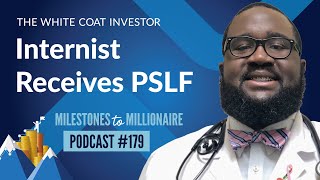
This is a YouTube video titled "Internist Receives PSLF - MtoM Podcast #179" published on July 15, 2024. It features a conversational interview between Earl and Jim Dahle, an internal medicine specialist from Atlanta, discussing Jim's experience with Public Service Loan Forgiveness (PSLF), his medical training, financial strategies, and advice for medical students regarding student loans. The podcast also includes financial tips and updates relevant to medical professionals and listeners interested in financial literacy within the medical community.
This is the White Coat Investor Podcast Milestones to Millionaire Celebrating stories of success along the journey to financial freedom. This is Milestone to Millionaire podcast number 179. Internist receives PSLF. This podcast is sponsored by Bob Baiani at DrDisabilityQuotes.com he's an independent provider of disability insurance planning solutions to the medical community in every state and and a longtime White Coat Investor sponsor specializes in working with residents and fellows early in their careers to set up sound financial and insurance strategies. If you need to review your disability insurance coverage or just need to get this critical insurance in place, contact bob@whitecoatinvestor.com DrDisabilityQuotes today you can also email infodrdisabilityquotes.com or you can call 973-771-9100 okay, I want to talk about a couple things before we get to our interview today. So you May recall episode 168. We had a guest who mentioned a Harvard Law School course that she took on negotiating. We had some listeners that reached out wanting that information, so we reached out to Jane and she sent us some information on it. If you go to this link whitecodeinvestor.com Harvard you'll be able to get to the free resources provided there. And she says Harvard Law School's program on Negotiation provides free resources as well as seminars and a course on negotiating. I recommend starting with the free resources and videos they have at the link and then consider which of the seminars you want to build with from there. So cool resource there. Check it out. Also, I wanted to go over one other thing. We had a podcast recently. It was probably actually on the Whitefoot Investor podcast where we talked about this. Not necessarily the Milestones podcast, but we were talking about HSAs and the fact that when you have non dependent adult children still on your plan, your children can make a family contribution to their own hsa. Well, there's another cool thing that can be done here. If you have a domestic partner you're not married to, but is covered by the same high deductible health plan from your work, you can each have a separate hsa and because it's a family plan, they can make a family contribution even though you're single and no kids. Wild, right? The caveat with that is you can't use your HSA money to pay for your domestic partner. It's healthcare expenses, right? Since you're not married. So something to keep in mind, you could make some additional HSA contributions if you were in that situation. Yet another form of marriage penalty, I suppose. Okay. By the way, we have a chance to win the People's Choice award for the best business and or best educational podcast of the year. But we need your help. We need you to help us reach more doctors and spread financial literacy. So this is a great and free way to give back and support wcf. To be honest, I don't care if we win this award, but I know that winning things like this helps spread the word. And spreading the word I do care about because I know there's a lot of people out there that have never heard of the White Coat investor, that this message can really help. So all you need to do is go to the whitecoatinvestor.com vote link and nominate the WCI podcast. The more nominations we get, the more people we reach, the higher likelihood that we win and can reach even more people. So that nomination period runs from now until July 31st. I think there's a vote after that if we are nominated. And you'll be able to use the same link to go there and vote, but we'll mention it again on the podcast if we do win, or at least if we're nominated. Okay, let's get into our interview, but I want you to stick around after the interview. We're going to talk for a little bit today about what med students should do today about student loans. This is not necessarily what I've recommended for years. It's not what you might have read in some of my books. It's kind of different. Things have changed, and my recommendations changed, and so I kind of feel an obligation to get that information out there. So. So stick around afterwards. My guest today on the Milestones Millionaire podcast is Earl. Earl, welcome to the podcast.
Thank you, Jim. Thanks for having me.
Tell us what you do for a living, what part of the country you do it in, and how far you are out of training.
Yeah, I'm an internal medicine specialist in Atlanta, and I finished residency training in 2016.
Okay. Hospitalist clinic.
Both just a clinic. I don't work in the hospital anymore. I've done it in the past, but I'm strictly primary care now.
Okay, and tell us what milestone we're celebrating today.
Well, I have successfully had my student loans completely discharged through the Public Service Loan Forgiveness Program as of March of this year.
Pretty awesome. How much was eventually forgiven?
Approximately 3, with interest in principal. 301,000 577,000, but who's counting, right? Right.
So how much did you borrow initially for med school?
Oh, for med school. I know Where I went to medical school, it was private. It was at least $80,000 a year, at least. But of course, I also took up some student loans when I did undergrad, which was also private, so that's where that total comes from. I also had some scholarship incentives that I took advantage of when I went to medical school. That tied me back to the state of Georgia, my home state, to practice in primary care. So that offset the cost a little bit. But I didn't come from a family that was independently wealthy, so I did have to take a hefty amount of loans out for both my undergraduate as well as medical school educations.
Did you. Did you have anything saved up before med school, or did your parents help out or anything? Or was it pretty much you borrowed the whole thing other than what you got for scholarships?
I would say that the latter, I pretty much borrowed the whole thing. I mean, my mother would help out where she could and different family members where they could, church members. I grew up in the Baptist church in my hometown, but mostly loans, mostly loans and scholarships, but still had a hefty amount I had to borrow to make ends meet while I was kind of going through training.
Nobody gave you tens of thousands?
No, no, that never happened. Not even once.
Yeah. How much did you owe when you came out of med school? Do you remember?
I don't remember the exact number. I remember being floored by the amount of. I knew that I was. Obviously, you know, that you're. You're borrowing, but I don't even remember the exact number. I remember it was at that time, somewhere in the 250,000 range. But, you know, obviously it grew over the years before. I never really paid in residency just because I couldn't afford to, even though it would have been offset. I just couldn't afford to pay with the cost of living where I trained. I trained in New England and, you know, the rents were high, and I just had enough money to, at the time, pay my living expenses, my basic living expenses.
So did you go into deferment or forbearance, or were you in an income driven repayment program?
Yeah, so I was in. During residency. I was in forbearance at the time. I just could not afford to pay. Not even the amount of the small amount of interest. I just did not have enough money to pay for that.
So when did you start making payments as an attendee?
Yeah, that's when I first started. When I finished residency is when I started making payments.
And of course, at least the first year or so, the Payments were based on your resident income. So that helped a little bit, I'm sure.
Yeah.
And then of course, you got three and a half years of student loan holiday in there somewhere, right?
Exactly.
I'm sure that helped a little bit. But it sounds like you made substantial payments toward this loan. Any idea how much you paid toward it over those 10 years?
Yeah, I think initially the amount that I started paying a month was about, I think like 2,300 when it, you know, after I got the benefit from residency. But once I, you know, recertified my income and reported that to the Department of Education, it jumped up quite a bit. Quite to about 2,300amonth. And so I paid it for as long as I had to. And then I learned about some additional options to, you know, like income driven repayment, and it significantly decreased after that.
Okay. All right. Wow. So you. When did you first hear about public service loan forgiveness? Do you remember?
Yeah, I can tell you I learned about it. I never learned about it in medical school. Nobody ever told us that. And for a long time I was angry about that because I felt like at the time our know, financial aid departments should at least, you know, shared information about the program with us. But of course, it was a friend of mine who trained at the same medical school who followed me to the same residency program. And he was the first one to tell me about it. And I had known about programs like the National Health Service Corps and State Department specific incentives programs to return to practicing underserved rural community, which, which I told others about. And I took advantage of myself. But I didn't really know a whole lot about public service loan forgiveness until he came to the same residency program. And he said, you should apply for this, you should consider this. And I'm like, okay. And, you know, this was way back in 20, I would say probably 2014, 2014, 2015. And that's when I consolidated at the time and then started seriously thinking about the public service loan for this program when I finished residency.
So did you deliberately take a job at a 501C3 when you left residency or is that just fortuitous?
I have been very intentional about that. I will tell you it significantly limited my job opportunities, but I did, I was very intentional about making sure when I chose a job after residency that it had 501 certification and that I can tell you one of the. My wife helped me really understand this once my student loans were forgiven, just like you don't have that stricture anymore. And it took a long time for me to really, probably the last several months, to really grapple with the fact that, oh, I don't have that prison, if you will, to deal with anymore. I can stretch out and look at, even for profit opportunities if I want to in the future. I happen to be very happy where I am now, which still happens to be a 501C3, and helped me get over the hump of qualifying for Public Service Loan forgiveness. But if in the future I wanted to make a career change, I don't have to worry about that anymore, which is very, very liberating.
You don't necessarily feel like you've been in prison, but you feel like you've got some golden handcuffs or you've had golden handcuffs and now you've got them off, huh?
Exactly. Obviously, you stated that much more eloquently than I could have, but, yeah, absolutely, absolutely.
Well, I was waiting for you to tell me you hated your job, and now you're leaving it, but you're not saying that, so I don't think you quite call it prisoner. You'd already be out of there. I tell you what, the first day I was eligible to get out of the military, and I even saved up a month worth of leave over the four years I was out of there.
Oh, wow. Yeah, I've heard that before.
Yeah. It must not have been too bad for you. I was definitely ready to get out when I was done paying my debt to the military. But I know that can feel sometimes having that limitation on where you can live and what you can do and what your job looks like, so. Okay, well, you know, there's a lot of people out there that, you know, don't, you know, not as much anymore as there used to be. But a lot of people that didn't really believe Public Service Loan forgiveness was going to take place. You had people like Dave Ramsey running around, you know, quoting, you know, inaccurate statistics, saying only 1% of people are getting it.
Yeah.
Did you ever lose faith that you were going to receive Public Service Loan forgiveness along the way?
Not really, no. I. I know I've heard a lot of the naysayers say that it was not going to be a program that was going to last or the government wouldn't be able to afford it. But I never listened to that. I continued to charge for it. What helped me, it was one of the benefits. Well, honestly, when we went into the administrative forbearance during COVID that helped me a lot. Also, working in a rural community with the 501C3, I've changed jobs a couple of times, but also working in that environment, that qualified. Like I said, I was very intentional about the types of jobs that I chose so it would qualify for that. And then I got some sort of benefit where some of my residency, around the time the Biden administration made changes to the program, they went back and they started to count even the forbearance that I was in during residency. So that even.
So you did get credit for residency, Right? Right.
Even though I didn't pay during that time, I did get credit through their revamping of the program.
So that that makes sense because you came out of residency in 16 and you've already got forgiveness eight years later. So that makes sense. You know, everything that could have helped you went your way here.
It did.
I mean, I don't want to say you're lucky.
Yeah.
But you got credit for payments you didn't make. You chose the wrong thing, frankly in residency. Right. You should have been making IDR payments of a couple hundred bucks or whatever.
Right.
And. And that didn't hurt you. And then you scored with three and a half years as an attending of the student loan holiday. I mean, did you ever just feel like you had a four leaf clover in your pocket?
Well, I look at myself as having been blessed. I've always tried to be a good steward of my money and try to set myself up. I'm a classic Aquarian. So I'm someone who always is futuristic and thinking forward from the very beginning, I've tried to make sure I learned about it investments. So that's one of the reasons I followed your podcast and the work that you've done and have encouraged others to do the same. But. And then even set my own individual family up, my wife and who also is financially savvy. And that helps in the household. But I can tell you everything that could have gone good for me went good and I'm very grateful for it. And you know, we look back now on the COVID pandemic as a very ill fated and igninous time in world history. But when you talk to people, when we talk to patients every day, you know, a few people will say I did get some good things that came out of that. We hate to say that almost. But you know, having had the loans, those, those that administrated forbearance time count because I was worried about that just like everybody else. That helped a lot. And in our health system at the time, I'm a part of a large comprehensive health system in the state. We Even experienced some changes in terms of how we would compensate. And so I had to make some cuts on some discretionary things that I was afforded some of the luxuries in life. And I did that for the time that I had to. But you know, I know I've always known how to survive. I grew up in a inner city community with a single mother. So I learned early how to cut costs if need be, but also how to, you know, catch. Catch the early, you know, be the early bird that catches the worm. Right. You know, in terms of preparing for my financial future and public service loan forgiveness, that was non negotiable for me. I recognized early that I had to get these loan forgiveness loans forgiven as a part of setting myself up to achieve my financial goals. And I've been very fortunate that everything has essentially fallen into place. And some stuff that I even didn't really plan to get that just happened just because of whatever administration was in place at the time. And advocacy by a variety of different student groups, young professional groups, people who are just working to eliminate student loan debt. And I followed them and learned about what they were doing and advocated for that for myself and others going through the same thing.
Yeah, the idea behind public service loan forgiveness is to get people to do work they wouldn't otherwise do, right? To go to rural communities to work for 501s, your government, employers, despite the fact that there might be more hassle there or lower pay there because of this benefit. And it sounds like you did have a few sacrifices in that department along the way. I don't know that all docs that get PSLF feel that way, but it certainly sounds like there was a cost to you to go for public service loan forgiveness as far as career and income and those sorts of things.
Yeah, I would say so. I. Everybody knows. Stretching all the way back to college just because of my experience in Shang. I went to a health science and engineering magnet high school in my hometown and I got a chance even before going to college to spend time in medical community shadowing. And I always knew I wanted to be a cardiologist. But I had to make some sacrifices in terms of my career goals. Just the way things were structured around residency and having to come back to the state to practice rural medicine and primary care. I couldn't go into fellowship because the state specific program that's sponsored some of my medical education would not allow me to. So that was a significant sacrifice. And for a period of time I lamented that. But then I found significant happiness in doing primary care and hospital medicine and seeing some of the cardiovascular diseases that I learned about and studied about early on and taking care of patients with those conditions, partnering with my cardiology colleagues, many of whom are close friends. So I look back on it as a learning opportunity. I had some health issues in residency and so I don't think I really wanted to do any more training after that. In retrospect, I just wanted to go in and practice. I've done some professional stuff since some like one year professional fellowships, but nothing acgm, GME related that would qualify for those criteria. So. Yeah.
No thoughts about going back to fellowship now?
No, no, no. I'm. Look, I, I tell people all the time, would you be happy having, you know, the one BMW and the house? I've learned from you, I got to be careful what I say here. I tell you, would you be, would you be happy having the one BMW and the house down the street in the same neighborhood on the lake? Or do you have to be right on the lake and have the three BMWs and just work hard and never be home? And I'm comfortable having the one BMW and the house down the street from the cardiologist. I don't have to be the cardiologist, I don't have to be the neurosurgeon. I'm just as happy. And I feel like it's. We've learned to do very well with the income that we have and be good stewards of it, not just because that's our last name. So I'm very fortunate.
Now, if you are made dictator, you know, you are Congress and you are president, what changes, if any, would you make to the PSLF program?
Well, I think that's a great question. I've never gotten that question before, but I do think, you know, it's significantly politicized, I think more than it should be. And I would really try to sit people down at the table who are willing to come to the table. If they don't have a chair, they can bring a folding chair, as Shirley Chisholm, the late Shirley Chisholm would say. But I do think it impacts, I think what's missing sometimes in the politicization of the issue is that whether you're independent, whether you're Democrat, whether you're Republican or no publican at all, student loan and indebtedness impacts just about everybody. And it significantly limits people's ability to achieve financial goals relatively early in life that can set them up for a pretty healthy and optimal financial future. So if I were to change Something. And a lot of doctors have said this, even taking care of patients with Medicaid should allow people to qualify for public service loan forgiveness. Just the repercussions of seeing those types of patients and working in those two sorts of environments. But I would make it easier to qualify. And I think the Biden administration has started to do some of that. But we still have a long ways to go. I'm just one who believes that if you pay a debt to society by devoting your life to working in any sort of public service service, you know, you should be rewarded for that. You know, on the flip side, people say, you know, if you take out these loans, you. You should pay them back. But what they don't understand is that people take loans out who may not all be afforded the opportunity to become physicians and make such a high income. So making it easier, educating people more about it. I don't think that's done well enough. People hear about it a lot now. But I would be very intentional about encouraging underrepresented in medicine, minorities to take advantage of this program. I've spoken about that. I've gone back to my medical school and taught about when I was in rural care, taking care of patients in that environment. But also some of the financial implications that could be beneficial to working in that environment, either for a period of time or for the duration of someone's career in our profession. So just more education, just trying to politicize the issue less and trying to make it easier and advocating for that for more of us, even outside of. Irrespective of specialty to qualify for. I think those are some of the ways that I would try to improve it. I think the Biden administration is doing some of that now, from what I see.
Yeah. All right. Well, congratulations, Earl. Thanks for what you've done for your communities and for, you know, going to med school and residency. And congratulations to you on getting your student loans forgiven.
Thank you, Jim. It's been a labor of love to practice medicine, and this has been a great financial milestone that I've been able to achieve with my family and the help of so many. So I appreciate you. Thank you.
All right. I hope you enjoyed that interview. It's always good to see docs getting PSLF. I think something close to 50% of docs are now going for PSLF. You know, those who come out with loans, if you talk to med students, it's even more of them. But let's talk about money. In med school, I get people asking me now. They come, them or their family, they've got $100,000, $50,000, $150,000, whatever to use to pay for med school. They're like, should I use it or should I borrow? And it used to be I would tell them, well, use your money first, right? So you can delay how long it is until you take out interest bearing loans, interest charging loans, rather than. And so that you can delay that moment and borrow less total and just be smart financially. Well, the federal government has made a few changes over the years that have made the student loan programs, the federal student loan programs so generous. I don't think that's actually good advice anymore. And it pains me to say this because I hate it that this is true, but I think it is true. I think the right thing to do if you have cash and you're going into medical school is to hold onto the cash and borrow the cost of your education. Now don't borrow more than you can use for the education. This isn't necessarily an excuse to spend more money, but I think you're probably better off leaving your money invested and borrowing. And even though student loans right now are pretty high, they're 8 or 9% starting this 2024, 2025 year, I think you're better off holding onto the money. I'll tell you why. First, this didn't used to be this way, but this is the way it is now. You basically don't have to take out private loans from medical school. You can just borrow federal loans after a while. They're plus loans, they're not the regular loans. So you pay a little more interest to pay 1% more in interest. But basically they can all be federal. You don't have to take out private loans anymore. And so all your federal loans, of course are going to qualify for the income driven repayment programs and for the forgiveness programs which have been made so generous. I don't want to make a political statement about this, but there's obviously some politics behind this. But they are so generous now, it's kind of silly to pay for your own school or at least remove the option, have somebody else pay for your school, right? SAVE is very generous. Now, while your loans do grow during medical school, they don't grow in residency, right? Because you get into the SAVE IDR program and whatever you have to pay, you have to pay $100, $200, $400 a month, whatever it is, and all other interest is waived so they don't grow. It will be no bigger when you finish residency than when you start. And you get to use your fourth year income to set how much those payments are, which is going to be like zero if you're like most people. And so your payments are going to be zero. And so that year of zero payments counts toward public service loan forgiveness. Then you get a couple more payments that are based on that year's worth of payments, based on your intern income for six months of your internship, which isn't that much, so your payments will still be small. Then you got a few years of payments based on your resident income, including a couple of years, one or two years while you're an attendee, and then the remainder you make attending level payments. But still, those are pretty low with save. And then you can qualify for public service loan forgiveness. And I don't know what the percentage of physician jobs is that qualify for public service loan forgiveness, but given that 78% of docs now are employees, and a lot of those are employees of government entities, you know, state universities or nonprofits, that they're going to qualify for forgiveness. And so if you can qualify for forgiveness, that's going to work out better than paying off your student loans every time. So the beautiful thing about not using your cash and taking out the loans is you have optionality, right? You've got options. You can turn around and change your mind at any time and take that $150,000 or whatever you had, hopefully it's significantly more now since you've left it invested through med school and maybe residency, maybe it's twice that much now and you can pay off your student loans, right? The only downside is you've lost whatever interest accrued while you're in med school. None accrues in residency. And so there's, you know, the downside is pretty minimal. The upside can be huge. And so I think it's just the right thing to do. Despite the fees on taking out student loans, despite the interest that accrues during school, I think it's the right thing to do. And I hate that that's true. I think the programs are probably a little too generous in that respect, in that there's no disincentive to do that, to just borrow, borrow, borrow. In fact, a lot of people, I don't think this is the right thing to do, but a lot of people are borrowing more money than they really need for med school because I think it's going to be forgiven. Now. You could get burned on that, right? Not everybody matches. Not everybody can get a job that qualifies for public service loan forgiveness. So don't get too carried away with this, but given the generosity and the current state of the program, you can't help but think, if someone else is going to pay for school, why should you be paying for it? Okay, enough on that. When things change, our opinion may change on how that can be managed, but it's pretty generous right now and might as well take advantage of it. Hate the game, not the player. All right, this podcast was sponsored by Bob Baiani@drdisabilityquotes.com One listener sent us this review said, Bob has been absolutely terrific to work with. He's always quickly and clearly communicated with me. Both email and or telephone responses to my inquiries usually come in the same day. I have somewhat of a unique situation and Bob has been able to help explain the implications and underwriting process in a clear and professional manner. You can contact bob@whitecodeinvestor.com Dr. Disabilityquotes or you can email him infodr disabilityquotes.com we can just call 973-771-9100 get your disability insurance in place. Please, please, please. Unless you're already financially independent and. Well, that's it. We're at the end of the episode. I hope you guys are doing great. I see this is going to run July 15th. I'm on another river as you read this. Hopefully I'm having fun doing that. And shoot. Tomorrow will be my anniversary as you're listening to this and we have got a heck of a celebration planned. I won't tell you what it is just in case Katie listens to this podcast the day before our anniversary, but I'll tell you all about it next week maybe. You guys have a good time. Thanks for what you're doing. You guys are awesome. We're grateful to have you here as listeners. Keep your head up, shoulder back, shoulders back. You've got this and the whole White Coat Investor community is here to help you. See you next time. The hosts of the White Coat Investor are not licensed accountants, attorneys or financial advisors. This podcast is for your entertainment and information only. It should not be considered professional or personalized financial advice. You should consult the appropriate professional for specific advice relating to your situation.
More from Jim










Physician Takes a Youth Sports Team to the State Championship - MtoM Podcast #236
