This is a YouTube video titled "Open Real Estate Funds At Origin Investments" containing a multi-speaker discussion from January 10, 2025, about various real estate investment funds offered by Origin Investments. The speakers describe fund types, risk profiles, tax benefits, and management structures. The conversation includes at least three speakers but does not mention Jim Dahle.
Let's briefly describe the three funds that Origin has open for investment right now.
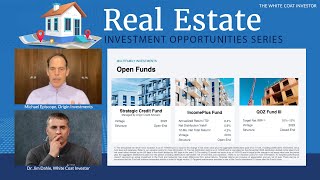
Yeah, we have. So the ones you see in front of you, I think you're sharing this still, Jim, when we think about this, all of our investors are taxable, high net worth investors and we think about it in terms of a risk return spectrum. So on the left hand side, what you have here is our lower risk or lowest risk fund geared towards income. This is a credit fund, only invests in debt products, so it's going to be less tax efficient. But the interesting thing about when you invest in a credit fund in real estate, you do get the advantage of a reit. Now those benefits run out in a couple years, so don't do it just for that. But we're also investing only in debt, in multifamily. So it's what we know how we operate on that side. And then in the middle what you see is the Income plus fund. And I would say this is more for moderate risk investors. We run three strategies in here. We run credit and that fund today is around 60% credit, 40% is common equity and half of that common equity is in ground up development. So in the last few years we really embarked on a barbell strategy of ground up development and investing in credit. And by the way, I should mention these are both open ended funds. So if you want monthly income, if you want to grow and protect and build wealth over the long run, you can invest all your capital and just let it grow. And so what I was talking about earlier about the tax benefits, the Income plus fund takes advantage of the tax benefits within the fund. This is an open ended perpetual fund. When we build a ground up development that sort of moves into what we call our core bucket, we don't sell it. We're not in the business of churning that, building great real estate in really high growth markets and then holding that for the long term and then continually refilling the bucket of ground up development which can be no more than 20% of that fund. And then the QZ fund is really part of our growth series. We don't have a growth fund today because the opportunities aren't out there. But the QZ is a tax advantage fund. If people have long term capital gains, they can actually defer those for quite a. They can defer those and get the advantage. Let me just back up. Qoz really hypercharges the tax benefits of real estate investing. So if you invest in the QZ fund today with capital gains, you don't have to pay those capital gains until 2027. So you get the advantage of deferral. But you will have to pay those because they're recognized in 2026. If you're in that fund for 10 years in a day and then sell your interest, you pay zero taxes. So it's a great program for investors who have a very long term outlook, want to be in ground of development and have capital gains to shelter. So that's sort of our mix of products. We also have a growth fund, we just don't have one available right now that will come out if we see an opportunistic investing come back to the market or if we see a great deal or a great opportunity for ground up development. We'll also have a growth fund, but just nothing in the market today that warrants us raising a fund for that.
Yeah. Now the Income Preferred or the income plus fund is over 60% preferred right now. Do you expect that to change long term? Is that kind of where you expect it to be? Could it, could it, could it be 80% in a year or two? Could it be 20% at some point in the future?
Yeah, that's a great question. I failed to mention that. But that fund, I love this fund, Income plus because we can tactically adjust it as managers. And if we go back sort of pre Covid days it was 30% credit and 70% common equity. Today it's 60, 40. And we see an opportunity which we've been talking about lately about positioning this fund more, tilting it towards common equity in this environment. We absolutely will. So it's more likely that this is the extreme credit to common equity. But you probably will see this tilting back maybe by year end or in 2025, sort of that 40, 60 the other way. Because when, if and when we start to see some positive tailwinds in the multifamily side, we are going to start buying more and more deals to tilt that back towards the common equity and take advantage of that unlimited upside as well.
Yeah. Now the Strategic Credit Fund is managed by Origin Credit Advisors as opposed to origin investments like the other two funds. Can you explain the difference?
Yeah. Origin Credit Advisors for all intents and purposes is a sister company of ours. And so this is for qualified purchasers where other funds are for accredited. And the Origin Strategic Credit Fund, it runs securities inside that fund and securities we are actually overseen by the SEC on that side. So we had to split that off. Whereas all our other funds we have the, we're under the real estate guidance or protected. We're not under the guise of the SEC on those. So that has a very different oversight, if you will, and it's important for us to manage that differently. And that fund is run by Tom Briney, who's been with us for 12, 13 years. He's fantastic. But it's separate and the same at the same time. So it utilizes all of Origins, infrastructure and experience to run that fund.
The hosts of the White Coat Investor are not licensed accountants, attorneys, or financial advisors. This podcast is for your entertainment and information only. It should not be considered professional or personalized financial advice. You should consult the appropriate professional for specific advice relating to your situation.