Ophthalmologist Overcomes Financial Mistakes - MtoM Podcast #217
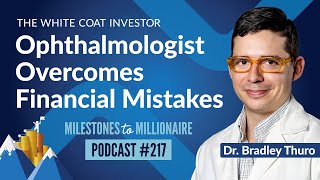
This is a YouTube video titled "Ophthalmologist Overcomes Financial Mistakes - MtoM Podcast #217" published in April 2025. It features a conversational interview on the Milestones to Millionaire podcast hosted by Jim Dahle with a guest named Bradley, an oculoplastic surgeon. The discussion centers on Bradley's financial journey, including overcoming early financial mistakes such as poor disability insurance and student loan management, firing a bad financial advisor, and ultimately achieving financial progress. Jim Dahle also shares insights on career longevity and financial planning for medical professionals. The content is an English-language podcast episode focused on personal finance and career advice for healthcare professionals.
This is the White Coat Investor Podcast. Milestones to Millionaire celebrating stories of success along the journey to financial freedom.
Milestones To Millionaire podcast number 217 Ophthalmologist overcomes financial mistakes With Weatherby Healthcare, you choose your own health care career path. Our locums experts then support you every step of the way, helping you find the right opportunities at the right time. We understand your professional and personal goals and are experts at helping you achieve them. Let's keep your career interesting with new locations and settings and diverse patients and cases. And just as importantly, let's make sure you get more time for your hobbies or to just relax. We'll help you find that balance with more jobs and more locations. Weatherby gets you where you Want to go. Whitecoatinvestor.com Weatherby to learn more. All right, it's survey time. We really need people to fill out the WCI survey, not because we get paid for it or something, but because we need the information. We need to be able to know how best to serve you, what we're doing right, what we're doing wrong, what more we can do. And the way we get that every year is by this survey. If you go to whitecoatinvestor.com WCISurvey you can fill that out. It'll only take a few minutes. It's open until May 6th. But it really does help us to serve you better. So much so that we bribe you to fill it out. Tom, we're going to give away a whole bunch of T shirts. We're going to give away five free online courses. The way you enter the contest is just by filling out the survey. That's all there is to it. Okay. We're not going to, like, publish your information somewhere in any way other than all of it aggregated, but it does help us to serve you better. So thank you so much, those of you who've already filled it out, those of you who have not, please. Whitecoatinvestor.com WCISurvey all right, we've got a great interview today. I think you're really going to love it. It's a new milestone we've never done before. But stick around afterward. I'm going to talk for a little bit about the importance of career longevity. Our guest today on the Milestones to Millionaire podcast is Bradley. Bradley, welcome to the podcast.
Thank you. Thanks for having me here.
Let's start out by introducing you a little bit to the audience. Tell us what you do for a living, how far you are out of training, and what part of the country you're in.
So I am an oculoplastic surgeon and I'm about almost nine years out of training practicing in the Appalachian region. I'm actually in West Virginia.
Okay, very cool. Now this milestone we're celebrating today is a little bit unusual. In your application you called it getting back on track. And after talking to you before we started recording, I realized you're just cleaning up some messes, some mistakes you made, and getting your financial life in order. And so I think it'll be a great milestone. This is something all of us, probably maybe not all of us, a few people have really knocked it out of the park. I, I did not. I made plenty of mistakes early on, but lots of people found the white coat investors, first year medical students and never made any financial mistakes at this point. But most people have screwed a few things up and have had to recover from that. And so I think this would be really good to talk about some of the things you did and how you cleaned them up later. So you mentioned that you had a disability insurance policy that maybe wasn't the best. Tell us when you realized that and what you did about it.
Right. So I initially acquired this disability policy in residency because a salesman came to me and told me I needed to have this disability policy. And so I got it. Honestly, at that time of my life, I was probably more focused on learning how to become an ophthalmologist than I was on what kind of disability insurance I had. And so I just, that that's what I needed to do. And in the last, oh, probably three years or so is when I started realizing that that was not an appropriate disability in policy. It didn't have specialty specific coverage or own occupation coverage. And as I started learning more of those terms and what those things meant for me and my family, I realized I needed a better policy. And, and working through the, you know, the WCI recommended brokers, I was able to find a much better policy and actually had a much better price.
Yeah, this is the part that's wild to me. Right. Typically if you buy a policy nine years later, it's significantly more expensive. So this one you had was a terrible policy at a terrible price, which is pretty appalling out there and kind of demonstrates how the industry works, sometimes selling you whatever pays the agent the highest commission. Most likely, I presume, and kind of.
Related to that error, I would also say actually is I was working through a so called financial advisor at that time who ended up being an insurance salesperson. And you know, I just kind of.
I've made that mistake. You're not alone.
Right. I put a lot of trust in that person to make the right decisions. And even as I worked through fellowship and beyond the end of my fellowship training, I realized even when he was no longer with that company and was working with a completely different company, he was still very sold on the process of not focusing my funds towards student loans and having that bad disability policy. He didn't understand what a backdoor Roth IRA was, and he just ended up giving a lot of advice and eventually leaded to me firing him.
Yeah. So you had a bad advisor you needed to fire. Tell us a little bit about that process. I mean, a lot of people email me and they're like, how do I do this? What did you do to fire your advisor?
I suppose it varies with different personalities, but for me, it was quite easy. I just emailed him and said, I don't like the advice you're giving me. We're done. And that's pretty much all there was to it. He told me, well, good luck doing this on your own. And I said, I have no worries. I've spent a lot of time learning about this now that I'm no longer a resident or fellow, and I felt very comfortable making these decisions on my own. I could tell that he didn't have a lot of confidence in what my plan was going forward, but I think I've demonstrated to myself that we've been very, very successful.
Yeah. Well, this is super frustrating, right? I mean, we're talking about mistakes you made. It's not like you didn't try to do the right thing. You went and tried to get financial advice. You paid for financial advice, and you were given bad advice, which is super frustrating. Right. It's not like you just made these mistakes on your own. You made these mistakes with the help of a professional.
Yep.
Pretty wild, huh?
Yeah.
All right, well, let's talk for a minute about the student loan issue. And presumably, I don't know if you got advice on this from that particular advisor or not, but you realize that maybe you hadn't managed them in the ideal way.
Right. So a little bit of timeline. When I was graduating from medical school, the whole idea of PSLF was just coming out. And so upon graduation, we really weren't being advised on what that even was or how that process might work. And towards the end of my residency and then fellowship training, I made the decision to refinance my student loans, thinking that that was the correct thing to do to get that Lower interest rate and get everything under one house and start getting it paid off. What I didn't realize is that PSLF was even a thing. And now looking back on that, I really could have done the PSLF route. I'm in an academic position now, always wanted to be and probably always will be, and I could have had a very significant chunk of my student loans forgiven. But here we are now on the back end of learning from that mistake. And, you know, when I started paying attention to why those student loans just weren't making progress is when I was reminded actually about the white coat investor from one of my residents, actually. And that's when I started really paying attention to the message you all send out, getting a plan in place. And then within about three years after that, they were gone.
Very cool. How much did you have when you, when you came out of training?
So when I finished training, it was a little over 400 at that time.
Lot of money. A lot of money.
And I'm embarrassed to say that it probably took me about three years to realize, hey, this just isn't working. Right. And then so once we got that plan in place, it was about three or four years and at which time there was still probably a good 350k left.
So, I mean, this happens to lots of us. We make mistakes, sometimes with more money, sometimes with less money. How have you managed to forgive yourself for making these mistakes?
That's an excellent question. I would say that when I reflect back on those years, I'm still happy to say that there were a lot of things we could have done that we didn't do. We didn't make ourselves let ourselves, I should say, buy a house that was way more than we should have been in. We weren't throwing money at a lot of things that we really shouldn't have been buying. Yes, between my wife and I, we both got new cars when I started my attending job. And yeah, maybe we could have done a couple things differently there, but we focused hard on getting those paid off. We focused hard on getting all of our credit card debt gone. I know long before I actually tackled the student loans really hard. And so I think we made a lot of smaller, good decisions along the way that when it came time to start paying attention to everything that was going on and driving the ship myself, making those other decisions, sacrifices, plans, was actually fairly easy to do.
Yeah. And there's lots of mistakes out there you haven't made too. Right. I don't hear anything about selling low in a bear market. I don't hear anything about buying some whole life policy you didn't need. You know, I mean, there are plenty of mistakes you didn't make, so you've done lots of things well along the way. So this process of becoming financially literate, tell us what you did to try to, you know, figure this stuff out so you can quit making these mistakes.
Well, as I mentioned, you know, it was actually one of my residents who had reminded me about the white coat investor. And I'd heard of it before, but didn't really invest time and learning that stuff myself. But when he reminded me that it was out there, it was at a time when I was feeling very, very frustrated about my student loans and my financial advisor at the time. And so I started listening to the podcasts and reading the articles. And I realized for those of us in healthcare, we already have the mindset of taking care of things and getting results, and we're smart enough people to do that. And so when I started developing this plan on my own, putting a lot of things on automation, I realized that at the end of the day, it really wasn't that difficult to get these financial barriers behind us.
Okay, there's somebody out there sitting there, you know, thinking they've made a financial mistake or listening to yours and realizing they're making the same mistake and they're a little bit scared, they're a little bit frustrated. What advice do you have for that person?
I think the big thing is it's paying attention to what's going on. I grew up in a household where we didn't talk about money. And even though I was taught to be fairly independent, which helped me a lot along the way, there was not a good discussion around money. So I think the big thing is really paying attention. And now that I'm on the other end of that, I do my best to pay it forward with my own residents. And I give them financial lectures a few times throughout the year. And even my own family members, my kids, you know, I, I teach them financial lessons in the same fashion that I think a lot of young people learn today, which is in the form of micro learning. They're scrolling through things on their phone. So about once a week, I give them a five or ten minute financial lesson on something that I think is very important for them to lear. And, you know, that's an ongoing curriculum that goes on for, you know, probably a few years it's going to take. So it's, you know, like I said, it's all about paying attention and then also paying it forward. Where you can.
Yeah. And you learn it better as you have to teach it, too. Of course, the gaps in your. In your fund of knowledge are exposed and you got to. You realize you got to go fill those. Well. Very cool. Well, congratulations to you on the success you've had. What's your next financial goal?
You know, the next financial goal, I think, is to hit that, you know, that true millionaire milestone in the last few years, alongside paying off all those student loans, we were actually able to get our emergency fund up. We got all of our investments. You know, we have half a million invested easily over that same period of time. And so I have no doubt that in the next few years, we'll also reach that next milestone.
Cool. Well, congratulations. I'm sure you will. And thank you so much for being willing to come onto the Milestones podcast and share your successes and your challenges and inspire others to do the same.
And thank you. Of course, we owe you a big thank you for all of you and your fellow posters guidance. One of the things that helped reinvigorate me was one of your columnists. Josh Daly was actually a medical school friend of mine. And even though we kind of lost touch after medical school, hearing him on your podcast and seeing his. His posts actually inspired me to reach back out to him and get even more involved myself.
Very cool. I just read his next column this morning in a content meeting, so I'm sure you'll like that when it comes out soon as well. I look forward to it. Thank you so much.
Thank you.
All right. I hope you enjoyed that interview. It was hard to know what to call that milestone, but I thought it was well worth talking about. It's such a common situation. I mean, I feel terrible about the $400,000 in student loans that could have been PSLF. Right. I mean, that is just heartbreaking. It would have been even more heartbreaking, though, if he had become disabled with a crummy policy that wasn't going to pay him, or if he developed some sort of medical condition in the intervening years such that he couldn't get another policy. And of course, the issue with getting bad financial advice is so common out there because 95% of those who call themselves financial advisors are really just product salespeople. And so these are all mistakes that are frequently made by white coat investors. If you have made one, don't beat yourself up. Right? I made two of the three. Plus I bought a whole life policy that was totally inappropriate for me. I've made all kinds of financial mistakes. The point is, recognize that when you've made one, it's water under the bridge. Make a plan and move forward. And don't beat yourself up about it. Were you expecting perfection in the way you managed your finances over the course of your life? Of course not. You don't expect that in anybody else. Don't expect it in yourself. All right, at the top of the podcast I mentioned I was going to talk for a few minutes about the importance of career longevity. The truth is the biggest threat to your career, the biggest threat to your ability to earn money, the biggest threat to your finances is not disability. It's not bear markets, it's not even poor management of your student loans. The biggest threat is burnout. If you look at the surveys, depends on the survey. But anywhere between 40% and 63%, depending on specialty of doctors have burnout significantly affecting their life. And it's common in other professions as well. This isn't just a doctor specific thing by any means, but when you invested your 20s in learning how to create this high income, it's valuable and you got to do what you can to protect. Doesn't matter if you are a pediatrician instead of a plastic surgeon, if you can manage to keep it together for 20, 25, 30, 35, 40 years instead of eight, you're going to come out ahead financially. That plastic surgeon might make more for eight years before burning out, but we'll also end up paying a whole bunch of money and taxes and just not having as much time for compound interest to work on the savings. And the truth is, you know, earnings over many years can really add up. So the key is to keep you in the game. So every time you make a career decision, you ought to be asking yourself, am I optimizing for career longevity? Is this decision going to make it more likely for me to be practicing in five or 10 or 15 years than if I do the other thing right? So when you're trying to decide how many shifts to work, how many patients per hour to see, or what employer to work for, or what type of procedures to do, or all these questions that come up during our careers, optimize for career longevity. If you're in a group of private practice docs and a big decision comes in front of of the group, don't necessarily just ask yourselves what's going to make us the most money. Don't necessarily just ask yourself what's best for patients, because what's best for patients a lot of times in your town is you staying in the game, right? Talk to patients about their Frustrations. Yes. A lot of them mention the high cost of health care, but more frequently it's access to care. They can't get in to see a neurologist or rheumatologist or whatever for four months and they want to be seen that week. Right? Access to care. And how do we maintain access to care? We keep doctors in the game. Right? Career longevity. Keep them from burning out, keep them being able to practice so they still want to practice even when they're financially independent, so they're not looking for side gigs to get out of medicine and build a real estate empire in four years and punch out. We want people to be able to stay in the profession, enjoy what they're doing, be good at it. Because I truly believe doctors with their financial ducks in a row are better physicians, parents and partners, really. But we got to keep people in the game. So be careful when you make those decisions. Do the things that are going to allow you to continue to practice. It's not just good for the patients. It's not just good for your well being, it's also good for your finances. Right? More contributions to Social Security. More time till you got to start taking Social Security. More time for compound interest to work. You know, you can spread the taxes out over a longer period of time. You can have more money you've earned that you can contribute to retirement accounts and invest in other ways. Right? It just all works out much, much better if you can stay in the game. So optimize for career longevity. With Weatherby Healthcare, you choose your own healthcare career path. Our locums experts then support you every step of the way, helping you find the right opportunities at the right times. We understand your professional and personal goals and are experts at helping you achieve them in let's keep your career interesting with new locations and settings and diverse patients and cases. And just as importantly, let's make sure you get more free time for your hobbies or to just relax. We'll help you find that balance with more jobs and more locations. Weatherby gets you where you want to go. Learn more@whitecoatinvestor.com Weatherby all right, we've come to the end of another great episode of the Milestones to Millionaire podcast. You can be on this episode. We'd love to have you on the episode. I want to celebrate your successes and use them to inspire others to do the same. Apply@whitecoatinvestor.com Milestones Keep your head up, shoulders back. We'll see you next time on the Milestones to Millionaire podcast.
The hosts of the White Coat Investor are not licensed accountants, attorneys or financial advisors. This podcast is for your entertainment and information only. It should not be considered professional or personalized financial advice. You should consult the appropriate professional for specific advice relating to your situation.
More from Jim










Physician Takes a Youth Sports Team to the State Championship - MtoM Podcast #236
