Real Estate Investment Opportunities Series - Black Swan Real Estate
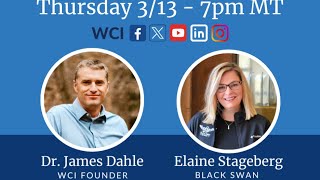
This is a YouTube video titled "Real Estate Investment Opportunities Series - Black Swan Real Estate" created in March 2025. It features a detailed webinar conversation between Jim Dahle and Dr. Elaine Stoggeberg, CEO and founder of Black Swan Real Estate. The discussion covers their real estate investment philosophy, strategies for passive investing, fund structures, market focus, and the benefits of long-term real estate holdings. Jim Dahle hosts and engages with Dr. Stoggeberg in a multi-speaker dialogue focused on educating viewers about real estate investing opportunities and the unique aspects of Black Swan's approach.
Foreign.
Welcome to another White Coat Investor Real Estate webinar. I'm here with Elaine Stoggerberg, who is the CEO, principal, founder, owner, et cetera of Black Swan Real Estate. Welcome to the webinar, Elaine.
Excited to be here. Thank you for having me.
Okay, like with most of these webinars, we're going to start with the presentation by Black Swan and then move into a Q and A period. But this is an exciting new partner we have this year for those interested in real estate investing, in passive real estate investing, with some pretty unique aspects that you won't find with our other partners. We'll be talking more about that as we move through the presentation and the Q and A period. Let me turn some time over to you and we'll let you bring up your slides and we'll do the presentation.
Absolutely. Let's get started. Well, thank you for that introduction, Dr. Daly. Excited to present today about Black Swan Real Estate. As you mentioned, My name is Dr. Elaine Stoggeberg, and my husband Nick and I own our company together. And we would like to say we like to do everything at scale. So that's what we'll share about today. So Nick and I have been married for 14 years. We actually started investing as a result of our marriage. We both owned our own homes and decided to move into his home and then keep my home as a rental. So that's how the story all began. And we've been married and investing now for 14 years. At the time, we had one child when I finished medical school, and now we have five children. As I said, we like to do everything at scale. I'm a psychiatrist by training. I trained at the Mayo Clinic. I live here in Rochester. This is where the majority of our portfolio is. And then Nick had a long career in tech entrepreneurship, had several tech startups. And then along the way, we decided to pivot into real estate. And I'll talk about why we made that decision and why I think real estate investing is such a great asset class. So one of the things that really started my journey well before I even knew what investing was or what real estate investing was, is the formative experiences that I had growing up in a family where we really struggled with financial scarcity, a lot of financial pain, debt, debt, sort of never knowing where the next dollar would come from. And Nick had a very similar childhood. And so when we met and decided to get married and decided to start a family, we knew for certain that we wanted something very different. We knew that we didn't want to have Such pain associated to the financial part of our lives. And then we also knew that we were going into professions that had huge time demands. And yet we knew we wanted this big family. And so how did we kind of balance all of this? We knew we wanted time freedom, we knew we wanted a life abundance. And so we started investing in real estate with just one single family home. As I mentioned, our very first property was the home that I lived in before we got married. And then a little later in our time here together, I'll show you our first purposeful investment that we never lived in. We bought exclusively for investing purposes. And really along that way we found and we committed to our why we knew that we wanted to experience financial freedom, time freedom, location freedom, and then most importantly, what I consider to be the most important types of freedom, decision making freedom and lifestyle freedom. And so we decided to invest in real estate. We decided to continue investing in real estate, to funnel those dollars back in, to funnel as many dollars from our careers into real estate and to build this portfolio. And then along the way, it took on such a bigger vision than what we originally had, had envisioned or intended there to. Now we work with over 450 passive investors and we think about our mission is to make the world a better place to live in the most tangible sense of the word. We love that we get to create communities for our residents to live in that we do deep value add projects. We're the largest housing provider in southeastern Minnesota. And in doing so, we get to create investment opportunities. Most of our investors are physicians, about 80% are physicians. And that we get to marry those two things together and create abundance in so many different ways. And so then the question became, well, why real estate? Of all of the various types of investments available, why did we choose real estate? And it really came because we didn't have that model to go to in our own family to look to for financial wellness. And so we asked successful people who were a generation or two ahead of us. And we found there was a very consistent story that these folks were investing in real estate. They might say something like, you know, well, I'm an attorney and I make my income there, but really I'm then shuttling that income over and I'm building this real estate portfolio. I'm a physician, but I'm shuttling that income over into real estate. And so we committed very early on in our marriage that we would do that, that we would earn income from our jobs and then shuttle that into real estate investing. And when I think about real Estate, I think of this sentence, real estate is a hard asset indexed to inflation and backed by paper debt. So what do those clauses mean? A hard asset means that real estate is something real. It's something you can put your hands on. It's sticks and bricks and electrical wire and plumbing fixtures, and the dirt that's under it indexed to inflation means that as inflation goes up, rents typically go up, and the value of real estate also typically goes up because real estate is valued often on replacement costs of how much does it cost to buy those small sticks and bricks and electrical wiring and plumbing materials to rebuild that building? And then real estate is backed by paper debt. And so what that means is as the value changes over time, the debt doesn't go up. So the bank doesn't call and say, I know last year when you acquired that apartment building and we loaned say $8 million on it, but it's worth more now, so you actually owe us more on the mortgage. The mortgage continues to go down with that debt paid out. So those three clauses together. Real estate is a hard asset and indexed to inflation and backed by paper debt. I think really describes why real estate investing is such an attractive asset class. And then inside of real estate, there's multiple different wealth drivers. Cash flow is a big one. Cash flow, just in summary, is all of your income and then take all of your expenses out and how much is left over at the end of that month? I think of cash flow as a defensive metric. I really strongly believe in investing in cash flowing properties so that that property takes care of itself each month and pays for all of expenses. Debt pay down means that as you're making that mortgage payment each month, the mortgage is going down and you're building equity there. In real estate, there are opportunities for two types of appreciation. The first is market appreciation, which is the value of that property going up over time. And then the second is what is called forced appreciation. So that's when someone goes into a property and they do either physical renovations, management improvements, almost always a combination of both to force up the value of that property in a shorter period of time. And that's really been a cornerstone of our investing philosophy over all of these years. Real estate is also a very interesting investment class because of the ability to use high quality leverage to get high quality mortgages on these properties, where you tend to have a relatively low interest rate, a relatively long period of time that you can borrow that money, and then the investor is earning returns on the entire value of the property, even though typically the investor only puts about 20 or 25% of their cash into the property, and then the bank carries the rest in terms of a mortgage. And then there's also the possibility for an infinite rate of return. So what that means is you can acquire a property, increase the value of it, go back to the bank and get a new mortgage on that property, and in doing so, pay off the original mortgage and then recoup the invested dollars from the down payment and the renovation costs, such that you can then own that property in perpetuity with none of your original capital invested in the deal. And there's few other asset classes where you're able to continue to own an asset despite the fact that you've recouped all of your original investment. And you'll see, through our journey of scale, this has been a critical part of our investing journey because when we were using our own capital, we, you know, we didn't, we didn't have such extraordinarily high incomes that we could just keep buying property after property after property with our earned income. So instead we took our investment bucket, acquired a property, renovated it, improved it, did a cash out refinance, and then used those dollars to buy the next property and the next property and the next property. And then that's also the model we have in one of our private equity funds. And then real estate also has really considerable tax advantages. So kind of in a nutshell, the IRS wants to incentivize society to create food and to create housing. And so there's all sorts of tax subsidies and other tax advantages in the tax code for farmers. And then there's all sorts of tax advantages for who create housing through depreciation and other parts of the tax code that make it such that dollars earned through real estate investing are relatively tax efficient, especially compared to, say, dollars earned through earned income, like at a W2 career. So when we made the decision to invest in real estate, I just explained to you why we made that decision, Our mentors that helped us with that decision, all of the financial drivers of real estate, and then here's our history. I think our history really encapsulates that. People underestimate or maybe overestimate what they can do in a day, but they underestimate what they can do in a decade. And so over the last about decade and a half, we started with one single property. We bought our second property three years later. There's a picture of that very modest home there. That was our very first sweat equity renovation. We acquired that home for $35,000. It had been vacant for nine years. It was a foreclosure. And we did almost all of the renovations ourselves. We laid all new flooring, painted, put in new windows. We did have to hire professionals for things like the plumbing and the roof. And we totally turned that property around. In 2016, we relocated to Rochester, Minnesota. I completed my psychiatry residency here at Mayo Clinic. In 2017, my husband got his real estate license. And that really accelerated our growth. And then in 2021, we filled our first private equity fund. It was a $10 million fund. In 2022, we filled our second fund, a $30 million fund. All of those acquisitions of our own capital over the years, the years that we were doing joint ventures with other investors, and then through our private Equity funds, in 2023, we became one of the largest housing providers in southeastern Minnesota. We have about 1300 units in Rochester and the surrounding communities. And then in 2024, we continued that growth and raised another 30 million across three funds. And so today we have about 375 million in assets under management of single family homes and large multifam family communities. And we serve about 450 investors. Just a really exciting amount of growth over the last decade and a half, and just really very enjoyable to see how we built wealth for our own family and then took that model and continued to work with hundreds of other investors. Some of the things about our investment journey is kind of all along the way, my husband and I, we enjoy working, so we enjoy doing sweat equity. We enjoy hustling for deals. Kind of the thrill of the chase of a deal. We've always done cash out refis. We've never sold a single asset. We believe deeply in buying a distressed asset, giving it the love and attention that it needs, increasing the value, doing a cash out refi, and then holding that asset and operating it very efficiently indefinitely along the way. As we scaled, we first started working with private debt partners, and then we started doing joint ventures. And then we launched our private equity funds in 2021. And the models have always been the same. So even though our structure is more complex and we're a much larger fir, our structure goes all the way back to the very beginning with that very first home. That was our first investment property. We've always self managed along the way. We are big believers that operational excellence is what sets apart any business from another business. And by leaning into the renovations, marketing, tenant placement, maintenance facilities, all of the things that are needed to operate that property very well, we can take very good care of that property and the residence and drive up our profitability in the enterprise. And, and then as I mentioned, we've had what I consider to be like an investor model as compared to a Wall street model. So what I mean by that is, as we were scaling, and particularly as we were making the leap from our joint ventures to our private equity funds, we looked at kind of traditional private equity that had a litany of fees and mathematical return structures that were very hard to understand with prefs and waterfalls and catch up press and various types of hurdles for splits. And we just thought like none of that was very interesting to us. And we thought if we really want to scale this thing and to impact other people's lives, the most authentic thing to do would be to do so in the way that worked for our family. And so we kept that exact model so we have no general partner level fees. And a little bit later in our presentation, I'll talk about the two models that we have in terms of our return structure. But we took our same investing philosophy all the way back to that very first property and then grew it. And instead of changing our own selves to fit the private equity model, we changed private equity to fit our model. And people tend to really like it because they see the alignment of incentives between us and our investors. So a little bit about where we are today. This is my husband Nick in this picture here with me. As I mentioned, we have about 375 million in assets under management. We're vertically integrated, which means we both own and manage our own properties. We have a sister company, Black Swan Living, that manages all of our properties. We've raised about $80 million of capital. And the fund that we have open now is called the Secure Freedom Fund. You can learn more about that@securefreedomfund.com we also have a very successful real estate sales team. So we're part of the Keller Williams brokerage. We've done 180 million of lifetime sales and that ranks us in the top 1/3 of 1% of all Keller Williams agents. And then we do some ground up construction. So over the last about five years, we've built a $40 million townhome community of 115 townhomes. And we are actively in progress of building an apartment building that's physically adjacent to our townhome community. That's 11.5 million in value. So we've done about 50 million in ground up construction as well. So you can see we like to do sort of all parts of the real estate life cycle and just enjoy everything from sales to management to construction. A little bit about how we're different. I like to think that in many ways we sort of do things differently than most other things in the industry. The biggest way is we have no general partner level fees whatsoever. So a typical fee that a general partner might charge would be like an asset management fee, a capital event fee, an acquisition fee, and we don't charge those fees. We believe that general partners, so that's our side of the equation, and limited partners, that's our investors, should earn profit the same way and that general partners should earn profit after the limited partners. And so we reflect that in the structure of our private equity funds through having no general partner level fees. And we can only earn profit from the buildings themselves, the same way our passive investors are earning profit. We've never sold an asset. We have the belief that by the time we've acquired it and renovated it and taken great care of it, we can harvest that equity through a cash out refi and then own it in perpetuity and continue to benefit from all of those wealth. Drivers of cash flow debt pay down additional opportunities for forced appreciation, market appreciation, and then continue to hold on to those tax advantages. We've never had a capital call, we've never lost money on a real estate deal. We hit our projected returns and we have on distributions. We invest in what are called blue ocean markets, and I'll share our two markets here in a little bit. We manage our own properties and really believe that operations are everything in terms of creating that excellence. We are big believers that quality debt is as important as the deal itself. So over the last several years in the real estate industry, debt is what has gotten a lot of deals in trouble, because most people have had variable rate debt, which worked well in 2020 or 2021, when interest rates were at historic lows because of the COVID pandemic. But then rates went up faster and further than really anyone predicted. And so then as rates went up, people's mortgages went up and that led to cash shortfalls which then led to either capital calls or potentially loss of investor capital. And we have always had fixed rate debt. So we have had fixed rate debt on every single penny in the entire portfolio, kind of recognizing that when interest rates were at those lows, they kind of had nowhere to go but up. And we wanted to be shielded against that risk. And so that's allowed our firm to be very successful over the last several years and to not have capital calls and instead to be making our distributions on time and to have our portfolio very well positioned. We believe deeply in alignment of incentives between investors and general partners. And then we took what worked for our family. We built our own single family home portfolio. We built our property management company. And as we scaled, we said, if that's what worked for us and if that's what created financial freedom for our family in about a decade, let's take that same model to other people so that they can participate in that. And as I said, we kind of changed private equity to match our model. Our investment thesis is really simple. We believe that investing in real estate can be quite simple. We believe in buying high quality assets in good markets, in good locations, taking amazing care of the assets themselves, taking amazing care of the customers who are the residents that are living in those assets, and then targeting an indefinite hold period. And we think if someone does that, and they do it over and over and over again, they are likely to have a very successful portfolio that's wildly profitable. Throughout the years, we've thought about what are our timeless investing principles. So over the last decade and a half of our investing, we've stuck to these timeless investing principles. The tactics change, what we're offering for a property, what the interest rate is, how many buyers there are competing with us, right? What's fashionable in terms of renovations. Those things are changing every quarter or every year. But the strategy has stayed the same. Start now, start small, get into the game. Time in the market is so much more important than timing. The markets do hard things, do right things. It's hard to acquire deeply distressed properties. It's hard to acquire large apartment communities that have been mismanaged for many, many years. But by going in and creating real value in those communities, both for the physical assets themselves and for the people living in those communities, that's what then creates the value that's shared out. In terms of profitability, we think that growing fast and scaling infinitely protects from risk because it creates economies of scale and other efficiencies. As I've mentioned, we've never sold a single asset. We like to keep things very simple. We're big believers and followers of Warren Buffett and kind of his very simple investing advice and then never stop and think big. So as we talk with investors on the phone and we meet investors at events or our own event here in Rochester, encouraging them to think about what is possible and not being constrained by limiting beliefs or thinking that this abundance isn't available with the right steps and the right investing and being committed to the why, right, that commitment to the why. Is a huge piece of it that people really can change their lives and they really can get to financial freedom and time freedom and the other types of freedom. I think that people having their own, what's called investment thesis, which is just a fancy way of saying what are the reasons for investing for you? Is it cash flow, is it equity? Where do you fall on the risk spectrum? Where do you fall in terms of do you want to be active or passive? Right. All of of those questions. It's different for every person and it's even different for every person with the dollars that they have at that time. Right. Someone might want to be active now and then maybe a few years later they have a child or they get busier with work and they decide they want to be passive then. So we've created a worksheet where people can work through their own timeless principles and you can access that with the QR code here. We're a values driven organization. Particularly as we've grown and we reach financial freedom for our own family. The thing kind of keeps it interesting for us is creating this value in the world, in our physical assets, with our residents, with our investors, and thinking about how we can have our mark on capitalism. So we've worked on our seven core values. We cast these as a company about five years ago. We teach these in the company every Monday morning and really focus on creating this culture in our company. Grow authentically, focus on the long term, create infinite opportunity, show up for people, take extreme ownership, embody servant leadership and radicalize transparency. And I hope you've seen, and you'll continue to see as I go on in the presentation, how we live these in the way we structure our investments and the types of investments that we do and the types of renovations, our management, our investor communication, the way we are leading others in the industry. I hope you see that these values, values are lived out and our actions. Debt is really important. I alluded to that a couple of slides ago. We believe that the deal and the debt is what creates the magic. So as much focus goes on the deal of like, where is the investment opportunity, how large is it? What's the purchase price? What's the value add plan? What's the exit strategy that is equally as important as the debt? What type of debt is it? What's the leverage amount? Who is the lender? Is it a regional bank? Is it a Wall street firm? Is it a debt fund? All of that together is really what creates the magic. And if there's weakness in either the debt or the deal, that can submarine a real estate investment. But if there's strengths in both of those aspects of the real estate investment, that's what leads to success. And it's always been the case that the deal plus the debt is what creates the magic. But over the last many years, debt was so inexpensive and it was so easy to get that people just kind of neglected thinking about it, instead just really focused on the deal. And then what we've seen over the last, say two years as interest rates went up so high, is that that debt piece is really so critical. And so as we think about debt, as I mentioned, we have all fixed rate debt. We work with local regional banks, we sign full recourse debt, which means Nick and I pledge our balance sheet to back that debt. We think about long time horizons in terms of the term of debt. We like for a five year term, a ten year term if we can get it so that we have a longer Runway where we're protected with that fixed rate debt. So the way we think about debt is very different than typical private equity as well, in that we go for secure, simple debt rather than having like very sophisticated debt instruments where perhaps the lender themselves, they're trying to acquire the asset or trip up the operator, or there's variability in that debt that leads to lower cash flow. The deal and the debt come together to make the magic. Be thinking about that as you're either investing actively your own self or you're looking at potential passive investment opportunities, is really understanding the debt that backs those investments. Next, I'm excited to share with you our markets. So we invest in two markets, Rochester, Minnesota and Tacoma, Washington. And we consider these to be a blue ocean market. So what a blue ocean market means is that instead of going to markets where there's already a lot of investment, we go to markets where we can become a dominant player pretty quickly. As I mentioned, we're now the largest housing provider in southeastern Minnesota. And we kind of create the market. Rochester is our predominant market. This is where we live and it's where our headquarters is. About two thirds of our assets are in Rochester. Rochester has consistently been rated one of the best places to live in the United States, Going well back in into the 1990s. It's a recession resistant city. It was actually rated in the top 5 of recession resistant cities right before COVID hit. And then it was interesting to see that play out through the pandemic that Rochester's economy stayed very strong. And then because of the Mayo Clinic and the careers that are available here, Rochester is also a very affluent community. So the median household income in Rochester is a little over 73,000. And then what's really critical for understanding investing in Rochester is understanding the Mayo Clinic. So the Mayo Clinic created what is called the Destination Medical center initiative about 10 years ago, which is the largest ever public private partnership in the state of Minnesota, and more importantly, the largest per capita spend on infrastructure anywhere in the entire country. That's seeking to double the population of Rochester by 2040 so that Mayo can have a larger population from which to draw its workforce. So that has created a lot of economic expansion and economic opportunity in Rochester over the last many years. And then in late 2023, Mayo Clinic announced its huge expansion. The initiative is called Bold Forward Unbound, and it's a $5 billion investment in infrastructure in Rochester to build the hospital of the future. We had some sense that this was coming from me training at Mayo, from my husband working at Mayo, from being in a community that's so led by Mayo, but we didn't realize it would happen so quickly. We kind of thought Mayo might unveil this plan maybe over the next 10 years. But because we knew this was coming, we've strategically positioned our portfolio around the Mayo Clinic. So in this map here, you can see all of the stars are properties that are owned by Black Swan, and the teal blue sites are the hospital of the future sites. So as you're driving up to our apartment buildings now, there's construction happening in all directions as Mayo does this $5 billion investment into Rochester. And to put that into perspective, the Amazon second headquarters, HQ2, that Amazon attempted to launch about a decade ago was a $2.5 billion expansion. And you may remember at that time, cities were bidding to be the city where Amazon would eventually build that headquarters, because that is such a large investment in a community. And so to have a 5 billion dollar project in a town of about 150,000 is a massive economic expansion. And we're excited that we've been investing here for many, many years and that we'll continue to invest here as the years go on. And then our second market is Tacoma, Washington. So Tacoma is the most affordable urban market in the Seattle msa, which is why we chose it. We really think of Tacoma is to Seattle as Rochester is to Minneapolis. And Tacoma is really a story of a community that's transitioning. Tacoma historically has been a blue collar industrial town with copper mining and other types of industrial jobs. And then it's really transitioned over the last several decades. The EPA led This through a large super fund cleanup of the Puget Sound in Tacoma. Now it's a community where people live, where young families live. They commute into Seattle for high paying jobs. There's good schools in Tacoma. It's a much more livable, affordable community. And so that's why we've chosen to invest here. Because we can not only have our properties where we reposition them through our value add plan, but we're part of a larger story that the entire community is transitioning. There's a lot of rent growth in Tacoma because of that transition. And then there's a housing shortage of a quarter of a million units. Because as the community grew in popularity and people moved there for lifestyle reasons, the development didn't keep up. And so back to Economics 101, where there's low supply and high demand, that thing becomes very valuable. So real estate there is very valuable both in terms of rent and asset value. The average household income is 85,000 in Tacoma. And we invest in areas that are about an hour drive from Amazon or the Microsoft headquarters to give you some sense of how families could live there and be in an affordable area with great schools and be able to spread out a little bit more. But they're able to commute into Seattle for tech jobs. So those are our markets. And then next up, I'm excited to share with you the two types of private equity funds that we offer. Our first offering is called our legacy funds. And inside of our legacy funds we create an infinite rate of return model. So our legacy funds are Black Swan real Estate Fund 1, Fund 2, Fund 3, Fund 4 and eventually when we opened Fund 5. When we think of how we created our legacy funds, it really came from the ethos of the Mayo Clinic. The Mayo Clinic. The philosophy is the needs of the patient come first. And we took that and we said how can we create a private equity fund where the needs of the investors come first? First. So we have no GP level fees whatsoever, no acquisition fee, asset management fee, capital event fee, disposition fee, loan recourse fee, promotion fees, there's all sorts of other fees. We don't charge those because we believe that disaligns incentives between general partners and limited partners. These general partners might be incentivized to make decisions that maximize their fee income as opposed to being incentivized to make decisions that maximize the profitability of of the properties. Overall, 100% of all profits go back to our partners until they're completely repaid. We tell people to plan for about a five year time frame. For that. And it's during that time frame that we're acquiring those properties, improving them through renovations, stabilizing them, and then working with the bank for the cash out refi. And then after that there's a 50, 50 split of profits indefinitely for about a 20 to 25 year hold plan. So investors stay in the deal even though they've received all of their capital back and they benefit from the cash flow. Opportunities for forced appreciation, market appreciation, equity that's built over the years, all through that long term wealth building plan over about a 20 to 25 year time frame. And then why an indefinite hold period? This is also pretty uncommon in private equity. A typical hold period in private equity could be as little as three years, maybe five or seven years is normal. And we believe in an indefinite hold period because it's a way to get an infinite rate of return. So what that means is an investor can take one bucket of capital, invest it in something, get all of that capital back through the value add plan, be receiving return streams from that originally invested bucket of capital, and then use it to invest in the same thing. And the next thing, that's how we built our entire personal portfolio. We saved up our dollars, we bought a house, we improved it, we did a cash out refi, we bought the next house. And we did that over and over and over again. And then we've taken that model into our private equity funds. It's great for doing a value add business plan. It aligns interests with tenants in the community for there to be the same ownership over years or decades of someone really having that extreme ownership mentality toward that building. And it's safer because it doesn't require a sale. So the value of real estate really matters the most on the day that it transacts. And inevitably in a 20 or 25 year period, there will be years when real estate's doing well and years when it's not doing so well. And as long as we hold through that period and cash flow through that period, we don't have to sell and lock in those losses. So it's a, it's a safer business plan where we can rise the long term market appreciation of our assets. And then real estate, as I mentioned, has a lot of tax advantages. But when you sell real estate, you have to do what's called depreciation recapture, which essentially means you return those tax advantages to the irs. But you don't have to do that until the time of sale. So rather than being on kind of a hamster wheel with receiving depreciation and then depreciation recapture. If there's a shorter hold period, investors receive that depreciation and then hold it indefinitely until that sale 20 or 25 years from now. So those are all of the reasons why we love an indefinite hold period. And that's how our legacy funds are structured. And then we have a second type of private equity fund offering that's called our Secure Freedom Fund. And in many ways it's kind of opposite of our legacy fund. So it's a fixed return model that really is meant to create cash flow for our passive investors. Again, there's no general partner level fees whatsoever. It pays a fixed, fixed 10% rate of return. So investors that are desiring security certainty, that are looking for a fixed amount of passive income each month, this is a great opportunity for them. Investors can elect to receive monthly distributions from their returns or they can allow those distributions to compound instead. And if they do compound, they compound monthly, which is a really aggressive compounding in favor of the investor. And we all know the value of compounding interest. Interest in investing. The payments are preferred returns. So what that means is from a tax perspective, they're taxed at a much more favorable rate than if they were taxed as say, interest on say a 1099 INT. That would be a much higher tax rate. These are taxes, preferred returns and paid on a K1 tax form. And then through our history of offering this investment, we've never failed to make an anticipate preferred return payment to return capital to investors when they request a distribution or a redemption. And people can learn more about that@securefreedomfund.com the deal deck is there, the PPM, the operating agreement and the waitlist. We open and close the Secure Freedom Fund as we acquire new assets. So people get on the wait list. And then when we have a new asset that we're acquiring, we'll raise whatever capital we need for that asset and then close it until the next opportunity becomes available. You can really think of the Secure Freedom Fund as similar to, say a CD or a bond, except with much higher returns. So some of the numbers that I've pulled in 2024, the U.S. 10 year treasury was paying a 3.83%. A CD pays around 3.25 to maybe five and a quarter. A money market account might pay around 5%. And the Secure Freedom Fund pays a fixed 10% rate of return. In a lot of ways, it's kind of a choose your own adventure for investors. The minimum is 25,000. Investors can add more as Time goes on, they can request a redemption. They can take capital out as long as they stay at that $25,000 minimum. They can change between receiving monthly distributions or allowing it to compound. So it's much more liquid than a typical private equity investment. Kind of more similar to like a long term CD that you might have, except with double digit rate of return. And then what we do with that capital is acquire apartment communities and single family homes. About a third of our portfolio is single family homes and 2/3 are large apartment communities. We do a value add plan. We're fanatical about operations. That's why we have a property management company and we vertically integrate and manage all of our assets. And you can see here some of our assets. So that's Georgetown Townhomes, Zick Apartments, Uptown Apartments, Residents at Discovery Square and Riverview Apartments. Residents at Discovery Square is our largest acquisition to date. It's valued at 36 million. And that particular asset is owned by fund one and fund two. This gives you some sense of the types of properties that we acquire and renovate. So you might be asking yourself, well, how do I do this? Right? When we are really committed to a why, then the next question is how? And I think a really powerful question that people can ask themselves is what do I stand to lose if I don't do this so much? Like many things in life that are very valuable, going to medical school, getting married, choosing to have a baby, choosing to make an investment, there's often reasons to not do those things. Things, there's often reasons to get stuck in fear or uncertainty. And instead we have to choose to step into our future identity and ask ourselves, what's my why for doing this? And what do I stand to lose if I don't do this? So all along the way for Nick and I, our why was creating a life in our marriage and for our children that was different than the financial pain that we experienced in our childhood. And creating a life where we could build our lives on our own terms, work on our own terms, and now helping many other families do that. So if any of this resonates with you and you'd like to learn more about investing, we've created our Passive Investing Guide. You can get that with the QR code here. I believe that the first thing to do when you're learning a new topic is to learn the language. So the Passive Investing Guide is a dictionary of all of the common words you might find in passive investing to build your knowledge and your certainty and your confidence in making a Passive Investing decision. And then if you'd like to learn more about us or consider investing with us, you can find us@blackswanteam.com you'll find all sorts of resources there. Our portfolio, information about our private equity funds. You can block a time on my calendar to do a call with me. We have a weekly newsletter that goes out once per month. We do what's called our Community Power Hour where we get on a free zoom call with our audience and teach about various topics like, say, state of the market or how to do renovations or how to build a real estate team. People love those and really get a lot of benefit out of those. You can find our YouTube channel here. So all sorts of resources there@blackswanteam.com we would love to hear from you and love to serve you in the future with your investing journey.
All right, thank you so much, Dr. Stockerberg. We appreciate the presentation. If you can't remember all of those URLs or anything, all you got to remember is Black Swan. If you go to whitecoatinvestor.com blackswan that will get you where you need to go as well. Before we get into a lot of details that I think think we need to get into, let's talk very briefly about why passive instead of direct? I think people hear your story and they go, well, wow, maybe I should just do what she's done and I should be a direct investor and I should go find my own investors and those sorts of things. Can you talk for a few minutes about the advantages of being a passive real estate investor?
Yeah, absolutely. So I have the belief that, that not only can someone do both active and passive if they want to. Right. I think sometimes investors sort of feel like they kind of have to declare an identity like I am an active investor or I am a passive investor. And I don't think that's true. I think that many successful investors do a little bit of both. And I think that it's really like, what does that dollar need to do in your life? So, for example, maybe someone has some more free time on their hands. Maybe they're really excited about learning a new skill set. They have an opportunity to invest locally. It might make a lot of sense for them to do active investing. Maybe they do that for a while. They build up a portfolio and they realize they love it and they continue to do that. Maybe along the way of building that portfolio, they get to where that portfolio is taking up, maybe too much time for them. Even if it's third party managed, they're still having to communicate with the manager and make repair decisions and all of those sorts of things. And then they may decide, okay, I've had enough of my fill of passive and I'm going to switch over to, I'm sorry, enough of a fill of active investing and I'm going to switch over to passive investing. Someone may decide along the way. I know that I don't want a second part time job. I know that with the time freedom I'm trying to create in my life, I want to spend that on myself, on my hobbies, my health, my children, whatever it is. And they never even consider active investing. So I think it really is what does that person want? What does that person want at that phase of their life with whatever resources they have available at that time? And then what do they do with that particular dollar? And so some people can do portfolios where it's all active, all passive, or a combination of both.
Now let's talk about, I think the big issue and maybe the most unique, unique aspect of Black Swan, which is that you take the perspective that what works very well for direct real estate investors can also be enacted for passive investors, which is to not sell. I mean, the most tax efficient way to invest in real estate is never to sell, right? I mean classically you buy and you depreciate and you exchange and you depreciate and you exchange and you depreciate and you exchange and you depreciate. And eventually when you pass on, your heirs get a step up in basis at death, nobody ever pays the depreciation recapture, nobody ever pays capital gains taxes. Very, very tax efficient way to invest, but not very often available to invest for those long periods of time on the passive side. So this is very unique to have a 20 or 25 year hold, which is incredibly tax efficient way to invest. The downside, of course is liquidity. Right. So can you talk to us about liquidity? And it sounds like this only really applies to those investing through the legacy fund. But tell us about the liquidity options for people that invest with you that way.
Yeah, so you're absolutely right that holding real estate indefinitely is very tax advantageous, which is exactly why we, we structured our legacy funds that way. So in terms of liquidity, I do encourage investors to think of that option as rather illiquid. So in the first phase, where there is return of capital, let's say an investor puts 100,000 into the fund, we project about a five year timeframe for them to get for investors to receive all of that capital back. And then at that point they have $0 left in the fund. So they have received all of their original capital back in terms of that liquidity. And then what they have left is their equity that's held in fund that then holds their ownership all the way through during that indefinite hold period. It is rather illiquid. Theoretically, an investor could sell their shares to another investor in the fund. They could offer for Black Swan to buy their shares, but there would be a tax consequence to that, just like you said, because then they would need to reclaim that depreciation. So how I encourage investors to think about it is we are working as hard as we can, as fast as we can to get to where investors have a full return of capital. We as general partners don't participate in any of the profitability until our partners are completely repaid. And so we're all laser focused on that day because we know investors want to get their liquidity back as quickly as possible. And then after that they've received all of their liquidity back and instead they have their shares, then that retains their ownership. It's important to note, kind of exactly like you said, when a U.S. taxpayer is holding on to depreciation and they pass away, that depreciation dies with them and there's a step up in basis. So while we hope that all of our investors live that whole 20 to 25 year time frame, it's very likely that some of our investors will pass away during that time frame and their shares are completely inheritable. Same as if they owned a property right down the street. And their heirs would also enjoy a step up in basics. This and they would, the depreciation would die with that original taxpayer. And then their heirs would continue to get their quarterly distributions until that final sale. And then for investors that want more kind of immediate liquidity, that's largely why one of the many reasons why we created the Secure Freedom Fund. So it is a much more liquid option. It's a smaller minimum investment amount, it's just $25,000. Investors can put their capital in, they can request a redemption at any time. If they redeem within the first year, that does forfeit any of the growth. Kind of same as if you like cashed in a CD early, but after that one year vesting period, investors can request a redemption and then we return their capital back to them. So the Secure Freedom Fund is a great option for someone who wants kind of more readily accessible liquidity, kind of adding and taking away from their investment bucket over time. And then the Legacy fund is more of a long term wealth building opportunity.
Okay, so on the legacy fund, there's essentially no guaranteed liquidity. It's possible you might be able to sell to another investor. It's possible Black Swan might buy you back, but there's no guaranteed liquidity whatsoever, Correct?
Correct.
You and or your heirs may be in it for the full 20 or 25 years, correct?
Yep. That is exactly how I encourage people to think about it. You get your full return of capital and then you're in it till the end. Yeah.
And on the, the Secure Freedom Fund, your liquidity is monthly after a year, it's quarterly. It's annually after a year. Or, you know, if you've been in it for three years and you decide, I want all my money back, what's the longest period of time you would have to wait to get it?
Yeah, excellent question. So when an investor puts their capital in, if they elect to have monthly return payments, they would get that payment on the first of that next month. The first payment would be be prorated, and then all of the following months after that would be a full month of return. If they elected to have their returns compounding, then they would compound monthly so that they get that additional boost in their growth. And then after the first year, they're fully vested. So investors can request a redemption within the first year. They just surrender any of the growth that happened. But after that first year, investors can request a redemption and then we return their capital to them. And there's all sorts of kind of, like I said, it's like a choose your own adventure. Investors can add capital to that account over time. They can take away as long as they stay at the $25,000 minimum, they can come completely out of the fund. They could perhaps say, have like monthly distributions happening and then decide, okay, I'd like to switch to compounding or vice versa. So it is a much more liquid option than the legacy funds.
Okay, so if you request your money back, how long until you get your money?
We would just process that with the next payment. So if you requested it on say the 11th of the month, on the 1st of the month, you would get your original return of capital and then any of the returns that had accrued as well.
So essentially monthly liquidity.
Exactly that.
And are there any restrictions on it? I mean, what if 60% of the investors requested their money back at once?
Yeah, excellent question. So redemption is on a best effort, first come, first serve basis because exactly like you said, we can't have a run on the bank Right. These dollars are invested in real estate projects, and so they're locked up into those properties or into those renovations. So we process them on a best effort basis. If there was some sort of hysteria in the market and a large percentage of our investors all at once requested a redemption, it's unlikely we would be able to fulfill all of those. Those because the dollars are invested in, you know, actual real estate. We would need to decide, are we able to do a cash out refi, Would we need to sell an asset in order to get that liquidity? To date, we've never had a situation where someone has requested a redemption that we've not been able to fulfill it. But it is important to note that the redemption is on a first come, first serve, best effort basis.
Okay. All right. We've talked a lot about, about the fees that you don't have. What we haven't talked about is how you get paid. Right. I mean, you're running a for profit business here. Let's talk about how you make money on the GP side.
Yeah. So there's two different ways, right? The Legacy fund or the Secure Freedom Fund. So in the Legacy fund, after our investors have a full return of capital, there's a 50, 50 split. So we get 50% of the cash flow, 50% of the equity. When there's that eventual stuff sale, 50% of whatever equity is generated at that point. So we're deferred. Right. We have a delayed compensation experience there and we receive return after our investors, but then we receive return the same way our investors receive return. And it's a 50, 50 split. On the Secure Freedom Fund, we have a fixed 10% rate of return and we carry a little bit more of the risk on that side as a general partner. But if for whatever reason, the assets in that fund weren't producing a 10% rate of return, we would need to top up that fund with our own personal liquidity in order to make the return payments to our investors. And then on the flip side, any of the profit that's above and beyond 10%, we keep that profit as general partners.
Okay. Do you see a possibility of either of those fee structures ever changing going forward?
Forward where we would charge partners at the or charge fees at the general partner level?
Well, any sort of change in the fee structure?
I don't think so.
Either for existing investors or for new investors?
Yeah, I don't think so. So for existing investors, it couldn't happen. Right. Because those people have already signed those PPMs and those operating agreements. So we're bound by those contracts. And then for future investors, you know, it is just such a fundamental part of our belief that general partners and limited partners should have aligned, incent and should be working toward the same types of profits. So really it's our hope. You know, when we think about like what's our big vision at this point? Right? Like we're going to continue to grow our asset bucket, we're going to continue to grow our property management company, continue to grow our footprint in Rochester, greater Minnesota. I'm sure someday we'll be a national company, but really like the big thing that we want to accomplish is changing private equity to make private equity a more just system, a more transparent system, a system where general partners and limited partners have the same incentives, where they're working toward the same thing. So it's hard for me to ever envision a scenario where we would charge general partner level fees because we think it's such a disalignment of incentives between GPs and LPs. And if GPs just focus on creating profitable investments, then that benefits, benefits the limited partners and then it benefits them as well.
Now, you talked about being paid out on a K1 with the secure Freedom fund. So this is paid out as real estate income. Is that what it's paid as?
Correct. It's paid out as preferred equity. It feels like a debt fund because it has a fixed rate of return. So people that are familiar with a debt fund, it kind of feels like a debt fund, but it's not. It's structured as a preferred equity rate of preferred equity fund, which means it's paid out on a K1 as real estate income. So it's a very tax efficient way to receive those distributions. Yeah.
And really the backing on that fund, the guarantee of the 10% return is coming from the company, from Black Swan, and from you personally.
Correct. From all of the real estate that's owned in that fund. So that fund goes out and acquires building and then that fund owns those buildings and receives cash flow from those buildings. If there were a sale, they would receive the distributions from that sale. If there's a cash out refi, the fund receives those distributions and then we use that bucket of capital to pay out the 10% preferred rate of return and then to pay redemptions when investors request those.
Okay, let's talk a little bit about debt. You went into it fairly extensively during your presentation, but how much leverage are you using initially when you're acquiring properties and in an ongoing way, how much leverage is there continuing on the properties.
In today's market, I would say it's probably about 70%. Historically we were able to get more like an 80% LTV or loan to value. We try to get maximum leverage, which again is a little bit different than maybe what other syndicators or fund managers might do. And it's really our belief that when a bank is offering a low ltv, what that indicates is that the bank doesn't believe there's enough profit it to pay the mortgage. And so it offers a lower LTV and it inherently puts more investor capital at risk. Right. So imagine like the worst case scenario, it's a $10 million apartment building. If there's an 80% LTV, 2 million came from investors, 8 million comes from the bank. If there's a foreclosure, then 2 million of investor capital is lost, 8 million of bank capital is lost. If it's a 60% LTV, same building, 4 million of investor capital, 6 million of bank capital, worst case scenario would be a foreclosure, well then 4 million of investor capital is lost. So it's really our belief that so long as there is cash flow, that's a really critical thing. There must be cash flow at the end of each month after all of the expenses and the mortgage is paid. But so long as there's cash flow, we think that higher leverage is protected because then it's more of the bank's dollars that are involved in that deal and fewer investor dollars. And then it also raises the rate of return. Right, because cash on cash rate of return or the overall annualized rate of return, the denominator is how many investor dollars are in that acquisition. So the smaller the denominator can be, the higher those rates of return. In today's market, because interest rates are at a relative high right now, that means the mortgage payments are a little bit higher, which means that after all of the expenses are paid, then that mortgage payment is higher. So there's less cash flow. So then banks are willing to loan a little bit less. So in today's market, I'd say like 70% is our usual, but we strive to get up to 80% when the market allows.
So in general, as much leverage as you can use while still being cash flow positive is the goal. And so far that's been 70 to 80% on your projects. And I don't know if it's been going long enough that this question can even really be answered. But I presume aside from the initial cash out refinance, where you're trying to get an amount equal to the initial capital, back to the investors. I presume you're trying to maintain that leverage with additional cash out refinances, correct?
Yep, exactly that. So as properties grow in value over time, either through another round of renovation, say in like a large apartment, apartment community, it can be impossible even to renovate all of the units because there's leases on those units, right? So people are living in them. It could take several years before all of those units turn over. So there could be phased renovations. So through future forced appreciation, through market appreciation, we essentially are looking at the portfolio every year and saying what are the assets? Where we're down to say like a 50 or, or 40% loan to value. Right. That means if it's say a $10 million building, there's a $5 million mortgage and then $5 million of equity that's sitting in there. And then that would be an indicator that if we're at about 50 or 40%, that's when we would start to shop for new debt on that building so that we can get back up to say that 70 or 80%, harvest out that equity and then share that out with our investors.
And since this is operated at a fund level, you know, if you did a second or third cash out refinance on a property, that wouldn't necessarily, that money wouldn't necessarily go to you and to the investors, it may stay in the fund and be invested in a new project, correct?
No. So like with our own personal capital, when we were building our own personal portfolio, we always reinvested in the next thing because we were really committed to, to building our own portfolio as quickly as possible so that we could have as many properties that were generating cash flow debt, pay down tax advantages inside of our funds. We think that investors should be making that decision. So we distribute out cash flow, we get to that full return of capital with that cash out refi. And then for example, we don't take that first cash out refi and buy more properties inside of that fund. Because we're, you know, our investors are all different ages, they have different goals. They're putting kids in, kids through college, whatever the things are. So we return that capital to them and say, here's your capital back, do whatever you want with it. If you want to invest it in more real estate, put it into the next fund. So maybe investors in Fund 1 would get into Fund 5, right? Or, you know, whatever number is available then, and then subsequent cash out refi, same thing. So we return that capital back to investors and say, here you Go. It's yours to do what you want with it. If you want to get into more real estate, put it into a different fund or put it into the stock market, whatever it is that you want to do. But we don't make that decision on behalf of investors because then essentially we would just be growing and growing and growing the fund and it would get bigger and bigger and bigger, but it wouldn't be paying out profits to investors.
So in that respect, every property in the fund is treated distinctly when there's a cash out refinance on a property, a second or third one, that would be split between the GPs and the LPs, correct?
Yep. So we spend the bucket of money one time, we acquire as many properties as we can with that bucket of money, and then that's it. We don't do additional acquisitions after that in that particular fund.
Okay. Now, you've never used variable rate debt in the past. It's all been fixed. Do you see a situation where you might consider it going forward?
I mean, I think with the time frame of, you know, how long we intend to invest, there could be a time when we choose to use variable rate debt. It would be a time when we believed that interest rates were at their relative, relative high and that it was likely that interest rates were going to go down. Right. We essentially would be betting that interest rates would go down. I think what harmed a lot of people is interest rates were very, very low. And so just mathematically a variable rate, there wasn't very much room to continue to go down, and there was a lot of room for rates to go up. We thought about potentially doing variable rate debt in 2024 when the Fed started lowering interest rates rates. But then we felt like the presidential election was a big unknown of who would be elected, what would their policies be, what would their policies, how would their policies impact inflation, job growth, all of the things that the Fed was watching. And so we thought about it and then we said, let's stick with fixed rate debt. We can always refinance, Right. If rates go down, we can always refinance. We work with our banks very closely to negotiate as few prepayment penalties as possible. The ideal situation is we have no prepayment penalty. So if rates are at 7% and we think they might go down, well, we can just refinance if they get to, you know, six and a half or 5%, where there's enough of a margin there to make sense to do a refinance. And I think that was the right choice. Right because then Trump was elected and some of the concerns around tariffs or immigration or other things like we're not sure how that's going to impact, impact inflation. And I think I would be very nervous right now if I had variable rate debt on my books where it had looked like rates were coming down, but now maybe they're held steady or maybe they go back up, you know, no one sort of knows right now. And so for now, sticking with fixed rate debt, but over our, you know, 20 or 25 year career, maybe we would do variable rate debt. It would just depend on, you know, what we forecasted in the interest rate environment at that time.
Okay, now you mentioned earlier, over our.
20 or 25 year career, maybe we would do variable rate debt. It would just depend on what we forecasted in the interest rate environment at that time.
Okay, now you mentioned earlier that about 80% of your investors are docs. What do you see as the advantages and disadvantages of most of new investors, fellow investors, being physicians?
You know, way back in the beginning when we started the company and we started started working with investors, sort of people thought like, are you only going to take physicians? Well, my husband's not a physician. And so that would have been kind of awkward if we were like, well, you and your friends, you can't invest in our funds. So we've always been a company that takes investments from any accredited investors. It is important to note that all of Our funds are 506c investments, which means someone does need to be an accredited investor. And it just so happens to be that kind of the ecosystems that we're in places where we are, there's a lot of physicians in those places. And so a large majority of our investors are physicians. Many are not about 20, 25% or not. But I think physicians, I think they appreciate our values. I think they appreciate how we put investors first. I think they appreciate how we took kind of the values of the Mayo Clinic and incorporated that into our private equity fund. I think they understand the Mayo Clinic and the expansion. Even if they've never been to Rochester, they can take a quick look at the bold Forward unbound initiative and understand the growth that's happening in Rochester. So lots of different reasons why our investors are principally physicians. And it's a community I enjoy serving outside of Black Swan real estate. I have a large coaching program that's women physicians. That's really just like the highlight of my life to be with them each week doing our coaching, coaching calls and those sorts of things. I think physicians are, we're just a really beautiful community of people that have big hearts, that believe in serving others, that have often had long periods of delayed gratification. And there's kind of this drumbeat in medicine sometimes that, like, physicians aren't financially savvy or physicians can't figure it out. And I think it's great what you've done over the last decade, but plus financially educating and empowering physicians and saying, yes, you can figure these things out. This is not as hard as medicine. This is not saving someone's life. This is learning some basic financial principles and then building wealth for you and your family.
Okay, next, a bit of a morbid question. What's the plan if you and Nick are struck by a bus this weekend?
Yeah, excellent question. So everything we own is held in our truck trust. And we, you know, we had to think about that for our own wealth as well. Even before we started working with passive investors, we had to think about how do we protect this portfolio for our own children. Our children are all very young. Our oldest is nine. So everything we own is held in our trust. And our trust has a board of directors that is seven people. So six of those people are real estate experts. The seventh is a professional trustee who would be the tiebreaker if the those six real estate experts couldn't agree. And then we have our property management company, and we have a CEO, a coo, a cfo. Right. All of the structure in that property management company. So daily operations would continue with the property management company, and then that board would make decisions as what to do with the portfolio. And it really depended on if it's, say, tomorrow. Right. Chances are high that we would not hold those properties for that full 25 years. That board would decide when does it make the most sense to disposition those properties, return profit to investors, and wrap up the funds. If it happens, say, 23 years from now, then, you know, the fund would kind of naturally carry out its predicted life cycle and then that board would wrap up the fund. We've specifically not given explicit instructions to that board because we don't know and we don't want to, like, legislate from the grave of. We wouldn't want to tell that board, board, you absolutely should sell everything as quickly as possible. Well, what if it's a down market? Conversely, we wouldn't want to tell that board, you're forced to hold these things for 25 years because what if we died tomorrow? That's a long time for a board to be running a company that, you know, they weren't the original founders of that company. But that's how we've structured that. Everything is in a trust. We have our day to day operations handled by the property management company with team and policies and those sorts of things. Things. All of our funds, they all individually have life insurance policies on Nick and I so that all of those funds had an additional liquidity injection if Nick and I were to pass away. And then that board would make final decisions on how to disposition the funds.
Yeah. Now Black Swan as a team holds onto properties. They haven't sold a lot of properties. Any concerns that investors should have about that lack of experience taking properties to market and selling them at some point in the future? Future.
So we have a very realist, we have a very successful real estate sales team. So we've transacted a lot of real estate, about 180 million of real estate that we've personally transacted on our team. So we buy and sell for others. We just don't sell for ourselves. But we have built that experience of what does it look like to market a property? What is, what is the sales cycle like? Who are the buyers? How long does it take through our real estate sales team team. It's unlikely when we sell our portfolio that we ourselves would sell it. I think the ideal situation would be we would wrap it up into one big portfolio and sell it as one portfolio to a very large private equity firm like say Blackstone or something like that. That's so far in the future that I am in, no means predicting that that will happen. Right. I don't want investors to think like, oh, I'm going to invest for that future return, current future scenario. But that's what we're thinking about. Right. Could we turn the portfolio into a reit? And that's called an upreach where investors would then have shares of that reit. They would be liquid, so they could sell those shares immediately if they chose to, or they just could continue to hold the shares of those REITs kind of same as they hold a stock in any other company. So we don't exactly know what the future will look like. Like, I think it's very unlikely that we would sell individual assets off and it's much more likely that we would package them up. That's part of the reason why we're so geographically dense as opposed to having, you know, a few assets in several different markets across the country. We have a big basket of assets in two small geographic areas. With the idea that we're trying to create a portfolio to eventually sit. Sell. 20 or 25 years from now, will.
Your investors need to file a Minnesota tax return?
Yes, Minnesota. And then a portion of our portfolio is in the state of Washington. Washington does not have personal income tax, so it's a happy coincidence. So I, as the fund, file a property or an income tax for the business in the state of Washington, but investors don't have to. They only have to file in their home state. And then in the state of Minnesota.
You don't anticipate adding other states to the portfolio at this time?
I don't. I think that's probably at least five years away. I think eventually we will as we become regional and we have other markets, but I think that's many years away at this point. Okay.
I presume depreciation gets passed through on the legacy fund to investors. Does it also get passed through on that K1 from the secure Freedom Fund?
It does. I would advise investors that if they're really looking to maximize their tax advantages, that the legacy fund is probably the better bet. We do all of the things like cost, seg studies, bonus and accelerated depreciation. Of course, right now that's ticking down each year, but who knows what the Trump administration might do in terms of bringing bonus depreciation back. And then because there's no sale for 20 or 25 years, investors hold on to that depreciation for those decades. We do similar things in the Secure Freedom Fund and we distribute out, out those, those depreciation dollars there. But because investors are receiving monthly, or if they elect to receive monthly distributions, you know, they're instantly receiving profit. That's, that's likely to make it that they have a gain on their taxes. If they compound and defer, then they wouldn't have a taxable event until they received that distribution. So we do share out depreciation in the Secure Freedom Fund fund, but there's greater tax advantages in the legacy funds.
Understood. Now, what happens if something happens to Mayo? I mean, such a large proportion of the properties and the funds are located around Mayo or connected to Mayo. What risk is there for investors in that concentration?
So that would be a huge risk. Right. Because about 2/3 of our portfolio is here in Rochester. A third is in Tacoma. Part of the reason of investing some in Tacoma was to be geographically separated in terms of economies, natural disasters, state regulation, those sorts of things. But the bulk of our portfolio is here in Rochester. Mayo is an organization that has a time horizon that is unlike anything else I have experienced. They have a 100 year strategic plan that they're constantly updating. Every decade, they're investing $5 billion into Rochester. So I think it's unlikely that they would invest $5 billion in Rochester and then cease to exist in Rochester or to have a large contraction in Rochester. The Destination Medical center initiative over the last 10 years has really grown Rochester, not just through Mayo Clinic, but through the largest ever public private partnership with, of course, Mayo Clinic, but also the city and the county and the state and tech companies and biotech companies and pharma and research companies to grow the job base here in Rochester and to create all this kind of web of economic opportunity as a part of Mayo. Right. Maybe pharma and a biotech company are down the street from Mayo, and they're running clinical trials with patients from Mayo. So it's outside of Mayo, but it's affiliated with Mayo. So we're very bullish on Mayo. Right. Obviously, as evidenced by our investment here in Rochester. And I think if people read about the Destination Medical Center Initiative and then read about Mayo's expansion, the bold forward unbound expansion, they share in our enthusiasm and excitement about investing essentially alongside Mayo.
All right, let's go through a bit of the nuts and bolts here. The Secure Freedom Fund has a $25,000 minimum, and it is essentially an evergreen fund. Correct. There's not multiple Secure Freedom Fund Evergreen.
Correct.
The legacy funds are distinct funds. Correct?
Correct.
And what's the minimum investment into the current legacy fund?
$100,000.
Okay. And which one is the current one? Does that have a number on it?
It's five, which doesn't yet exist, but I think it will exist probably in about a year.
Okay. And approximately how many properties do you anticipate going into each of the legacy funds?
So I would say for every, say, 10 million raised, there's usually two or three properties, depending on that property size and how much down payment is needed. So, for example, fund one was a $10 million fund. It has three assets. Fund two was a $30 million fund. It has nine assets. Fund three was a $15 million fund, and it has four assets. And fund four is a $15 million fund, and it has three assets. I anticipate that fund five would probably be somewhere in that, like, 15 to $20 million range and would get somewhere between, say, three and five properties, depending on the size of those properties.
Okay, that's helpful. All right, our time is now short. What else have we not talked about today that you think potential investors ought to be aware of?
You know, I think of ourselves as an education company in addition to being an investment company. That's why we do so much in our weekly newsletter and our monthly Zoom Community Power Hours where we get onto Zoom and we have a presentation, we teach on a certain topic. We do live Q and A right there. We really think that investors should be empowered in making their investment decisions. And so we love to serve and to teach and to speak and want to serve and teach investors even if they don't end up investing with us. I think along the way they see that our investment model makes a lot of sense and that our alignment, our incentives are all aligned and they choose to invest with us. But we love to just be a thought leader in the real estate space. And as I mentioned a little bit earlier, like really thinking about how can we change private equity, how can we change capitalism? And bringing general partners, limited partners, more in alignment. That's really our big mission now.
Thank you so much for your time today and for this webinar. For those looking for more information about Black Swan, the easiest way to do that is whitecoatinvestor.com blackswan on and you can continue to learn and look into investing with them. Appreciate your time today.
Thank you. The hosts of the White Coat Investor are not licensed accountants, attorneys or financial advisors. This podcast is for your entertainment and information only. It should not be considered professional or personalized financial advice. You should consult the appropriate professional for specific advice relating to your situation.
More from Jim










Physician Takes a Youth Sports Team to the State Championship - MtoM Podcast #236
