Real Estate Investment Opportunities Series - DLP Capital
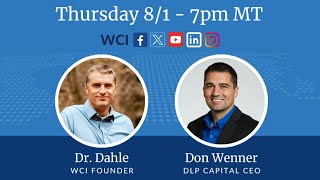
This is a YouTube video titled "Real Estate Investment Opportunities Series - DLP Capital" created in August 2024. It features a conversational webinar between Jim Dahle and Don Wenner, founder and CEO of DLP Capital. The discussion covers detailed insights into real estate investment strategies, particularly focusing on attainable workforce housing, various investment funds offered by DLP Capital, market outlook, and the housing crisis. Jim Dahle hosts and engages with Don Wenner in a multi-speaker format, providing an in-depth exploration of investment opportunities and fund structures relevant to accredited investors, including physicians and other wealth creators.
Foreign.
Welcome to our White Coat Investor Real Estate webinar for today. I'm here with Don Wenner of DLP Capital. We're going to be talking about all things real estate and specifically about the opportunities available with dlcap. DLP Capital. I've been investing with DLP Capital both indirectly and directly now for a number of years and actually increased my investment recently in one of their funds through my 401k, actually their lending fund. So I like DLP, I invest with them. Brett, our COO invests with them. They also put on this year at WCICON they put on a one day conference the day before WCICON started, which was pretty awesome. So we really enjoyed that. But welcome, welcome for another webinar. Don't.
Well, thank you so much, Jim. Great, great to be here today.
I think our format today will be you've got a presentation prepared, so let's go through that to begin with and then I think we're going to do some Q and A afterward. But it's always good to be with you and to hear from you and, and to hear what's new going on at DLP Capital. I know a number of White Coat investors have invested with DLP over the years and it's been successful for them as well. But let me turn the time over to you, Don, and let you start with the presentation.
All right, well, thank you, Jim. And I'm gonna move, considering people are gonna be watching this as a recording and they can certainly slow down my recording, I'm gonna move a bit fast through a good overview about dlp, what we do, how our investments work. And as you said, we actually have well over 500 members of White Coat invested with us today. I actually think we're over 600 now. So it's been an awesome, awesome relationship. We've had the great pleasure working with many great physicians and do today and hopefully we'll be able to show today for those of you new to us, why that is and why we've been of interest and a place that many, such as you, Jim, have trusted us to steward some of your wealth. So I'll kick off here again. My name's Don Wenner. I'm the founder and CEO of DLP Capital today, DLP Capital and tell you a little about who we are today which has evolved over the last now 19 years since I founded the firm. That picture there is the office I'm talking to you from Right now in St. Augustine, Florida, our headquarters here. And DLP Capital is a private financial services and real Estate investment firm focused on impacting some of the nation's biggest crisis, starting with the attainable or affordable housing crisis that we have really across the entire country. As mentioned, I'm the founder of the company, started the company back in 2006. Today we have over $5 billion in assets in our management, nearly $6 billion. We've been one of the 5,000 fastest growing companies in America. This will be our 12th year in a row we've invested over $10 billion in housing. About half of our money we've invested has been into the development, construction and operation of housing. Directly think rental communities, multifam as well as single family communities. And then more than half of our capital now has been invested as a lender, lending money to other real estate developers, builders and operators who are creating attainable housing. Also husband to my wife Carla there on the picture. And our three boys, Donnie, Alex and Jacob, who are 12 10. Alex's 11 next week, so I guess my team got ahead of me there and updated to 11, his birthday's next week. And Jake, who's 2, we live here in St. Augustine, Florida. Also spent some time in Asheville, North Carolina. So over the years now, 36,000 real estate transactions. On this picture here, though, on the slide here is the first ever real estate transaction I did. This picture is of a house on 223 Church street in Catasauqua, Pennsylvania. And you can pull that up on Zillow and verify my story here. But this is the first ever property I bought and I didn't plan to buy this property. I was actually a real estate agent representing a gentleman who was going to buy this property, renovate it and sell it. And day of closing, I was sitting at the closing table with this little old lady named Eleanor, who was in her 80s and she was selling this home. She had already moved out of the home and was living in a assisted living facility. And I met her at closing and I was waiting for my buyer, Jack to show up to closing, which he never did because he couldn't get his hard money loan. He was going to borrow to buy this house. And when I found that out and I told it to Eleanor that my buyer wasn't going to be able to buy her home, she broke down into tears, told me she was going to get kicked out of the assisted living facility she was living in if she didn't have the money. Today, the day that I was sitting there, it was about 4 o' clock in the afternoon and was completely distraught. And in that moment I decided I was going to buy her house and had never to that moment thought I was going to invest in real estate. And I literally left the closing table, literally ran across the highway, which was in front of the office building I was in to my bank, which was literally directly across the street. I was looking out the window at my bank and went into the bank and withdrew a cashier's check for basically all the money I had. I was 20 years old and I bought this home for $72,000. I renovated it, I sold it to a young family and then interesting enough, this is still the. Out of the 30 some thousand properties we've investments we've done, this is the only one that I've ever owned twice. I actually bought it, sold it, unfortunately they lost in foreclosure. I bought it again, renovated it again and sold it again. But all I'd say this is where it all began. And even though it wasn't a plan to buy this home, I was hooked. After doing so, I solved Eleanor's problem, created a great home for a new family, twice actually with this house. And this led to us starting to really grow and buy a lot of houses like this initially and then quickly expanded into buying larger rental communities, doing ground up development and lending capital to others and been a great, great journey over the last 18 years since that day. This is where we're located. So again, top is where I'm talking from today. We began in Pennsylvania, hence that last home I showed you. We still have offices in Pennsylvania as well as two other offices here in Florida and an office in Asheville, North Carolina. These are our values at DLP. Spell out DLP Capital. These are our 10 core values. A really, really important one to us and to all of our investors is stewardship. We take the opportunity and the responsibility of being stewards to the assets you entrust to us. Very serious here at Work really hard to not only generate great returns, but to protect your capital, generate consistency and give you confidence in the money you invest with us. What we do in one single sentence at DLP is we finance the building of thriving communities. Our purpose at DLP is to make a. To passionately make an extraordinary impact by transforming lives and building thriving communities. DLP stands for Dream, Live Prosperity. Our mission is to change the nation through the building of thriving communities. And our big hairy audacious goal is to become one of the hundred largest private companies in America through the living out of our purpose and the execution of our mission here, impacting over 10 million lives. So this basically means we're going to be about 10 times our current size. When we make this list as one of the hundred largest private companies in America, this is how we'll do so this is what we call our flywheel. This is our business model to how we go about growing the organization. It starts there with our purpose to transform lives through the building of thriving communities. Leveraging a way we go about executing on a day to day basis. How we set goals, how we achieve those goals, how we drive communication. We call the elite execution system, which is what I wrote a couple books about. Building an elite organization and building an elite career. Then we directly steward resources for wealth creators such as you, such as Jim, such as Brett, such as 500 other white coat investors. We then directly finance housing, community developers, builders and operators, or a lender, in addition to directly acquiring, developing, building and operating communities. Right now, today we own about 25,000 residences rental homes in our portfolio. Our outlook here for 2024 is overall strong. You hear a lot of different things in the news today, but when it comes to housing, rental housing, especially affordable rental housing, market's really solid. We expect to see modest growth in rents this year. So we expect rents to go up 1 to 3% this year, which is around historical averages. We expect rents to go up even though we're in a time and place here, the first time arguably in history where the average American now is spending over 30% of their gross income on rent, which is thought to be the peak or the threshold of affordability, which is why we have such a big crisis, because many people in America today, more than half of American renters, now are burdened by how much their rent costs. But despite that, rent is a much more cost effective alternative to homeownership in this market, which I'll talk about in a moment right now, the cost of owning a home versus the cost of renting. It's about $1,298 more per month, nearly double as much to own as to rent right now. In part because of the dramatic increase in interest rates we've experienced over the past couple years. In addition to the incredible increase in the average cost of a home in America over the past few years. Occupancy of rental housing is really, really strong. 95% occupancy across the country, meaning 95% of available rental homes. Rental units are occupied, which is near all time highs. And despite all of the positives of great demand, rent growing up, great occupancy, There is beginning to be some more challenges with people being able to afford their rent, as many are cost burden, Many are struggling to make ends meet every month. So we do expect this year we will see a slight increase in delinquencies, a slight decrease in the amount of rent that is collected by landlords by about 1%. And a big part that's driving the, the demand and the lack of supply, which leads to really high occupancies, is the lack of construction. So construction, new permits, new projects going into construction is slowing dramatically as there's a lack of financing for developers and builders. So last year there were about half as many permits. New construction starts last year as in 2023, as in 2022. This year will be about half of what there was in 2023. So construction starts, new projects going into construction is slowing, which means there's going to be even new housing available, which in places like Florida and Texas, the top two states we're focused on, which is where a lot of people are moving to. There's a major shortage in most markets. Property values across rental housing are really dictated in part by or in heavy part by rates. So if rates start going down, we'll see values go up. If rates don't go down, we'll see values decline. That's, that's short term, but still is an important, important factor and how we go about investing. All right, so our investment thesis at DLP just given a little bit of backdrop of what's going to happen this year, but way more important, what's going to happen over the next five years, 10 years, how we think about our investments. We believe that investing in attainable workforce housing, where our rent is less than that threshold, our rent is less than 30% of the local income, is a great starting point to our thesis. That's what we focus on almost all of our investments. Our rent is less than 30% of the local income. It's affordable for local families. Not only can they afford to move in, but they can afford to actually pay their rent. We believe that housing that is affordable to workforces will be in great demand in all market cycles. We believe what you pay for an investment, the basis you pay, is really, really important. They often say in real estate, location, location, location, which is true, but it doesn't mean it's a great investment, even if it's in a great location. If you overpay, has to be at the right price. We believe that housing supply will continue to be constricted. We believe that we are a renter nation in America. More and more people will choose or have to stay renters due to the cost of homeownership and just societal changes and not having the same desire to be homeowners as we once did. We believe the demand for single family rentals is going to grow dramatically. We believe that the Sun Belt is the best place to invest. And within the Sun Belt, the Southeast is the best region of the Sun Belt, so that is Florida, Georgia and the Carolinas. We believe in investing where job and population growth is happening or we expect it to continue to happen. We believe people want connection, want to be a part of a community. We believe people want to be connected to nature, want more time outdoors. And that's how we program the communities we develop and build and invest in. We believe people want to be in places where their dogs are welcome, which is a big part of what we welcome, and create amenities around. We believe in investing when others are afraid or unable, such as times like today. We believe in investing when there's a lot of equity behind us, which is the case in all of our investments, which I'll show you in a minute. We believe interest rates will come down and we believe the most scalable way we can create an impact in the attainable housing crisis is through building new housing. So how we work, how we execute on that thesis, our strategy is we invest with experienced developers, builders and operators. We operate in some of our deals as a lender, some of our deals as a developer, builder or an operator. And we'll show you that in our funds in a minute. And who invests with us are high net worth and ultra high net worth individuals, wealth creators, mostly directly with us. And our mandate is to invest in housing that is and remain affordable for working families. All of our funds are impact investments. All of our funds are mandated to do well while doing good to provide attainable workforce housing and attainable workforce housing. The housing being affordable we think of as the, as the starting point. That's the anchor, that's, that's the requirement. If you can't afford your housing, if you don't have safe, affordable housing, it's hard to focus on the things that are on the screen right now. It's hard to focus on the, you know, living fully, having, meaning, pursuing goals, you know, focus on the, the kind of Maslow's law, right? You need safe, affordable place to live and your family to be for you to really focus on the next steps and prosperity or being a part of a thriving community. So we aim for all the places we invest in to be places where the people in our Communities are living fully, have meaning, are pursuing their goals, have real opportunities for prosperity and have deep relationships and connections. And we think of there being eight elements to a thriving community we look to impact again, starting with housing being affordable, then there being access to banking, lending, investments, there being companies that create jobs, being deep connection within our residents. I believe in the statement it takes a village to raise a child and we want our communities to be that village. Deep relationships within our residents with one another. And we program and do events and activities to bring our residents together. Education, family, God, church, ministry, healthcare, nutrition, wellness. We think of those as the elements of a thriving community that we look to program into with other programming, other wraparound services with each of our communities to really provide all the full elements of a thriving community for all of our 85,000 residents that live across our properties. In terms, that's our resident community, our investor community. We have now nearly 2, 900 families invested with us. As mentioned before, over 500 a part of White Coat. We welcomed 428 investment investors into DLP new investors last year, many of which are in multiple investment funds with us. Which is what I'll talk to you about now, our investment vehicles and then I'll wrap it up to Jim to questions. So all four of our funds that are available to to you if you're watching this, all of our funds are private impact funds focused on this attainable rental housing to working families. All of our funds are evergreen open ended funds meaning we expect we'll be running these funds in 5 years, 10 years, 15 years. They don't have a close ended structure where they're going to be closed down in a few years. All of them are designed to provide above market returns, double digit returns. All of them pay a preferred return, a return to you before we even earn our management fee or any profits. All of our funds reduce our management fee as your account grows with us. All of our funds are for accredited investors only. All of our funds provide regular reporting and all of our funds accept IRA and other forms of qualified investments such as Jim mentioning his 401 program. All of our funds are structured with equity behind us. So no matter which of the funds you're in, our lending fund which are all senior secured mortgages. Our pref credit fund which is both senior secured mortgages and mezzanine subordinate mortgages or our two equity funds, all of the funds there's a sponsor, a developer who's putting their equity in subordinate to our money, subordinate to us getting a return on our money and subordinate to Us getting our money returned to us, sheltering our investors from risk. And I'll walk through a little bit more about that on each fund here. Now this little overview gives you a comparison of our funds. This is available to White Co investors. We have all the information I'm going to show you in our investor portal as well, which you can access. See all the information, all the historical reporting, audits, financials, but this just gives a little quick overview of how they stack up, how they compare. I'm going to walk you through each one of them here, over a minute or two each and we'll take some live questions from Jim. So first is the DLP Lending Fund. This is a very easy fund to understand in that it's pretty straightforward. It does one thing. It makes senior secured first position mortgages against primarily rental housing. It's all non owner occupied investment real estate. Almost all of it is rental housing. Our average loan to value is in the 50s. Right now it's about 54%. All of these loans are to professional full time real estate investors. We've made over 5,000 loans in this fund. We have not written off a dollar of principal or interest on a single loan. This fund provides an 8% preferred return to investors. That's 8% you earn. Before we earn anything, the target is to generate between 9 and 10% net to you. Our management fee is subordinate to those returns to the preferred return. All of the returns I'm showing are net of DLP's fees. If you grow your account with us to over a million dollars, we rebate down the management fee. It keeps growing. We continue to rebate. In this fund we pay out two distributions a month. We pay out the preferred return on the 1st of every month and then we pay out all the additional profits the middle of each month. This fund and all of our funds, you can take distributions monthly or you can let it compound and grow. And another unique thing about this fund, it's 90 day redemption notice, so very liquid for a private fund. And also another nice little benefit is a 1099 tax reporting. So no K1 statement here. So last year our return was 10.57% net to investors. We've been over 10% return net to investors every month for 10 years. And that's fun. So here's an example of a loan in this fund. This is a property called Twin Lakes at Avon Park. This is actually a manufactured housing community, 324 homes. We did a loan for $22.5 million that was 62% loan to value. This developer is a pretty big actual home builder. This developer has a net worth of over nine figures, actually over 10 figures, and has done a bunch of these projects before. We've done other loans for this borrower. So this is a loan in Sebring, Florida, to develop the land, put all the infrastructure in place, which is now all done, and then place these homes from his manufacturer on the homes, rent them out, and then he will either sell or refinance. This project's been going great. All the, all the site works done, the homes are being delivered. And example type of lending we do, there's some actual pictures of the units that they've been putting into the property. Great amenities, pickleball pool, convenience store. And the site work's done and houses are going in right now. Here's some examples of the floor plans of the homes that are actually going into the community as we speak. Here's another one. This is called Enclave at Kings Fort. We closed this loan last month. This is in the Dallas msa. This was to develop lots which are being sold then to a home builder. So this developer came to us for the money to develop the lots, put the roads and utilities in place already with a contract to sell once the lots are finished to a big home builder. Our loan is 47% loan to value $13.76 million. It was at a 14% interest rate to a very, very experienced developer who's done many, many thousands of lots similar to this project. All right, so that's the DLP Lending fund. Then we have the DLP Housing Fund. This is our most tax advantageous fund. This fund does one thing. It owns existing housing communities, owns about 14,300 apartments right now. This fund pays out a 6% preferred return that gets paid before we earn anything paid every month. The Overall target is 10 to 12. Last year. We actually next week or within the next week or so, we're finalizing our year end nav valuation, which goes through a valuation process the end or the beginning of each year, I should say for the end of the year. Our historical returns in this fund are over 25% annualized returns net to investors over the past four or five years. Same fee structure, monthly distributions and annual monthly preferred return distributions. And then everything else gets paid out annually. Annual liquidity, K1 tax reporting, which this past year and every year, we've gotten out by the March 15 deadline, never delaying our investors, which is a big deal. We're making an equity investment in this fund right now. So it gives you an example of type of investments we're making. This is a community that's brand new construction already built, built in Greer, South Carolina which is a suburb of Charlotte. And we're doing a $9 million pref equity investment into this, meaning the sponsor has $14 million of equity that's sitting behind our $9 million investment. So a lot of equity behind us. We're going to have a 9% current return on our investment plus a 9% accrued return. So we're going to have an 18% return on really what's at debt level risk on a really high quality property in a great market by a credibly experienced third generation real estate developer. So why you would consider the housing fund? Great double digit return, 20% plus annual return history, monthly distributions, annual liquidity. And so far today we've been able to shelter for most investors 100% of the income from tax through depreciation as well as through our unlimited qualified business income deduction. Then we have the DLP Building Community Fund. This fund builds brand new housing communities. This Fund has an 8% preferred return, gets paid out quarterly 11 to 13% target, did 11.74% last year net to investors. Same management fee structure, same annual liquidity, same K1 structure of the housing fund. So double digit returns building brand new housing. Then 8% preferred return 11.74 was what we distributed net to investors last year. This is a fund again building brand new housing. The biggest need, biggest way we can impact this crisis we have in most markets we need to build more housing and that's what this fund does. This is an example of one of the products we're building. These are we call living fully connected cottages. These are single family homes connected through a garage, two car garage, first floor master bedroom, four bedrooms, two and a half bathroom with a fenced yard. It's a product that's very, very attractive to families, cost effective for us to build, which means we can deliver this community at really great rents. Full set of amenities in the community. Pool, clubhouse, walking trails, pickleball, et cetera. We're building this product in a community in Kingsland, Georgia right now in the top of this picture. And then there'll actually be an RV resort on this property as well. So here's an example of one of the properties in this fund dream Winter Haven in Winter Haven, Florida, south of Orlando. This investment to build 280 units across 17 buildings. We're in vertical construction right now. There's some of the pictures from a couple weeks ago of all the infrastructure that Was going in. That's now done. They're now going vertical as we speak. Here's another property. This is actually right literally outside the windows of my office building. We're going to be building 209 units here in St. Augustine, Florida. We're going into vertical construction here, or I should rephrase, we're going into horizontal construction here momentarily and vertical construction soon after as part of a master plan community. 209 units building into a little over $250,000 a door in St. Augustine, Florida, which is actually the fastest growing county in America, believe it or not. And then finally, we have the DLP Preferred Credit Fund. This fund has the highest preferred return of any of our funds. 9%, 10 to 11%. Target did just under 11% last year. 90 day liquidity, just like our lending fund. And this fund makes mortgages and second position loans to our highest quality borrowers. We've never even had a delinquency in this fund's history. So great track record, generating double digit returns with all the income distributed monthly out to investors. And then finally, if you want to be in arguably our lowest risk profile, you can invest as a fixed note holder. Get an exact fixed return, know exactly what you're going to earn on your investment. Take distributions every month or let it compound and grow. We're paying out 9%, three year fixed notes, which is pretty cool. If you were compounding those returns and you say you invested $500,000, you'll know exactly how much money you'll have in a year, exactly how much money you'll have in two years, exactly how much money you'll have in three years. Or again, you can take the distributions every month. All right, so that's our investment funds. For anybody interested in learning more, one on one, you can use this QR cod. We had a great team of investor relationship managers, we call them investor success managers. Dedicated to providing you great support, answering your questions, providing insights and direction, helping you decide if any of our funds could be a fit for you and your family. And with that said, Jim, going to open it up to questions.
All right, thanks so much for a great presentation, Don. Well done. Let's start with a question about value. You talk about the steward mentality at the company and what do you do in an ongoing way to foster that.
Yeah, thank you, Jim. So I'd say, you know, first, first big thing is, you know, we, we operate as if it's our money. And the way we think about it, it really is our money. And I'll Give you a real life example of that. In the DLP lending fund, which we've made over 5,000 loans out to real estate investors I mentioned, we have never written off a dollar of interest or principal. Well, one of the reasons we've never written off a dollar of interest or principal is if a loan gets to the point of going into foreclosure, which happens every now and then, we have to take that property to foreclosure, which means we're going to have to take ownership of the property. We actually buy that loan from the fund for 100% of what's owed. So even if the borrower was delinquent on payments, we actually pay the fund any delinquent interest and the full principal, and then we handle that workout ourselves. Meaning when I say we, it's essentially, it's me. I put my money into that loan, pay off the fund, give the fund back 100% of the equity and interest, and then we work it out. If we lose money on that loan, that's our loss. Investors don't lose a dollar. That's our problem. And we do that because we think it's our job to make the credit decisions to protect our investors from risk. And if a loan doesn't out, that's ours to work out. And that's, you know, that's one kind of big example. But the overall, is everybody in the organization, all 900 or so of our team members, having an owner's mentality, having a mindset of thinking through every expense, whether it's signing a contract for $500 to get an apartment painted or thinking through, you know, do we need to add another employee to this team, or should we allow somebody to stay on the team who's not performing and not carrying their. We, you know, making those kind of decisions from a seat of an owner, of understanding that we have a great responsibility to steward the resources of our investors and that if we don't continue to do that effectively, people will not continue to invest with us. We won't be able to continue to scale our impact to providing attainable workforce housing and having that sense of ownership and pride of even if I'm not investor relations, even if I'm in accounting or I'm in property management or I'm in maintenance. That mindset of it's my job to steward those resources. And we do. We spend a lot of time connecting our team to our investors in a lot of different ways so they understand that our investors are hardworking people who have responsibilities to their organizations to Their families and they're counting on us each and every day.
Let's talk a little bit about the housing crisis. Now. The housing crisis is not just affecting workforce housing these days. It's affecting doctors. In many cities in the nation, including here in Utah, many physicians literally can't afford the median house in the community. So when are you going to fix the physician housing crisis? Or at least do you have any thoughts on what else can be done about the crisis besides build, build, build, build more housing?
Yeah, we can spend a lot of time on this. I mean the shortest answer is what you just said. Build, build, build more housing. If there was more housing, housing prices wouldn't be going up at the level they are. Rents wouldn't be going up. As quick argue. Wouldn't be great things for our investment strategy if we could solve this problem fully. Unfortunately for that side, but unfortunately for most markets around the country, we're nowhere near being able to solve this problem. And the problem's only getting bigger. And this most recent crisis of the increased interest rates, that's slowing construction, slowing development is only exacerbating the challenge. The other big thing is we need to private public partnership. So in order to create more attainable housing to bring costs down, we need zoning changes, we need more municipalities focus on allowing denser housing, allowing things like manufactured housing, like that example I just showed of one of the loans we did recently. We need more incentives on attracting developers to build, lowering the friction cost, the time it takes to get through projects because a big part of the cost of developing is the heavy cost of capital to go through the slow process of getting the project into construction. So it's going to take public private partnership to really solve these problems and create more housing, bring down the cost of housing, the cost of fees and expenses that go to local municipalities. And in the nicer neighborhoods, the wealthier communities, those costs become really exorbitant. The number of people who have their hands out to get paid by the developer in order to get that project off the ground to be able to provide kind of that mid level housing that probably you're talking about. For many physicians looking for a nice, depending where you're in the country, four or five, six, seven hundred thousand dollars home. So much money goes into the cost just to get the land to the point of being able to build a home in many parts of the country.
Yeah, I know there's a lot of docs in some cities that would love to find a $700,000 home, but agreed, the empty lots cost more than $700,000.
Exactly.
You know, stepping back and looking at the options for an investor investing in credit versus equity these days, obviously you have funds that do both of these things and so you've got a little bit of a bias here. But if you are an objective investor, which one are you more excited about right now? Which one seems more attractive to you right now from an investment perspective?
You know, it's hard to not love credit today. You know, the risk today. I mean, we all know it's a more volatile market today than it's been in a while with the interest rate environment and what that's caused in the banking sector and so forth. And we also own a bank as well and actually buying another bank right now. And so we know the banking side really, really well. But the credit side's hard not to like given, you know, because of the increase in interest rates and because of the lac, traditional financing that's out there from banks, the ability to get double digit yields in a credit position with very little volatility cash flow immediately, not a lot of risk. If you're investing with a good lender who knows how to manage credit risk effectively, it's hard not to like. And the saying that I've heard for a long time is the smart money is on the credit side. You know, it's sexier, it's more fun, there's bigger upside. Being on the equity side, it's exciting owning something. But being on the lending side, we get the majority of the upside with a lot less downside. But I'd also comment that our equity funds are kind of a. I consider it more of a mix between debt and equity because there's always subordinate equity to us that shelter. So I'll give you an example right now. It's not one I love in the respect that I'm not happy about this for some investors. So we have a deal right now in Texas where we have about a $15 million equity investment into a really nice apartment community. But due to some of the challenges with the interest rate environment, we did the deal as prep equity with a sponsor, so with a syndicator, a sponsor who went out and raised money into the deal. So put $15 million in our money in first. Our money ahead of the sponsor's equity. Well, the sponsor raised $5 million of equity from individual investors, probably some doctors, and their equity is sitting behind the lender and behind our $15 million. Our $15 million gets all the cash flow first. We get all our $15 million back plus a 17 or an 18% IRR return on our money before the sponsor and his investor gets any money back. And long story short, right now, unfortunately the investors who invested directly with that sponsor, they're going to have all of their money wiped out. They're going to walk away with $0. So they're not going to have gotten any return and lose all of their investment while our investors are going to end up with a 17 or an 18% return. So, so that's an example of where you sit in the capital stack is really, really important. And sitting in the lender position is almost always the lowest risk position. But sitting ahead of the top of the common equity, which is how we invest ahead of that common equity, reduces our risk and increases the consistency of our returns.
Now for an investor looking at the two DLP credit funds, how do you advise them to choose between them? Which investors should take the lending fund versus the preferred credit fund?
It's really a personal opinion. There's some investors who, if I was having a conversation with, there's no convincing them that not being the senior secured mortgage could be lower risk. And that's a valid opinion. Say if I'm the first position lender, senior secured every time, that's the lowest risk position and that's, that's a fair argument. And again, we've got a 10 year track record, 5,000 plus loans, never written off a dollar of principal or interest on a loan. So that fund's got a long track record, long history of performing really, really well. The referred credit fund's only about 2 1/2 years old but has had also a track record of generating double digit returns in every period. And I can easily sit there and argue with you, it's a lower risk position because we only do prep equity with the top. I'll call 10% of our borrowers who we would do prep equity with. We only do it on the highest quality real estate with a lot of equity behind us. Every deal we've ever done but one has had a few million dollars of equity behind our loan. So we've never even had a borrower go delinquent in the preferred credit fund. Lending fund will generally have 2 or 3 or 4% of our loans in delinquency. It's part of of part of lending for a credit fund because of the quality of borrower we're able to choose from there with offering subordinate debt. I could easily argue with you that it's a lower risk position than our senior lending fund. So I'd say it's kind of an opinion. But the practical reasons why you would choose one or the other if risk wasn't the deciding factor in your mind. The preferred credit fund has a 1% higher preferred return. We expect to generate 1 or 2% higher returns. The lending fund does have a 10 year track record though of really great consistent returns, which is, you know, even putting risk aside, a 10 year track record is hard to argue with. Of course, we all know the legal statement past performance is not a guarantee of future performance. But those would be some of the factors people think about when making a decision. And then finally, the last part of it that people often make their decision on practically is pretty simple, especially once they have a relationship with us. Very often the conversations are they talk to their investor success manager and they simply say which of your two credit funds is going to deploy my money the fastest? And that's often what they actually choose based upon. And the great news right now is both funds are deploying the capital within a few days.
How many securities or notes or loans or whatever you want to call them are in each of the two funds? How many are in the lending fund right now and how many are in the preferred credit fund?
Yeah, and that's a great point that I didn't probably explain enough when I said about a ten year track record versus two and a half. So the lending fund is a bigger fund. We've been running that fund for 10 years, which means now it's about $1.1 billion in total loan amounts. And that's across around 400 different loans across over 1,000 different pieces of real estate. The preferred credit fund is only 2 1/2 years old. It's a much smaller fund. It's only around $100 million in total assets and that's across 20, 25 different loans and 50 to 75 different pieces of real estate. So still a lot of diversity, but not nearly as much diversity as the lending fund being. And it's a longer timeframe and larger size.
Let me ask you a few questions about fees and terms. Is there a catch up on your promote or do you only get 20% of what's earned above the preferred return?
So the way our waterfall works, and waterfall term meaning how does the cash flow get distributed? Right. So if we had $100 of cash to distribute, how does it get distributed? So our waterfall goes depending on the fund, a preferred return first, which ranges from 6 to 9% return on your money that gets paid first. Then we get our management fee, assuming there's enough return for it, which is 2%. Then after that, it's an 8020 split. We do get R20% of the preferred return, which is the term you use. Catch up. So if we paid out an 8% preferred return to you, you get 8% on your money, then we get our management fee, then we get 20% on that 8% preferred return, and then it continues 80, 20. 80 to you. 20 does.
Now, you offer a 0.5% fee rebate for an investment of over a million. Is that a million total or a million per fund?
A million per fund. So it's based on each individual fund. And some of these rules and how these things work are guided by what the SEC guidelines are. And we can't calculate the combination of different fund investments together. It's per fund fund.
Now, what's the current minimum investment for white coat investors? And do you expect that to change anytime soon?
Yeah, I'm glad. Yes, that. So it's $100,000. And everything I showed you there showed it was $200,000. But we are allowing white coat investors to invest for $100,000 minimum. That's $100,000 per fund. So you could take 200,000 and put 100,000 in two different funds. 100,000 per fund, and then there's no minimum after that. So if you invest $100,000 in the lending fund, you could then add 10 grand or add 20 grand. We actually have a lot of doctors who take part in what we call our auto ach program, which is we'll set up a process. Say you invested 200,000 a day and you're blessed to have cash flow that exceeds your living expenses. We can set up that, hey, 5 or 10 or 20 grand gets added to your account every quarter automatically and kind of steadily builds, which is a cool way to kind of put it on autopilot. But no, we're not expecting the minimums to change in the short term. Certainly over time, they will change. One of the things we deal with is the way our funds are structured. We can't have more than 1999 investors per fund. And that's really the reason we have minimums. Because if we could, we'd love to help tens of thousands of families. We enjoy it. But we have to fall under the SEC rules where we have to only serve accredited investors. And we can only have 1999 investors per fund. And our biggest funds today, Lending fund, Housing Fund, are both over 1000 investors today.
Now, I was noticing looking at the fund comparison chart that the building community's fund distributions are only partially eligible for the 199A or the QBI deduction, whereas most of the funds are completely eligible. What's different there that causes that? Do you have any ideas?
I don't think.
Maybe there's a better question for the accounting team.
I don't know. Well, I don't actually think that's accurate anymore. So I'm glad you actually asked the question and I'm going to pull that up so everybody can see what we're talking about here real quickly. So I actually don't think that's accurate anymore. And so let's see here. So this is the comparison that I showed a bit earlier. So where were you seeing that, Jim?
I was seeing it. I don't know if it's on that one or the one I pulled off the website.
I think it was different on the website. Yeah. So probably. So that, that's a good note. So it's not on here anymore because the Building community fund originally was not a reit. So all of these funds, I didn't really talk about this, but all of our funds now are private. So These are private REITs, not public REITs, like you can invest in the stock market. These are private REITs. And REIT is really a tax election. And there's a number of specific qualifications to be able to become a reit. And long story short, it took us a couple years of the Building Community Fund being a ground up development fund to become REIT qualified, I'll call it in simple terms. And one of the big benefits of being a REIT is that there's an unlimited qualified business income deduction, section 199A, as you mentioned. And what that means is whatever your marginal tax bracket is. So if you were at the top marginal federal tax bracket of 37%, you get a 20% reduction in our funds, you'd be taxed at 29% instead of 37%. So now all of our funds are private REITs and they all have unlimited qualified business income deductions.
Yeah. Now I just got my K1 for the housing fund for 2023. Again, ordinary business income, zippo. Again this year I got $21,000 in distributions. None of it's taxable. Well, I guess about $1200 of it was taxable interest. But what could change in the future that would make the housing fund less tax efficient?
So the answer to your question is, so far, to best of my knowledge, in the housing fund, all investors have not had any taxable income while They've been investing. We've been able to shelter all of the income from tax through largely through depreciation. So what could happen that would make it less tax efficient over time? So there's two things that could lead two practical things that could lead to taxable income in the housing fund. One is if we generate incredible returns that we can't shelter from depreciation. So that's a really good problem to have. Now a couple years ago we generated a 45% return to investors in a single year in 2021. And we still were able to shelter all the income. But depending on how many sales we have in a year, we could get to a point where we can't shelter all of it. That'll likely be from good reason, meaning returns are so high that we couldn't shelter all of it. The second factor is the fund is incredibly tax efficient for you as investor when you're invested as we're able to defer tax and appreciation. And there's some other great benefits in the fund being an evergreen fund. And as we sell assets, which we do over time, we can actually do like kind 1031 exchanges within the fund deferring out long term gains. A lot of unique things we can do to make it really, really tax efficient. But when you exit the fund, that's when you'll have some generally some long term capital gains when you exit your position. But the nice thing with the fund being evergreen is you can stay in as long as you want. You could choose to exit the fund when it's the right time for you to have a taxable event. But also once you do so, you were able to have the gain in your account over however many years you were in the fund tax deferred, which makes a huge difference. And then when you are taxed it's going to likely be. None of us know if tax code could change in the future. But as of today you'd be being taxed at long term capital gains, which has historically been at a much lower tax bracket than our most of our ordinary income tax bracket.
One last question for you in your investment theses you mentioned that you believe interest rates will come down and I've always found interest rates very difficult to predict about the future. I'm curious why you believe they're going to come down.
Yeah, it is very, very difficult to predict and I can't tell you exactly when it's going to happen and I can't tell you exactly how much they're going to come down. My expectation is they will come down at some point between now and next year. So over the next 12 to 18 months we expect they'll come down. Our predictions are they're going to come down at least around the 5% borrowing rate. So today kind of you're in the low to mid sixes borrowing rates for at least the type of borrowing we do. So we do expect to see some growth. We're not saying they're going to come back into the low 3s like we were at a couple years ago, but I think there's a lot of reasons they're going to expect they're going to come down. There's of course the argument that the government needs them to come down as the amount of borrowing that we have and the cost of servicing that debt. But I think the bigger thing is at some point it hasn't yet, which is why they haven't come down at some point. The high cost of borrowing and what that's doing and slowing development, slowing construction, slowing a lot of the economy down, slowing a lot of investments, making debt inaccessible to a lot of companies, a lot of developers, a lot of the market, at some point it is going to restrict economic growth. It's surprising, I think, in stumping a lot of people to how well the economy seems to be doing despite the higher rate environment, which is why we haven't seen them come down yet. But at some point we're going to see rates come down. There's a lot of people think by the time election comes around that we'd be seeing them come down. Both parties don't want a slowing economy and don't want to see a kind of high rate environment. But it's hard to predict. There's the arguments that if we have a real estate developer back in an office that is going to be pro real estate, which has been very much driven on rate environments over the last couple decade and a half, but hard to know exactly when. But I'll say I get the pleasure of sitting with a lot of economists and a lot of experts in a few different kind of groups I'm in. And everybody has different expectations to how soon it's going to happen and how much. But the consensus is by the experts who spend a lot of time studying this, they will come down probably going to take longer than a lot of us would have predicted a year ago. But we will see some decline here in the near future. And we're already seeing it. We have been seeing our borrowing rates from Fannie Mae and Freddie Mac's steadily coming down, tightening the spreads, even though the indexes haven't come down. So the spreads are tightening, but the indexes haven't come down yet. And we'll see. It'll be interesting. And for us, the way we think about it, if we're wrong and rates go up, up or don't come down, and that leads to more distress and more challenges, which it will, that creates opportunity for us. Opportunity as a lender, opportunity as a buyer. So we're kind of prepared and ready for kind of what the what we can predict and model out as well as what we can't, such as the COVID environments of a few years ago.
All right, well, I think we've come to the end of our time. Appreciate your preparation and and your thoughts on this webinar. For those who are interested in learning more about DLP or investing in their funds, you can go to whitecoatinvestor.com DLP and learn more or get started investing with them. Thanks so much Don for your time today.
Thank you, Jim. The hosts of the White Coat Investor are not licensed accountants, attorneys or financial advisors. This podcast is for for your entertainment and information only. It should not be considered professional or personalized financial advice. You should consult the appropriate professional for specific advice relating to your situation.
More from Jim










Physician Takes a Youth Sports Team to the State Championship - MtoM Podcast #236
