Real Estate Investment Opportunities Series - Southern Impression Homes
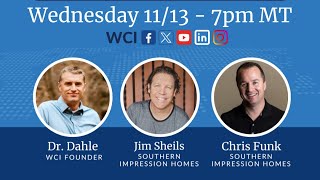
This is a YouTube video titled "Real Estate Investment Opportunities Series - Southern Impression Homes" featuring a detailed webinar discussion between Jim Dahle and Jim Shields, recorded in November 2024. The content is a conversational real estate investment webinar where Jim Shields, a partner at Southern Impression Homes, presents his company's build-to-rent real estate investment model, financing options, and market strategies. Jim Dahle participates actively by asking clarifying and challenging questions, making it a multi-speaker conversation focused on turnkey real estate investing, financing, property management, and long-term wealth building for investors, particularly targeting the white coat community.
Foreign.
Welcome to another White Coat Investor real estate webinar. I'm here with Jim Shields, partner at Southern Impression Homes. Welcome back, Jim.
Thanks for having me, Jim. Good to be back.
Now, for those who don't know him, Jim is not only an accomplished author, he's been a speaker at the Physician, Wellness and Financial Literacy Conference. And so we're excited to have him back here to do a real estate webinar. He spends a lot of time teaching people how to build stronger families, better relationships, particularly with your children. However, his actual main gig is in real estate with Southern Impression Homes. And that's mostly what we're gonna be talking about today, I think. So why don't we go ahead and get started, Jim? We'll do your presentation first and then we're gonna have a Q and A session afterwards. So we'll bring your slides up and let you, let you present to start with.
Sounds good. Thanks for having me again, Jim. It's, you know, great to be back with White Coat. We've really enjoyed the last few years working with the white coat community. My name is Jim Shields. I'm a partner at Southern Impression Homes. We focus on the build to rent niche for rental property. My wife and I just released a new bestselling book called the Passive Income Playbook. We've given it to a number of the white coat community people. I know Jim was very supportive of the book. Thanks, Jim. And, and it really does tell our 25 year journey of not only how did we go through our real estate journey and finally end in new construction rentals, but how we've done the same for many clients and there's lots of case studies in the book that people have really enjoyed. So we'll make sure you guys get a copy of that book. Our family is all about adventure. Very similar to the dollies. We are loving warm winters in Costa Rica and cold summers in Nova Scotia. We like to be on the road and traveling together. We're very into our service and contribution, being able to support Guatemala orphanages and build houses in Mexico, Costa Rica and other third world countries. This is all possible through the real estate investments I started making 25 years ago. Also, what paid for my real estate was our bestselling family book. Without real estate, I would have never created this book, would have never been able to finance this book, and definitely, probably without the connections, get it to the number one Wall Street Journal bestseller. Some of you saw me on the podcast with Jim last summer and we appreciate your support on that, but it was all backed by the real estate that I've been able to support. And probably one of the best things that came out of my life, which I know this community will appreciate, especially 12 years ago I was able to donate a kidney to my father. I was the only one who had the financial resource and the time to be able to recover to do that for him. And that was one of the best decisions of my life. And my dad really had a big impact on my life financially because he struggled with money his entire life. And I remember my father left a Hallmark card on our parents old wooden bureau for years. And it was that good looking couple walking down the beach in a Caribbean area in that all white linen outfits. And in that card I'll never forget, my dad had written we're going to go to these places someday. We're going to go here with all the kids. And we really never got to do that until about 15 years ago when I was able to retire my parents so that he could finally get to that part of his dream. He passed away last year on Christmas, unfortunately. But I really do feel accomplished that he went out on top because he got to live that dream finally when I was able to retire with my real estate investments. And Southern Impression homes has done that for many clients, which I'm going to talk a little bit about today. Our build to rent model and build to rent is different. It's kind of the 2.0 of what's called turnkey real estate investing where Chris and I, my partner in the Southern Impression Homes business, we both used to fix up old homes and keep them as our for ourselves for rentals or work with investors. And we found the new construction about 10 years ago was a much better way to have less headaches, less maintenance and repairs, longer tenancy, better overall numbers for that generational growth. Because most people I talk to say I want to have a rental portfolio. If I'm going to own rentals, I want to be able to pass them down to my children. And in order to do that you got to have them in a certain area, in a certain condition. At least that's been my experience. Our sweet spot is single families, duplexes and quads. We are not going into the big commercial realm. We stay in the residential. We are big believers in residential. It seems to really hold in the strong time, I mean in the social times and go up in the stronger times. So this is our recipe. Single family duplexes and quads. These can all get residential financing, which is really important when you're looking to Finance something long term and get the best cash flow and results. We even are able to offer our own in house financing, which I'll talk about on that today. That's much lower than the average mortgage rates out there. Now people say to me, well, is it worth owning your own rental property? I'm a doctor, I'm a medical professional and I'm busy. I don't want a second or third job but, but I've heard about some friends that have done well in real estate. You have other friends that haven't done well. So let's look at first, can you make money and is it worth it to have a little bit of extra effort of owning your own property? If you had invested $250,000 into our, into the S&P 500 five years ago, you would have averaged a 10.49% return, very good return. Now if you had invested in a real estate fund, which are great, you know, go to my friends over at dlp, that's how Jim and I actually met. You know, they could have earned you maybe 13.5% annual return, which is a great return. However, when you look at home ownership, if you had bought into $250,000 put into our Build to Rent program in Jacksonville, Florida five years ago, your average annual return would have been just over 69%. This is the advantage of owning property personally and the growth that can occur especially when you're patient, looking long term and in the right markets with the right management. Again, look at this chart from the Fed. Real estate historically has always gone up. Yes, there will always be little blips which we see you even look in here, that, that time in 2008 where it did go down for a little while and within seven years it was back up above where it was. But over the over long, especially any 10 year period and certainly this last hundred year period we're looking at, it is always going up. And that's why a lot of the bigger groups look to us to buy property. So Blackstone, we used to actually sell Properties to Tricon. They bought this group, Tricon for $3.5 billion in the beginning of the year. What is this company made up of? It's made up of the investments that we offer to our clients and do for ourselves. So we know that if these biggest money groups in the world are banking further on our model, that's good for not only us, but for you as well. So couple things. You know, there's three types of investors really in real estate investing. It's almost Like a triangle. At that effective level, that's kind of the base level. That's where I started out. You like to get into the market, meet realtors, find properties, research the areas, hire contractors, oversee the rehabs, look at, you know, managing the property on your own. You're very involved, you have the time you want to do that. It can be a very good way to get going as long as that's what you want to do. At the second level, the enhanced level, what we see, Jim, is it's where you want complete hands off. I am super busy in my career. I don't want anything. And this enhanced level is where you write a check. Like I said, maybe you've written a check to dlp and that's great because you'll have really no involvement except for looking at your statement at the end of the month and then you're not getting any time involved. Now, at the engaged level, we tried to get to a little bit more exposure to ownership without a lot of that effective level work to it. You know, a lot of our people that end up coming with us at the engaged level, they don't want to find the properties on their own, they don't want to figure out finance, they don't want to research the areas, they don't want to deal with contractors or manage their own properties. And that's where we step in, not only with a certain type of property, but only new construction. We've become really, really serious about that. That was pretty hard for a guy like me who made his bones rehabbing thousands of properties. But I gave that up about seven or eight years ago because I saw that new construction was a better formula for the overall good of not only our company, but our investors as well. Now, one of the things that has really kept us alive through these more flat times in the last two years is our financing program. We're in a very good position financially with our company, so we're able to pre buy money. And all that means is you' to get rates by buying one of our homes that if you walked into a mortgage company, you just wouldn't be able to get. Right now our most popular program is this 4.75 interest rates. And Jim goes over numbers very well in a lot of his presentations. When you're locking in at 4.75 opposed, let's say seven and a half to buy a rental property, this gets you off on the right foot. We also include two years of free property management. And all this goes to your bottom line to get you that Initial cash flow in the right direction. So it's about an $80,000 minimum investment to start building your rental portfolio with us. We currently have over 700 million under asset management, which produces 46 million in annual recurring revenue for our investors. It's almost 170 million in equity we've made for our investors over the years. And we currently have 925 active investors and that grows weekly. Over 8,000 units developed and over 8,800 people are residents and growing. And we figure with our 120 employee team that we have running all day every day for you guys and 5,000 more lots in Florida to build on, we've impacted over 375,000 families. And with building out the rest of those lots, we know it's going to come to a million. So one of the things that was pretty exciting that I know I've talked about before in the podcast. About a year ago, our company was partially acquired by Brightland Homes, which is owned by Sumitomo Forestry. Sumitomo Forestry. I hadn't heard of them, to be honest, although Warren Buffett has invested in one of their other conglomerates. But they're a 331-year-old company with extremely strong financial roots and we're able to capitalize on that by the way that we build and the amount that they build again, they build 17,000 homes annually worldwide. And what's that done for our clients? Well, it gets them better deal in pricing and quality, better service through all of the infrastructure that we've been provided, and that means a better overall future. We still have that same client focus and spirit of a family business which was started by my partner and his father, and it continues on, but we have bigger and better backing, which gives you more support in that comfort of knowing that, yes, we are a healthy builder and one that's you can trust on the financial end. Now with our book, we have worked again and you can read on some of the case studies. We've helped dozens and dozens and dozens of investors, including those in the white coat community, follow our passive income playbook. You know, we have certain income principles and success indicators. We look for our most successful clients, invest in three to five properties and then every three to five years they roll the equity into new deals or to future financial instruments, and they use the refinance to let their tenant pay for things, and that's tax free. And we also include our legendary family blueprint because my belief has always been if you're not enjoying your family life with all this real estate what's the good for? So we have a bonus section of how to live a legendary family life that we've tried to follow over the last 20 plus years with our own family and five children. So couple quick principles. First, we invest for the long term. We are not for everyone. If you're looking to flip a property in the next six to 12 months, we're not for you. We are building long term generational wealth rental portfolios. Also, real estate makes money in at least five different ways. Look, cash flow is important, but what I've learned over the years and I just did a big podcast on this yesterday, I've always sacrificed a little bit of initial cash flow up front to get into a better quality area and property and look long term with it. And we also by able to own your own properties with this are looking at the depreciation, the tax performance, the debt reductions, the ability to be able to refinance tax free off. There's five different ways and we go through this in the book of ways to make money owning your own rental property. Also, we only invest in good areas and good neighborhoods. If me, you and Jim couldn't walk down the street at 9 o' clock on a Friday night to say hi to one of our tenants, I don't want to go there. Not that you have to do that. We want that ability. We only go to good areas and good neighborhoods. And also I avoid fixer uppers. And that's kind of funny coming from someone who was a rehabber for so many years and did so many rehabs. But again, I hate to tell you this, but the TV shows don't always tell us the truth. It's not always as fun as they make them out to be because with older homes there can be a lot of surprises and also something called the three year curse. What I found is when I was rehabbing older homes from the 50s and 60s and redoing everything, it seemed after three years my maintenance and repair budgets would change, always grow pretty high and I own old properties. But I know that's expected now and that includes more involvement of my time. And a lot of our people that we work with, they don't want to give up more time. So that's why we avoid fixer uppers now and do new construction because that is a more solid play with less involvement. Also, let experts manage your property if you're not looking to create an extra job for yourself, one that doesn't even pay that well like property management. I've always let experts manage my Property. I don't like to manage my own portfolio. I've done it before, it was not my favorite thing. So I let experts manage my properties. And along with that, I've gotten very clear over the last 25 years that rental properties are for cash flow, not for charity. And the reason I say this, it's in the book. When I first started out in real estate out In California almost 25 years ago, I remember the first five rental properties that I bought. Three of my five tenants paid me more stories than they did actual rent. And that put me in a very, very dangerous situation where I finally got clear that, you know, I mentioned to you guys before, I'm very involved in charities in Guatemala, Costa Rica, other areas that I truly care about. I found that if I didn't, if I didn't separate my rentals from my charity, I'd never be able to give to anything but my rentals. So for me, keeping managers in between me and my rentals, I don't get too emotionally attached. And I've learned that lesson that yes, I care about my tenants, I give a great place to live, but I can never confuse my rental properties as charity because I won't be able to give anywhere else. Now another thing, this is really important. There have been a lot of changes, I don't have to tell this group that over the last couple of years. And there has been changes to landlord laws in different states. Some states it can take you 12, 14 months to have a tenant who's not paying leave, sometimes even longer. So I encourage you to find landlord friendly states. That's why we're in Florida. Florida is known that if a tenant doesn't pay, they have to be out in 40 days. And that is a good position to be able to be in if you're owning rental property as opposed to being in a state where it might take 14 months to get them out, that can be a major drain to your financial resource and cash. Plug into a support team, guys. Don't create another low paying job for yourself. When you come to a group like ours or other groups, if they're providing the properties, the financing, the insurance, the management, you know, don't try to recreate the wheel. Plug into the system, ask questions, but don't try to redo it on your own. That kind of defeats the purpose of not wanting that extra job and only buying. At least my suggestion from a builder rent company with a profitable track record. What I believe is a track record is at least 500 individual properties have been built. We're at almost 2,500 and growing right now. And I felt after a thousand we really started to hit our stride. So I just ask you if you're going to go the build to rent, make sure they have a profitable track record and also a healthy balance sheet and never stop learning. I don't really need to tell this group that obviously with White Coat Community you're constantly learning of how to invest and have this side residual that you're growing as you have your medical career. But I never stop learning. I'm always going to events and keeping abreast of what's really happening in our industry, in the real estate overall. And one thing I like to do is I include my children, my older boys. They're in our CFO meetings, they know about our rental portfolios, they are involved, they're getting into their own properties now at young ages. So I always encourage you, if you're going into this, bring your kids with you. I mean, the money game is very important to understand so that they have more freedoms by the time they're Our age now. 5 predictable passive income success indicators. We'll go through these real quick. I don't depend on appreciation, but I do my best to get in its way. And where I find appreciation goes is where there's economic growth, population growth, affordability, desirability and healthy supply and demand. And that's why we go to Florida, because Florida has them all. Couple of things you want to know. Between 2012 and 2021, there were 12.3American households floors, many of those in the southeast. But only 7 million homes were built. Stop and think about this. That for a minute. That is a monstrous amount of homes. And we were already behind unneeded inventory since the 2008 meltdown. Affordability, people say to me all the time, well, do you think that the market is tapped out? And I say, well, which market are you asking about that's topped out. I always look at very simple fundamentals. So going out to where near where Jim was out in Salt Lake, you know, the medium home price out there is 581,000. But in Cape Coral, one of our most expensive markets, it's only 339,000 with similar family incomes and similar rents. This tells me I like to go to areas that show this lower median home value tied to household income. Also Boise, Idaho, Jacksonville, another place where we've had a lot of investors come out of near almost five and a half, 538,000 opposed to 299 similar household incomes. And Average rents. These are things you guys want to look for when you ask that question, is the market topped out? And when you look at these, which one do you think might be topped out? Which one do you think has room to grow? Desirability. We do not build in Orlando, Tampa or Miami. And if you're a northern boy, like I originally was saying, wasn't that all Florida is? The answer is no. We focus on second tier markets that are showing all of those five fundamentals I just talked about about. All of these are having those areas of growth and we're able to get you in at that lower buy in where there's still cash flow. And we believe that higher chance for equity appreciation, which is one of the big reasons that we go into real estate supply and demand. We are answering a call that many people are not doing in the residential realm. This is a really interesting statistic. New builds. The number of new homes under 1400 square feet has declined since 2008, and it's less than 10% of all new builds. Now, this is a monstrous stat when you really understand because most of what we build, from our single families to our duplex to our quads, these units are under this 1400 square feet. They're in high demand, they're affordable, and people are looking for them. So this is part of the market. We really answer to that. The national home builders, well, they have no interest in. They don't find it to have large enough margins. We're willing to be a low margin builder. They're not. We're answering the column hurricanes. This is a really interesting one. So hurricanes are something that I like to focus on because a lot of people get scared with them in Florida. This is a picture right here of. There we go. This is Punta Gorda, Florida. Now, if you look right here on the right, there was one roof taken right there that got blown on. But let's look at this overall area. This is the day after Hurricane Ian came through it. And if you're looking, you're going, gosh, there's some trees down, some wetness. But the houses looked pretty intact. You know, besides that one roof, look at this. This whole area looks pretty intact. All the homes are there. Everything's good. Well, the reason why is Punta Gorda, Florida changed all the rules. It was hit in 2004 by Hurricane Charlie, and the government stepped in and changed the rules after that because it was absolutely decimated. They said you got to build on higher ground, you got to build with stronger structural design. So this is the day after a category four came through. And this is what it looks like. And that is the advantage of new construction with hurricanes, because you are building on higher ground, you're with stronger structural designs. And a lot of the times, even though we're in coastal communities, we're at least five miles inland. All of these things matter to insurance companies. We have no problem getting insurance on our individual properties. Why? Because they've been built newer than 2004. So we're held to those guidelines of building on higher land. The old homes, they were built at 2, 3ft above sea level. We're building 13, 14ft above sea level with stronger structural designs. And that is why insurance companies love to insure us and also give us way better rates than some smaller older homes that could be only a few miles away. That could be seven, eight times the annual premium in insurance. Now, when we went through that large hurricane ian, we had four projects out of 278 in Southwest Florida, that Greater Fort Myers and Punta Gorda, where the eye of the storm went right over. We only had four that needed insurance claims. And why did they need these claims? Well, because they were just freestanding walls. We had just started the project, and in the wind, they fell down. We didn't have time to tie on the roof, which gives that strength. And we had no flooding. So this is a remarkable track record that we were a little nervous about, to be honest. But it showed that, gosh, the new construction really doesn't give a protection of not only actual hurricanes, but also insurance rates. Because after this, our insurance rates have actually dropped for our average client starting this year because we've performed so well through big things like this. Now, who's our typical investor? Well, they want us to find the deal, finance the deal for them and manage the deal. You know, Don Warner, a lot of you guys know from dlp. He's the one introduced me to Jim and the gang here at White Coat. I've been a family advisor for his company for a few years as well. They've put over 40 million into our deals. And there's a reason why for that. Tom Tusson. I love Tom's story because that beautiful woman standing there next to him is his wife. I had a similar story where they were going through a kidney donation. And he was saying, running a mortgage company, Jim, I'd like to be able to step back within a few years. I think my wife's going to need a donation for kidney. I said, I know what that's like. And he did. Quite remarkable. And it all started with this one duplex, an $88,000 investment that he grew into four more properties and then another two properties. And now Tom is sitting at over a million in equity and almost $12,000 a month in cash. And it's given him the time to keep what he likes to do. He's former Air Force. He still flies his own plane. I got this message from him on Facebook, which I love to share. I was asking about his wife, he was asking about my newest child. They said, hey, I retired from Fairway Mortgage yesterday. You played a big part. And he's still flying. His wife's doing great post. Kidding Donation. I love this story. Amina Goodwin, she is an infectious disease doctor in New York. Young, great doctor, young family. She didn't want to retire. She loves what she's doing. But she wanted to start to supplement her income for down the road. And she started with three properties and then grew it into two more. And that's now got her at almost 6,000amonth in monthly cash flow and nearly $800,000 a month in equity. And that's just in a few years. I'm looking forward to seeing what happens for Amina and her family in the coming years where they're expecting more growth patterns here in Florida. Now let's look at some live deals. The good thing that you guys should know is our property counselors are there to support you with questions, concerns, scenarios. Go through things slowly. And one of the things that can be most confusing about real estate is the performance, the numbers. You guys have figured out some very complex things in your medical careers, but sometimes the numbers can feel a little daunting. We're there to slow that down and explain it for you. So we look at things in a very deep fashion and are there to answer extra questions. Now we're just looking at this, a single family home. We're looking at again, initial cash invested of about $79,000. And you're looking, if you look in the orange on the bottom, a cash on cash return of nearly 8%. And based off some very, very conservative assumptions that we go through. And again, we'll go through this slower. If you're calling a property counselor to go through this property, you're looking at a five year hold profit of $93,000, which gives you an average internal rate of return of 22% a year. Again, this is the power. We'll teach you all the levers you're pulling by going into one of our properties, a duplex, going to be a little Higher buy in, you're looking at 132,000 to buy a duplex. Now that's going to bring you a cash flow of almost 6% and then a five year hold of almost 140,000 and an IRR of 20%. Duplexes are a great thing. They can go in really solid neighborhoods and get you two tenants under one roof. And the quads, we've been working on a lot of quads of the white coat community, they are larger buy in amounts. However, that larger buy in amounts can really produce a quicker cash flow as well because you're averaging over 10% year one on your cash on cash return and a five year hold of $378,000. That's a 25.2 internal rate of return. Again, I know I'm going through these numbers a little quickly, but you'll get a copy of the slides and our property counselors are there to go through them with you slowly so that you understand them. Again, what makes all these cash flow is the internal financing that we're offering mortgage companies. If you went into a mortgage company and asked for these rates, they're going to tell you they could do it, but they're going to charge you over 10 points to do that. That's 10% of the loan amount just in fees to try to do it down. We do that for you. So you can get in at these low 4%, 4.75% interest rates with two years of property management. And again, by doing this and doing it in the right areas, we're setting you up to have not only cash flow off the bat, but poised for growth in those second tier markets I explained that are still showing a lot of room for growth. If you don't like our first program, just to show you that is a 30 year amp 10 year fixed. If you said, oh, I want longer than a 10 year fix, that's fine. For just a little bit higher you can do a five and a quarter interest rate. And again, that also comes with two years of free property management. So we've really enjoyed working with the white coat community. Jim has been great to us, Brett's been great to us. There's probably a few of you listening. Thank you for your continued support and giving us a chance to build your rental portfolio. If you're interested, we'll get you out a copy of the book and you can have a no obligation discovery call to see if we're a fit for you. If we're not, we can try to send you someplace else. But if we are, then we can start to build that rental portfolio for long term generational growth.
This, this is fun to talk about turnkey investing. It's my job, a couple of things. One, to make sure everything's nice and clear to everybody, but two, to ask all the hard questions. So we'll be, we'll be peppering you with a few hard questions here. But before we get to those, let's walk through beginning to end of a turnkey investment. I mean, I know you know what a turnkey investment is, and I know what a turnkey investment is, but I'm not sure everybody does. So let's start right at the beginning. What do we mean by a turnkey investment and what are the stages of this for somebody who's interested in investing in this type of an investment?
Yeah, turnkey investment. The term became popular right after the 2008 meltdown where a lot of foreclosures were coming out, they were getting renovated. There were people that were looking to professional investors like myself to handle everything. So turnkey means, you know, that old turnkey, you literally step into a property that's, you know, already been bought, renovated. There's, there's management in place, they take everything care of and you just step into the property. That's what a turnkey rental looked like. We kind of took it to a different level where turnkey rental for us means only new construction. We do not renovate old homes anymore for, for good reason, because just we are here to take and mitigate risk off the table. And we found the new construction does that. So the, the A to Z on a new construction turnkey is. We will research the area, we will build the house. You do not need to get a construction loan. We will help you get the final permanent loan that you'd be buying with. We have a property counselor that stays with you for the long term that goes through it. We help you provide the insurance. Now, we have no financial affiliation, but everyone used to say, well, Jim, who do you use for your personal portfolios? Can we talk to that same insurance company? So we provide insurance leads. We also provide management in place so that you don't have to find out who a manager is. So all these things are put in place, Jim, and as you know, as an active investor, those things take a lot of time. So we're trying to really improve the rot, the return on time where if we can take that big time spent off of their plates and put them into a permanent house with a tenant in place, then our guardrails say for two hours a month. You can be an active real estate investor owning rental property with us. That's our end goal. And we do it with new construction homes in high growth areas with management in place and the option to finance through our mortgage company, which can get you probably a 3% discount on average rates out there.
Okay, so you build the home, we buy the home from you. You finance, you manage the property. Eventually, at some point, a lot of people will want to sell the home, either them or their heirs. How is the home sold? Is that sold through you as well?
You can come to us to sell it. Obviously we have a brokerage and a sales team that can sell it. But it's your home, Jim. If you say, well, my aunt lives in the area and I want her to sell it, that's totally your prerogative. We're here to serve you. But you are a direct property owner now. You are in charge. We're here to serve you once you buy the property with management or maybe some real estate services, but that is totally up to you.
Okay, now what are the houses selling for right now and how much do we have to put down to get into your financing program?
Great question. So we have quite a range. We're in 12 different markets in Florida, as you know. And our properties will range from about a base level of about 260,000 for a small single family home up to about 990,000 for a quad in one of the upper end areas of Jacksonville. The quad meaning four units. And for a single family home, you're looking at putting 20% down. And for a duplexer quad, 25% down. Okay.
Now obviously SI Homes is a successful business. It's getting paid at each stage along the way. Can you talk about what we pay SI Homes for eliminating these hassles from our lives?
Yeah. So really we are paid two ways. We're paid for building the house and managing the house. That's it. When you look at the things that we do and the other things are just bonus from us, you know, we don't get paid anything by referring you the insurance company. We are actually losing money by providing these mortgages. That is not a profit center for us. We're having to negotiate with the banks and pre buy this money and it actually is costing us part of our profit margin on the sale of the property to you. But we're okay with that because as you know, Jim, our model has always been volume. So the two ways that we make money with all of our clients is we Will long term manage the property for a lot of them and we will sell them the property.
Okay, so obviously you're selling the property for more than it costs you to build it or you wouldn't be building these properties. What's the, what's the management, what's the management fee on these properties? What do we pay you to manage?
Management fee is 8%. That's average in Jacksonville, our hub market, 10 to 12%. We get it done for 8%. And currently with the incentives we're offering, we're actually waiving that 8% for the first two years of management.
Okay, that's 8% of the rents collected.
Collected rents? Yes, sir. So if we don't collect rents, we don't get paid.
Okay, let's talk more about the financing. Right. This is unique. This is one of your big value adds that you offer is instead of getting a 7% mortgage or whatever on these, you're getting, you know, 4.55% ish mortgages right now. I mean, I guess you've got to bake that into the profit when you, when you build and sell the home in order to be able to afford to do that. What made you decide to go that route? Was it just people couldn't buy these without a lower interest rate? Or why'd you end up going this route?
Yeah, good question. You know, June of 2022, we all remember that hockey stick started coming in. Where we're going, oh my gosh, interest rates are going up, up, up, up. The Fed's not stopping. And when your business is like ours, where one of our main fundamentals is cash flow, this can ruin cash flow. It wasn't really a pricing issue. It was that interest rates rose so quickly. So we were seeing our properties going from initial positive cash flow to negative cash flow. And although that's only one of our ways that we make money for our people, we wanted to get them off on the right foot where there was positive cash flow right off the bat. And what we found was we could not do that without getting into our own mortgage game where we had a very healthy balance sheet. We were able to step in and, and negotiate with the banks to pre buy large amounts of money to be able to get this lower rate. And a lot of people say that, Jim. They're like, well, you have to bake it into the price then. So let's say, you know, we were paying x amount or $50,000 to buy down, you know, a portion of the mortgage for this person. Well, we couldn't raise Our prices that amount because as you know, all of our properties are appraised. They come out, a bank appraiser goes out, they pick their own appraiser and goes out. If we tried to inflate the pricing, it's not going to appraise. So very simply put, when people say, is it baked into the price? It is in the initial price. But we're just taking a lower margin and that's really hard for people to believe that we're taking a lower profit margin. However, when you are now partnered with a 331 year old Japanese company that says, guys, we look long term, take a lower margin and keep doing volume. And that's kind of our play right now. And that's why we brought the mortgage in. Because if we can get that initial cash flow, especially new construction, high growth areas, as you said, Jim, we're able to do something a lot of people out there cannot do. Both areas, as you said, Jim, we're able to do something a lot of people out there cannot do.
You used an 8% appreciation rate in your assumptions. A lot of people look at that today and say, wow, that seems really generous. Although that doesn't seem generous. Looking at the last five years, of course, what happens to the expected returns if that rate turns out to be 0% or even somewhat negative over the next five to 10 years?
Well, that's only one way. Again, I don't depend on appreciation, Jim, but I do my best to get in its way. So I look at the other fundamentals of debt reduction, tax incentives, and also rental growth. And a lot of the times, even if values have gone flat, we've seen rents continue decline, especially in areas where there's low inventory, like Florida. So I am, I like appreciation, I like to get in its way, but it's not my most necessary component. Again, I start with good property, good area, fair rents, and then I look for growth from there. So I think even if that didn't happen, you're still looking at a very solid return that can continue to grow.
What happens to our investment if SI Homes goes out of business?
Well, you're a personal owner, Jim, so let's say we all of a sudden said, yep, we're packing up, buy Sumitomo, we're done. You own a property now that you are in a good condition, good area that you could transfer to other property managers in the area and pretty much step away from us quite easily. It's not like we're in a fund or syndication together where if we, you know, had Real financial problems. There's a whole tie in. It's hard to unwind. This is the one good thing about one of the good things about direct property ownership. You can walk away pretty clean and easy since you are the clear and only owner of the property and you can move that however you want.
Am I locked into your management for a certain period of time after buying or after using your financing?
We do a one year requirement, but we're offering two years of free property management. And I'm proud to say we'll probably have a 95 plus percent retention rate after two years. So we don't want to hold you to us. We want you to decide to stay with us.
Yeah. You're only locked in for one year and you're getting it for free for two years. It's kind of hard to complain about the price, isn't it?
Yeah.
All right, another question for you. You know, a lot of these communities that are being built in a lot of ways, the community is being built for to rent. What percentage of homes in a neighborhood need to be owner occupied in order to keep the neighborhood in good shape? And what are you doing to make sure the homes in the neighborhoods building in are above that percentage?
Yeah, great question. And this is a big, big confusion of build to rent. When we hear about build to rent, we usually think like you're saying, Jim, there's one community that's being built all for rentals and those are out there. And we do build some of those for some of our bigger clients. However, you know, our individual investors. I was always taught as a real estate investor to do exactly what you're talking about, Tim. Find those neighborhoods with a good ratio of homeowners to renters, you know, maybe 60, 40, 70, 30 homeowners versus renters in an area, you know, solid established areas. So we still look for those. One of our main ways that we acquire lots and build is what we call infill lots or spot lots. So we'll go into an area that's an established neighborhood. Again, you and I would walk through, no problem, Friday night at 9 o' clock, and we will buy up, you know, a few hundred lots in a few square mileage area of this established neighborhood already that has high home ownership, you know, solid fundamentals. And then we'll build our single family homes and duplexes within those neighborhoods. That puts them in an already established neighborhood, an area that has, you know, a high percentage of home ownership, which we like, which is good. We find for not only safety of the area but also overall growth. So that's something that we do that a lot of people don't look at. We buy these infill lots in already established neighborhoods. Also, let's say we are taking down a big development. I know Brett actually came to Panther Creek with us. So Brett was out here two years ago with us at Panther Creek. Now, Panther Creek was huge, Jim. It was a thousand lot development. It was a defunct golf course. It took us a few years to get it going. We developed all the lots and we kept about 200 of the lots for ourselves for our build to rent program. The other 800 lots we sold off to National Home Builders because what are they going to do? Well, they're going to buy them and build their nice big houses all around us. So we were able to put our build to rent properties in there. But also we didn't want to take that risk for ourselves or our clients to build the whole thing as just rentals. So we actually, when we come across a bigger piece of property, most of the time like that, we will sell a large chunk of the the lots to National Home Builders who will build home owner occupied properties and then we'll be able to put our smaller percentage of build rents within the neighborhood. I don't know if that makes sense or not. Absolutely.
All right, now I've known you for a few years, Jim. A few years ago you were building the homes. We kind of contract with you and then it'd be a number of months before the home was actually built. I think your inventory is caught up now.
First we'll build home owner occupied properties and then we'll be able to put our smaller percentage of builder rents within the neighborhood. I don't know if that makes sense or not. Absolutely.
All right. Now I've known you for a few years, Jim. A few years ago you were building the homes we kind of contract with you. Am I right? Are there homes that I can buy today that are already complete?
Yes. So there is no wait time on our properties right now. One of the advantages with Sumitomo coming in for a piece of our business, Jim, was that we're on a continual build cycle. Some of my builder friends out there, they're required by banks and we have zero bank debt. I think that's something important for investors to know. In the white coat, we have no bank debt, which is kind of unheard of for a builder of our size. But what we do is we do not have to, we do not have to wait on a bank where a lot of builders Right now the banks are saying, okay, well, we'll give you the money, but we want you to get a pre construction sales contract before we give it to you. So they're, you know, trying to find someone to buy the property pre construction and then once they start, it could be 10, 12 months. Well, we're building on our own money right now. So we're in a continual build cycle. We don't have to sell them pre construction, which means, like you said, we can release them when they're finished or within 60 days of completion. So people are like, yep, I want to get going. This makes sense to me. They can buy in right away.
You mentioned earlier that you view Florida as being particularly tenant friendly. Can you list off some other tenant friendly states or particularly unfriendly states? You know, I shouldn't say tenant friendly. I should say landlord friendly or particularly landlord unfriendly states.
Yes. So we are big fans of Florida, Texas and Tennessee. Those are three that have shown real landlord fairness which, which is all we're asking for. And side note, our next two states that we plan to go into over the next 24 months with our parent company are Texas and Tennessee. So I can tell you, I personally believe in it. We're actually looking at putting boots on the ground in those states. The states I do not believe in are New York State and California. And that's from personal experience where I was a California investor years ago. And I also have very good friends in upstate New York that had such traumatic rental collection experiences through the last few crazy years. I just could never in good conscience recommend it to anyone. So those two states, not my favorite, California, New York. But when it comes to Texas, Tennessee and Florida, I give it a thumbs up for rental collection.
All right, well, I think our time is getting short. What else have we not talked about today that you feel like white coat investors ought to know about? Turnkey renting in general. Build Durant or Southern impressions in particular.
Yeah, I think we really covered it all. We're not for everybody. As you know, Jim, owning rental property is different than investing in a fund or syndication. The fundamentals are different. You need to put some guardrails around your time where you have to. If you say I have no time, none at all, not a single moment, we're not for you. But if you can put guardrails of two hours a month where you might not even have to use that some months, you look at your statement, review it. Yep, all is good. See you next month. But if you can at least guarantee or dedicate two hours a month. We know we can build you a successful rental portfolio, and that's one of the things we specialize in. I love when we when people start to get the aha lights and they go into their second or third property and they're starting to see the wheels turning forward from the fundamentals that we've been trying to teach. So again, we're not for everyone, though. What I always encourage is just start with a simple discovery call. You know, some of our property counselors have been doing this 15 years, have their own properties. They can really get you attuned to what you might be looking for and whether we're a right fit or not. Very cool.
For those who want more information about Southern Impression Homes, you can go to whitecoatinvestor.com Sihomes that's whitecoatinvestor.com sihomes to get more information. Jim, thank you so much for your time on this webinar today.
Thanks for being here. Thanks, Jim. The hosts of the White Coat Investor are not licensed accountants, attorneys, or financial advisors. This podcast is for your entertainment and information only. It should not be considered professional or personalized financial advice. You should consult the appropriate professional for specific advice relating to your situation.
More from Jim










Physician Takes a Youth Sports Team to the State Championship - MtoM Podcast #236
