
7:57
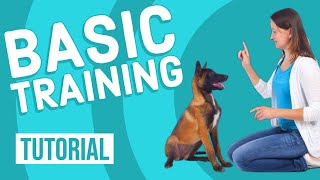
Dr. Lera Clone trains her 11-week-old blue bay shepherd, Raven, showing how to teach sit, down, and no using food motivation and a clicker. She uses an anchor leash and elevated surfaces to set puppies up for success.
Dr. Lera Clone trains her 11-week-old blue bay shepherd, Raven, showing how to teach sit, down, and no using food motivation and a clicker. She uses an anchor leash and elevated surfaces to set puppies up for success.
Hey guys, Dr. Lera here. Today I am here with Raven. Raven is an 11 week old blue bay shepherd puppy. She's our new family member and she is, as you can see, like I said, she's a puppy. And so today we're just going to be talking about some just basic training stuff. I'm not a professional trainer, I don't pretend to be, but these are just going to be some things that we'll talk about as we go through the training process. We with raving as pet owners, stay tuned and you'll be in store for more information than you'd like. All right, so training, typically with training, one of the things that they talk about is more about going ahead and getting control, going ahead and having the pets motivated technique and that kind of stuff. And so one of the things that the trainer that I watched, I took his master class and I'm in the process of taking it now is they talk about training your dogs when they're motivated. And the reason that they want you to train your dogs when they're motivated is because otherwise they're not going to do stuff. What does motivated mean? In Raven's case, motivated means hungry. So if you try to give her treats after she's had her meal, then it's not going to be something that's going to be as motivating. In this particular case with Raven, I can actually use her own food to get her to do what I want. So this is her food right here. So that you can see it's nothing super yummy or anything like that. It's just regular dog food. And so what we're going to do is we're going to work just show you some of the few things that we've been working on with Raven, which is sit down. And now the most important command that you'll want to start first is typically the sit. And so that's something that usually is going to be started off. What they will normally talk about is if you notice over here in the corner by my office, she is tied to a leash and they will talk about having an anchor leash. The trainer that I watched online, and I'll put it in the, in the description below, what he does is he puts the piece of treat or food between the fingers so that the dogs can see it. And then he will go ahead and get their attention. And so typically what he'll do is he'll say raven, okay. And so we'll just kind of hold it up like this. And, and so normally what you want to do Is you want to have it in this position. So that way it kind of forces her to sit down. Oh, see? So sit. And after she stays there, I'll make her kind of stay for a moment and if she tries to get. Nope, there you go. So that's, that's one quick thing. One of the things that he did when he was showing it was he would step on the leash over here and when they try to jump up and so that kind. They kind of self correct. Eventually, once they sit down, you'll want to go ahead and reward them immediately. And you'll reward them a lot. The next command that we've been working on with Raven is down. Good job, Raven. Raven down. So I tried doing it without the food in my hand, so now we're gonna try it with the food in my hand and then you'll see how that goes. Raven, down. Down, down, down. No, stay. No, down. Down. Good girl. Now once you actually able to go ahead and get them from, you know, in the down position, normally she's. She responds to the, the commands better. Raven, down. You're doing a great job showing me off on tv. That's awesome. Raven, down. Good girl. Stay down. Good girl. Now, one of the things that he talked about in the video was he said typically he likes when he's teaching the down command, he'll have them on an elevated surface. So a park bench. I think we did it on like a coffee table at my house or on the couch. Because when you're trying to get them to go into the down position, you can't go any lower than the floor. If you have them on the floor versus if you have them on the elevated surface, typically you can obviously go lower than that and that will go ahead and allow them to get into the down position. Again, usually with the. Even with the down, what he had was he had that anchor leash that you guys saw in the video earlier. And so that's something where it kind of controls them a little bit. The next command for me, which is huge, is no, it's big for me because we have three and a half year old twins and those baby teeth which are oh so sharp. They cause a lot of pain, they cause a lot of fear or strike fear into my kids. And so we obviously don't want them to have fear of Raven. So the next command that we've been working on as of right now is no. Again, what he starts off with is going ahead and having an anchor leash so that you can see that she's kind of controlled so she won't come near what it is we want. And so what we've noticed is. Or what I've noticed is she kind of like, so run away from the. From the stuff that I say. No, I don't start it close to her, nor did the trainer in the video start it close to them. He goes ahead and starts it kind of far. No, no. And so then what I'll do is I'll kind of move it closer. No, no, no, no. Good girl, Raven. Good girl. The other thing that I've noticed on some trainers, what they'll do for when they start doing clicker training, which we're actually going to get into a little bit, they'll click, show their hand, and typically the dogs will come over for the treat. And that is actually something that's been working really well for Raven, not doing it right here just because she's on a leash for the training purposes and also to kind of keep her from getting into other stuff with other dogs. But it is something that has been super helpful. If you go on Masterclass and you look up the. The dog training course, I think it's about 240 bucks for the year. Of course, there are a bunch of other classes on there. I'm not getting a paid. I'm not getting any sort of sponsorship from Masterclass. It was just something that I found very helpful. And it depends on which. Which training philosophy you follow. At the end of the day, this is just some super basic stuff. Again, I'm not pretending to be a dog trainer just so that you have some ideas on how to work on some different things and how to get some of the most important and some of the, I would say the foundational commands off the bat. If you guys found this video helpful, please give us a thumbs up. Subscribe. If you know somebody who needs to watch it, please share it with them. And if you really want, like, the professional version of it, check out Masterclass. I know there are other trainers online that do video courses as well. You can check them out and thanks for watching. Have a blessed day.










