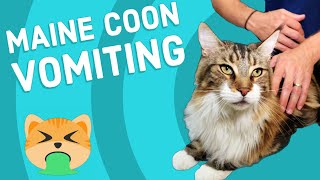
Dr. Lera Clone walks through diagnosing a vomiting Maine Coon named Professor. The workup includes bloodwork, fecal tests, and imaging to rule out pancreatitis or blockage. Maine Coons carry genetic risks for heart disease and spinal muscular atrophy.
Questions this video answers
Approximately three years old.
Maine Coon.
Chapters
Foreign. Hey guys. Dr. Larry here today. I'm here with Professor X Charles exit. No, I'm kidding. His name is professor and. And professor is a three year old man Coon. And you'll be able to maybe see, we'll see if we can catch a glimpse of that illustrious tale of his. So professor is new to the area and dad was giving us a call because he was hiding in the closet. He really hasn't been wanting to eat very much. Dad does suspect that he's been having some weight loss and also he has been having some vomiting. Now, recently the vomiting ended. He seems like he's getting a little bit better. But the concern is he's still potentially losing weight, still hasn't really eaten anything solid. And so obviously that's something that's a concern. So when I have a patient that comes in where they're not eating very much, they're hiding and they're potentially losing weight, we're definitely going to want to start off with some blood work. The blood work is going to look at the red blood cells and the white blood cells to see if there's any sort of major infection. We're going to take a look at his liver, his kidneys. We're going to look at his thyroid, sometimes an overactive thyroid, which is more common in cats than it is in dogs. Dogs typically will have an underactive thyroid like human beings versus cats have an overactive thyroid. So that'll cause them to sometimes have vomiting, sometimes can cause them to normally will cause a voracious appetite, but it doesn't always have to. And the other thing that we would be looking for would also be maybe if he swallowed something. Since he is a young cat, about three, three and a half years old, we want to see if there's a possibility that he could have potentially swallowed something. And now it's potentially causing what we would call a partial obstruction. The partial obstruction sometimes can go ahead and cause either nothing to pass or it could cause maybe some decrease in appetite, maybe some pancreatitis. So the pancreatitis will sometimes be seen on blood work, usually will be confirmed with an ultrasound. So the way that it's going to work is we're going to start off with blood work and we'll go ahead and do a stool analysis or fecal, then we'll go ahead. The next step would be doing X rays and then depending on what we see on those different tests that will lead us into a course of action. Usually with patients like this, a lot of times what we will do is we'll go ahead and send home some antidiarrheal medications. So I like to use some probiotics. There's a product called by Nutrimax called Probiable and it comes in a diarrhea kit or probiotic kit. So it's going to have a syringe which has kind of got a paste to it and then it'll be a capsule that we go ahead and we open up on the food. Um, though most of the time the patients that I have usually don't have issues with palatability, meaning they take that probiotic pretty well and you don't have to worry about shoving that capsule down the throat, which clients are usually really excited about. The other thing that I will typically dispense will be some sucralfate. Usually a sucralfate will go ahead and help bind up the stool and then I'll usually dispense something called metronidazole. Metronidazole is typically an antibiotic. We also use it because it has anti inflammatory effects on the intestines. Now the thing that you guys may have wondered about, professor, is he looks a little different than a lot of our cats that you might have seen on our channel. Professor is what we call a Maine Coon. The Maine Coon is the largest domesticated breed of cat here in the US and they are prone to a couple of different diseases, genetically speaking. There's one called hypertrophic cardiomyopathy, abbreviated hcm. And that's something that it's a condition where they could make it very dangerous to put them under short of any anesthesia. The other thing that they are pro to is spinal muscular atrophy sma and that is something where you will start to notice them having difficulty walking or walking kind of funny around three to four months of age. So these are just some of the different things about Maine Coons. There are genetic tests for that out there so that you can see if your cat does have genetic markers for these. If you have any questions, please let us know. Otherwise, if you found this video helpful, give us a thumbs up. Subscribe and share. Thanks for watching. Have a great day and be safe. Sam.