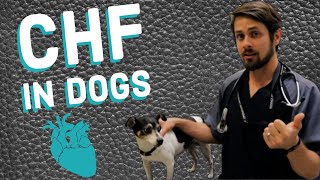
Dr. Lera Clone (Heron Lakes Animal Hospital) discusses Harvey, an 11-year-old terrier mix with congestive heart failure and an enlarged heart. The transcript details Harvey’s presenting signs (coughing since October, increased respiratory rate, panting), diagnostic workup (chest X-rays showing marked cardiomegaly and tracheal compression, blood pressure and bloodwork to assess kidney function before medications, pulse oximetry, and ECG), and treatment status (on three cardiac medications with dose increases but ongoing difficulty). The video explains common valve disease in small-breed dogs, how an enlarged heart compresses lung fields and the trachea, and offers owner guidance (watch for nighttime coughing, coughing when lifted) and invitation for questions.
Chapters
Hey guys, My name is Dr. Lara here at Heron Lakes Animal Hospital. Today I have Harvey. Harvey is an 11 year old terrier mix. And so Harvey's got some issues with his heart. He is in congestive heart failure. He's got some problems with his valves, which is very, very common for smaller breed dogs. And so Harvey initially came in in October because he was having some issues with coughing and that kind of stuff. And what ended up happening was we did some X rays on him which showed of an enlarged heart. And then based on the professional and expert opinion from the boarded radiologist, they said, hey, we think that he might need some medications. So we started him on some heart medications. We did check his blood pressure at that time, as well as some of his blood values to make sure that his kidneys were able to handle the medications we were looking at getting him started on. Harvey is now in the later stages of cardiac failure because he or heart failure because he's on three different medications right now. We've already increased the dosages of the medications and he's still having some difficulty. So today we're going ahead, we've rechecked some X rays on him and we're also looking at rechecking his oxygen saturation, his blood pressure and his ekg. This is some of the ways that we go ahead and check that. We have the oxygen saturation monitor right here. We have the blood pressure monitor right there. And then over here we have our EKG monitor. This particular device records his actual ekg, which is that little Blippi line that you see. And I'll show you a picture of what it might look like on the videos or on TV whenever you see a patient under anesthesia. The other thing that I want you to notice is he's got an increased respiratory rate, he's panting, and we're indoors. And that's something that will normally cause be a sign of having congestive heart failure. The other thing is if he's coughing more than normal, sometimes clients will notice that they're coughing at night, more so, or when you pick them up by their chest. That's another reason or another symptom for you to watch out for. To say, hey, maybe there's an issue with my dog's heart. Okay, Nancy, I'm gonna have you hold Harvey for me just for a moment while I go over the X rays. Let's see here. So over here we're gonna take a look at the X rays on Harvey. And so see that with Harvey's X rays we have his head up here and his tail down here. And so this region right here is his lung field. And so that lung field ends up in the center of it. You'll have the heart. Now, normally with a dog that doesn't have congestive heart failure, you're going to have a smaller heart. It's not going to look so much like a basketball. And this is with Harvey laying on his back. Typically, we'll have the patients lift in a foam tray kind of like this. This is something that provides some stability for them so they don't get really stressed out when we're trying to do those X rays. The other shot that we have on Harvey's chest is this heart right here. And so you can actually see his heart is taking up almost all the space in his lung and it's even pushing up his windpipe. Okay. This is the left side of his heart. You can see the two microchip he's got right here. Probably one of the microchips wasn't working. Or somebody else put a microchip in without checking for it. Okay, those are not going to hurt him. This is the other one. There's minimal space between his windpipe and the backbones right here. So when he gets picked up, he's going to be very prone to coughing. And so that's going to be an issue that is very prominent for him. So if you do have any questions about dogs with congestive heart failure, or if your dog's coughing or anything like that, you're more than welcome to leave us a comment down or questions. If you found that this video was helpful, please give us a thumbs up or a like, or even better, share it on your Instagram, Facebook, or any sort of social media. Thanks for watching and have a great day.