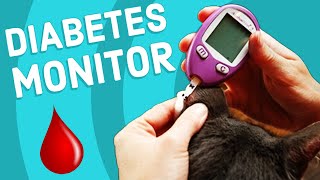
Dr. Lehrer demonstrates placing a continuous glucose-monitoring patch (an implanted/stuck-on sensor) on a canine patient named Mocha. He contrasts the patch with traditional blood glucose curves and owner-performed blood pricks, emphasizes that the patch is minimally invasive (one small needle) and avoids clinic-induced glucose elevation, and notes the monitor functions for about two weeks, yielding many readings without repeated sticks. Practical tips include cleaning the site, using tissue adhesive, and protecting the patch with clothing if the pet will scratch it.
Questions this video answers
About two weeks.
About 80 readings in two weeks.
"Far less than maybe 0.1%" (speaker's rough estimate).
Chapters
Hey, guys, Dr. Lehrer here today. I'm here with Mocha, and Mocha is here today because we're going to be putting on a diabetic monitoring implant. One of the things when you're monitoring your pet's blood sugars is doing what's called, typically, a blood glucose curve. And the blood glucose curve is the best thing that we have in veterinary medicine to most accurately assess your pet's blood sugars. Maybe I want to say five to ten years ago, a company came out with a blood sugar monitor that owners could go ahead and take it home and they could do the monitoring at home. But that meant that you, as the owner, had to go ahead and prick your animal either on the ear, on the gum, on the toe and get blood and actually measure their blood at home. And not everyone was really comfortable with it. I want to say far less than maybe 0.1% of the people were actually doing that. It's just. It's something uncomfortable. And so recently, a company came out where they were able to go ahead and develop a patch where the patch actually gets implanted or stuck onto the skin. And it is something that goes ahead and measures the blood sugars. They get stuck once with a small needle when it gets implanted, and that's it. And then as long as they leave the monitor or the implants on, the monitor is good for two weeks. So. So it's really, really good at helping to go ahead and get a good idea of where their blood sugar is at. Also, they're at home, not at the office. So we're not going to have artificial elevations in the blood sugar. And it's not painful because a lot of times when you're doing these kinds of sticks, a lot of times the dog may get annoyed, and so we don't like that. Mocha right here is one of our favorite patients. She's been here with me at the office for a really, really long time. She and I've seen her and her sister since they were puppies. And, you know, I grew up with rottweilers, and so this breed has a special place in my heart as well. And her personality and her sister's personality are nothing but big mushes. They just love attention and they love to be loved on. So I'm just going to show you guys about this, how we implant this device. It is something that's really good. If you're having difficulty getting them under control or even at the very beginning to go ahead and get an idea of where we need to make an adjustment to get them under control even faster than normal. All right, so right here we're going to go ahead, we're going to take this off. And then this right here, this is the actual patch on here. And then what I'm going to do is I'm going to go ahead and, and clip it in there. When I take it out now there's see the needle. And so now the patch is on there. And so what I'm going to do is I'm just going to leave this right here. I'm going to go ahead and wipe the area on the shoulder where we're going to place the patch. And we just want to make sure that it's as clean as possible. This way the patch sticks as well as possible. Now, it is important if you have a dog that's going to scratch this off or a cat that's going to scratch this off, that you go ahead and put some sort of T shirt on them. Otherwise you may not get them to leave this patch on as long as possible. And then you don't get your money's worth out of the patch. So we also take a little extra step. We put a couple drops of glue or tissue adhesive on the patch beforehand. And they do, they do sell, like, some things where you can go ahead and put it on there. They're like little band aids, but we don't use those here. So guys, watch. We're just gonna go 1, 2, 3. That's it. And I'm just gonna go hold it there for about a minute. Well, you can see mocha didn't even flinch. The needle is. There's a needle definitely, but it's not a huge needle. And it's definitely well worth it if you only have to stick them once with this to get easily. You could get 80 readings in two weeks versus having to stick them 80 times for this one patch. So if you guys have any questions about this particular topic, leave it in the comment box. If you found this video helpful, give us a thumbs up. Subscribe and if you know somebody who should see this, share it with them. So hopefully their pet doesn't have to get poked a bunch of times. And they can also help get their pet their has diabetes under better control so they can live a longer and healthier life. Thanks for watching. Have a great day and be safe.