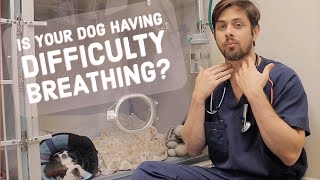
Dr. Lera Clone walks through Rocco, a 9-week-old English bulldog with a hypoplastic trachea, a narrowed airway that caused breathing trouble and pneumonia. X-rays showed the underdeveloped trachea; treatment was doxycycline, oxygen, and strict activity limits. It's lifelong but manageable with early intensive care.
Questions this video answers
9 weeks old.
English bulldog.
Doxycycline.
Hypoplastic trachea and pneumonia (infection in the lungs).
13.6 pounds.
Chapters
My name is Dr. Lara here at Heron Lakes Animal Hospital, and today we're here with Rocco. Rocco is a 9 week old English bulldog puppy and Rocco presented to us on Monday because he's having a little bit of cough, a little bit of difficulty breathing, but nothing out of the ordinary for a puppy, especially an English bulldog. English bulldogs are known to have problems with a number of different things. They can have problems with their nostrils. So sometimes the nostrils will be really, really close and it makes it hard for them to breathe. They can have an elongated soft palate. And I'll show you a video of what that looks like or a picture, and it makes it hard for them to be so. And then they can also have something lower in the airway which is called everted laryngeal saccules. He came in because when we put him on the antibiotics, doxycycline, which is a really good antibiotic for kennel cough. And that's something that's very common for puppies to have when they're coming either from some sort of shelter, from potentially a breeder, if there are multiple litters there and, or if we're coming from a puppy store. And so antibiotic doxycycline is typically the antibiotic of choice for that because it reduces the inflammation in the airway as well as treating the organism. The only catch is that if you use too high a dose for too long a period, then it can actually cause damage to the permanent teeth. So that's something to be aware of. We put him on some antibiotics on Monday on doxycycline. And on Wednesday, mom came in on emergency and he was having a lot of difficulty breathing. Mom had been up with him all night long. He couldn't get comfortable. And so what we ended up doing was we ended up giving him some oxygen. It helped him feel better because he was actually able to get the oxygen that he needed. We went ahead and did some X rays and we'll see those X rays later in the video. And it showed us that he has what's called a hypoplastic trachea. So essentially he should normally be breathing through, let's say a snorkel or a pipe this big in theory, and proportionately speaking, he's trying to breathe through a pipe this big. So it's very, very hard. If you guys have no idea what I'm talking about, try breathing through a straw. Really, really hard. Now, the other catch with that is he also has pneumonia. So now imagine that you get a little bit of snot in that small straw, how hard it is to breathe through that. If you're ever trying to drink a really thick milkshake and you're sucking that thick milkshake through that small straw, it almost collapses the straw. And that's something that makes it hard for him. So right now, the issue with this particular condition is it is something that he's going to have to live with for the rest of his life. But it is not a death sentence. All he needs is some care, some intensive care up front. And I would say for the first week or so. And then after that, he's going to need to be kept inside. We live here in South Florida, so he can only go outside for a few minutes and he's got to come right back inside. He's also got to be kept calm while he's inside. So his puppyhood is not going to be a normal puppyhood from an activity standpoint. And so it is something. We have another puppy here. We always call them puppies, but Lily is about 3 years old and she's another English bulldog. She had the same condition that he has, and she's doing great at home. And so as of right now, we have him on oxygen. You can see these bubbles. The air is actually running through here. And so what's happening is the air is actually getting humidified. So that way when he breathes, it's not as uncomfortable for him to breathe. The other thing that you'll want to know is we do have some cold packs in there with him because it can get warm. And so that's one of the other things that's really important. Mom was able to keep him comfortable last night. She had the temperature really, really low in her house. And she also had the. She had some pillows and things that were stretched out. So one thing that you'll notice with dogs who are having difficulty breathing is sometimes they'll stretch their neck and they'll want to. And what that does is it straightens out their airway or their windpipe so that they can breathe easier. So mom did notice when I mentioned that to her that he was wanting to stretch his neck. And he seemed to be more comfortable kind of lying like this, even though it doesn't look comfortable at the end of the day, he's gonna be fine. But it is something that does require a lot of care up front. This is a follow up X rays or one X ray is of Rocco, and Rocco weighs 13.6 pounds. And the other X ray is of my dog Ginger, which you guys have seen in the past, potentially, she's a nine pound poodle mix. And so if you look over here, you're gonna see this little white tubing right in this area. And that white tubing, that's his. That's Rocco's windpipe right in here. And then if we jump right next door to it, this white tubing right here, this is Ginger's same windpipe. And so you can see that the windpipe is actually Ginger's windpipe, and she's actually smaller, is probably three times at least the size of Rocco's windpipe. And so that's why it's so hard for him to breathe. Like I said, this is something that he will grow more. And so he's not going to grow out of it per se. He's going to have this issue the rest of his life, but it won't be as bad. And so the other thing that is the issue with him is that he has pneumonia. He's got an infection in his lungs. And so he's got all this discharge and this mucus in there. And so that's also now why it's causing so much difficulty for him to be able to breathe. The way that the X rays are set up is this side over here is the head. This is the backbones. This over here is a heart. And then his heart sits kind of in this area over here. And this whole area right here is his lung field. This is Ginger's lung field over here. Back here is the tail. And then on Ginger, you can actually even see her microchip, which sits right here. These particular images were inverted, so that way it's easier for you guys to actually see the windpipe. Based on normal X rays, they're not going to look this color. They're actually going to look more like this over here. And what I'll do is I'll even go ahead and invert it so that you can see. So this is. This is what the X rays look like normally. Okay, if you guys have any questions about how Rocco is doing about this particular condition or the treatments for it, let me know and I'll be more than happy to get back to you. Have a great day and thanks for watching.