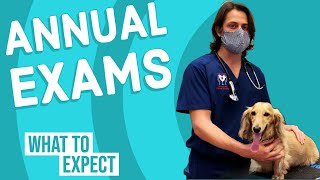
Dr. Lara walks through a dog's annual exam on a patient named Solo, checking vitals, heart, lungs, and abdomen. Solo's temperature is elevated at 103.2°F, so vaccines get deferred. The video explains bloodwork trends and why vets sometimes use vaccine titers instead.
Questions this video answers
103.2°F
99.0°F to 102.5°F
Above 102.5°F
Example: creatinine 0.8 (to) 1.6 considered normal; a rise from 0.8 to 1.2 is a 50% increase.
Chapters
Hey, guys, this is Dr. Lara. I'm here today with Solo and Solo's here for annual exams. And so, you know, depending on the age of the dog, we may actually do biannual exams or twice a year exams. But Solo is not considered in the og. Old school gangster. I don't like to use the word geriatric very often. So we only need to do an annual exam on him once every 12 months. Now, what an annual exam entails, usually when you first come in, you're going to come in, the technician will come into the room, they will borrow your puppy or your kitten or your dog or your cat or your baby or your fur baby, whatever it is you like to call them, and they will go ahead and collect the vitals on them. Those vitals include a temperature, a heart rate, a respiratory rate, a weight, also what the gums look like. And so typically what ends up happening is we do that for one of a couple of reasons when we look at the gums, you know, if the gums are pale, that's concerning. If there are, if they are coming in for annual exam, we want to check their temperature before we actually administer a vaccine. Because one of the side effects from vaccines is it could potentially cause a fever. And in this particular case, Sol actually has a temperature of 103.2. Dog's temperatures can range anywhere from 99 to 102.5 to be considered into the normal range. Once they go above 102.5, that is considered outside of the normal range and therefore a fever. Now, as you can tell, Sol is nervous, unfortunately, you know, he's trembling a little bit. He's a very, very sweet dog, by the way. And you can see he's also exhibiting some signs of stress by panting as well. And so it is very possible that his temperature can be elevated as a result of agitation or stress. And so when we continue to do the rest of the exam, we'll look at the eyes to make sure there isn't any evidence of any sort of broken blood vessels or bruising. We'll look in the mouth to make sure that there isn't any evidence of periodontal disease or any abnormal changes, like I told you before, to the gum color or any sort of masses. We'll then look in the eyes, not on the white part of the eye, but actually in the eyes to check for any evidence of cataracts or any sort of what we call petechia. And then we'll look in the ears to see if there's any evidence of ear Infection or inflammation. Then we'll move on to the lymph nodes to make sure that we don't have any increased, large or increased size lymph nodes, which might be an indication of some sort of inflammation, infection or disease that is causing that. And then we'll go to the lungs, the heart and the abdomen. The lungs, obviously, you know, we will get indications of either some sort of pneumonia or potentially some sort of pulmonary edema, that kind of stuff. Usually we're going to have some clinical signs that you might see at home, the heart. We're going to listen for murmurs. We want to make sure that, you know, there hasn't been a change where before maybe Solo didn't have any record of a murmur and now all of a sudden does. And if we do have what we call an acute development of a murmur, which means and all of a sudden out of nowhere, then we need to go ahead and investigate why it is we have the development of a murmur. We'll go ahead, we'll palpate the abdomen, see if there's any sort of pain or maybe a mass like effect, depending on the size of the dog. And then at the end of the day, we should be doing a feet rectal exam on your patients or your pets once, at least once a year, because if they happen to develop a little growth back there, if you can catch the growth inside the anus right by the anal glands before it gets to 2 and a half centimeters, the chances of them having a really long survival time is very high. So that's just part of the reason why we, you know, what we do when we do physical exams here and annual exams here, we try to do more blood work rather than vaccines. We do talk about different vaccines and that kind of stuff. And it's again, always a team decision. I'm going to put Solo down on the ground just because Solo is, you know, still panting, hasn't calmed down yet, so. All right, Solo, I'm going to put you on the ground. Let's see here. You're not going to go in that direction. There you go. No, not so much. Okay. So one of the reasons that we'll do blood work, even if the patient is doing well and is not on any medications, because we like to monitor trends. Sometimes patient might have, let's say a creatinine of 0.8 and up to 1.6 is considered normal. If they go from 0.8 to 1.2, that's a 50% jump. Now it's still considered in the normal range. So if all we did was spot check that particular value and we didn't have anything to compare it to, then what would end up happening is we wouldn't know that there was a 50% jump. The other thing that we'll do is we'll do what are called vaccine titers. Vaccine titers could be kind of controversial in regards to testing to see if the patients actually need vaccination or if they are adequately protected from previous vaccinations. The other part of it is just figuring out what your pet's exposure and risks level are for different diseases. Therefore, we can determine more accurately which vaccines they actually need based on their risk levels and exposures and which ones they at the end of the day, you guys are the ones that are going to make the decision as to what your pets receive today. My recommendation for Solo is we're not going to get any vaccines because we have that temperature of 103.2. If you guys found this video helpful, give us a thumbs up. Subscribe, share, and be safe. You know we're getting close to taking care of this or getting a handle somewhat on COVID 19. But remember, you still need to be diligent about protecting yourself. And if you protect yourself, you also protect others. Thanks for watching and have a great day.