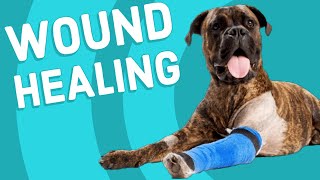
A short YouTube video in which Dr. Lehrer (Heron Lakes Animal Hospital) explains wound care for a yellow Labrador named Amber after toe-cancer surgery. He describes risks of incision breakdown from excess activity, contrasts re-suturing vs. healing by second intention, and explains using honey-impregnated bandages changed about every 24 hours; at ~7–10 days of bandaging Amber was about 95% healed.
Questions this video answers
About once every 24 hours.
Approximately 7–10 days.
About 95% healed.
Chapters
Hey, guys, this is Dr. Lehrer here at Heron Lakes Animal Hospital. So today we're talking about something called wound care. And so Abraham's gonna pan down to this beautiful yellow lab. Her name is Amber. You guys might recognize her from the toe cancer video. And so Amber's toe cancer did come back. We got the biopsy. We did get it all out. And so, most likely, this is something that is going to heal on its own. So yay. Good, good news there. Now, one of the things, whenever you have any sort of surgery done on a toe, an elbow, or a knee, it's really important that you guys go ahead and restrict the activity of your pets during the time of recovery, because if they are moving too much, what will happen is the stitches will rip through the skin or. And then what we call the surgical incision or the surgical site breaks down, and we have what's called wound dehiscence. And so then we are left with two potential options. One, we go ahead and we put them back under anesthesia, and we try to do surgery again, or b, we go ahead and we try and let the body heal by second intention. And so in this particular case, you know, Amber has this habit of liking to go under the bed. And so when she's pushing, pushing, pushing, there's really a decent possibility that that might cause the stitches to pop or rip through the skin. And so we elected to go ahead and do what's called wound healing and allowing the body to heal by second intention. So that means that, like, the cells will kind of just like, grow in slowly but surely over time. And what we do is we go ahead and we put what's called a honey bandage on her foot. And we do that. We change that bandage probably once every 24 hours. And what happens is the honey has some really, really great healing properties and characteristics, and it also has antimicrobial properties as well. So it helps the wound heal faster and nicer. We're about, I want to say, maybe between seven to ten days into bandage changes with her, and we've got great, great, great healing. We're probably 95% of the way healed. And so it's something that does being on top of it, as well as the owner being on top of it. So it is something that is an option besides surgical, you know, going back in and re suturing. And it is something that is. That can potentially happen and is common for it to happen in areas where there's a lot of motion, a lot of pressure. If you guys found this video helpful, give us a thumbs up. Subscribe and share. Thanks for watching. Be safe and have a great day.