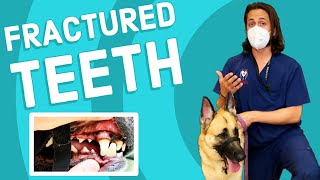
Dr. Lera examines Mochi, a 3-year-old German shepherd with fractured canine teeth that likely exposed the pulp. Treating fractured teeth requires general anesthesia, X-rays, and custom crowns or root canals across multiple visits. Canines are high-priority teeth and often covered by pet insurance.
Chapters
Hey guys, Dr. Lara here today. I'm here with Mochi. Mochi is a three year old female spayed German shepherd. And Mochi's coming today because mom was saying that she had some really sharp teeth. She had thought that her, her previous veterinarian said that she probably just needed some crowns because it didn't look like the pulp was exposed. Now when you guys look at Mochi, Mochi is not wearing a muzzle. This is called the gentle leader. And so this is just something that Mochi has. She's kind of like me. She probably has some ADD and she's all over the place. So this helps to keep her attention. But this is not a muzzle. So when evaluating a dog's teeth, whether they're fractured and what kind of treatment they need, the only true way to know what kind of treatment the dog will need is going to require general anesthesia. I'm gonna say that again. The only way that you will know the majority of the time what the dog needs is with general anesthesia required, because general, you need dental X rays to do a proper evaluation. Now when I went ahead and did an evaluation on Mochi's teeth, Mom thought it was just the bottom teeth. When I went ahead and looked, I'm going to see if she's going to let us. All right, so Abraham, if you want to come close, let's see here. So if you guys come over here, you can see, see this little dot right here? That's because Mochi has her, most likely her pulp exposed. That's the inside of the tooth. And she has it on all four of her canines or her fangs. Now the canines are very, very important teeth. They occupy a lot of real estate for the upper jaw and the lower jaw. And they also go ahead and are very important to the anatomy of the dog's mouth. Now there are a few teeth that most insurance companies will cover to do root canals on. The canines are one of the four out of the eight teeth that are covered. That's how important they are to the dog's mouth, that even the insurance recognizes the importance of them. Okay, now, and this particular dog, this is most likely going to be an all day kind of procedure. If she ends up needing either crowns or root canals, this is going to be at least a two part procedure first, where we go ahead and we grab the molds the first day and then two weeks later, once we get those molds back that have been, they've created the crowns from those molds custom manufactured for her, we will go ahead and place those crowns on on the patient whether or not we do a root canal. That's all gonna be based on the evaluation while she's under general anesthesia. This is something that can be potentially very painful for patients and can compromise other areas of the mouth. So it is really, really important that you go ahead and get teeth evaluated as soon as you notice some sort of defect in the mouth. It is also one of the things that your veterinarian should be evaluating on a once a year basis, if not every six months. Honestly, the only reason I know so much about the teeth is because I work with oral surgeons and I've learned a lot from working with them over the last five to six years. Otherwise, before that, I probably would have looked at this dog and been like, oh, the dog's okay, the dog's comfortable, fine. Don't need to do anything. So don't be upset with your veterinarian if they don't identify these things. It's just something that we're not even really taught a lot in veterans because we have to learn so much. So. So, you know, she's done a great job. She does have some separation anxiety, but she's doing a great job with us and we just want to say thank you to her. Thank you guys for watching. If you guys found this video helpful, please give us a thumbs up. Subscribe and share. Take care and be safe. Say bye, Sam.