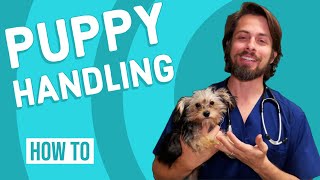
A short YouTube tutorial by Dr. Lera Clone at Herring Lakes Animal Hospital about acclimating new puppies (and cats) to being handled for vet and groomer visits. The video centers on a three-month-old Yorkie named Coco, demonstrating touching feet, examining the mouth, and working with ears (Coco resists ear handling). It also notes dental-care options (sedation-free scaling and polishing) and emphasizes practicing gentle handling with treats to reduce stress during professional visits.
Chapters
Hey, guys, My name is Dr. Larratt here at Herring Lakes Animal Hospital. Today I'm here with Coco. Watch out, Coco. So Coco is a three month old Yorkie and Coco's coming in today because we were coming in for a puppy visit and Coco had been scratching out the ears a little bit. The main topic of the video today is going to be handling your dog or your cat. And so we. When you first get a puppy or a cat, it's going to be really, really important that you work on touching their feet, which Koko seems to be fine with, looking in their mouth, which Coco is kind of okay with, and then messing with the ears. Coco does not like the ears messed with. Abraham may have gotten some footage earlier where you'll see we were placing some medication in Koko's ears and Koko's ears don't really look that inflamed. But Coco was really, really struggling with us to go ahead and just place the medication in the ear. And that's not something that's usually painful. So when you go ahead and have a dog who is kind of resistant to either handling, it's something that you definitely need to work on. Because when you have a dog that is, is that resistant to handling. When you come into the veterinary office or to the hospital or even to the groomer, let's say you're not even going to the veterinarian, it's going to the groomer, which Coco's gonna have to go to on a regular basis. It's going to be a very stressful experience. And then what ends up happening is every time they go in, they're going to get worse. Because unless the veterinarian or the groomer finds a way to go ahead and handle your dog or manage your dog with their certain little requirements of being held in a certain way or being held very little, it's going to get worse and worse. And so really what. And what I was telling Coco's dad was that you want to go ahead and get used to just kind of handling his ears and massaging his ears and looking at his mouth. And Coco is also going to be a dog that is going to be very prone to periodontal disease. We offer service here at Heron Lakes Animal Hospital where we do sedation, free scaling and polishings. That's a controversial topic amongst veterinarians. And we'll do another video about that. That being said, if Coco is not allowing people to get in the mouth and is not sitting still for the exam and the scaling and polishing, then it is not going to be an option for Coco. And a lot of people want to try and go ahead and do scaling and polishings without anesthesia. I understand the advantages to it. That being said, you got to go ahead and you got to make sure you work with your dog and you get them to the point where at least they can allow to have the procedure done. Ginger, you've seen in the past, she, she's one of my dogs. She's amazing for it. Ruby, she's okay. She's good enough to have the. Allow the procedure to be done, but she's not terrible. So it's going to be really, really important to go ahead and just kind of get them used to, you know, sticking your finger in their mouth and know. Letting them know that it's okay, nothing bad is going to happen. And you'd usually want to give them some sort of treat or some sort of reward after that happens. So if you guys have any questions about this particular topic, you'll see. You know, Coco is not as nervous now, but leave it in the comment box. If you have somebody that you think should see this video, share it with them. Otherwise, subscribe. Thanks for watching and have a great day.