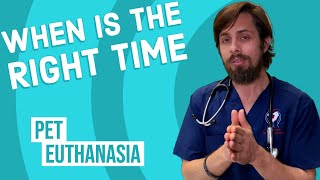
Dr. Lera (Aaron Lakes Animal Hospital) explains how to decide when to euthanize a pet by focusing on the animal's quality of life. She recommends making a roughly 10-item list of behaviors that make the pet "the pet" (examples: greeting at the door, chasing wildlife, excited for food, barking for the last word), using the list to count good vs. bad days (6+ good = acceptable; 5 or fewer raises concern), and considering whether there are more good days than bad days. She also stresses trying management options (diet/supplements, anti-inflammatories, physical therapy, or advanced interventions like stem cell therapy) before concluding euthanasia, and notes the decision is ultimately personal and may be constrained by budget.
Chapters
Hey, guys. My name is Dr. Lehrer here at Aaron Lakes Animal Hospital. Today we're going to be talking about not a sensitive topic, but a tough topic. And that topic is when is the right time to put your animal to sleep or your pet to sleep or for baby to sleep. And so typically when I'm talking to people about when the right time is, you're going to look at a lot of different things. And so what I usually want people to focus on is it is quality of life that we're talking about here. And so I usually like people to make a list of about 10 different things that will make your dog that make your dog your dog. So, for example, Ginger, if she doesn't start dancing for food, that is something for me that says, hey, she's not feeling well. If she is not always having it. Always having the last word. Whenever she's barking at something and I say, say, that's it. Stop, Ginger, stop yelling. And she's like. She always has to be like. Like, get the last word in. So if she stops doing that, that, to me, I know, means she is not feeling well. If somebody knocks on the doorbell or. Or knocks on the door or rings the doorbell, and my dogs don't go crazy, they're not feeling well. If. When I get home, they're not, oh, my God. Touch me. Touch me. Touch me. Touch me. If they're not acting like that, they're not feeling well. If. When they see a raccoon or a possum or a cat or a lizard or a squirrel and Ruby doesn't go chasing after it, that's something to me that says Ruby's not feeling well. Now, Ginger, she doesn't really act like that. So that's something just to realize that not every dog is going to act that way. You know, when they see family members, that's something else that will let you know when it is the right time. Now, some of the obvious stuff, if they're eating on a regular basis, that's normal. If they're able to go outside and poop and pee on their own without help, that's normal. When they greet you at the door, that's normal. All normal stuff. And very easy. Because if the dogs don't want to get up, they're not eating, they're sleeping all day, they're urinating and defecating on themselves, those are clear signs it's not fair and there's no quality of life. And at the end of the day, you want to know whether or not it's the right time. Now the other thing to realize is, and this is going to be more of a personal decision, you have to make the decision. If you have a dog with arthritis and you're not, and that dog has no quality of life and you haven't given any sort of supplements, any sort of physical therapy, any sort of anti inflammatories or anything like that, there are very, there are a lot of options of things that you can provide to your family member or your pet that will improve their quality of life and actually almost give you a brand new dog. So that is something that you will have to make the decision at the end as to how far you want to go. Some people, they'll go ahead and do stem cell therapy for their dogs and that is something that can sometimes be an invasive thing where you have to do a surgery, however minimal it is, it is still a surgery and they will do that to help provide better quality of life. At the end of the day, it is something that you're going to have to figure out what works with your philosophy and also what works within your budget. And you know, if you have any questions about this particular topic, leave it in the comments. Otherwise I just gave you a few examples of some different things that let me know, hey, if Ginger and Ruby are not feeling well or then their quality of life isn't there. And then we go from there. Now from that list, you take that and if they're doing six or 10 out of that, out of the six out of those 10, that lets me know they've got it good. If it's five or less now I'm concerned. The other thing that you have to start figuring out is do they have more good days than bad days. You're going to use that list to determine is it a good day or is it a bad day. And then you got to figure out if they're having more bad days than good days, then it's clear cut. It's not fair. There's no quality of life. They're having more bad days than good days. And if you are keeping them around, you're doing it for yourself more than you are for them. If you guys have any other questions or concerns, please let me know. Otherwise, give us a thumbs up. Subscribe and share with someone that you think needs this video. Thanks a lot for watching and have a great day.