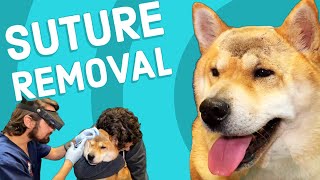
A short instructional vlog by Dr. Lera Clone showing removal of sutures from a dog named Obi. The video explains causes of a gash, risks and timing for suture removal (prefers ≥14 days), tools used (suture removal scissors with a hook), when sedation or staples may complicate removal, and advice to consult a veterinarian.
Chapters
Hey, guys. Dr. Lara here. I'm here with Obi. And Obi is here because he got a little bit of a gash. If you guys see it right there, we're not sure if it's from his brother or not. And sometimes what will happen is his brother will crash into him with his mouth open. So mom and dad aren't really sure. They were outside playing, and next thing they knew, they came inside and he had this big gash. And so they took him to the emergency hospital, stitched him up. And so he never really acted lethargic. He was acting fine the whole time. He was just like, hey, hi, how are you? And then all of a sudden, he came in and had this thing on his head. So I have this thing on my head because I am getting older. I'm going to be 37 this year, just in case you guys are wondering. I know, I know I look great, but nonetheless, this helps me with my eyes. And so sometimes what happens is when sutures or stitches are put in, what can happen is if the stitches are put in too tight, then the stitches will almost get buried into the skin. The other thing that can happen is it makes it harder for us to go ahead and remove the stitches. And so what. We have these special suture removal scissors where it's got a little hook on the end of it. And so it makes it easier for us to go ahead and hook that. That part where it's the gap between the skin and the actual knot. And so usually we should have, like, a nice space there for us so we can just make it easy. What ends up happening is if it's too tight, we really have to pull up and it's uncomfortable. And that's not something that we really want to get in the habit of doing just because it's. It's uncomfortable for the patient. The other thing is, normally I don't like to remove stitches or sutures any earlier than two weeks after any sort of surgery. Some people will remove my 10 days. I just had a really bad experience within the first few months of graduating vet school, where a client begged me to remove sutures earlier than I was comfortable. The incision opened up, and ever since then, I personally will not remove sutures any earlier than two weeks or 14 days. Now there is a possibility if there are staples in place, that's a different story. You have to keep a very close eye on. I have one patient that had surgery somewhere else, and the skin grew over the staples, and we had to do, like, a mini surgery to get those staples out. So OB did really well. Most patients do not need to be sedated. There are only a few surgical procedures that patients might have that they will need to be sedated to have the sutures removed. And even then, sometimes there are sutures or stitches that can be absorbed. When you guys have questions about that particular stuff, usually it's best to ask your veterinarian and be clear as to what exactly they're putting into your dog when it is that they need to come in to have them removed. Two weeks, remember, and if there's anything to watch for afterwards. If you guys have any questions about this video, please give us Leave it in the comment box. If you found this video helpful, give us a thumbs up. Subscribe and share. Thanks for watching and have a great day.