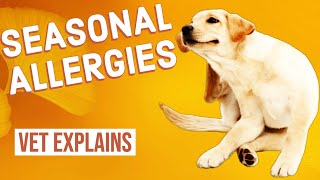
A short clinic-style YouTube video by Dr. Lera Clone about seasonal (environmental) allergies in dogs, illustrated with a case study of Maddie, a 7-year-old spayed female Jack Russell who is chewing her feet. The video explains typical progression and seasonal waves of allergy signs, describes management goals (lowest effective drug dose), mentions Cytopoint injections and supportive supplements (omega-3s, turmeric, aloe), and gives practical advice on introducing supplements one at a time.
Questions this video answers
7-year-old female spayed Jack Russell.
South Florida.
One injection of Cytopoint.
Symptoms recurred in under eight weeks; nearly four weeks since treatment she began chewing again.
Chapters
Hey, guys, My name is Dr. Larratt here at Heron Lakes Animal Hospital. Today I'm here with Maddie. Maddie is a 7 year old female spayed Jack Russell. And Maddie's coming in today for a couple of different reasons. The main reason that we're going to be focusing on her visit for today is the fact that she's chewing her feet. And so Maddie is chewing her feet, we suspect, because it's tied to what we would call seasonal allergies, otherwise known as environmental allergens. And so those are just the pollen from flowers or weeds or from the trees and that kind of stuff. And we live here in South Florida and so a lot of times we will have things blooming all year round, but there are certain things that will really set off patients. And so when you have a dog that has seasonal allergies, there are a couple of things to take into consideration. First, you want to know that it's probably not going to be that bad in the beginning. It's also probably going to get worse as they get older. Second, you want to know that it may change not only in severity, but potentially how it presents. So it may start off as just some eye boogers, then it may go to ear infections and it could go to skin infections. And then it could potentially progress to chewing of the feet or any sort of variation of those different options. The other thing that you want to know is it's going to happen in waves. So for example, over the last three or four months, about three or four months ago, I saw some patients starting to come into the office for skin infections, ear infections, infections, chewing of the feet, all that kind of stuff. And then just recently, I would say within the last week or two, I've noticed another wave of patients coming in for allergies. And so that's one thing that you need to be aware of, is that if your dog has seasonal allergies, there's gonna be different parts of the year, hence the name seasonal allergies. That being said, Maddie in January to March only needed allergy, needed one injection of something called cytopoint. From January to March, almost eight weeks now it's been a little less than four weeks and we're coming up and she's starting to chew again. So different times of the year, if your dog is on allergy, medications are going to require different dosages. The hope is to get your dog down to the lowest effective dose that will control your dog. So that way we don't have to have them on drugs as much or as we can. Have them on drugs as little as possible. Some of the things that you can do to help with that is look at putting them on some supplements like omega 3 fatty acids, tumeric Aloe juice. When looking at doing those supplements, make sure that you only do one at a time, because if you add them all on and they end up having soft stool or vomiting, you don't know what's caused it, so you only want to add one on at a time. If it sits well with them, then you can look at adding the next one. Okay? Other than that, if you guys found this video helpful, give us a thumbs up. Subscribe and share. And if you have any questions about this particular topic or there are other topics that you want us to discuss, please go ahead and leave it in the comment box. Thanks for watching and have a great day.