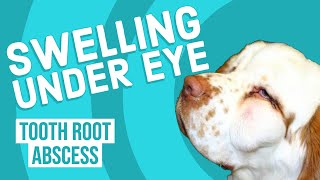
Dr. Lera Clone examines Riley, a 6-year-old Sheltie with swelling under her eye caused by a fractured tooth root abscess. A fractured maxillary fourth premolar needs surgical extraction because antibiotics alone cannot clear the infection inside the tooth. Chewing hard toys is the common culprit behind these fractures.
Chapters
Hey guys. Dr. Lehrer here today at Heron Lakes Animal Hospital. Today I am here with Riley. Riley is a six year old male neutered sheltie and he's coming in today. I don't know if you guys can see it over there, but he's got a little bit of swelling right on this area. So if you guys stay tuned, we'll go ahead and get into what we think that is, how to diagnose it, how to treat it. And we'll go from there. Stay tuned. So swelling under the eye, typically what you're going to end up having is it's going to be most likely what we call a tooth root abscess. So what does that mean? So the crown that you see or the part of the tooth that you see that looks kind of like a triangle, that's the crown and then underneath the gum is the root. And so what will happen sometimes is when you see these dogs develop a swelling in this particular area, what I literally just told this particular client is that is a tooth root abscess until proven otherwise. And so that is something that the way that we go ahead about diagnosing that is usually one of two ways we're either going or one of a few ways. We're either gonna see a fractured tooth when we go in there, or broken tooth. It's called the maxillary fourth premolar and we'll see it visually. Then we will typically go ahead and confirm that there is an infection in there by massaging the gum tissue and seeing some potential, what we call purulent debris or pus come out of the area. We would go ahead and do some dental X rays, which is usually once the patient's under general anesthesia. And then we'll be able to go ahead and treat the patients at that time. Or you could get kind of like a better scientific guess by going ahead and putting the patient on some anti inflammatories and antibiotics. If you notice that the swelling goes down and then comes back after a period of time, then odds are it's definitely a tooth root abscess. You still could potentially have some tumors in that area. But a tooth root abscess is definitely going to be the number one on my list for sure. The way that you go about treating that or curing that is going to require surgical correction. And that typically requires us going in there and removing that tooth. It is not as simple as 1, 2, 3, tie a shoestring to that thing or some floss slamming the door shut and the tooth coming out Most of the time, when you have a patient that has a tooth root abscess, that particular tooth has three roots, and one of those roots is affected, maybe two. And the rest of the teeth are typically going to be anchored in, in pretty well. And so what ends up happening is we have to go in there, we have to make a cut into the gum tissue over here. The surgeon will go ahead and flap that tissue up and then start removing some of the pocket of bone that those roots sit in. If you really try to crank too hard, what will end up happening is you'll break the tooth at some point. And that creates that much more work for the surgeon. And it's something that, you know, it's also more trauma to the patient, and we really want to try and avoid that at all possible. So what we'll also end up doing is we'll end up cutting that tooth into three pieces. So that way we have three different single rooted teeth to go ahead and remove. Makes our lives easier and makes it less prone to fracturing the teeth. Once we go ahead and we remove those teeth or that tooth, then that typically resolves the infection, or what we call the nidus fur infection. Some people will say, well, can't I just go ahead and put the dog on antibiotics? You can, but the issue is you can never fully disinfect that tooth where the bacteria has set up shop with antibiotics, which is why we have to go ahead and remove the tooth. The reason dogs really like, or the reason that that's the most common, one of the most common teeth to break is because that's where dogs will get the most leverage on a chew toy. They wedge the teeth all the way back here and then they can really. And that's where they're able to. Or that's why they cause the most damage back in that area. Usually the oral surgeons will say that they do not want their patients chewing on anything really hard. It's got to have just a little bit of give, because if it doesn't have that give, something's going to give and it's either going to be the toy or it's going to be the tooth. And at some point, there's a very, very high probability it's going to be the tooth that eventually gives way to the some degree. The tooth doesn't have to be fractured down to the gum. The tooth does not have to have like a flap or looks totally gnarly. It can be just a little bit of the tip of the tooth that sometimes is enough to make that tooth porous and susceptible to infection, and then the bacteria can go through that little opening and then cause the infection. The way that we would be able to tell if your dog does not have the abscess from forming underneath the eye is by going ahead and doing the dental X rays. And the dental X rays will go ahead and be able to help us determine whether or not there is an abscess there or not. Usually when we are evaluating that particular tooth, we're also evaluating the rest of the mouth. That because we want to make sure that we are not going in there focusing on that one tooth. And then a month to two months later or even six months later, there's more problems in the mouth. And then the question comes up, was this there when we did the X rays in the past? So you want to make sure that when you have a situation like that, in an ideal world, you would have somebody go ahead and evaluate the whole mouth so that everything, at least you have the option of addressing everything in one potential anesthetic episode instead of having multiple anesthetic episodes. If you guys found this video helpful, please give us a thumbs up. Subscribe and share with somebody if you think they need to watch it. Thanks for watching. Have a blessed day and take care. Of.