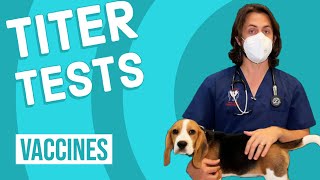
Dr. Lera Clone explains titer tests, blood tests that measure a dog's immunity to parvovirus and distemper. A positive result means your dog is protected and doesn't need a booster. Core vaccines like distemper and rabies differ from non-core ones like leptospirosis.
Chapters
Foreign. Hey guys, Dr. Lara here today. I am here with Coco and Coco is here for some vaccinations. One of the vaccines is the December Parvo vaccine, but that's not what the topic of the video is. The topic of the video today actually is what we call vaccine titers. So normally with most veterinarians in the United States, we usually go ahead and follow the American Animal Hospital association recommendations for vaccinations, which means that we typically will give two core vaccines, the Stemple carbo vaccine and rabies vaccination on an annual basis and then depending on what their exposure level is to other diseases such as leptospirosis, canine influenza and or bordetella. Those are some of the what we consider non core vaccines that we will sometimes go ahead and administer to our patients to help and protect them against said diseases. Now, I personally came up in veterinary medicine with a veterinarian who was not or is not in favor of giving a lot of vaccinations. The thought process behind giving a lot of vaccinations or against giving a lot of vaccinations is the fact that you're introducing something into the body that caused, purposely causes inflammation and therefore makes them more likely to potentially develop other conditions. Such as there have been some, some correlations to immunity, immune mediated hemolytic anemia to some of the vaccinations we have seen. I have seen some dogs who will develop hygromas. We have a video on that where dogs will develop like a swelling on their elbow, typically something seen in bigger dogs. And you know, of course then there's that whole controversial topic of whether or not vaccinations in humans, caus, autism or anything on that spectrum or any sort of side effects like that. And so, you know, I don't consider myself to be completely holistic, nor do I consider myself to be, you know, very traditional. I'd like to say that I use a mix of both and call myself integrative or. And so the vaccine titers. What we will, what we typically run on our patients here majority of time, and what I do on my own dogs is a blood test that measures the immunity level for the dogs against parvovirus and also against December virus. Now, the test, the way the test works is we'll go ahead, we'll draw some blood, and if the patients have their immune system has adequate immunity against the decempovirus and parvovirus, then the test will come back positive for both the virus immunity levels. Now, positive in this particular case is actually a Good thing we do want the test to come back positive. If the test comes back negative, then a lot of times what we will end up doing is I talk to the clients and I have a conversation about whether or not they have an actual increased level of exposure or risk with other dogs going to dog parks, that kind of stuff. Remember that distemper virus is transmitted through aerosol, kind of like Covid is. And so the. I know, I know, Alejandro. And we're gonna go ahead and get Coco off the table. Cause as you can hear, the Coco wants to get off the table. And so. Hi. Oh, now you found my mouth. And you're okay with that? Okay, so if the patients are non exposed. Here you go. Thank you, Alejandra. You look so different. This is actually Valeria, if you guys remember her from other videos. If they are not exposed to other dogs or don't come in contact with other dogs, or if they do what we now know as social distancing, I'm actually okay. If that particular tiger comes back low and we choose not to go ahead and vaccinate the that particular dog against distemper virus. If the parvovirus titer comes back low, I actually recommend vaccinating for that. Unless you're keeping your dog in your house and not taking them for walks around the neighborhood or anything like that. Because parvovirus is transmitted in the feces. That is the poop. And when those dogs have a bowel movement or when they poop it, it's very, very liquidy. And so you may not even know that there is residue of another dog's poop on the grass. And so then that's how your dog would potentially have that virus transmitted. When for you guys to be aware, when we vaccinate or booster for these diseases, we do booster them for distemper and parvovirus. We personally do not carry any individual vaccines for that. You can check with your veterinarian. I try to give as little vaccines as possible. In human medicine, they have a lot of different vaccines which they give. In veterinary medicine, we only have two, what we call core vaccines, Distemper virus and parvo Parvovirus in one vaccine, and then rabies is the other vaccine. Hopefully this video was helpful in terms of explaining what vaccine titers are, which diseases or vaccines we will go ahead and do the test for and how to go ahead and interpret those results and some different options that you can go ahead and move forward depending on how the results come back. And also what your personal pet's exposure level is to those potential risks of diseases and that kind of stuff. If you found this video helpful, give us a thumbs up. Subscribe. Hope you're staying safe and if you know somebody who needs to watch this, please share it with them. Thanks for watching. Take care and be safe.