DSCR loans for real estate investors keep your 3% rate
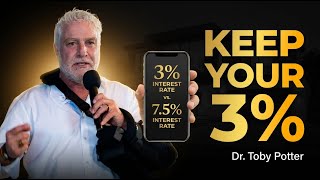
In a recorded interview at LeverageCon in Dallas, Toby Potter of Global Integrity Finance speaks with Tyler Bond, national account and business‑purpose lending lead at Deephaven Mortgage. Tyler explains that Deephaven, founded shortly after the 2012 non‑qualified mortgage (non‑QM) rules were established, is a national wholesale lender specializing in alternative‑income solutions for self‑employed borrowers, residential real‑estate investors, and homeowners with equity. The company offers primary‑home, second‑home, and investor loans using flexible documentation such as 12‑month bank statements or profit‑and‑loss statements, and it pioneered debt‑service‑coverage‑ratio (DSCR) programs for investors. Deephaven operates via correspondent and wholesale channels, partnering with mortgage brokers and independent mortgage bankers rather than retail borrowers. It differentiates itself through a decade‑plus track record, a chief underwriter who authored a non‑QM guide, proprietary online tools (bank‑statement calculators, scenario desks, pricing engine), and a strong educational “Power Pull” roadshow. Deephaven’s sister company Anchor Loans provides renovation‑to‑permanent (RTL) and ground‑up construction financing, while Celine Finance handles servicing and Progress Residential offers property‑management integration, creating a vertically integrated ecosystem. Recent product innovations include a closed‑end second cash‑out loan qualified by DSCR, allowing investors to pull equity without prepay penalties, and flexible prepayment options on DSCR products. The conversation also covers geographic licensing (present in all 50 states except a few low‑population, high‑rural states), competitive positioning versus other non‑QM lenders, and future considerations such as cross‑collateralization and bulk second‑lien bids. Tyler shares how brokers can connect with Deephaven via the website, AE map, and upcoming events, emphasizing the firm’s commitment to supporting real‑estate investors with fast, flexible financing.
Chapters
Hey everybody, Toby Potter here with Global Integrity Finance. We are here in Dallas at the LeverageCon, um, kind of rolling out real estate lending, investing, talking about the market. And today we have the privilege and the honor of having Tyler Bond here with us to kind of talk about his company, what they do, where they do it, and what they love to see in their clientele. Tyler, welcome aboard, buddy.
Yeah, thanks, Toby. Nice to meet you.
Yeah.
Yeah. So my name is Tyler Bonn. I work for Deephaven Mortgage. Deephaven is the original non-QM platform. We've been in business since kind of the rules were defined back in 2012 and '13. So a ton of experience and expertise around alternative income solutions, self-employed borrowers, residential real estate investors, and home equity. And we operate in all 50 states. So we're a national player, obviously doing more deals in Florida and California.
Oh yeah.
Texas.
Yeah. Like everybody else.
Yeah, absolutely. But we got a fantastic team spread across the country. I run our national account and business purpose lending disciplines. So all the strategy that goes into figuring out how we grow that for Deephaven is what I do every day.
So when you say non-QM, you're in that Correct me if I'm wrong, that's kind of a hybrid off of the Fannie Freddie product line, right?
Yeah. So, you know, non-QM stands for non-qualified mortgage, right? As a reaction to 2008, a set of rules were defined in 2012, published in '13, and basically it, it laid out the rule set for lenders to underwrite a loan that a government agency would buy on the secondary market.
On the securitization. Yeah.
Yeah. And so, you know, there needs to be a yin to the yang. So once they defined those rules, there became this opportunity to create liquidity in what doesn't fit that box.
Gotcha.
Right. And so that the acronym— acronyms are abundant these days. So Non-QM took shape in kind of 2013, '14. Very early on, it was for probably lower FICO wounded folks coming out of the Great Recession. Yeah. A lot of good people unfortunately had one of two things happen, either they had real estate that because the market changed, they lost, they had a bad loan. So there were a lot of short sales and foreclosures, but in general they were good borrowers, right? So they, they needed some type of underwriting guidelines that they can get back into homeownership. The second piece that happened, if you think back around that time, is there are millions of self-employed borrowers who had no access to re— to real estate capital, right? Because they could not prove income, right? In the ways defined by a government agency.
The Fannie Freddie guidelines, right?
So Non-QM in the infancy was how do we help folks that just missed the box from a, a FICO perspective? Mm-hmm. But the bigger opportunity that helped it grow is how do we provide liquidity to self-employed business owners that have cash flow that can afford a mortgage payment but can't buy a house right now because they can't go and get a government-backed loan.
So when you're talking your product, is it both for primary residence and for investments?
So we have products for primary homes on the non-QM side. So on the non-QM side, yeah, we've got owner-occupant loans. Yeah. Your primary residence.
Yeah.
We've got second homes and we have investors.
And that qualifying ratio or qualifying document is going to be bank statements, right? Yeah.
So, so all of our programs have some flexibility around them.
Yeah.
So what we still see take up about 50%, 40 to 50% of all transactions is a bank statement or P&L loan qualification for a self-employed borrower.
And you're looking at that residual balance in that account to qualify them for money, showing they've got money left over every month to be able to make a mortgage.
Yeah, absolutely. We actually have some great technology that we use to to qualify, look at 12-month bank statements. You know, there's some good, you know, logic or rule sets built in around large deposits and we can kind of talk through that with a borrower or the way we ingest loans are either through a brokered relationship from a loan originator or we buy whole loans on the secondary market. So we've got good tools to help originators simplify how you qualify a borrower with their income using a bank statement or a P&L. And then on the investor side, that program is available, right? An investor could finance a loan with a little bit better terms if they want to show their bank statements. If they don't, then we do a tremendous amount of work in what's known as a DSCR program. And then that's kind of standard analysis. Again, we've been around since 2012. We've seen a lot of these deals. We are one of the early adopters of a DSCR program.
Yep.
And so we help steer the guidelines for the market on what the secondary market expects and what they'll actually consume. And so we're out training loan originators and private lenders on here's the loan that you can go to market with and sell, and there is an exit for it beyond your balance sheet.
Right. So when you're working with clients, you work with brokers or individual clients directly?
Yeah. So we don't have a retail channel.
Okay.
So if you wanted to borrow money, you wouldn't come directly to us.
Gotcha.
We work with lenders independent mortgage bankers, brokerages.
So you're a wholesale—
we've got a correspondent and a wholesale.
Correspondent, that's what— yeah, okay. So Global Montanity Finance would be set up as a correspondent lender through you?
Correct.
So we would then originate, process, underwrite, submit, you guys would bless and fund?
Correct.
Right.
And we'll either underwrite for you, or you could be delegated where you're underwriting to guidelines we agree to, and then we would just buy that after you after you close.
Okay. And you do buy closed funded loans?
Correct.
Under the correspondent section?
That's 65% of our business.
Of your business?
Yeah. Nice.
Nice. What sets you apart from the other Fannie Freddie companies out there that are trying to get into this, like, say, Verus, Bayview?
Yeah.
You know, they, they didn't— they went from Fannie Freddie right into DSER. And they kind of skip that non-QM gap.
Okay.
How, how do you work more efficiently than they do?
Yeah, I don't know their entire stack, but I can say what makes us different or separates us in terms of why somebody would want to partner with somebody like Deephaven. Number one is experience and expertise, right? We've had a great team together for more than a decade. Our chief underwriter kind of wrote the book on non-QM, so there's not much we haven't seen.
You guys kind of built it.
Yeah. Yeah.
You built the product. Yeah. After the crash, this was, uh, conceived and rolled out.
Yeah. Our founder, I would say, is one of the founding fathers of non-QM.
Yeah.
Right. Yeah. So, so we've got a lot of experience. So that's number one.
Yep.
Uh, we, we've been there before and, and we know what you're looking at when you bring us a deal. Um, number two, we've got a ton of tools for our partners, right? Whether that's a bank statement calculator or a scenario desk for underwriters to talk to underwriters and get things done.
And these are all online portals.
Yeah. We've got access to that through our website. Okay. So our account executives are kind of the front door, right? We've got probably the most talented AEs in this segment of the business, looking at these deals and, and making sure that you've got something that we can actually buy or, or you can send to us. And then the third piece that's really interesting where I've been spending a lot of my time, and I think it plays well to the audience that we'll be speaking to today, is, you know, I broke down non-QM or the way I break it down on the soccer field or at Thanksgiving dinner to people that aren't in the business.
Right, right.
We specialize in loans for self-employed borrowers. Residential real estate investors and all US homeowners that have equity in their house and they need some type of cash-out product and to not upset or refinance their 3% existing mortgage.
Yeah, yeah. That's the toughest thing right now.
Yeah. So Deephaven's got products that fit into those three windows. I've been spending a lot of time with our sister company Anchor Loans. Yeah. Specializes in RTL and ground-up construction for investors. And between the two of us, we've got a full solution set for residential real estate investors.
Nice.
So you can start in the acquisition world and buy a loan under like a fix and flip program or a renovation program.
Right.
And you can do that with Anchor Loans.
Through Anchor.
Right.
Yeah.
And then if you even want to go further up and work with builders and developers, you can do ground up, a ground up construction loan. We bring liquidity to that space that helps originators get further upstream with their client base.
Right.
And that client base typically is doing 4 to 10 transactions a year.
Right.
And so you've got the anchor loan side of things. And then on the Deephaven side, we've got a full solution set of DSCR.
So take them right out of that deal.
Correct. So we've reduced our seasoning requirements. So coming out of a renovation loan, you don't have to wait 6 or 12 months to reestablish value to get cash out. If you're coming out of an institutional renovation loan, as quickly as 45 days.
Oh, really?
We'll let you order a new appraisal.
Okay.
and then we'll use, um, some of the documentation around that construction to verify, to validate expenses.
Yeah.
Yes. And you can reestablish value and then refinance that into a longer-term debt structure with D-Payment.
So, so if I buy a property for $250,000 and I put $150,000 into it, so I've got now what, $400,000, $500,000 into it, right? No, $300,000, $400,000 into it.
Yeah.
And I think that the ARV is a $525,000, $530,000. I don't have to wait the 6 months. I can just do a new appraisal, show my $150,000 construction, validate it, and the appraisal comes in at that $530,000. You're good to go.
Correct.
Now, does that have to have been done through Anchor or could that have been done through anybody else? RCN, Lehman One?
Yeah, great question. So yeah, our overall guidelines are around product type, right? So it doesn't have to be through Anchor.
Okay.
We would like it to be.
Yeah, right. Yeah.
Because we know that there's some comfort in the underwriting with the family of companies there.
Established understanding of the client.
Correct.
Right.
But if you got a balance sheet, um, RTL deal, or you did it with one of Anchor's competitors, we know those companies as well. As long as that meets the guidelines, and like you said, the appraisal comes in, the appraiser agrees with the output of what you did, right? Uh, then, then we've got a loan in a very short cycle, and we can get that done pretty quickly.
And then we can come right into a cash-out refi.
Correct.
Put that on now. Is there a prepayment penalty on your non-QM products?
So not on a consumer loan, right?
Right.
On the primary. Yeah.
Yeah.
Right.
That's the Dodd-Frank.
Correct.
Litigation.
Correct. We have options with and without prepay for our investor DSCR products. And then obviously we comply with all state guidelines. Each state looks at it a little bit differently.
Right.
But for the most part, you've got options to go either way. You know, if you think about the secondary market and the investor base, they're going to get paid either way. Right. Right. So either you take a longer prepay and get a better interest rate and actually a lot higher interest rate and make sure there's a prepay in. Now, one other thing we actually rolled out in the last 90 days, which is getting a ton of traction, is we now have a closed-end second cash-out loan using a DSCR qualifier. So think about the production you've done over the last 5 years. Okay. If you were working with investors in '21 and '22, right? And they were 20% and 21% and they got into a DSCR at a phenomenal price.
4.5% to a 8%—
we don't wanna give up that loan.
No.
But they built up equity anywhere from 10% to 50%, depending on where that property is.
Easily.
We can now allow them to take cash out of that property qualifying with DSCR calculation.
Right. So say we're in the 1.25%, actually we'll go down to 1%. 1%. So, so 1%, so 1 for 1.
Correct. And they can take cash out and they don't have to disrupt their original financing. Or if you did a loan for an investor in '23, '24 that's sitting on a 3 to 5 year prepay because it got them the best rate of the day.
Right.
They can now take cash out of that residence using a DSCR qualification on that property versus paying the prepay to get all right.
Right.
So they can continue to buy properties and invest or even improve that property. Right. We've got some clients out there that are looking for— they've already got a, a 2 or 3 unit and they want to figure out how to put an ADU or a fourth unit on the property.
Yep.
They can get cash out of that property through that DSCR closed-end second to then move forward and continue their, their, their growth.
Yeah, that's amazing.
Yeah, it is. It's been a great year. We're doing a lot of great things to really support residential real estate investors.
That's amazing. Holy cow. I'm sitting there running through my mind all the deals I could send you right now, because that's one of the biggest fights that we have. Number one, all the loans that we did in 2021.
Yeah.
You know, we were offering DSCR 4.5 base, then it would maybe get up to 5. Yeah.
But they can't find much under 7 right now.
Yeah.
Yeah.
Our baseline today is 7.5, right? So those guys are like, man, you know, I got tons. I've got one client's got 450 properties and he's just, you know, collecting rent. Yep. But he could consolidate. Now you do portfolio. So if we consolidated 5, 10 loans into properties into one loan, would that work with you?
We don't cross-collateralize for an investor today.
Okay.
It's on the drawing board. We know there's demand for it. We're just not there yet. So there's no cross-collateralization on our products. We typically believe that flow is better pricing than bulk.
Yeah.
So in most cases we're looking at flow business.
Gotcha.
But if you were sitting on, especially in the second lien space, we've got a healthy appetite there. So if we want to take a look at a tape and do like a bulk bid for you on some second liens with any type of qualifier, whether that's bank statement or P&L or full doc or DSCR, we're interested in that conversation.
Okay. Yeah, because they're like, you know, what we're seeing a lot of is I'm tired of having 25 ACHs out of my bank account every month. So if I can start consolidating my properties, I'm about to knock the mic over. Yeah, I can start consolidating my properties into one ACH every month.
Yeah.
Then it's easier, cleaner bookkeeping.
Yeah.
And they're not— and people aren't selling their properties today. They're converting them to rentals and waiting for that time to come for evaluation, appreciation, and all that.
Yeah, I understand what you— what you just defined. We're not there yet to make that happen for you, but it is on the drawing board. I think, uh, obviously competing priorities on some of the stuff we do. There is a side of the street that suggests if you cross-collateralize 10 or 12 units and 1 or 2 of them are dogs and you want to sell them in a year and a half, you can't until you refinance the whole stack. And so that's been one reason why we're, we've questioned the demand for it.
Yeah.
But we're probably going on 18 months of running into that at every show.
Every show. Yeah.
So yeah, it's on the drawing board.
And the ones that we do the cross-collateralization, if they do want to start peeling them off, you know, 120% of that valuation is coming back to the note. So they're not making any money now until they sell the last 2 or 3, right? Then it's 100% equity. But what it is is getting that dog off them, off the balance sheet. Yeah. So Tyler, how does the, the world find you? I know you work with lender or with brokers or lenders. But how does a broker come and find you guys? Where do they find you and how do they learn more about you and your company?
Yeah, uh, great question. So I'll be at DFW on Friday.
Okay.
I'll be in at the new— at JFK on Monday and Wednesday of next week. I'll be in Atlanta in 3 weeks. I, I travel a lot. Uh, if you really want to find me, we can make that happen. Uh, the easiest way is to go to deephavenmortgage.com. Got a full functioning website. There's ways that you can request an application to get approved with us from a counterparty standpoint right there. All of our programs are there. We've got a great pricing engine tool there so you can price deals just on our website without credentials if you needed to.
And this kind of gives somebody an understanding where they stand.
Yeah, absolutely. And then we've got to find an AE tool, right? So depending on where you originate, if you want to find someone local that represents Deephaven, you can go into a map and find your favorite AE based off picture credentials or your network.
Right.
So that's a great way to find us. We've been doing something, you know, somewhat revolutionary in this market over the last year. We developed a series called the Power Pull series that we've been taking on the road. So we've already been to 6 cities in the last 6 months. We've done 2 shows in South Florida, 2 shows in Texas, 2 shows in Southern California where we invite loan originators all shapes and sizes to come in and learn from us. and we cover all non-QM. We cover RTL and construction. Uh, good way to—
so this is both Deephaven and Anchor.
Deephaven and Anchor, right? Uh, we kind of founded it under Deephaven, but they're, they're our strategic partner on this. And so we co, co-brand and co-host that event.
So is that, uh, does the CEO of Deephaven, are they also the CEO of Anchor or was this a merger? No.
So we got two separate CEOs. Uh, we're under the same parent, Pretti and Partners outta New York. Mm-hmm. Uh, it's a great ecosystem. Besides Deephaven and Anchor Loans that originate on the front, we've got Celine Finance, who's our sister company servicer. They're based here in Texas.
Yep.
Been around for a long time.
Yeah.
What they're doing, they service for us and others. Yeah. And then we also have Progress Residential, which is the largest SFR institutional landlord in America with about 100,000 doors as a property manager. Property manager.
Yep. Yeah. Yeah.
So we all work together completely vertically integrated and 100% focused on residential real estate.
Nice.
And doing good work and growing year over year.
And, uh, you guys are nationwide?
Nationwide.
Now we don't do— we probably— you don't do business Wyoming, South Dakota, North Dakota, Montana, any other state?
Yeah, great question.
So, uh, from a deep end, we always say if there's more trees and cattle than people, we're out. That's our— that's— it's just simple. There's more trees and cattle, yeah, than people.
That's right.
We don't do business there.
That's right. That's right. Um, You know, we're actually in a lot of those states. We're not in South Dakota, but we're, we're, we're not in one of the two Dakotas. It might be North Dakota, to be honest. So we—
Too damn cold.
Yes, too cold. That's right. You know, it's interesting about that. We obviously have guidelines around rural properties, right? So there's certain areas we're not going to touch because it's, you know, 30 miles from the next ranch and there's no comparables. So those deals aren't going to get done.
And the ranches are owned generation after generation. So there's no comps. Right.
That's right.
And nobody's moving in.
That's right. That's right. But yeah, no, you'd be surprised. The way we think about it is there's self-employed borrowers in every city. There's residential real estate investors in every city.
Right.
And there's a demand for product. So to the extent that we can get licensed there and then there's not too much cost to the licensing in a state that we might only see 2 transactions a year. Right. We make it happen. Yeah. Awesome. Yeah.
Go find Tyler. Deephaven Anchor. These guys got it going on. I'm gonna have to hook up with Tyler after this is over with because we have a ton of business we could be sending his way, and I didn't even know it existed. I've known of Deephaven, but I didn't know the product and the programs. I feel a little embarrassed sitting here going, holy shit, I know I need that stuff. Yeah, so if I need it as a 30-year veteran lending, you guys need it. Hook up with Tyler, his team, his company, and let's do some business. Let's grow. Thank you everybody for being here. Tyler, thank you so much.
Thanks, Toby. Appreciate it.










