Fix and Flip Loans 100% Financing: The 5-Day Close Secret
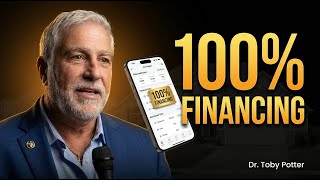
In a live interview at the LeverageCon real‑estate expo in Dallas, host Toby Potter (Global Integrity Finance) talks with veteran private‑lender Robert Greenberg about his extensive career and the current strategy of his firm Turnus (formerly Ternus). Greenberg recounts his early work at Blackstone‑backed B2R Finance, his role at Patch of Land/Lending’s crowdfunding platform, and his stint building a correspondent program at Lima One. He then explains Turnus’s product suite – balance‑sheet lending, wholesale/transactional funding, bridge, fix‑and‑flip, DSCR (long‑term) and portfolio loans – and its focus on 1‑4 unit residential properties across roughly 22 non‑judicial states (with about a dozen states still unlicensed). A key differentiator is the “Quick Turn” or 5‑day/24‑hour close offering, which often forgoes traditional credit checks and appraisals, relies on Richard Values valuation reports, and can fund up to 100 % loan‑to‑cost. Greenberg describes the firm’s go‑to‑market model of serving both direct borrowers and brokers (no white‑labeling), emphasizing speed, transparency, and dependability. He also outlines fundraising efforts: a Reg CF equity raise of $5 million (10 % of the company) and a forthcoming debt fund with a 6‑month lock‑up, targeting retail investors who want to park capital. Throughout, Greenberg stresses “common‑sense lending,” disciplined underwriting, and the importance of maintaining strong performance amid growing institutional capital. The interview ends with promotional calls to action and personal anecdotes highlighting Greenberg’s industry memory and reputation.
Chapters
Hey everybody, Toby Potter here, Global Integrity Finance. We are here in Dallas today at the LeverageCon real estate expo, and I'm telling you, there is a plethora of investors, lenders, title companies, uh, attorneys. I mean, if you're a real estate investor or a broker and you're not here, you're missing out. But here's the good news: we have the distinct privilege, honor— I don't know how to say it— to have this guy Robert Greenberg right here beside us, talking to him today about what they do, why they're here, and how they can help you take your business to the next level. Rob, Toby, I'm thrilled, buddy.
Thrilled to be here with you. It's, uh, it's been a good day. Um, and you're right, there is everybody from every walk of life in the, in the private lending business here for sure. Yeah.
What an amazing show.
Yeah, it's great. I mean, Brett really does a nice job.
Yep. I think I saw somewhere we had almost 500 people registered here. I know when we were up on doing our platform earlier, the room was full.
Uh, and lunch, lunch was great. Like even the food was good.
Food was good. Nothing to complain about. Robert, tell us, I want to, before we get into where you're at right now, we're going to back this bus up about a decade. Because I met you, I think at Pitbull.
It was probably, it might have been a Pitbull.
It had to be Pitbull. You were at Patch of Land.
I was. Even before that, I, you know, my first entry into lending, any kind of mortgage lending, I was never a conventional guy, was 2014. With the Blackstone-backed B2R Finance.
B2R? Yeah. Holy cow.
Which is where I met Tim Herridge.
You know how many people I now know from B2R? It's like B2R incubated all you guys and then get you out into the world.
Yeah, it was unbelievable. It was the group of people that were assembled, you know, between Beacham and Tennyson kind of at the top there. And Tim with that group and Justin Short. I mean, it was just a—
Eli. Where is that today?
And Dave on all those guys for sure. Yeah.
I mean, I'm here to tell you the best of the best came out of that group.
Oh, it was a great group of folks. Yeah, it was a great group.
It was a, it was kind of like it was a, a VoTech of how-tos and then kicked you guys out in the world to create.
And to watch, you know, it was kind of the beginning of institutional capital coming into this space. So, you know, to have been a part of that and then watch what's happened in the 10, 12 years since has just really been amazing.
It's amazing.
So yeah, that led to, yeah, eventually wound up in an LA-based company, Patch of Land, which ultimately became Patch Lending. We were doing crowdfunding, allowing accredited investors to buy fractional pieces of loans we were originating.
So let's talk about that real quick so the audience understands. So basically you guys would get a loan come in, a property, a borrower and all that, you would post it into a portal and, and investors could, could, could invest into that deal and have it sent to them.
That's, that's exactly right. I used to, I used to tell people it's sort of like, uh, Amazon's, Amazon selling books in the early days.
Mm-hmm.
And what we were doing is putting loans on the internet and you in, you could buy, you could buy the entire book.
Yeah.
Which would be the whole loan if you wanted it. Right. You could buy a chapter or Or you could even buy a word, a page, right?
A page.
And yeah, it was, uh, we, our minimum investment was, I'm thinking, I think it was $1,000.
Was it really?
We had some loans that had 40, 50 investors in it. So that was a headache.
How do you manage?
Yeah, that was a headache. Well, we had a really nice, uh, technology-driven platform.
This was back in the '50s. This was, yeah.
The, the, the founders started building this thing. Uh, it came about, uh, after the JOBS Act, which was a piece of legislation that Obama signed into law in 2012. So they were very quick. They knew the implications of, uh, you could wrap a loan up to $1 million and get people to invest in it.
Uh, and so without any violations of solicitation, it was right.
It was perfectly legit. Uh, SEC, uh, and it was, there was a bunch, it was probably 100-ish crowdfunding sites, uh, by in the first few years.
Well, it wasn't PeerStreet.
PeerStreet was, and then, and they had a slightly different business model. Right. RealtyMogul. Yeah. So there was, uh, Yeah, real— there was just a bunch.
I don't know. That would drive me crazy to have a guy, gal, somebody put $1,000. I got a $300,000 loan here and you're going to put $1,000 in because you just want, I don't know, test the waters. Oh, well, you know, there's no return on $1,000. Well, you're going to get $1,005 back.
We were doing loans as low as 12% and as high as like 15%. Right. So the investors and we were making, I think, a point point on management. So you were getting an 11 yield on it, right? If you put, so you'd make 11% on your $1,000. But a lot of guys, what they did, it was kind of like in a, in a sense, they were maverick millionaires, like guys with a lot of money, guys, gals. And this was kind of fun money. They, they, a lot of people have made money in real estate. They understand how to underwrite. And so it was almost like, it's sort of like what I see. Like I, I, I have a mybookie.com account, right? And you familiar with MyBookie?
MyBookie?
MyBookie.com.
You made me choke right there when you said that.
MyBookie. And like, you know, the other night I bet halfway through the game, I bet on Denver. Yeah. And, you know, just to keep the second half of the game interesting.
Right, right, right.
And it wasn't a lot. You know, they're small bets.
Right.
And that's sort of like what I think of.
If you lose, no big deal. If you win, great.
And so a lot of the guys that were doing that. But there were—
Moving to Vegas.
We had, you know, a few hundred people that had well over $100,000, right?
Some even had over $1 million on the platform because they diversified through 10, 15.
That's right. And that was really the right way to invest. Don't take down the whole loan. Take a piece of it. Take a piece down. 10 or 12.
$100,000 in each one of them. Let it ride out.
Yeah. And then what happened, of course, is, you know, the Torex got involved and, you know, the rates were coming down. We were down at 8%. So accredited investors making 7 or 6%. On this money, it didn't make any sense.
Nope.
So, uh, and what we did is we got enamored with, you know, taking rates down, being super competitive. We were primarily making money on points and fees, right? And so we were passing through most of the, the margins.
I'm closing a deal at 8% and I'm paying my investor 8%. I'm just trying to make my upfront money, right? I'm getting no override management fee. Yeah, but that's that.
And so we kind of let the crowd go. Yeah, by not You know, we had to because the rates came down and it just didn't make sense. Then of course, 20, you know, 2020 comes around and COVID hits. And had we nurtured and created that, had, had that crowd there for us, we would've been— there were—
oh, you would've owned the market, right?
We would've been able to—
everybody else shut down. Everybody else walked away.
The big unknown though is how, what the appetite for our investors on the site You know, everybody was afraid, everybody was scared, uh, scared of what was going on. So I don't know that we would have had as much capital flowing to us as we would have needed, but we would have at least been able to continue. So yeah, really interesting business. It was a— I learned a lot, learned a lot about managing investors on the other side, definitely gained a lot of experience. You know, my experience up until that point was mostly with the long-term product, the DSCR program, right? So I You know, that's really where I got very familiar with the— what we now basically call RTL or fix and flip short term. And it was just, you know, it was great. It was great. It was great fun. That's— then that's somewhere along the line where you and I met.
You were at Patch, and I know the first time I met you, it was Patch of Land, then it was Patch Lending shortly thereafter.
Yeah, we were acquired in summer of '21 and we went through a rebranding.
Rebranding and all that.
And then And then, then like, uh, early, uh, 2023, I went over to Lima One to build out that correspondent program. That's right.
I forgot about that. Yeah.
That was, yeah.
That took forever. It was. So in that, so behind the scenes, were you restricted on, on, on why that took so long to launch that?
No. And it really, it was 11 months. You and I, I called you early on. I knew it would, would be something you would be interested in.
Yeah.
So I, and that was really, Once we kicked, I started in January. We brought our first lender into the program in November, and by May of 2024, we had 23 partners.
Really?
So I had lined up a lot of people who I knew. I knew our program, but it took a long time because we wanted to truly— we— most of the players that had done a similar program were building it as they go. And so they frustrated.
Yeah, yeah. Original. Yeah.
And it was so we built it right. We, and there was a lot of patience on part of MFA and Lima, you know, so it was—
there's a rumor out there that you don't want to irritate me because I fire back.
Well, I will, you know, and again, I wasn't just you, right? The right way to do it is get it built, do it well. And you know, that way you're not having to apologize for a shitty experience.
And that's, that's it. You know, overpromise or underpromise, overdeliver versus everybody else. Let's roll it out and we'll fix it.
That's right. Right. And a lot of times, you know, like we were, you know, what's the right instrument? You know, what's the entity going to be? Is it, you know, we had to— it was very— a lot of the correspondent lenders didn't have an origination channel.
Right.
So like, you know, they had like ROC, probably the biggest and most successful program in the space, but it wasn't until COVID when they brought house lending into play, but they weren't, they weren't even able to originate. So the fear that a lot of our partners, the, our, the other lenders that we brought in, well, you're just gonna steal my business. You're gonna steal my customers.
Right, right.
Right. Well, if we had, we had one of the largest originating organization, or, you know, in the country.
Yeah.
So it was Limo One. With Limo One.
Yeah.
Limo One, 70 salespeople. We were coast to coast.
Most, you know, you guys doing $300, $350 million a month.
So exactly. Yeah.
Yeah. I just, I'd call, I'd talk to Jeff. I'm like, how's the business? I remember I called him right before he retired. It's probably 4 or 5 months before that. I said, hey man, how's, how's business over there? He goes, oh man, it's really hard right now. I said, oh, I was kind of excited. Like, yeah, really? He goes, yeah. I mean, we're probably going to close out at $275 million. I'm like, you got to be shitting me. I would die to do $275 million and you're whining about it.
In a year.
Yeah, yeah, yeah, yeah.
I know it. It was, and it grew. That was a, that's an amazing case study too as a business.
It just— Yeah, he went from $20 million.
Right. To $200 million.
$200 million a month. Yeah.
And $2 billion.
Yeah, $2 billion from $20 million a year to $2 billion a year in the first 3 to 5 years.
Yep.
And then took it over $3 billion a year funded loans. Yeah.
And it's so, yeah. So then, but it takes a titanus, right?
Yeah. Yeah. Now. Now we're caught up.
So Tim Herridge, uh, North Texas guy, been flipping houses here.
Known Tim for long before I ever knew you guys. So Tim used to put on meetups and, and expos like this. Yeah. And we used to go to them and they, when we first, and this was in '15, it was the biggest in the area.
Yep.
And then all of a sudden it died.
Well, actually the, he, he ended up having to sell it.
Yeah.
The Blackstone guys that were running the B2R money, they saw that as a conflict and they didn't, because he was managing director of Blackstone at the B2R.
Oh, I didn't realize he was still at B2R then.
So he had to sell it while he was at B2R. So he ended up selling it to the Think Reality guys. That's who ended up, that became the Think Reality conference.
Really?
And Eddie.
Eddie.
Eddie Wilson. Yep.
Yeah. Yeah, it was one of the most, because it was right here in Dallas.
Yep.
We were just local. And so he was one that we were building our business. Him and Phil and Chanel Grove was doing their deal. So those were the 3 to 5 events we did every month and loved it. So now Tim sold that. Now you're at Tenerife.
So Tim started Ternus in January of '24. Yep. This is a Latin phrase for threefold.
I knew it was a three-pronged something, but I didn't know what it meant.
And, and we, you know, there's a couple different threes: speed, transparency, dependability. You know, a lot of investors get into this for cash flow and for a paycheck and also to build a lasting legacy for their generational wealth. So that's kind of our commitment to the investors in this space. We also, you know, Warren Buffett likes to talk a lot about invest in businesses you understand and know. And so we have done a Reg CF offering. Now we're raising $5 million, 10% of equity in our business, and allowing our customers, our borrowers, to be owners in our company. So, and we're really excited about the potential for raising a lot of retail cash from people who understand how to make money in this business and want to not only be our customer but be a shareholder and an owner of our business.
Well, and, and now they're investing in their own success.
100%. Yeah. Yep. They're investing in in the lender that they're depending on as a partnership.
That's awesome.
Yeah, it's awesome. It's a, it's a unique idea. And, you know, we're really also just very focused on building. We, we want to build balance sheet. We're doing balance sheet lending now, primarily on the RTL side. We're not balance sheeting the DSCR program, but we want to be in control. We want to be able to give the borrowers a lender that they deserve to have.
Yeah.
You know, the amount of institutional capital in this space has kind of made everything that everybody's doing look very similar. It's a very commoditized product, right?
Commercial.
Yeah.
Yep.
So this gives us a little bit of control. We're able to close very quickly. I mean, we've closed some loans in 24 hours.
Nice.
We, we like to say we can close in 5 days and we can. Often it's the borrower that's not ready.
Right, right.
So, you know, without placing blame.
So are you doing appraisals and backgrounds and all that, or?
It depends on the, you know, if, if the project and the borrower qualify for what we do with on our balance sheet. No, we won't pull credit, we won't do an appraisal, and we'll do up to 100% loan to cost. And we're very comfortable with that. If the property has to come back, we feel like we can manage through it. We've got a network of folks that we need to get rid— we need to sell that property, or we could finish it out. And you know, if there's generally there, if you underwrite it properly, there's going to be enough left. Where you come out. Yep.
So are you guys just in Texas? Where are you guys?
No, we're, we're really kind of national. There's about a dozen states that we're not licensed yet.
Right.
So we're not able to do loans in those dozen states, but we're primarily focused on the nonjudicial states. So there's 22 states that we're willing to do. We're doing a wholesale product, which is basically a 60-day loan. Wow. Wholesale to retail.
Yeah.
And we're doing also transactional funding, which is the you know, wholesale, wholesale, A to B, B to C. Yep.
Yep.
And so both those are a little bit unique.
Yes. Very.
And then of course we're doing bridge and fix and flip and then the long term. We'll also do long-term portfolio loans. Yeah. So we're not doing any multifamily. We're not doing any new construction, although we'd like to.
All 1 to 4.
It's all 1 to 4. We can do on the, on the, on the long-term thing, we can do more up to 9 doors.
Up to 9 units on the DSCR.
Yeah.
And then are you guys working exclusively with brokers or direct lenders? I mean, direct— direct—
we'll do both. We're doing broker business as well as direct. I'd say our skew is much heavier direct, just basically our marketing and our, you know, Tim's influencer marketing on social media. Yeah, we just have a kind of a direct line to a lot of folks in the investment space. That are direct borrowers, but we're happy to work with brokers.
So with the brokers, are you white labeling or are they just on the hub?
No, it's just on the hub. Yeah.
Okay. Yeah. Yeah.
It's a true broker relationship.
Yeah. Yeah. You're not white labeling. You're not.
No, we're not. We're not looking to, you know.
No. And I think that's, you know, it— you got a lot of brokers that whine and cry about that. Oh, you're going to steal my borrowers. They're going to know they go directly to you. I'm like, you know what? If my loan officers can steal your borrower, you're not doing a very good job because, and you know, we've had loan officers come and work for us and then leave and go work somewhere else. And my office is like, well, what if they take our clients? I'm like, then they deserve them, right? They deserve them. If they can take the client with them, then they did what they were supposed to, which was build a relationship.
Yep.
So nobody's doing business with Global because of our name. They're doing business because of who we are individually.
Yep.
And that's who they follow. So I've never stressed over that. And brokers, well, I won't do business with you because you don't white label. I'm like, okay.
Yeah, I'm the same way. Although I will say too, you know, and I'm sure you agree, I know how you run your business. You put systems and process and underwriting in place. And so even if you've got a really strong relationship, depending on where you're, where that loan officer might go, he may not wind up with somebody, you know, right when you build confidence that we are going to get your loan done. And that's what we— we— it's really important to us. We, we stand for speed, transparency, dependability. We tell you we're going to do it. We're going to get your loan. We're going to get your loan closed. We teach our guys, don't say, you know, give a quick no, right? You know, right. It's not something we're going to get done. Be upfront about it. Say no. And don't say yes until you're absolutely certain this is a deal you can do.
Yeah.
Because if our guys say yes, we're gonna close that loan.
Good. Good, good, good. Um, oh shoot, I had something else I was gonna say, Robert, and then I went blank. That's what happens when you get old. Oh, I know it. So how can people find you?
So turnus.com, turnus.com. Uh, that's probably the best way. Uh, just looked at some updates to our website yesterday, so I'm super excited to see some updates on our new, uh, on our website.
You guys launched something 2 days ago.
What did we do 2 days ago? I'm trying to—
my team was telling me that they saw that Tim just made an announcement 2 days ago. Did he forget to tell you about it?
Yeah, probably.
No.
We are, well, we in, was it in March? What's that?
Second Lien?
No, I don't know what that would— in March we, we're about to come out. We're about to launch a debt fund. So we're raising money for a debt fund. We've been toying around with something that we want to call Quick Turn. Yeah. And, you know, maybe quick spelled, you know, in 4 letters.
Unique. Yeah, yeah, yeah, yeah.
And, uh, and turn being T-E-R-N. Yeah.
So it ties in.
Yeah.
Quick turn.
Um, but that's basically the, the same thing. The fix and flip product that will close in 5 days or less.
Or less.
And because we're not pulling credit, we don't, we're not, we're not waiting on an appraisal ever.
Uh, you're not getting appraisal ever.
But we're, we're using, uh, Richard Values has that report. I know you're familiar with it. So we're, we're not going blind. Mm-hmm. We're pretty confident that that's a decent We're getting good valuation out of that. And, uh, you know, we're, we're not, it's just because you apply doesn't mean it's gonna happen.
Right.
Right. So we're trying to, we're putting good underwriting behind it.
Yeah. Yeah. Yeah.
Uh, so not everything's gonna qualify, but if we like the project, if we like the property, we, we'll do it. Yeah. I mean, good. It's, you know, the, the, I've heard this term common sense lending.
Yep.
Forever.
Yep. And does the deal make sense?
Yeah.
Period.
And there's, We've— with the institutional, the infusion of institutional cash, common sense isn't necessarily the rule of the day anymore. Yeah, it's— there's a lot of, you know, things.
Well, unless you're balance sheeting, there's so many restrictions. And you knew that at MFA, you guys balance sheet but didn't. So you still had guidelines you had to fall into.
It was balance sheet, but it was, you know, whoever, whoever owns the money gets to make the rules.
Golden rule.
That's right.
The golden rule. The man that makes gold makes the rules.
100%.
Yeah. And that's when, when you're looking at, you know, having to close fund and sell off, we have to look at, will they buy that loan if we underwrite it correctly? And if we don't, we're stuck with it. So it's a different mindset with what you guys are doing. You're able to really be flexible. Does it make sense? Is there common sense theory into this? And do we trust the sponsor? To perform.
And that's the key for us. I mean, we have got to stay, stay vigilant and disciplined because our performance has got to stay strong.
Yeah.
We're, we're going to, we're, we're going to grow by raising retail capital. Right. And if, and if we perform, that capital's not going to be gone. But if you can, if we continue doing what we're doing, the money, you know, especially at these kinds of yields, we will, we will raise a lot of money.
Yep.
Yep. Really confident in that. And, and again, if your investors know the space and have made a lot of money in the space and they're looking for a place to— I mean, park some money. Our debt, our debt fund is going to have a 6-month lockup. So if you need to park some money from a deal you just cashed out of and you're not sure what you're going to do right away, park it with us for 6 months, make money on it, and you pull back.
Well, and the good thing is if they dumped it into an LLC and then that LLC invests in you, there's no capital gains on it.
There you go.
So it's a tax savings. So hey everybody, it's my buddy Robert. Look him up if you like what you heard. Like, share, subscribe, hook us up. Go to his website. This guy's got the stuff. Been around the industry forever. Knows it from the top to the bottom. Love him to death. And here's one thing I'll tell you. One thing that impressed me, Robert, is that when we first met him, I might have met him for 30, 40 minutes, maybe an hour, I don't remember. But the next time I met him, 30, 45, 60 days later, He remembered my name. He remembered my wife's name. The guy could tell me what I told him last time. The guy has an elephant memory. So amazing.
Well, the memory's not so great anymore. Yeah, but now you've got a little memory. No, it's, uh, no, you're super memorable guy. Very. Enjoy getting to know you.
I'm always in the positive.
You take a lot of pride in that.
That's right. I do. I do. You know, once you build a reputation, you got to stand behind it.
Absolutely.
Right. Hey guys, my buddy Robert.
Thanks, folks.
Let's go. Appreciate you, Robert.
Yep. Thank you, bud.
Thanks, man.










