Learn to Turn Your Collapse Into a Comeback with Toby Potter
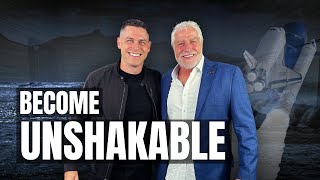
Dr. Toby Potter built a real-estate empire closing $35-40 million in loans monthly, lost everything in 2008, and rebuilt from a $1,500 copier loan. He now runs a hard-money lending firm and teaches investing through courses and nine published books, stressing the mindset shifts that separate collapse from comeback.
Chapters
Welcome back to the Brennan T. Adams Audio Experience. I'm Brennan T. Adams and I'm sitting here with Toby Potter. What's up, my man?
Hi, my friend. How are you? Good, good.
The Unshakeable Investor has lended over a billion with a B in money out. And he is my go-to for anything real estate, helping people get loans for real estate, but also coaching people, which we're going to talk about soon. But I want to go back 30 years now.
30, uh, yeah.
30 years ago.
Started.
How did you get into real estate? Like, what did you wake up one day and say, I want to get into real estate? What's— give that backstory.
Almost. So recently married.
Yep.
First child on the ground, a couple months old.
How old were you?
26.
26 years old. Had your first kid.
First kid. Uh, had a landscape company.
Yep.
Was running about 12-15 hour days and, uh, really didn't know much about parenting. Like all of us, there's no real manual on how to parent. But anyway, came home one afternoon and she was sharing with me that my daughter was now starting to react. As she's walking around the room, she's following her. And I'm like, this ain't happening. She's not going to grow up without knowing me. So I got up the next day, sold that business, and had a family friend that was in the mortgage industry.
Yeah.
And said, hey, You guys seem to be doing pretty good. I want to know what you do. Can I come sit with you for 30 days? He said, you bet, come over here, sit for 30 days. They worked out of their house. We'll teach you what we can do and we'll go from there. And after about 90 days, I realized what they were doing wasn't a fit for me because they were only doing the A-paper, perfect credit, high-end clients, and that's very competitive. And meaning you had to have a perfect score, but like, yeah, yeah, back then, this is like in, in what, '95? '95, '96, you know, if you had a 680, 700, 750 FICO score, you got great credit. And this is right after, you know, Carter had the administration, interest rates were 12, 14, 16%. Clinton comes in in the early '90s and drops those things down into the 5s. So refi boom is through the roof, right? So everybody with great job history, great credit was getting, you know, just beat up by all these mortgage companies wanting to do their loan, and they were able to say, you know what, so let's say Brandon, you came to me and I got you 5.75, and I was gonna charge you 1 point origination fee, and the day of closing, I say, hey Brandon, title company's looking for you. Oh yeah, yeah, Toby, I went over to over here because this guy got me 5.525 at half a point.
Yeah.
And so I couldn't do that. That's very competitive. So I went a different direction, which really launched our whole career. I went to everybody Everybody that had gotten turned down. So we started—
meaning they had a bad credit, not very good issues, they just weren't—
they didn't have a good financial structure, they just were turned down. And so we, we did some marketing, and so we created this program that says, all right, Brandon, uh, we looked at your credit, pulled your credit, or you provide us one. We said, hey, we had two programs. Either one was we got you in the house in 6 months, or we got you in 12 months. Depending upon that is the program we went. So if it was 6 months I would then find a realtor, say, I've got a guy pre-approved, go take him to a builder. Back then, US Homes, Pulte Homes was my go-to builder company. Yeah, they built houses in about 4 months. So I would give you pre-approval, you'd go get a contract on a brand new house, start building it. And while they're building it, we're working and cleaning up your credit and we're adding credit. We're taking your car insurance, we're taking utility bills, we're taking anything that you pay.
You're working magic for them.
We're creating credit.
How long did that take back then? What, took about 45 days. 45 days from they go to you to when you got them the loan.
Got them the credit, and then—
The credit.
But the deal was, now you had to all start saving money for your down payment, and now you had another 90 days, and you're watching that house being built. So you're not backing out, 'cause you've already taken your wife, you've already taken your kids, you've already taken the neighbors, the brother, the brother-in-laws, you're showing them, hey, look at me, I'm getting a brand new house. You ain't letting that deal go. And we got them closed. Well, the minute we closed you, when everybody said no, You just told everybody. And so we just, we were doing—
You helped the most difficult customers, which allowed you, everybody coming to you.
That's what grew it up. And that's where then we went to the next level because see, I might have taken you over to a Keller Williams agent 'cause I'm trying to get her business. But when she found out what I was doing, she then took you back to her mortgage company. So then I bought a RE/MAX franchise. I said, if the realtors aren't gonna work with me, I'm gonna own 'em. So then we bought a RE/MAX franchise.
So you had real estate agents under you then?
That's right. We had the mortgage company, we had the credit repair company, we had the RE/MAX franchise, we then had a title company, and we had an appraisal company. So when you came to Imperial Mortgage, which was at the time was the company, you got complete turnkey service, expedited timeframe, and absolute, you know, results that most people couldn't imagine.
When you were at the peak of that business, what were you doing in revenue? Like what kind of volume were you going through?
Probably closed loans was $35 to $40 million a month. This was all primary— A month? Yeah, a month. A month. Yeah. Primary resident on that side because of the RE/MAX and the title. Brandon, I, we, you know, all I can remember exact was when my buddies would say, hey, what are you doing today? I said, I'm going to the office to print money.
Yeah. I mean, that was literally, literally print money.
We were going to the office and my wife and I were headed to the office to print more money because we were lending it. We were fixing credit, which we didn't charge for that, but we got the results of the loan. We had the RE/MAX franchise, we had the title company to close it. We had our appraisal, we had an appraiser that we liked that we were doing business with and he worked for another firm, but he wasn't always available. So I went to him and said, hey, if I could give you, he was doing about probably maybe 20 deals a month through that firm. I said, if I can give you 50 deals a month guaranteed, maybe more, but no less than 50 deals a month, will you cut your fee in half and come work for me directly? Captura.
Just like that.
So we moved him into one of our offices And, you know, I can say this now 'cause their statute of limitations is gone. But, so, maybe an appraisal came back a little low, you know? And I'd say, "Hey, I don't think you got the right comps on this property.
Go fix this." Which really helped with that.
It really helped.
But I'm sure a lot of people were doing that.
But part 2 of that was, so maybe your credit was really bad, maybe, 'cause a lot of those people just didn't have credit. They just weren't credit users, so we added credit. Maybe you were that guy that had credit and it turned bad. It was okay, take us 12 months. Well, if that was the case, this is where we really credit got good, we would— I would go buy a dilapidated house, fix it up, and sell it to you, owner finance it. And then we'd spend 12 months cleaning everything up and refinance you into an FHA because this gave you that mortgage history, that gave you that experience and exposure that FHA loved.
See, I want to share this because I know a lot of listeners probably wondering, you made a shit ton of money in a short period of time. And what was it like for somebody that hasn't got into a bunch of money, from going to not really having money to building a business, not overnight but in a short period of time, to having a lot of money. What was that feeling like at that time back then? Just kind of—
it was, it was, you know, uh, it was unbelievable, but it was expected, if that makes sense.
Yeah, you knew you were gonna—
I knew I was going to be good. I knew I was going to be great. Even at an early age, I started selling greeting cards at the age So sales was never an issue, and I always knew I wanted to be something great. So it wasn't a surprise, but it was unbelievable. I mean, literally, I was, I was sharing with, with a gentleman the other day, we had a 50-foot yacht on Lake Texoma, and on Friday afternoons I hung out with Pete Verde, who is the owner of Jason's Deli. I hung out with Troy Aikman. We hung out with Eddie Balfour. They were all right there. They were in that little community, and that's who we hung out with. And I used to go back to the Yeah, I got to hang out with a bunch of millionaires. Yeah, it was kind of that, that, but it was a little bit arrogant, a little bit cocky, and a little bit unprotected, I think, was the real attitude.
Talk about the fall, because not everybody talks about that, because you did hit a crisis where you lost everything.
Yeah.
What was that like?
Unbelievable. You know, 2008 real estate crisis hit nationwide, and for us at the time, we had about 200 banks that we did loans through. And of course, when it first started, there was a lot of the subprime deals that went bankrupt first of those banks. So we just knew that that program wasn't available anymore. But when it started evolving, when that, when that, that ball started coming down that mountain and you had Bank of America, you had Countrywide, and then you had Lehman Brothers shut the doors. I felt like Armageddon. And at first we weren't really worried but we didn't know the impact that was going to happen. And then within about 30 days of seeing this, actually it was the close of, we were devastated because we had no backup. We had no alternative. Real estate, you couldn't sell a house, you couldn't do a loan. I mean, I had hundreds of employees that I had to let go, number one, first and foremost.
Probably right away almost.
Almost immediately. We're like, guys, we're done. Yeah, I mean, I'm waiting for the trumpets to blow and Jesus Christ come meet us halfway in the sky. I thought it was, it was the end of times. And so then, then the reality starts kicking in, and we've got this yacht, we've got a 45-foot motorhome, we've got this custom-built mansion, a house, land. I mean, we had all this that we could now make a payment for. And so it just slowly start trying to—
the bank just take everything?
No, we, we liquidated, uh, we liquidated 100%, uh, at 50 cents on the dollar, 60 cents We also had about 35, 37 owner finance notes that we had in place that I just gave those to the people. I just gave it back. House is yours.
What, like, tell me your mindset and when all that happened, you almost, you hit rock bottom. What was it like? How did you deal with that?
So we went from never worrying about putting gas in the car, never worrying about money and the groceries, never worrying about money, never thinking about money, to now we're down to one vehicle. Had to get rid of all the vehicles. We had to get rid of the house, moved into a family double-wide. So we had no mortgage, no rent, just had to pay the utilities. Got rid of all our cars, had another minivan that was given to us. We're now trying to budget.
Yeah.
How we get back and forth to job. I had to find a job, she had to find a job. On Sunday, or Saturday afternoon, midnight back then, you go to the local grocery store, you put a dollar in and you can open up and there's all the Sunday papers with all the coupons in them. So I'd pull them out and wedge the door open, pull all the coupons out and put the newspapers back. And myself and my daughters would start cutting coupons for, a dollar you could refill a case of water bottles, refill them with filtered water. Didn't have the $4 to buy the case, but I had the dollar to refill. So now we're—
so you did a full kind of change of life.
Yeah, I— we were this close. If it wasn't for the family, we would have been homeless.
What, what, what was your comeback? What, what did you do after that to get back to where you were?
The first thing is shock. Second thing is anger. Third thing was embarrassment. And fighting through that took me longer than it should have. Blaming myself for not being more protected, blaming myself because we had money in the stock market. We had a lot of money in the stock market, but it crashed too. And so your first thought is, oh shit, that's liquid cash. Let me have what I can get before it's gone. So we, you know, instead of riding it out, we did— we thought we had done everything right, but of course you didn't. You never prepare. But anyway, so now I'm feeling like a failure. I feel like I let my wife down, I let my kids down, I let everybody— I let my employees down. So I was embarrassed, I was angry and all that. But then I started remembering, how did I get there? Because nobody gave that company to me. I started— I borrowed $1,500 from my mother-in-law to buy a copier to run out of my house is how we started the company. Yeah, it's how broke we were when we started. So if I could do it once, then I can do it again. Where was I at mentally and emotionally and spiritually to get there? And so it took me a long time to stop being mad, stop being angry, stop feeling sorry for myself, and start really resonating. How did you start that company? What was going on in your world that started this. Of course, oh well, interest, it was easy because interest rates. No, no, no, no, you're missing. And finally understood that it was me. Yeah, it was my belief, my power, my strength, that I believed in me. I knew I was going to be great. And so, and I have a creator that said, if it's going to be, it's up to me, and I will set the plans for you, the plans to prosper, not to harm you. And so I started resonating that again every morning before I get up to go. To the job that I had, I said, you know what? I know there's more for me. This is just a path. And so when I started believing that and started excelling at that, things started opening back up.
You know, you and I have experienced the same things. I was almost bankrupt and lost. The bank took everything from me, everything I had besides, I mean, I remember going to the store and getting tuna for my wife and I, and I fucking hate tuna, by the way.
I love tuna.
And so I know what it's like. And going through that, it's a mindset. And you have to surround yourself with the right people, which you've done. And now you're an author of multiple books.
Yes.
You're speaking all over the world. You just got back from Africa. You're speaking at different events around the country and you're helping thousands of people through your training, through your coaching, and you're still loaning out money. Talk about today where we are today. Talk about what you're doing to help people.
You bet. So as you mentioned, we have the, the Lincoln. So we are a direct hard money lender, private equity firm, however you want to label it. But we lend money out to people.
Yep.
That want to buy real estate and grow generational wealth through real estate investing. And so through all this ups and downs and turbulence, I realized that the way I did it was by having a strong platform spiritually, mentally, physically grounding myself and improving myself first and foremost. And when you do that, when you start seeing the positive in everything, everything becomes positive around you. So I did that. We started the firm. And grew it up. And now you hear so much because before COVID real estate investing was pretty good, but after COVID it was amazing because money was free.
Yeah.
And then rates jumped up. And so you got all these people saying, oh my God, real estate's dead, real estate's dead. And yet last year we acquired almost 300 units in this most turbulent time.
Yeah, amazing.
$0.45 on the dollar. So I said, if I can still do this then I can teach it. It's a mindset. Like you said, it's a mindset. And so we have a course, we have several courses that shows people how to really evaluate good deals, where to find them, how to evaluate, how to underwrite, how to contract, how to close, fund, and all that. So we coach it.
Yep.
We mentor it, we partner with you, and then we lend on it so that we can ensure that you have success. And I think that's the biggest thing is you and I, when we had to rebuild, it really was kind of a one-man show.
Yeah.
Starting internally. Who went to just yourself. Yeah. Hoping to find people. So I said, you know what, I'm not going to do it for anybody. But if I would have had somebody say, hey, dude, here's where you can be tomorrow if you just jump on my wagon and let me show you, would have gotten there a lot quicker. It took me 7 years to overcome that.
That's why for anybody watching and listening, If you want to do anything, you find somebody who's done it. But not only somebody that's done it 30 years in this space, somebody that lost everything, built it up, lost it, and built it back up, and now is helping people. You're the person to go to for your training. Where do people go to be able to learn from you and work directly with you in your training?
Yeah, so two places. One is they can follow on Toby Potter Official, uh, which is Instagram, TikTok, YouTube, all that. But the real place, if you really want to get an understanding, go to theunshakeableinvestor.com. That has all the products, the programs, the books. Go to Amazon, buy a book. We have 9 books out, one with your buddy. Yeah, yeah, love it. And that's what really launched me to start writing books, when I saw the power and the impact of the stories and how it changes them. There was 15 people on that book.
Yeah.
And I read every one of those stories, like, holy cow, there is so much to give out there. So I started writing these books to coach, teach, and train. The Unshakeable Self really builds that foundation spiritually, mentally, physically, because if you're not straight and solid, ain't nothing around you going to work. Yeah, it doesn't.
For all of you listening, watching right now, for one, anything real estate, I go to this guy. This is the guy you need to go to. But the lesson here that I really resonate with Toby is to never give up attitude, no matter what comes at you. You look at what is the opportunity with it and how do you push through? And that's what you've done. Yeah, I'm just— I'm grateful to know you. I'm excited for the journey together. Thank you, Toby. I really appreciate it.
Yeah.
And until next time, everybody, create something great and become unforgettable because life is too short not to. I'm Brandon T. Adams. We'll see you guys later.










