Real Estate Investing 2024: Why 60% Of Investors Fail
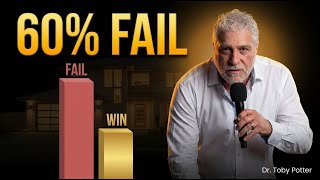
In this interview, host Holly welcomes Toby Potter, founder of Global Integrity Finance and Global Integrity Investments, to discuss his personal journey and the broader challenges facing real‑estate investors. Toby recounts his early career in landscaping, his pivot to mortgage lending, the loss of his assets in the 2008 crash, and the creation of Global Integrity in 2015 to help people achieve financial freedom through real‑estate investing and lending. He identifies three essential pillars for success – the right property, sufficient capital, and deep knowledge/coaching – and explains how fear, the wrong platform, and lack of expertise cause 60% of investors to fail. Toby debunks three common myths: that investing is easy, that every deal is profitable, and that all gurus put their own money at risk. He describes how post‑COVID valuation spikes and rising interest rates have reshaped the market, emphasizing patience and a long‑term, rental‑focused strategy over quick flips. A detailed case study follows, describing the acquisition of a distressed 94‑unit multifamily complex in Longview, Texas, the negotiation of a 4% note assumption, additional financing, and the property’s rapid appreciation from $4 M to $7.5 M in 18 months. Toby outlines his coaching model, which combines lending, mentorship, and capital provision, and urges listeners to act now, highlighting the chronic housing shortage and the generational‑wealth potential of multifamily rentals. The interview closes with a call‑to‑action: listeners can DM "Freedom" to Toby’s Instagram handle (TobyPotterOfficial) for a free 30‑minute consultation.
Chapters
Toby Potter, thanks so much for being on the show, and I'm excited to get into your expertise and share all of your wisdom with our listeners.
Hey, Holly, thank you so much for, for allowing me to be here on this show. I followed you. I've seen what you've done with the audience, with the people. It's impressive, and it's just an honor for me to be here today to help bring value to your listeners and to your group. Hopefully they'll get something out of it, and both you and I can build your platform and grow the, the audience's awareness to what we do in, in society and how we give back.
Oh, wonderful. So let's start, because I know you've got an amazing story to share. Take us back to that place, to what first inspired you to, to actually get into real estate investing, and how did that journey evolve to you becoming a successful lender and a coach?
Sure, absolutely. It's a, it's a great story. Um, I had a company, a previous company, a landscape company. My daughter was about 2 months old. I was working from about 2 in the morning till 7, 8, 9 o'clock at night. I came home one day and my wife had kind of shared with me about how she was vacuuming and cleaning the house and my daughter was following her around. And my daughter was the really the first person that taught me what unconditional love was. When she was born, I never felt the, the power that unconditional love gives you. And I did with her. I mean, I would, I would do it, and I was working my ass off to give her. But anyway, long story short, my wife was sharing all this, and I said, I'm not doing this. I'm not going to work my butt off somewhere else while she grows up. So I sold that company, got right into, uh, mortgages And one of the things that evolved was people who couldn't get a traditional mortgage because they didn't have good credit, they didn't have enough money, they'd have job history. So we started building a platform of buying properties, owner financing them, moving them into it, working on their credit. I had a mortgage company, a RE/MAX franchise, a title company. We had it all. And a construction company. And so we were buying these houses. Owner financing them, moving them in, working on their credit, working on their savings, working on their budget, and then refinancing them into FHA. And this became a tremendous platform. And so with all that, we built it up. The crash happened in 2008. We lost everything. I mean, when the, when the mortgage industry crashed, it was, in my opinion, Armageddon. I thought it was the end of the world. And I floundered around and I've got a couple of books out that talk about it. But in 2015, I was still just yearning for that fulfillment of what I was good at, which was real estate and banking. And so 2015, I founded Global Integrity Finance. And, and when I founded it, it was all about sharing to the world who we are, what we do, and how we do it, and to help better them, better them tomorrow than they are today, through real estate investing, through real estate lending, through, uh, being able to build a financial stability and a financial freedom that everybody longs for. And that's who, that's who we are. And that's where we're at today.
Ah, such a good story. And, you know, and I love how, like, from, you know, kind of that place of being able to provide the assistance to, you know, kind of taking this to a bigger picture. I mean, I remember back in, what year was it? 20— no, 2001, 2002. Was when I bought my first apartment condo. Yeah. And I remember I actually did a rent-to-own because the owner came to me and was like, hey, we're going to sell this place. We're just going to give you first right of refusal. Do you want to buy it? And I looked at my bank account and I was like, well, I can afford the mortgage, but I can't afford a down payment.
Right.
And I just moved to the DC metro area. The cost of living was a lot higher. And I remember being in that place where I I really wanted to buy it. I lived there, I loved it. I knew I could afford the mortgage payments, but just that down payment was hard. And we ended up getting really creative. And then fast forward to the place where to be able to own several properties and to actually use that to finance a big transition in my life. So it's crazy how much real estate actually can impact your life. From that perspective of, you know, I mean, it literally is life-changing when you have these assets. So I'm excited to get, to get into this.
Yeah. And that was the whole deal. I, I had been blessed through life with, with a lot of different things. But the one thing that really has always impacted me, my family and my businesses is being able to give back and help people understand what the true American dream was, is, and it's homeownership. Everybody has that nagging desire. I think it's a nagging desire to own a home because you just— it gives you that sense of pride, that sense of accomplishment. And in early 1990, when I started Imperial Mortgage and had the RE/MAX and all that, that was the key thing. In the late '80s, interest rates were like 12, 14, 16%. Early '90s, Clinton had come in. Lowered the interest rates and the refi boom was on and everybody was buying houses. You had US Homes, you had Pulte Homes, and all these builders that were blowing up here in the Dallas area. But you had that, that, that, that group of individuals who still wanted the American dream of homeownership. And we saw it as a need, as a niche, and we capitalized on it. And then when the crash happened, there was that void. Because I wasn't in real estate, I wasn't in finance, and I really wasn't making a difference in people's lives. It's when we founded Global Integrity and I went right back to it, picked up right where I left off. But now it's even on a bigger platform, Holly. It's like you said, I get one through creative financing, and through that I'm able to now start doing multiple deals and build a portfolio. And that's what we teach, and that's what we coach. Not only can you, uh, get rid of the job, the J-O-B, that's never going to give you a good retirement, that's never going to give you a financial future, and it never gives you any freedom. This is where we come in and say, okay, let's start you with the creative financing on your first deal. Let's show you how to, to rehab it, how to manage it, how to exit out with profitability, and then take that money and then now do it 2 times and 4 times and scale up so that you can replace that income, get rid of that job, and see a better future for retirement, freedom, travel, all the things that life should be affording you.
Yeah. Oh, so good. So Toby, in your opinion, what separates, or, or what are the, um, what are the top traits or mindsets that separate those who are successful real estate investors to those who just really never gain traction?
So there's two. Yeah, that's a great question, Holly. Most people— I'm sorry, 100% of the people I talk to want financial freedom. They want to change what they're doing to have a better tomorrow. 60% of them never do it because of fear. They're scared. They're like, well, you know, I know it worked for Joe and I know it worked for Susie and I know it worked for Peter, but I don't know if it'll work for me. They don't believe in themselves enough. They don't have enough mental capacity, positive mental attitude to take the leap of faith and trust. Here's something else we find. There's a lot of real estate gurus out there. There's a lot of real estate courses out there. There's a lot of here's how you become successful in real estate. And so maybe they've been down that path. Maybe they bought a course, maybe they went to a seminar and they just never took the step forward. To engage, to make it happen. So that's rule number 1. Number 2, they tried it, it was tough, they lost their money, and now they're out. So those, those are the 2 segments that never make it for whatever reason. And we attribute 100% of that to the wrong platform, the wrong structure. You have to have 3 things to be successful in real estate investing. And I teach it, I coach it, and I preach it. Number 1, you have to have the right property. You can go on to Zillow, you can go on to Realtor.com, you can go on to all the real estate platforms and there's a plethora of properties listed for sale. None of them are the right deal. 90% of them are not the right deal. Okay. So number 1, you have to have the right deal and that takes work. And it's 85% of the time that you will spend to try to become a real estate investor is finding the right deal. But number 2, you have to have capital. You have to have the money. Whether it's your own money, whether it's a hard money lender, whether it's a partner, doesn't matter. But you have to have capital to make the thing happen. And number 3, you have to have knowledge. Now, here's the problem. A lot of people have 2 of the 3. They think they have the right property. They got capital, they got a partner, they got their own 401(k), whatever, and they dive in. They don't have knowledge and they fail because something happens that they weren't prepared for. Something happens that they didn't have enough money to cover and they fail. And so then they quit, they give up. And so you have those that said, I'm taking the plunge. I've got $200,000, $300,000, 401(k), retirement plan, whatever. I'm tired of the job. I know the future isn't going to be right where I need to be. I'm going to take the plunge. I took a course, I found a property, I got the money, but I don't know what I don't know. So I'll just fake it till I make it. And then they fail and then they give up. So you have those that never take the plunge to do it. You have those that bought some programs and that, you know, kind of, you know, it didn't work for me. It works for them. Then you have the other side that actually does take the steps forward to do it, but then fails because they didn't have the right 3 pillars of that stool. And we bring all that together. We help you find the right property. We ensure capital, whether it's our cap— what is our capital, because we'll fund the deal for you. And then we coach you through that success. And then therefore you don't have to worry about giving up because if you're going to put your money in as a down payment and closing costs and I put the purchase and the rehab money up, so I'm putting 70% of the money up, you're putting 30% up. I'm going to guarantee the thing works or I'm not because I'm not going to lose my money. And so we give you that coaching. But you ask, you know, what separates the mindset? Most people who don't make it in real estate investing have gone down the wrong path and either never started or gave up too soon.
Ah, so true. So true. And, you know, we see that everywhere. It's like you're, you know, you, you, you have these, it's almost like there's two levels of commitment. You have that first commitment of I'm gonna do the thing.
Yep.
But then the thing gets hard and you're like, ah, it's just easier to not do the thing. But when you have that second level, you're like, okay, I'm gonna stay with it. I'm gonna be committed. So now I know all of our listeners know that we quite contrarian on this show and we're, we're zagging when everyone else is zigging. So let's talk about the misconceptions and what are some of the biggest myths that people have about getting started in real estate?
Biggest myth is it's easy. Everybody's doing it, so why can't I? I used to get up on stage back in, um, uh, 2016, 2017, and I would, uh, and this was when HGTV first came out with Fix and Flip, Fix and Flop, Flipping Vegas and all these shows. I mean, every night there was a new show of real estate investing. You had Chip and Joanne Gaines, who, you know, became rock stars overnight. But you had all these shows. And the funny thing, the biggest myth was, hey, I watched the show they did in 30 minutes, therefore I know I can do it because I know how to buy material. I know how to do this. I know what shiplap is and blah, blah, blah. And I say, you know, it took them 6 months of work they ran into problems. They don't really show the catastrophic problems. They just show you how they resolved a quick and easy problem. You don't know what you don't know. I've been doing this for 30 years and I still make mistakes. So the biggest myth is people just think that through a course, through a TV program, through, you know, simplicity, that this is easy because there's so much money being made in real estate. And I think I'm a sharp guy. I think I'm a smart, intelligent individual. If, If Susie can do it and if Pete can do it, by gosh, I can do it. Myth number 1. Myth number 2 is every deal is a profitable deal. That is the biggest thing that I see all the time is most people, Holly, are so desperate to do a deal, they're willing to do the wrong deal. You know, it's kind of like when you were in high school or junior high, whatever, and everybody was going to— I guess it'd be high school— everybody's going to prom, right? And everybody had a prom date. You didn't have one, but there was that one person that really you didn't like. They were kind of odd, but instead of going alone, you were willing to go with the wrong person.
And you actually did that.
Exactly. See, so you know, and you hear those stories, you go with the wrong person.
Just— I asked the awkward I asked the awkward kid who I was in band with because I didn't have a date.
You didn't have a date. Yeah. And it becomes miserable. Well, that's life. We all do things and we see it in real estate that I'm going to do a deal because I need to get a deal done. And if I just get the first deal done, I'll learn from it. Well, the problem is, unless you have a lot of money, I mean, deep, deep pockets, you could lose everything. And a lot of people do. So myth number 2 was, you know, I just need to do a deal. They're all good deals. We can make it work. I can. I can cut corners and make it happen. And myth number 3 is, is that all the gurus out there are experts. And that is probably the biggest myth that causes the biggest pain. We are one of few where we're not only a coach, we're not only a mentor, but we're also a lender. So we're putting our money, my money. I don't, I don't borrow money. This is my money. I'm putting it up on the deal. And if I'm putting my personal money that I've worked hard for into a deal, I'm going to guarantee it succeeds. And I want to do that with you 4, 5, 6, 8 times until I know beyond a shadow of doubt you have success. I don't know any real estate guru that's a coach, that's a mentor that does that. Now they all say, well, we have our programs, but the programs are— they're not true out of that individual's pocket. I know a handful, but out of the hundreds of thousands of coaches and mentors, only maybe 1%, if that much, maybe less than 1%, actually puts their money where their mouth is.
Yeah, I'm really glad that you brought up those myths, 'cause I know I definitely learned through the school of hard knocks, and I'm not going to share the number, but I know I've shared with, you know, some of my friends how much money I lost on one of the real estate deals, and they're like, wait, what? They're like, how are you not upset? I'm like, what are you going to do about it? You're just going to learn and move on, you know? But it, yeah, I mean, it can be, it can be an expensive mistake. And Toby, I'm glad that you're here educating us on this because, you know, I don't think people think that far down the road that they just think, oh, this is all going to be profit and not realizing, yeah, I can put you in the hole for a minute.
So very— and the problem with it is, and Holly, this is one of the things we try to teach, but it's really, really hard. You can't be emotional about money, but we all are. You know, there's not one Anybody tells you that money's not important and money's not happiness and money isn't this and money— it's because they don't have any. When you have money, life is a lot easier. You can do so much more with money. You can offer charities, you can do donations, you can build villages, you can go mission trips. When you have capital, when you have money, life is a lot better. Trust me, I've been rich, I've been broke, and I've been wealthy again. And trust me, I'm going to stay on the wealthy side of life right now. Because being broke can be fun. So people that jump into real estate, there's not one person on your podcast, on anybody I ever talked to that graduated high school back 10 years ago, let's say 20 years ago, because it's more prevalent today. But way back when nobody got out of high school, said, I'm going to be a real estate investor, I'm going to learn how to do real estate, I'm blah, blah, blah, blah, I'm going to be a fix and flipper. They went to college to get a degree in a career because that's what we were all taught. But 20 years later, 15, 20, 30 years later, they started looking at, hey, I need to start looking at retiring. I look at my retirement statement and there's no way with inflation, with the cost of living, with all that's going on, I'm not— I'll outlive my money. And so now people that are in real estate, that have been in real estate, that got into it, got into it because they needed a better future. They needed a better tomorrow. They needed that hope of financial security. So therefore it is emotional. It is about emotion. It was never about logic. It was, holy shit, I'm having an aha moment and I got to make changes or I'm going to be a greeter at Walmart. And trust me, if anybody's a greeter at Walmart in your audience, I'm not disrespecting it. A lot of people do it because they love the interaction, but it's nothing that you ever aspired to be. We all aspire to travel, to raise our grandkids, and to enjoy life in the golden years. That's why they're called the golden years. But if there's no money there, it is emotional. It is a strain. And so, you know, you got to be able to try to minimize the emotion when you're looking at a deal and not get dollar sign eyes to say, oh my gosh, I'm going to make— I'm going to make it, I'm going to do it. You know, this is going to be the project for me. Because if you miss something because you're so excited, because you're looking through rose-colored glasses, it becomes a devastation, becomes a bankrupt, it becomes, you know, a one-and-done. And that's the thing that breaks my heart the most.
Yeah. Now you said the big word, the, uh, inflation. And I know the economy is on everyone's mind right now. So how do you help your clients navigate in times like this? I mean, everything is kind of topsy-turvy and interest rates all over the place, and the economy is really uncertain right now. So how do you help your clients navigate that?
Well, the times are tough, and this is one of the things, you know, it's not easy. And so, you know, you asked earlier about the mindset. In order to do this today, you have to be 100% dedicated. You have to understand that this is a long marathon. This is not a get-rich-quick This is not going to happen overnight. You know, used to, right after COVID in 2021, 2020, well, yeah, 2021, 2019 before COVID 2021 after COVID, people were buying properties hand over fist. Interest rates were low, valuation was low. You really, you know, it was, it was a churn and burn society of real estate. Then COVID happened. Interest rates were really low. People were buying left and right, and you could sell because I could take a property, I could fix it up, I can put it back on the market, and, and the homeowners were coming in droves because they were getting interest rates at 2% and 3%. That was easy. Then boom, 2022, interest rates skyrocketed. The other thing that happened was because of that demand in 2021, valuation skyrocketed. Um, here in Dallas, valuations are through the roof. I mean, properties that were worth $300,000, $400,000 in 2021 are worth $600,000 today. Same property because of the demand. And so it's tougher today than it's ever been. When we started in 2018, 2016, it was easy. I was flipping. I was running this company and flipping one house a month just to show my, my clients how to do it, doing the coaching, do the mentoring, but doing it ourselves. And walking them through it. I couldn't do that today. Today we're looking at 30, 40, 50, 60 houses and I mean really looking at them to find one deal. So it's all about perseverance. It's all about determination and it's all about being patient because here's what I'll tell you in 2023, as a— because I'm a lender, we had, we had announced that we were going to start doing some acquisitions, multifamily acquisitions. So I founded another company called Global Integrity Investments, and it was just a multifamily acquisition because I was getting so many deals from other banks and other investors saying, hey, this guy's upside down, he needs a bailout with Global Integrity Finance refinancing. And I'm like, I won't refinance him, but I'll buy it. You know, I'll bail him out through a buy. But long story short, it took— on two deals that are our keystone deals, it took me almost a year to get a deal. And here's a great example, and I'll make it short. So we had a property in Longview, Texas, come to me. It was a 94-unit complex. It was in bad disarray. Seller was, was an absent, out-of-state owner. Yeah, the seller was an out-of-state owner. He lived in California and he was upside down. He hadn't taken care of the property, bought it in 2020, bought it with a really low interest rate, but had never done anything with it. And it was dilapidated. It was run down. He had done no maintenance and he needed out. So in 2023, it came to me like in August, September, something like that. And I offered $2.5 million. I said, oh no, no, no, we're going to put it on the auction. It's worth $4 million. I said, it ain't worth $4 million. Long story short, it went to auction and it sold at auction for $4 million. And the broker called me and said, see, the torch is worth $4 million. I said, you got one of two things going to happen here. One is you, a, a foreign national bought it, somebody from Israel, somebody from out of the country bought it sight unseen, and they'll dump $10 million into it. Don't get me wrong, that happens all the time. They're just buying assets, kind of like Blackstone, BlackRock did in Zillow way back. Or you got another idiot who bought it, and once he starts going through it, he's going to realize he's upside down and he's going to walk before he closes. One of two things will happen. Sure enough, About 45 days later, I got a call from the broker. He said, you're right, the guy bailed. Are you still interested? I said, yeah, I'll go back to my $2.5 million. Well, we can't do that. Fast forward about 90 days. The broker called, said, hey, we've talked to the bank, and if you'll just assume the note, take the property over, it's yours. I said, what's the balance? $3.1 million. Little bit high. What's the note? Well, it's a 20-year note at 4% interest rate. Shit, today's market is 7, 7.5, 8. So I'm like, no, that's a no-brainer. Let's do it. Called the bank. They're like, oh, it's a credit union. We don't do assumptions. We've never done assumptions. We're not going to do an assumption this time. But if you want to send us your financials, we'll look at a loan. So I sent them all our financials. They came back and gave me terms. I'm like, I don't want that terms. 6.75, 15 years. Just wasn't a good deal, 20% down. So I called the seller back, said, hey, we're out, we're not going to do it. Bank's not assuming it. Within an hour I got a call back from the bank. Bank said, we'll let you assume the note, you're good. So I said, all right, so I'm assuming 3.1, 4% interest rate, 20 years. Yep. No money down, no money up. Nope. Just got to cover closing costs. Fast forward, we went to closing. Well, no, let me back up. So then we did our due diligence, and this is so important. This is why patience pays off. If for all you listeners, I should have you reeled in right now. This is why patience pays off. So we sent a team out there to do our due diligence. 94 units. They took over 250 pictures. And I'm telling you, it looked like a war zone. It was bad. People were living— it was 60% occupied and it was in terrible, terrible shape. Nasty mold, mildew, ceilings falling down from, from just bad, terrible. Got all those pictures back and I sent those pictures to the bank and said, hey, we just finalized our due diligence, wanted you to see our report. I got a call from the bank. He said, oh man, it's in bad shape, isn't it? I'm like, yeah, it's in bad shape. So I assume you're going to walk. I'm like, well, I'm not going to walk, but we're going to need a lot more money than what I was planning on putting into this deal to get it where it needs to be. He goes, oh, How much money you need? I said, I need another million dollars. Done. So not only did they let me assume the loan at a 4% interest rate when market rates were 6.77%, they let me assume it. They gave me another million dollar line of credit to put into the property. That's how it pays off. Now, today, that property, I've got $4 million into it. It's worth $7.5 million inside 18 months. That's where patience pays off. We could have done the wrong thing and overpaid in the beginning. We could have done the wrong thing, but you negotiate, you work, you understand when you're in control, you dictate the terms. And when you do that, you make money. So, uh, we're having an open house this weekend. We've rehabbed like 90% of the property. It's phenomenal. The city is in love with us. There's so much. But my point to all that is, is it is a marathon. And for anybody that thinks they're just going to go find a property in the next 30 days, get it rehabbed in 60 and sell it in 6 months and make $20,000, $30,000, $40,000, they're just kidding themselves and they're setting themselves up for emotional failure. They're setting themselves up for financial failure and they're setting themselves up for short-term visionaries.
That was Such a great story. And I'm actually thinking back to something that you said about from the perspective of looking to the future. And I'm thinking, okay, if you would have done this X number of years ago and then how much you can make from then to now. But I'm also thinking it from today's perspective. And one final question before we wrap up and just kind of looking back at my own personal experience and thinking about the house that we bought in, it was 2011, and the interest rates were half of what they are now.
Yeah.
You know, buying the house in a— and we were in Alexandria, Virginia, so a suburb of DC, but it was a very, you know, kind of middle-class neighborhood. I mean, it was government, it was military, it was just, you know, hard-working individuals. And, you know, and we bought it for $600,000, and it's now over a million.
Right.
And looking at how much the salaries aren't that much higher.
No, you doubled, but your cost of living didn't double.
Right. And the interest rates doubled as well. So for individuals who are looking at this, thinking from the perspective, I mean, obviously this was right outside of Washington, DC, but does it matter from you know, a more metropolitan area or small town, like, you know, looking at how much the evaluation has increased, looking at the, the interest rates, you know, can people actually afford to do this? Is it worth the investment to, to do this today, meaning a year from now, 6 months from now, 2 years from now, it's going to pay off?
Absolutely, because we tell everybody, just like you're saying, You know, I didn't do it a year ago. I didn't do it 3 years ago. I didn't do it 5 years ago. Well, today it's not, it's not going to get any better than it is today. I can promise you this. So if you are looking for a financial future, if you're looking for freedom, if you're looking for a venue through real estate, you got to get in. It's not going to get any better. We're not going to have a 2021 real estate interest rate drop like that. That'll never happen again. That will never happen again. Valuation. Here's, here's the hard truth, Holly. There's 6.5 million people needing housing in America. So we have a shortage of housing. Everybody, whether to purchase or to rent, there's 6.5 million people that need housing that can't get it because it's not available. So the one biggest asset that everybody needs is real estate. So jump in, get after it. And don't look back. And that's what a lot of people do. They're like, oh, you know, maybe I got in the wrong time. There is no wrong time. In fact, the wrong time is never getting in. The wrong time is never making the commitment. The wrong time is never doing it. And that's, that's the only advice I have regardless of what the rates are, because the rentals are the biggest growing commodity we have right now. Buying multifamily, buying residential rentals is so much more valuable than any kind of fix and flip. Fix and flip gives you cash today. Rentals gives you legendary legacy capital, generational wealth. And that's what we teach is, do we need money today and can we commingle it? Can we do some fix and flips while we're building a rental portfolio so you can get some capital coming in, you can pay your bills, but we need to build, you know, generational wealth. How that's going to pay off because As long as the rent is covering the mortgage, you're golden because that property is going to continue to appreciate and that valuation is going to appreciate and your equity position is going to appreciate. And when you go to sell, you're going to have millions upon millions upon millions.
So the time to do it is now and the coach to do it with is you. So Toby Potter, thank you so much for such valuable information today. I'm sure all of our listeners are going to want to connect with you, so I want them to reach out to you. So where can they find you?
Yep. So if you guys will just go in and DM me, you can go to my Instagram. It's Toby Potter Official, uh, is the handle. Uh, type in there Freedom, and then I'll know that you were on this podcast, and then I will send you, uh, a calendar, and I will give you a— for free, for all your listeners, Holly. And I don't normally do this, but because you're such an amazing individual, you've got such an amazing following, I want to help build that. So I want to give a free consultation. So I'll give a free 30-minute consultation because we need to know where you're at to know where we're going. And it doesn't do any good for me to give away a course or anything like that. So what I'll do— and normally I charge about $299— I'll give away a free 30-minute consultation. So if you DM me on Instagram, Freedom, just the word Freedom, I'll have my staff get all of you, get you scheduled. We'll do a 30-minute consultation and we'll be able to see where you are in life financially, mentally, because the mental impact is the biggest thing. And then we can work way to the future for that financial freedom.
Ah, so good. So the handle again is Toby Potter Official, correct?
Toby Potter Official. DM me, we'll get hooked up, we'll get things rolling, and then we're going to, you know, really let Holly know how wonderful she is and what she's doing in her network and their group, because this is what it's all about.
Yeah, so good. So thanks again for sharing everything with our audience today.
You bet, Holly. Thank you so much for having me on here. It's been an honor and a pleasure, and let's, uh, let's get together soon.










