Real Estate Market Trends 2025 Why Fix and Flip is DEAD
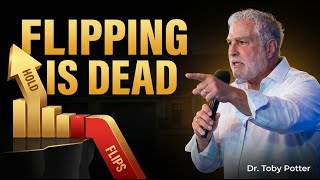
In a live presentation introduced by Felipe, Toby Potter of Global Integrity Finance outlines the current U.S. real‑estate landscape and why the traditional fix‑and‑flip model has collapsed. He explains that interest rates have flattened at high levels, rent growth has stalled, and a 6.5‑6.7 million‑unit housing shortage creates strong demand for multifamily and buy‑and‑hold strategies. Potter details the sharp decline (≈67 %) in fix‑and‑flip activity versus a 180 % rise in buy‑and‑hold deals, and he argues that investors must focus on three pillars: the right property, sufficient capital, and deep knowledge. He discusses alternative financing (owner‑financing, DSCR loans, private equity vs. Fannie‑Mae), the surge in distressed‑asset opportunities, and the importance of a robust network for deal flow. Technology, especially AI tools, is presented as essential for underwriting, scouting, and property management. Geographic hotspots (DFW, Tampa, Salt Lake, Nashville, Phoenix, etc.) and policy factors (rent control, affordable‑housing grants, cost‑segregation tax benefits) are highlighted. The talk concludes with practical advice on due‑diligence, avoiding emotional decisions, and leveraging modern tech to stay competitive.
Chapters
learn something. So folks, what my daughter taught me, my 18-month-old daughter taught me, was write everything down, take notes, and make sure your diaper's clean. I don't know how that all goes together, but I was taught that. So folks, feature speaker of tonight, guys, lock in, raise your hands, ask questions. This is the perfect time. Won't you folks put your hands together one time as I bring up Mr. Toby Potter?
Hey everybody, uh, my name is Toby Potter with Global Integrity Finance and Global Integrity Investments. Felipe, I want to say thank you so much for giving me the opportunity to get up here and kind of chit-chat with your group. Uh, you know, I met you 2019, we did a deal with you, or for you, um, and to watch you grow and build and do what you've done for the last 5 years, absolutely remarkable and amazing. Everybody give it up for 4Bases. They are so much fun. So, um, tonight I'm going to talk to you a little bit about— so I just give a little background so I can show and share that I have a little bit of knowledge of who we are, what we do. I've been in the real estate lending business for almost 30 years, um, and I'm only 40 years old, so that really helps to show that I've really soared along with expertise, knowledge, and ability to scale. I was talking with some, some old friends that we met years back. I think when, uh, you probably showed up at the Lava Cave team a few times when we were hosting that. One of the things that really has erupted in our space was coming out of the big crash of 2008. They actually— so you were in the business in '94, you went through the crash of 2008, and then of course we got in back into the business in 2015, did remarkable. Then at the crash of COVID which all of us have been a part of. And now we're going through all this disruption. Coming out of COVID was amazing. Uh, you had the low interest rates, you had good valuations, fix and flips were rocking and rolling. And then now the Fed at that time decided, hey, we've got to lower inflation, so let's raise interest rates. And a lot of things have changed. And so as a lender, as a coach, as a mentor, Every day I get asked, hey, what's going on in the market? What do you think is going to happen? Where are we headed? What's going on? Well, unfortunately, I don't have a crystal ball. I'm not that smart. But I do look and watch trends and see as a lender, where do we need to be looking at? As a lender, what do we need to be focusing on? Because not only do I lend our money out to investors like you all, but I also buy properties. I do acquisitions on multifamily. So I need to kind of know where all this is going to go. So tonight I thought that I would share with you a little bit about what I know about the trends, where we're going, what Q1 of 2025 looks like, and where we can kind of start gauging where we want to go. That works great. So when we start looking at 2025 in the first quarter, we, we all know that the Feds are not going to do anything with interest rates. They're gonna— they're flattening out. They're not going up anymore. We had this huge spike from 2022 or '21 into '22, but they've kind of flattened out. But the thing that we had hoped for was with the new administration, with the Trump administration, and all this is being changed, we had hoped that inflation would go down, that cash flow would increase, and that rents would help rise up. And it's not really moving to the way that we anticipated coming out of the end of the fourth quarter of '24. Because we anticipated all these changes. So we got to look at, well, if rates aren't moving and rent growth is not moving the way we hope, what do we do? Um, we have multifamily. So, so, so the biggest thing that we understand and really recognize as a real estate investor, we know— and if you don't, you should— that there's about a 6.5 to 6.7 million housing shortage in the U.S. 6.5, 6.7 million people needing housing in the U.S. And a lot of that is moving into now because of inflation, because of the economy, affordable housing. So what do we do? And I met several people earlier today that are doing owner financing, which is one of the most lucrative things going on right now, to kind of be a bank but not a landlord. Uh, that is a really good move. But so we have to understand, if I want to get into this space, I want to grow in this space, what is my direction? What is it? What is my opportunity? And I will tell you, when, when we met Felipe in 2019, fix and flips was the gold— the goose laying the golden egg. I mean, you could flip properties and make a ton of money. In fact, in 2019, I did a membership program because we were growing our network And so we said, hey, we're gonna, we're gonna do one thing more than just lend you money. We're gonna find properties, we're gonna evaluate them, we're gonna do a scope of work, we're gonna post it on our website, and you can take them down and put them out. And in order to show that that model worked, I flipped 11 or 12 properties in 2019 myself as I was also being a lender. But it was so easy back then. Rates were low. I think we were doing 7.5% on a bridge loan, on a fix and flip loan. We were doing high LTVs. In fact, there was times we were doing 100% purchase and 100% rehab as long as it was in a 90-mile radius. Um, but, but doing fix and flips back then, and we were having these properties bought, rehabbed, and sold inside 6 months for top dollar. I mean, you could— they were being sold before we finished the rehab. You can't do that today. In today's market, you're not going to get those margins, you're not going to get that turnaround time for many, many reasons. Your cap rates have adjusted upward a little bit, but particularly in the markets where there's a heavy supply and declining rate growth. So we have that balance that we have to understand is if I'm going to be in real estate investing and if I'm going to be growing my portfolio What is going to be my best margin of profitability and security? Multifamily trends are probably one of the things that we like the most because it's really hard for people to now buy houses when rates are 7.5 and 8. Now I go back to the early days of 1994 through 2008 when we had a mortgage company a RE/MAX franchise, a title company, and an appraisal company. We were offering FHA loans at 8, 8.5. But what happened was during COVID people were getting in at 3%, 2.7, 2.5, and now they don't really want to do that. They don't want to now go and buy a house at 7.5% interest rate. So that is slowing down the purchase price. But again, as I mentioned earlier, you've got 6.5 million people needing housing. Affordable housing is probably 75% of that demand. You have a couple of choices. Do I go out and buy 100 single-family houses? Now, if I'm owner financing, if I'm doing the RVs and the mobile homes, that is a great opportunity, but that is kind of stabilized and structured under the multi-family structure. And when you're capitalizing on profitability, when you're capitalizing on cash flow, I, in my opinion, multifamily is the way to work it. Because there you can have a whole bunch of people, a whole bunch of mailbox money under one roof. And we are seeing so many opportunities with that right now. I'll get into that in a minute. We have a 93% occupancy rate nationwide in multifamily. That's huge. When you have 93% of the multifamily units being occupied and rented and waiting lists, that's where I want to put my money. That's the demand that we need to look at. So am I saying to fix and flips out? No, but we need to understand when that can come back. Um, This is the other thing. As you all remember, what was it, maybe 2 or 3 years ago, Zillow went and bought a plethora of properties. I mean, they were buying everything they could get their hands on by the hundreds of millions. And then about 3 or 4 years, we hear this report that Zillow lost like $700 million because they overbought, they didn't do valuation, they didn't structure, and now they've got all these properties that are distressed and they're pulling out. And when they're pulling out, so are the other institutional investors. This is an opportunity for you, the smaller guy, to go in there and find deals to capitalize on that and to take advantage of them now moving out of the market. We deal with PE funds. When we close and fund loans, we package those up, bundle them up, and sell them off to a private equity firm. And the BlackRocks, the Blackstones, uh, the Redwoods— none of those guys are buying the properties and the loans like they used to do. They're all holding back. Why? Because the cost of capital is too high. The cost of capital, their margins are too thin. So we need to understand, how do we then take advantage of this opportunity and look at it? Um, fix and flips versus buy and holds. One of the things that I talk about and that I teach is you have to have 3 things to be successful in real estate investing. Number 1, you have to have the right property. Now, as we know, anybody can go anywhere online, whether it be through an auction site, whether it be through Realtor.com, through Zillow. There is a plethora of properties out there. That doesn't mean that they all work. So 85% of most investors' time— and I guarantee it, everybody here can attest to it— 85% of your time is spent trying to find the right deal. That's going to cash flow out or flip out with profitability. It is so important to make sure that you have the right deal. So number one, you have to have the right property. Number two, you've got to have capital, whether it's yours, whether it's a hard money lender, whether it's a partner. You've got to have capital. And then third, which is really to me the most important of it all, you have to have knowledge. Because you can have the right property, you can have somebody bring you the money, roll in or You can get money from a lender, you can get it from a partner, from a private lender, whatever. But if you don't have the knowledge to make that deal work, you lose. You lose, everybody loses, and now you're upside down. And through the years, we have seen multiple, multiple, multiple people so desperate to do a deal, they would rather do a bad deal than a good deal, just to have a deal under their belt. Now we do talk about in our coaching and training that on your first few deals, if you break even, that's not a bad thing. If you can take a deal, buy it, rehab it, sell it, or turn it into a refinance, into a cash flow, and break even, that's a positive because the education, the knowledge that you gain from that is astronomical, and there's no way to put a price on it. But nobody's here just to break even. I didn't. You're not. And I know that nobody— Flip A's not. So one of the things you have to understand is without those 3 things, without the right understanding and knowledge, then you're going to fail. And when you're looking at fix and flips today, because the margins are so thin, you're buying at top market. Sellers are still holding true. Chandler and Randy, they work for me. They have looked at 2 dozen properties. And in the area that where we were doing up in the Sherman, Pottsboro, Denison area, where I did those 12 deals in 2019, I was buying those properties for $10,000, $15,000, $20,000, putting $80,000, $90,000 into them and selling them for $180,000, $200,000. That is no lie. I did 12 deals in 12 months that way. We went back up there and started looking in that area again. Those same houses, $60,000, $70,000, $80,000. And I'm telling you, I would not let my dog live in those houses. But that's where the economy is on real estate because of the demand. Because people are— there's so many more investors in foot— uh, in real estate investing today. The sellers know, you know what, if I sit on it long enough, I'm going to make a premium. So when you're looking at doing fix and flips, it is going to be a 1 out of 50, 1 out of 75, 1 out of 80 houses that you look at that gives you that right deal. And then you've got to hope that you don't miss anything. You got to hope that your scope of work is right, that you have really analyzed it and you've crossed every T and dotted every I. This is where the knowledge comes in. I have probably underwritten over 6,000 deals in the last 10 years. I have flipped probably 200 deals personally. I own almost 300 units today, and I still miss stuff. And the reason why I miss it, and the reason why most newbies fail is because they'll do a deal, they'll be very skittish, they'll be very conservative, they'll be very methodical about it all, and they break even or make a little bit of money, they get really excited, and then they do another deal and they don't cross all the T's and dot all the I's. They don't look as deep. They're so excited, they've had success, they're ready to rock and roll, and they miss stuff. And then guess what happens? You got a major plumbing issue, you got a major foundation issue, you got a major HVAC issue. You got major issues that wasn't part of the scope of work, and they don't have the money to finish that project, and now they're upside down. And I see this so many times, and this is why when the margins are thin, you can't afford to make a mistake. Back in 2015, '16, '17, '18, '21, you can make those mistakes because there's plenty of margins there. And you could probably bring in a partner, say, hey, I need an extra $20,000 and I'll pay you, you know, whatever, when it's all said and done. And you can do that because there was plenty of room, there's plenty of equity. The margins are so thin today that fix and flips have tanked. In our world, from '21 till today, our fix and flip clientele has declined almost 67%. And we're nationwide. We're nationwide, so you can only imagine. But I will tell you this, the buy and hold has gone up about 180% because I can buy that $100,000 property in Sherman, Davis, and Prosperity. I can put $50,000 into it, $60,000. I know it's only worth $180,000, $200,000 today, but I can put a tenant in there. I can rent it for the next 2, 3 years and And if you're looking at Sherman and you're seeing all the stuff that's going on, I'm telling you, we're trying to buy Sherman by the inch right now. Every square inch is for sale. We're trying to buy it because all that's going on, that is the hottest commodity in town. So you can do that, you can buy it, you can rehab it, you can put a tenant in there, and in a year or two or three or four, that property's worth $400,000. And that's what we're seeing nationwide. It doesn't matter. But buy and hold, building that rental portfolio. If it cash flows, take it. Uh, there's a guy that I have known for 10 years. His name is Eddie Wilson. He owns a little over 4,000, uh, doors, mostly in Florida. But when I met Eddie 5, 6, 7, 8 years ago, uh, at the Apple Conference, he talked about most people look at buying rental properties for cash flow. And if they're not making $100, $200, $300, $400 net net each month, they don't do the deal. And he said that's the stupidest thing you could ever do. If you're looking to build a portfolio, if you're looking to build net worth, if you're looking to build generational wealth, you buy a property at the cash flow, meaning it covers your nut, your note on it, then take it because that equity will guarantee the deal if you're in the right area. Guaranteed to build. And I think that most of us are into real estate. I don't think anybody here started out as an 18-year-old in real estate, did you? I think everybody here started out because they didn't like their job. I see this every day. Everybody that we coach and we work with, they said, you know what, I'm sick of my job. I'm sick of what my 401(k) is doing. I'm sick of my IRA not making any money. I'm sick of that. You know what? When I hit 65, my Social Security check, if they're still in there, is going to be bigger than my retirement check. So I need to do something different now. That's when they got into real estate investing. And you have both sides of the fence to where you can take some cash if you find a good deal, you can get it. But they're so thin that you need to understand building long-term residual is what you need to be looking at. Because if you're serious about a retirement Buy and hold is where to go. Buy and hold will get you where you need to be. Now, if you need to replace your paycheck, that's a different story, but this is where you start. And you start it because this is the highest demand. And just remember, there's 6.5+ million people needing housing. How many of those houses do you want to be renting out? How many of those people do you want to be your tenants? And that's what you got to understand and look at, the true economics. Capital markets and financing. This is my field of expertise. Um, there's 3 ways to really skin a cat in real estate. You can get debt, which I believe is the absolute best way to do it, not because I'm a lender, but because it's the cheapest way to finance a deal is through debt. There are some arguments But I'm telling you, debt is still the cheapest. Now there's multiple ways to do that. You can do partners, or you can, you can do private lenders, or syndications, I guess is the way to use it, to where you have somebody who has half a million to a million dollars and they go in with you. But it's still debt, you're still giving them a return until you can pay that off through refinance, whatever. But as you can see, back in 2022, 70% of all deals were funded through debt. Small amount of those, uh, and I can't see that far, I think it's 20%, was around, uh, mezzanine, which was that equity partnership type structure. And then the remaining amount was 10% was money out of pocket equity. And so not much has changed with all the things that's going on with interest rates rising. You know, as I said, when I think when we did Felipe's deal back in February, uh, he was, he was pretty much a very hard-nosed negotiator. We were offering 7.5 and 8. I think we gave him 5. I'm just kidding. Um, but even back then, rates were low. We used to offer fix and flip hard money loans, 7.5, 8%, depending upon your level of experience. Today we're at 12, we're at 10.5, 11, 12%, and that's because our cost of capital is so high. But if you look at it, in 2025 60% of all deals funded nationwide are still through debt. Still through debt. You have a little bit more now coming in on partnerships, which is an equity supply, which to me is extremely expensive. Extremely expensive. And then you have the rest where you bring money to the table. When you're looking at financing and trying to figure out what's the best play, You've got hard money lending, you've got private individuals, private, private equity, uh, lenders, you've got, uh, Fannie Freddie. If you are the person that still has a job or has good cash flow, tax returns, and you want to provide full pay stubs, W-2s, tax returns, full qualification, you can buy up to 7 deals financed through Fannie Mae on investment property. Now the difference that you have to look at is What is my rates? What is my return? And what is my tolerance when we're looking at a DSCR loan? So when we look at and compare DSCR loans from a private equity lender like me to a Fannie Freddie deal, we're about 1% off. If you were to go do a, a rental loan, let's say you don't have any because you can do up to 7 and then they cut you off and you could qualify through your pay stubs and all that. You could probably get a non-owner occupied at 20% down, probably 5.5, 5.7, depending upon your FICO score. With us or with a private equity individual or bank, you're going to get about 6.5. The difference is, and what we try to present to you, is frictionless and sticky, meaning when you go through a lender, a private equity lender No pay stubs, no W-2s, no tax returns. It's asset-based. It's all based upon whether the property will perform or not. With Fannie Freddie, it's all about you performing. Can you make the payments regardless whether you have a tenant or not? Can you make the payments? And that's why they underwrite you. When you look at financing through capital markets, through private equity, we look at will the property perform. And we have a golden rule in my office is, does this deal make sense? Whether it's a fix and flip or a rental property, does the deal make sense? Will it perform? Will the rent— and we have to look at the market rents. And trust me, we get so many people, we're looking at $6,000 a month for that deal and the average rent in the area is $2,200. Well, I don't care. Well, we got a lease. Then you found an idiot. But that's not something we can bank on. And trust me, I've seen it all. We've had people come to us for refinances and they've had— why not just climb up for 2 years? He's paying 10— you're out in Florida, he's been paying $10,000 a month. Good for you, but the average rent in that area is $3,800. So meaning when that guy wises up and moves out, you now can't afford it. The rent doesn't offset it. So does the deal make sense? And that's what you should be looking at as an investor. When you're looking at doing a deal, you need to understand and ask yourself, ask your partner, ask your spouse, does this deal make sense to you? When I lay it out there, does it make sense? And one of the things that is so hard to teach and coach is remove the emotion. And it's almost impossible, especially if you're new. You're so excited about the opportunity and so excited about the transformation. That now you're going to be a real estate investor with financial freedom that you've seen across the nation, and you want to be a part of that. And you finally, after looking at 20, 30, 40, 50, 60, 70, 80 deals, you found one. You hope. And that emotion kicks in. We as lenders take it all out and ask, does this make sense? And that's what you gotta look at. Um, so you got the private equity, uh, they're— and the refinances are through the roof. As I said, our buy and hold DSER loan programs have soared through the roof. Everybody's buying them, everybody's turning them into rentals, they're building a portfolio, and they're understanding this is a long-term play right now. Our institutional buyers— and when we talk about institutional, that means they do 10 deals or more a year, and most of them We've got one guy that, uh, 450 deals in his portfolio. We've done about 47 of those this year alone in refinancing. And every now and then he'll take on a new one. What we're doing is refinancing all his that had, uh, full, uh, lots of equity in that and pulling that equity out so that when he finds a deal, when he's ready to pull the trigger, he has the money ready to go. And that's what we're seeing. The institutional investors that were doing fix and flips all the time have slowed way down in fix and flips. They're still taking down properties, but all of that is moving into a portfolio of rental properties. One of the things that we have seen, and this is why in 2023, uh, I founded Global Territory Investments. Which is a sole acquisition company, is because of the opportunities of distressed assets. And you guys should be seeing it too. And when I talk about the distressed assets, I'm talking about in my world, multifamily, that the seller is upside down. Out-of-state sellers who got into the game around 2019, 2020, rates were down in the dirt. They could get good financing from banks, traditional, uh, credit unions and all that. Most of those were on a 3 to 5 year adjustable, balloon or adjustable. And guess what? They adjusted. And here's what they didn't do. Here's what they didn't do. They didn't manage the property during the last 3 to 5 years. What they did was they took that check and lived high on the hog. They had 70, 80, 90 occupancy. They had at the time good market rents. They were scraping a good 15, 20, 30% net profit each month, and they were living on that, and they weren't reinvesting. Well, guess what happens when somebody lives in a unit, especially if it's an affordable unit? They don't quite take care of it like you and I do in our own home. It gets— and it gets run down. Chiller systems break down, HVAC systems get wore out, plumbing gets old. Most of the things that we're seeing on the distressed assets are the older buildings that just haven't been brought up to code, up to speed. And we have gone in on 3 separate occasions and scraped up properties at 30 to 40 cents on the dollar, gone in there put money into them, bringing them back to stabilization, and now they're worth a lot of money. These are the kind of things that you should be looking at. RV parks— I see RV parks and mobile home parks on the auction almost every day nationwide, nationwide, because people just don't know what they're doing. When you have out-of-state owners that took on properties in the early '20s, 2021, they just basically were scraping paychecks. And now you're seeing the distress. You're seeing that the rates are coming up, rents aren't increasing for two reasons. One is nationally it's not already increased, and they haven't done anything to the property to be able to justify raising the rents. Number two, um, the properties are dilapidated. They're not evaluating out. The NOI is dying. And so when you see this, we get probably 2 to 7 deals a month come across my desk as a, hey, can you bail them out? And we say no, but we'll buy them out. I'm going to tell you a quick story of, of how this is true. So in early 2024, a property in Longview, Texas came across my desk. The seller, the owner, was out of California. And out-of-state owner had owned the property for 3 years, needed out. He believed that the property was going to go to auction on a platform. I think it was on Real Estate Marketplace for $4 million or higher. We looked at it pre-auction. I said, I'll give you $2.5 million. Oh, hey, no, it's gonna go for $4 million. And here's what happened. Went to auction. Guess what? Winning bid was $4 million. Called the broker of the broken car, said, hey man, you should have taken this deal, man, this is gonna be sweet. I said, I said, there's no way that property's worth $4 million. I've walked it, I've seen it. I wouldn't let my worst enemy live there. He said, well, we got a buyer. I said, you got an out-of-state buyer, bought it sight unseen based upon your false information of numbers. When you look at those OINs on the auctions, those numbers are bad. Trust me, take whatever they post, cut it in half and say that's probably pretty close. But I told you, these numbers are bad. You're going to be calling me. So long story short, 45 days later, I got a call. I said, yeah, that deal fell out. Are you interested? I said, I'm too fine. He said, I can't do too fine. I said, so we talked with 27. Can't do 27, but the seller needs out. So we walked away. 7 months later, the broker calls me back and says, hey, we got to move this property. Are you still interested? I said, tell me what would make me interested. He said, well, they've talked to the bank. It's on a 4% 20-year note, and they'll let you— the seller believes they'll let you assume it. Now that's interesting, that's appealing. It's 94 units. So what's the balance? $3.1 million. Okay, so what are we, $30,000 a door, give or take, in Longview? $70,000, $80,000 valuation and all the comps around, 4% interest rate. Kind of like it. So I called the bank, said, hey, so-and-so's looking to sell, we understand that you're going to let us assume it. Oh no, this is a credit union, we don't let anybody assume. We've never done it, not going to do it, sorry. You can get a loan, but we're not going to do it. So all right, call the seller back, said, hey, bank said they're not, let's assume it. I'm out. I got a call within an hour from the bank saying we'll let you assume the note. Kid you not, that is a true story. We did our due diligence, sent a third-party company after. I said, I want you to go through every unit, take all the pictures you can. 2 weeks later, they came back with over 200 pictures of crap. I mean, embarrassing stuff. I sent it to the bank, said, hey, we finalized our due diligence, uh, wanted you to see this. And I was more pissed at the seller, so I was kind of slamming him a little bit. The bank called, said, so are you going to walk from the deal? No, but here's what I do need. I need another million dollars to rehab it. Done. That quick, that easy. So not only did we assume a $3.1 million, 94-unit, at 4%, 20-year note, but they gave me a line of credit of a million dollars to go in and rehab it. That's the kind of deals that are out there. These are the kind of deals you're going to be doing. Patience, perseverance wins every time, every time. They're out there, they're off market. But here's the deal, you can't go online and look for deals because everybody's going online. I learned a long time ago that my net worth is equal to my network, and I'm sure you guys have all heard that. The more people that I know And the more people that know what I'm doing and what I'm looking for, the more deals that come to me. And when we announced in 2023 that we're going to start buying properties, they started coming to us and they know we can perform. They know we're a lender. They know we've got some money. They know we've got history, we've got stability. So they bring us deals to get a bailout. This is where you've got to move to in today's times. You've got to capitalize on this situation right here because it doesn't get any better. It will not get any better on buying properties that are distressed and off-market availability. Chandler and Randy are working on a deal in Plano, and two neighbors came up to you guys and said, we want to sell our property too. That's how it works. That's how how you can capitalize on opportunities that's going on. You want to know what the secret sauce to success in today's market? It's not, you know, that I'm going to go down this direction or this beach. It's just getting out there, understanding the opportunity, and making everybody aware because they're by the hundreds. And I'll tell you, you can do the same thing in fix and flips. When we were doing the fix and flips with these guys, with our model families, is let everybody know that whole neighborhood what you're doing, because I guarantee somebody else is needing out. Somebody else in those neighborhoods are wanting to make it, you know, a change. And if they know who you are, know what you're doing, they're going to call you and they're going to give you a sweet deal. Rate caps are high, interest rates are high, terrible management, terrible management. That is the one thing we see across the board is management is terrible. And the DSCR is the new black of real estate investing. Buy and holds are growing left and right. Um, we had hoped that with the new administration that interest rates would come down, inflation would come down, cash flow would, uh, stimulations would be taking place, and that you would see that, you know, things will start growing back. It's not going to happen. And I don't know if it's because of all the, uh, disruption that we're seeing with all the, um, I don't know what, how to say it politically, what Elon Musk is discovering, if that is taking precedent over what the new administration was really planning on focusing on. But we know that that has been millions and millions and millions of dollars of debt that's been removed because of all that. And so with that, we still have rent control in many, many metro areas, meaning you are not allowed to raise rents above a certain threshold, which we had hoped would be released so that we could start recouping some of the cost of doing business. Affordable housing incentives are across the board. I'm telling you, I was never a Section 8 fan. I believe that if somebody had to have payment vouchers to live, that they were going to destroy my complexes, they were going to destroy my units. But you know what, that is a terrible, terrible stigmatism or stereotype. If you truly do an application and an interview, you will find good tenants that just are trying to get their feet underneath them and move up in life and grow and build, and they want that extra leg up. So affordable housing is still a good project. And on affordable housing, you get maximum rents with those vouchers, so you now make better NOI. 1031 and Opportunity Zones are becoming the new thing to do with. The other thing that I didn't put on here was cost segregation bonus depreciation. If you're not familiar with that, you need to get educated because you on multifamily can write off 100% to back that up. You used to write 100%, there's 60% right now, but there is a great, uh, buzz that Trump is going to bring it back to 400%. But it allows you to write off all your cost of doing— so for my HVAC, for my appliances, for my windows, anything that will depreciate in that building that I put into it new, I get to write that off. and that offsets my NOI, my income. So now I'm not paying Uncle Sam, I'm putting it back into the property. And that's how you capitalize on all this. Uh, increased zoning flexibility in the Sunbelt cities. What we like and what we look at is from Texas to Tennessee to North Carolina to Florida. That is our sweet spot. When somebody says, what's your sweet spot? That's it, because that's where everything is in favor of what we want to do, what we want to build, and how to grow. Now some of you might say, well, I'm just local here in Texas or Dallas or Metro, that's fine. But if you start branching out, look at those areas— high demand, great state, favorable landlord, favorable states, and you've got a lot of programs to support affordable housing and rents. You know, one of the reasons why Trump and the government allows for the cost segregation bonus depreciation is because they know they need more housing. They know that they need more opportunity for these working-class men and women, and they want to support it and help you develop it and grow it and build it for them. So they're kicking it back to you. These are the cities, these are the states that really emphasize that. Here's a great another example. We bought a property in Evansville, Indiana. It was a 109-unit senior living facility that went belly up in 2022. It's 66,100 square feet, 4-story building with a basement. It was also in bad shape. One of the— they had the 3-inch, uh, fire suppression speaker lines going through the third floor. They shut the power off when the guy went belly up. Of course, they shut the utilities off. They've got to shut the water off. And Evansville, Indiana, it gets cold, it freezes. It froze, it busted. When it thawed, it rained and flooded this building for a long time. We bought it, and I bought this building for $750,000. We converted it to 60 units affordable housing. What was awesome about it was we— the day I bought it, we went and sat down with the city and said, I'm buying this building, it's downtown, I'm going to put about $3 million into it, maybe even $4 million. But I want your help. They're like, what do you mean? I said, you guys have grant money. We know you have programs for this. If we make this affordable housing, how much money can you give me? They gave me $2.5 million on a grant, free money, put into that property to turn it around. We just had our grand opening last weekend. We had, within 24 hours of that grand opening, we had the mayor there, we had, uh, Evansville Development Community there, We had E-Rep there, we had Channel 44, we had Channel 5 News, and almost 200 people there. Within 24 hours of Grand Opening, we had 55 leads come in right there. This is what's going on in America. These are the opportunities you have in front of you. You just have to look for them. They're not going to come to you. You've got to go find them. And when I tell you that you need 3 things— you need the right property, you You need the right money and the right knowledge. That's all you need. But those— you can't have two of the three, because if you take away the money, nothing happens. You take away the right property— you have all the money in the world and all the knowledge in the world, which doesn't make sense, but then you buy the wrong property because you're eager, you're giddy, you're excited, you're going to be upside down. You take away the knowledge— I don't care how good that property is, I don't care how much money you have, You don't have the knowledge, you will be upside down before you know it. But look at the political landscape of these areas. Look at what the cities are giving you. All this apartment housing that's going in right here, right, right here, that is about a $34 million complex right here. And guess what? The city paid for almost 90% of it. These are the kind of things that are out there and available to you. You just have to pick up the phone and ask. And you can, you know, there was somebody talking about, uh, ChatGPT or AI. AI is the new way. We underwrite AI. I use ChatGPT every day, all day long. I have 6 different programs to do 6 different things through AI development, and I know I'm way behind. But these are the kind of things you can go in and say, is there any affordable housing grants? Is there any economic development grants in this area, and boom, it'll tell you. And then you pick up the phone, you call them. These are the kind of things that you need to understand about the opportunity after that. You want to know what's going on in 2025? This is it. It's the best opportunity you could ever have. I don't know if you've been in it as long as Flip Bay or if you're brand new or what, or in between, but it's not going to get any better. This This is the way you capitalize. You're ready to retire in the next 5, 10 years? Make the move now. Take advantage of everything today. Um, technology, efficiency, and trends. If you're not using AI, you will get lost or left behind. You're already lost. You will get left behind because the guy sitting next to you is going to use AI on analyzing the properties. The guy next to you is going to be using AI to scope works. And we all know right now cost of materials through the roof, labor's through the roof, and these tariffs aren't helping. These tariffs are not helping, but we can't do nothing about it. So we have to be able to use all the tools, all the resources to maximize our profitability to ensure, uh, success. Um, smart locks, utility monitoring, tenant apps. On that building we did in Evansville, everything on that is through your phone— the doors, temperatures, everything. That way it's controlled, it's easy. One of the things I don't want to do, and we're having to do it on the Longview property, is change out locks. Oh my gosh, that is a pain in the butt to to go out there and rekey 94 units and give it all to the tenants. And if they lose one, guess what, we gotta do more. I hate that. Because we were rebuilding the property in Evansville, we went all with, uh, remote door access. And it's so simple, so easy. And if somebody's phone dies, all they do is call, hit the call button, and we program it. Let it in. That simple. That easy. Utilize today's technology. I use the Netflix Blockbuster example every time. Back in the '80s, Blockbuster owned home movies. They were the place to go if you wanted to watch and get it with a movie. Then Redbox came out, no big deal. But Netflix went to them, said, hey, online streaming is the place to be. They said, nope, we're good where we're at. They're bankrupt today. They're gone because they didn't evolve with the times. You're going to be the same way if you're still living in the year 2000, 2002, 2000, or 22, 23. You're gonna get left behind because as time goes, technology is moving faster and faster and faster. ChatGPT and all that, what came out, what, 2 years ago? I can't even— I don't even know, but it seems like it's been out for decades. The way it evolved, the way it's moving, AI is the new thing to be doing. And you need, like, like the gentleman said, find out what, what your niche is, where you're at, and what works for you. Because I guarantee, I think there's over 3,000 different AI programs out there, so I guarantee there's one for you, if not a handful. Capitalize on it, use it. Um, real quick, about to wrap this thing up. So top market trends— DFW, as everybody knows, this is a hotbed. This is where everybody can buy, sell, do whatever. Our property values are through the roof. They're only going to continue. Construction's going on left and right. No matter where you look, something's being built in the DFW metro area. Tampa next, Salt Lake City, Nashville, Phoenix— these are the hottest markets going on. And this is just scratching the surface. What about RDU? RDU? Raleigh-Durham area? Don't know anything about it. I don't know anything about it. Is it? And trust me, there's going to be pockets everywhere, um, but I— these are the ones that showed up to say this is where 99% of all activity is being had and moving forward. And it is again majority rental properties. Real properties. Okay, uh, for investors, underwrite, stress test, make sure you cross T's, dotted I's. There's so many deals out there, you don't have to get the wrong deal. Just do your homework, do everything that you need to do to guarantee success and profitability. I'm done. Any questions?
Anybody have any questions? I know I just came out of voice out of nowhere, Toby.
Wait, don't you leave yet.
We got to give you a proper send-off.
Absolutely fantastic.
Ladies and gentlemen, please give Toby a hand.
That was it.
Actually, I just want to stand next to you. It's the great thing we got going on right here. Well, you got more gray than I do, but yours is—
if you call that gray, you're weak. That's weak, brother, because you don't have anything on top. So you have a little bit there.
We would have nothing on top.
So that ain't great.
So let me ask you a question. Where can they find you at?
Uh, so they can go to globalternityfinance.com. Okay. Uh, that's our website. Uh, and then you can go to Global Eternity Investment goes.com for our acquisitions and coaching and all that.
And you'll be hanging around afterwards if anybody wants to talk to the coach?
So they can talk to those two guys right there if they have any questions. We got Randy and Chandler, they can talk to them. They don't know anything, but they'll be glad to talk to you because they love to talk. They do.
Just let them babble away.
It's like that. Those guys will talk your ear off. We drive separate vehicles because they'll hang out till midnight and I like to get home.










