Ep 03: WTH ?!? All things CBD
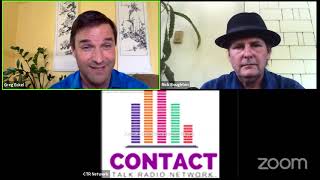
This YouTube interview (recorded Apr 13, 2020) features Dr. Greg Eckel interviewing Rick Kayak Bouton about hemp, CBD, and their roles in health and the environment. They cover movement history and activism, the endocannabinoid system and clinical interest, environmental uses of hemp (bioremediation), sourcing/organic concerns, industry trends, and Bouton’s related businesses.
Chapters
Consciousness in action. And you are taking action into your consciousness by tuning into Contact Talk radio.
And on tunein.com fm and up snap.
Mobile Contact Talk Radio. Hey, welcome back to what the health. I'm Dr. Greg Eckel of Nature Cures Clinic here in downtown Portland, Oregon, where we are bringing healthcare to promote thriving. So this is the station for that. Please tune in. We're on weekly at 2pm on Tuesdays and I am really excited about our discussion today. We've got all things hemp and Cannabidiol or CBDs and with one of the North America's top experts, he's been in the industry. My esteemed friend and guest today, Rick Kayak Bouton has been working in the natural products business since the 80s. And with two goals in mind. He's really into promoting, validating education and producing natural products as the source for all our needs. Totally aligned with that. And the second one is to establish, re. Establish the family farm as a source of natural products. And I'm really excited to talk about both of those. This really pulls it all together with regards to what we're setting the stage here for what the health this is like. All of it in one episode. So super excited here. He began in the boutique and fashion industry with evolving into essential oils, body care, herbal medicine. So from farm to product basically and community in between, he's operated family business that has brought many products to market and helps create product niches for folks. Finally, his work lets his work with the hemp, essential oils and fungi realms. He pioneered the concept of functional foods and superfood products, helping bring many new age foods to individuals to aid their healing and health, reclaiming their health. And at this time we find our plant allies. They are able to help us. And that was really the stimulation for this episode. Really got to talking to Rick at Country Fair, Oregon Country Fair and had a blast down there with a love of love and light beings and just thought, you know, I got to get him on my show and have this discussion. You know, he basically ties together sustainability with Gaia and Earth. He's founded many businesses, a couple Tradewinds Natural Products, Tradewinds Hemp Company, Green Goddess Organic Chocolates and Mountain Girls Botanica. He's helping with all of these companies. So we're going to talk about each one of those individually. Without further ado, I really want to welcome you on Rick. So thanks for being my guest today.
Thank you. Thank you very much for your work and I really appreciate the subject.
Indeed. So one of the things that really sparked my interest was we're living in Oregon and we have definitely our little bubble out here with legalization of marijuana and plant products, and in particular this kind of spread now into the CBD world. I wanted to first start out and just talking maybe just all things hemp and, you know, you've been in the industry, you've been talking superfoods. You guys are super health conscious and, you know, making such an impact on our planet. You know, what your vision or how did you get into this?
Well, we were really fortunate. A lot of people have been working since the 60s and 70s to set the foundation for a lot of things such as legalization. And legalization of marijuana actually became several different movements over time. And one of them evolved into the hemp movement and hemp legalization and the hemp so called industrialization. So when we first came out here, it was the late 80s and the first hemp was just coming into the country at that time in the form of a shirt, a typical farmer's, you know, cotton shirt. You always see farmers wearing these denim shirts. And the first batch of hemp shirts was at the first festival I went to in Oregon. And that was Bill Conde. Bill Conde was one of the backbones of the movement and he had the. Those shirts for sale at the Southern Oregon Barter Fair. I didn't have to go anywhere. They were right across the way from me pitching hemp all day long. And by the end of the three days I was there, I went from thinking $40 was an awful lot of money for his shirt to having the future laid out for me. And Bill also hosted some of the original hemp festivals in this state and in the Northwest. And we came here working with. I tied sage sticks, you know, it's a Native American smudge. And my wife made jewelry, and it was crystal point jewelry and silver. They're basically, essentially natural products. And that led me to essential oil and incense right at the time when you could get the first hemp oil. We were part of the first group of folks importing hemp oils. And it was really. I have a lot of gratitude for all the work that was done before we got here. It was a very simple addition to what we were doing. And then it became an education. And I've been trying to keep up with my elders ever since. Honestly, I consider myself a young man trying to be useful. And a lot of this was really all laid out. A lot of this is one hundred and a thousand years old. It's a matter of bringing it into modern Culture and educating people to the usefulness and then making it available.
That's. So, you know, one of my first introductions with Jack Hererer's book, the Emperor Wears no Clothes. Right. So I'm guessing you had your paths have crossed with him through time.
Right. Again, the same, folks. The Southern Oregon Barter Fair hosted Jack Harrer. Bill Conde had Jack Harrah at many of his events. And the whole network of hemp awareness was done primarily by individuals, not companies. You didn't see these guys in stadiums or at the state fair. You met them at individual festivals. And that's another thing I have to say. You met them. They weren't just up on stage. They were very available and accessible. And they were also really common people. They weren't trying to, you know, they didn't have PhDs and titles. The Jack Harris book is essentially the backbone of the modern awareness movement, and it's really all government information that was republished in a book. He didn't write the book.
Right.
All information that was out there, people didn't know about, and he brought it to the forefront. He's also one of the most incredible, bombastic speakers anyone has ever heard or encountered. And he's an individual. He's what you call the all American man. You know, he didn't smoke pot. He just was a guy. And when he started learning this, he believed in truth. And he really wanted to see everybody, you know, live a good life. And one thing led to another, and here we are.
Indeed. So what for you. So you were at basically ground zero of this all coming into. Coming into the country. So, I mean, in your lifetime, you've seen some change here. Could you imagine that there was a national bill to legalize hemp production in this country? Did you see that coming?
Well, we saw it coming, but I can tell you that it took so long that you kind of get. I don't know what the right word is. You just don't stop working. And days turn into months, and months turn into years. And what I didn't see coming is when it actually happened, you know, we were primarily a young family, and I was basically trying to find the best way to combine activism and making a living. And. And I used to be a labor construction worker and things like that. And the natural products was a way to spend more time with my family and be involved in art. And then I tried to figure out a way to be an activist and not have my family suffering from my lack of ability to make money or the time spent away. So creating natural Products and then based on hemp became a really viable way to do this. If you can touch something and you can see it's harmless and you can see its use. And we were helping the activist movement and most of the activists were, you know, brilliant people. Honestly, anyone who can take on the legal process and the legal system and try to articulate law, I take my hat off to them. And you know, there was Jack Harrod, it was Chris Conrad and Mickey Norris and you know, dozens and dozens of people. Alvinnette, you know, Alvinnette was a farmer activist and he debated, I forget his name, Franmeyer, Dr. Fraunmeier. He was the federal judge that tried to take away sacraments and the federal court. And our friends debated this guy at the environmental law conference and they were already masters of the language. And I came in, as I said, trying to be useful. And this is how I decided to do it.
Indeed. And this whole concept, a friend of mine, Janek Silver, has a book out called Evolved Enterprise. And I really see these movements coming together of really the new economy that we can actually create together, viable, where there is abundance, where support is sustainable, and it helps promote this thriving aspect that is really near and dear to me. It all can actually line up this way. One of the things you mentioned about you actually got to know these people there is that personal connection, that heart centered component that really is. I really feel like we're coming back to that, right. We've kind of really veered off into this more corporate distant relationship to products, to health, to even just simple transactions. And when you bring back like what actually are we doing? It's this energetic exchange and to have products that you can get behind with your heart and soul and know like this is creating, you know, like you're talking about tying this into family farming. So what, how does that fit in here?
Well, my wife Tanya and I are both grandchildren of immigrants. And our family established farms in the United States around the turn of the century. And there's dozens and dozens and dozens on both sides. Our family family farms established by say the 1920s. And the main people I knew surviving and farming were really working with tree nurseries. Most of the markets had been co opted, you know, by the 50s, 60s, 70s is harder and harder for dairy farmers, which is a prime focus for our family to maintain at the level, you know, used to be able to have 200 head of cows and live and your kids went to college even and you know, now that just barely exists and there's a new movement for heirloom traditional varieties of plants and animals and, you know, coming on strong and cheese makings coming back and different things. And that's 30 years later. And that's partially because once the family farm started going bust, you know, people each had to innovate. And part of that innovation was going to the past and reclaiming some of the lost techniques or the undervalued techniques that are all different aspects of traditional farming. You know, the meat industry, the holistic meat industry has come back very strong and people are starting to be health conscious. But that took 30 years of education. As I see it. At first, technology is going to save the world. And everyone thought all the technology, whether it was food science or any aspect, was something you could trust. And then we found out that was sort of manipulated for profit to certain degrees. And the technology started getting used in different ways. And so for me, I've always been loyal. Some of the farms still exist, they're just not operating farms in our family. And I've had a dream all my life of going back and re establishing that farm. Well, in my life I learned how to hard and how dedicated farmers have to be. And you do have to specialize. And I'm not a born and bred farmer. I don't get up at 4 in the morning like farmers do. They have that in their blood. And so I see that there's different aspects of every family. You know, some of them want to be doctors, some of them want to be farmers, and some of them want to make things and work with their hands. And so in the broadest sense of a sustainable farm, you would, you would have all these aspects, you know, a decentralized economy or, you know, if we start going local and we start focusing on sustainability and ethics and start, you know, for example, measuring well, how much gas did you spend to ship this product versus what the cost of that product is. You start re establishing these values. Things change and things are changing. I live in Eugene, Oregon, and when I got here, the Saturday market and the farmers market existed and it was a strong entity. But at this point you can't get into the Saturday market. And they need a bigger space. And a lot of people are supporting that and a lot of people are eating very good local food. And that movement has spread to every major city in the country. And whether they're getting farm produce from just outside the city or growing it inside the city, it's really come a long way. And so in my opinion, having vital food is important. And that has led to everything else. Really.
Yeah, for sure. And that component of really I was just on. I did a television interview this morning around how global climate change affects our health. And it was kind of a novel approach to the folks interviewing me. Like, what do you mean the environment matters? It's like, what are we doing? We live in it. It's our home. Right. And currently we don't live on a sustainable planet. And so this component, you've got this whole industry just really bubbling up. Like, I mean, I was back in North Carolina earlier last year and like, small town North Carolina has a CBD shop now. It's like, what is going on? Like, that's a pretty cool inroads. And to see it just popping up, you know, all over the place. Obviously the population is hungry for it. They're hungry for the connection, they're hungry for health. They're hungry to kind of bring back the cultural values. Like we can actually reclaim those as a piece of this evolved enterprise and doing transactions where, you know, it's all of us together, it's not just some of us that are going to make it right. We got to take all of us are part of it. Right. And to have you talk about your core values is having that in just from the very beginning. And you see the connection of the family farm to what you're eating, to what products you're using as all tied into one. That is such a naturopathic approach of looking at the whole picture. I would call you very naturopathic in that thinking or holistically. Right. So around. Let's stick with hemp for right now. The hemp evolution into cbd, where is that continuum? We talked a little bit before getting on here around some changes that you've noticed recently and or shifts. I'm curious, I know just from your point of view, what are you seeing out there in the industry? Because it's like everybody and their brother is coming up with a CBD product right now. Right. I mean, it's just kind of the buzz term in the industry. And so to differentiate and. Or to maybe educate around. Well, what is happening there? What do you see in there?
Well, you know, the prime word is education. And the main thing anyone can do is educate themselves. The next wave of health and healing has to do with understanding your own healing path as much as trusting any individual or any individual product. And there's many reasons for that. For one thing, the more power you give over to someone else, the less responsibility you take yourself. CBD is a reality. It's also a buzzword. And it's a buzzword because many, many people are having health problems. Many, many people have problems with drugs and alcohol. Marijuana has established a level of legitimacy a lot of people didn't think could ever happen. And although they're two separate plants, in a way, they're really the same plants. There's. They're different varieties of the same cannabis plant. And, you know, this is historic, this is a legal issue, because for many years, the United States kind of forced a prohibition of hemp or marijuana and THC around the world. So a lot of countries were forced to drop their hemp programs or not export because of that position. So I put these together because in my opinion, in the mind of the public and in the legal system, they are tied together the. The expansion of a legalization issue and into the legal process. I think there's 26 states now just decriminalized marijuana. The 26 Hawaii just a few days ago. Wow, 26. Okay. We just hit over half of the United States. And many years ago, 60%, 58% of people in America commonly polled that they thought legalization was a good idea just based on the economics of incarcerating people or because they accepted its usefulness. And back to health and healing. As far as cbd, we were in a discussion a few days ago, and there are two levels of that discussion. You know, people. Some of the people were informed and they had an idea in the legal process. And as the state goes for legalization of plant medicines, a certain amount of people have an idea about it now. A certain amount of people are accepting it, maybe without too much understanding, maybe their aunt or maybe their tribe. You know, there's many reasons people will have accepted without having it all spelled out for them. And many of those people are involved in the healing aspects of things. And, you know, healing has been a verbal tradition for thousands of years. So a lot of people came to this not through even considering legal issues. It's because their grandparents and their historical knowledge of a certain plant as being safe and helpful is part of their life. And so, you know, CBD comes to the front primarily because it's a major step easier to obtain and ship and work with CBD over marijuana or thc. And there's different characteristics, of course, but both THC and CBD tend to seem to help so many different aspects of your life, starting with anxiety and stress, which so many people carry, and then pain, which so many people carry, that it just affects so many people's lives, even if you're not individually using it, someone you Know, probably is. And when you add the fact that I know at least a dozen people that have told me I cured myself of cancer, for example, with thc, or I can go to work with fibromyalgia because of cbd, then at this point I would say it's not a fad, it's not a slogan, it's not something that's hip or hot. It is a fact of life.
Yeah.
I do believe that there's scientific based medical aspects of this plant that are so powerful, it's not by accident that all these things are happening. As I understand it, CBD or THC was first researched. It was first proven to the world once they found the endocannabinoid system that THC had incalculable value. Yeah. To that research. And this is why the door opens. That research was done in other countries and at this point, the last reports I heard have something to do with the THC can help all aspects of healing based on it's working with receptors in your brain which are part of the healing process. The last, newest news is that it might help all balancing in your metabolism, all, all aspects of your metabolism. So I think stress reduces the ability for someone to, you know, be healthy. And there's many, many ways that you know, that works. But you know, having your metabolism, your metabolism decrease, it means you're not really, you know, none of your bodily functions are on point. So if you have a medicine that's helping at this level, then you know, we're truly at a revolutionary stage of gaining power over our own medical and healing path. And also some of these plants have quite a bit of healing aspect for bioremediation of the earth. And you have the ability to clean up soils and water with some of the same plants. And I think that this is why at this point all these things are coming to the fore. We need them. And, and there are part of the solution.
So you touched on multiple fronts there. So I want to unpack some of that. So one, yes, when I went to medical school at the late 90s, early 2000s, we did not even know about the endocannabinoid system. And for that reason, Professor Machulam out of Israel is one of my personal heroes. So I wanted to mention his name because he did the research that, some of that initial research in the 80s and coming up with an endocannabinoid system, some facts on that. I did lecture at the American Academy of Environmental Medicine three years ago on the research around CBD use with patients with anxiety. There is A growing level of evidence. Of course we've got the anecdotal, which definitely the real world experience is definitely valuable. And to make the change on kind of a systemic level, we need that research. But it doesn't mean that we know it's a safe plant. Like it's a botanical medicine, for crying out loud. Right. And so we have this whole system that underlays. And for me, one of the thought processes I've had on it was, wow, we didn't even know that existed. But when you talk about the stress aspect and you layer that like on the hormones, this whole system is laying underneath our hormones and it goes like, oh, of course the light bulb went off. Like, wait a minute, maybe with this chronic adrenal fatigue and or hormone imbalances, what we're missing, instead of just going to give those hormones or herbs to change those hormones is we actually need to get in on this endocannabinoid system and feed it and get it well preserved. There are more receptors. We keep finding receptors for cannabidiol, right? There's CB1, which is central nervous system and CB2 is the peripheral nervous system. But now I think we got CB3, CB4. It's still a whole science in exploration. It's new territory. And to have there are more receptors for cannabidiol in our body than all of the other hormones and neurotransmitters put together, just for one moment, that is mind boggling. We didn't even know that system existed when I went to medical school. And there's more receptors for it in our bodies than all of the other ones put together. So clearly there's something going on here that we had no idea about this previously. To have that in my lifetime, especially as I've been a practicing physician, it's so exciting. The group that I went to, the American Academy of Environmental Medicine, it was really kind of a groundbreaking presentation because it was really the first talk out there around using CBD clinically. And these docs are super hungry. It's an alternative kind of complementary group or integrative care practitioner network that I'm plugged into. And we want to know where. I'm asking patients like, well, what's the dose, what was the variety, how frequently, what form? There's all of these different facets of are you smoking it, are you using edibles, are you using it topically? So maybe we can kind of talk about that in the second part of our show here. That aspect of, wow, you really hit it under stress. This whole aspect with the THC CBD balance and for the anxiety and pain and cancer, epilepsy. I mean the list goes on is because this endocannabinoid system is sowhat a network in our body and we're still just kind of uncovering what it does for us. So that was one awesome piece of that. The other flip side of that is around sometimes the component when you start putting a list like that together, Rick, is it's like, well, is this a panacea for everything? Right. A lot of times, you know, you got the green cross out here in the west and I have some just funny stories of people calling me from out of state coming, you know, into the clinic specifically for one issue. Now you don't need to do that anymore, right? Because we've got it legal out here. But you know, I wonder how you address. Oh yes, address that. And then the other aspect was on the industrial land and what this plant does to help remediate the land. Right. So let's start. Actually let's start with that piece then we're going to talk about the panisia discussion. But because one point that I really want to make for folks is source matters, right? All of these products are not created equal and it is kind of the hippie adage which I have grown up on, which is source matters. You want a trusted source, you want to known what is the land. Where is this coming from? Right? We're not talking industrialized mega corporate production because that is out there and I just don't find those products work as well as the, the smaller farm and or we know where this is coming from. Like we got to know our source, right? So let's talk about that. Because one component of hemp is it helps remediate land. It will concentrate pesticides, it will detox the land, Right?
Yes, a lot of questions, I know.
Well, let's start with that one. One, one quick break. If you're just tuning in, this is what the health. I'm Dr. Greg Eckel of Nature Cures Clinic. If you're just tuning in now and you want to catch the be beginning of this, I'm going to have it up on my website, which is naturecuresclinic.com we're here every week, Tuesdays at 2pm you can join the fun. We're educating about healthcare to promote thriving. And so this is the place. Please share it with your friends and family. This is the source. We want to get this information out to you about how you can take control of your own health and healthcare and be really highly educated about what's going on out there. So first question that we'll start with is let's start on the plant, the hemp plant in and of itself for remediating land. Because this piece really gets to source matters, I think.
Well, being a hemp farmer and traveling around, most people have heard of the Chernobyl debacle and there's a lot of hemp growing around Chernobyl and apparently the soil is being remediated by hemp in ways that no one understood was possible. And in recent times the University of Hawaii was doing studies in advance of them creating a hemp program. And as far as pesticides were concerned, I know Dr. Hari Ako and he told me personally that 50% of the pesticides were remediated in the living plant and neutralized, meaning they were non detectable in the living plant. In other words, it wasn't a sponge, it didn't soak toxins from the soil. And then you had a toxic sponge that you had to deal with. It literally broke down the chemical bonds that made the poison. And as I understood, I worked with mushrooms. And the backbone of organic farming is microbiology and soil health and the combination of hemp or mushrooms and microbiology and the understanding of soils and soil content and toxic substances. We have a great deal of hope and promise that we can clean up soils and we can clean up water in most cases already there's not a lot of research being done on this. It's not an industrial focus for the companies that actually create a lot of these topics, toxic substances, to address something you had brought up before, relatively speaking, to people's their health path and knowledge of any of these, either gaining knowledge or also. There's two points I'm trying to make. First of all, it's all our responsibility to learn. It's our responsibility not to accept, you know, facts off the television and not accept general understood things to be true. You have available to you through the Internet and through other means the ability to understand a great deal of what we're talking about. And a lot of information's out there. A lot of information is international. Just because it wasn't done in one country or one place doesn't mean it doesn't exist. And a great deal can happen from people understanding. If you don't gain understanding of the facts, then you can't have a position on the law, you can't write your senator, you can't share with your friends why you think things should happen or things should be done. And I want to stress that a great deal of what is happening now is happening because people became active in the government or as private citizens, they became active in their own health path. Or like yourself, you brought these ideas into your practice and this is why it's growing, because it works and because it's growing through community activism and communication. People power. And you spoke before about access to folks like Jack and other folks being accessible. And you know, that was the basic part of the movement, that people that were really guiding the dialogue actually they made themselves very available and communication is extremely important. You can read something in the paper. Can you remember what you read? You have to internalize it and you have to share it. And then people have to, you know, this is what's happening with the healthcare movement in this country. You know, healthcare, I don't want to get negative here, but it is a problem for a lot of people. And what's happening is a lot of people are sharing their health issues with each other and that's one reason they're gaining control over their life and their health is because it's the age old concept of the folk medicine and community combined with folks like yourself that are professionals and taking plant medicine seriously that we're having this evolution. It's not because it was in the papers, it's because it works.
Yeah, because it works. And that is. You're proven the point for my show. So thank you so much. I did not prep him on that, but that is my podcast is called what the health. And you know, we really are here to promote healthcare. Healthcare that promotes thriving. And it really is around. I like to dub myself a clinician's clinician. I want to know and use what works right. We could have a position paper. I had seven doctors on staff at one point at Nature Cures Clinic. And you know, we'd come back and like kids in the candy store, oh, look at this new research. Let's try this new protocol. And we'd run it through 100 to 200 people and would get no clinical results. It's like, well, that isn't helpful. We want to, we want real world, tangible results. And we know this works. It's worked for eons and it's great to have the support of the research. But we also have this, it's called clinical evidence. Are people feeling different with it? We know there is a truth there. That is the movement. It is people power. I love that you said that, Rick. So bringing that in. I like that these bioaccumulate, but they don't get stuck in the plant. So that's great because that was a worry for a lot of colleagues around. Okay, well what if they're growing on industrial wasteland? Be interesting to see the assays of the product that comes off the different lands. Of course you want a better soil quality, I would guess, and maybe correct me if I'm wrong because I'm not a farmer, but I think if you had a better soil quality, you're going to have a better product. I mean, that's a no brainer, right?
Yes, absolutely.
How about.
I want to clarify a couple thoughts. Oh yeah, we're just getting into the field and the concept of bioremediating soils. I have worked with some microbiologists and people that make nutrient substances for plants and they have tested super fine soils and been able to get a clean soil when they're done. That doesn't necessarily mean that you're ready to grow, you know, medicinal mushrooms or I'm sorry, marijuana on that land. Because we, you know, we're the first generation trying to prove this out. We're also the first generation, we're not the first generation to deal with toxicities, but we're a generation to where dealing with toxicities is such a fact of life, almost no one can escape it. And in the most, you know, remote regions of the world, people are starting to have either deforestation problems and, and, or toxicity problems. Whether it's the rain. I don't like the word climate change. The climate is clearly changing and produce pollution is clearly a problem. And we're the generation that is suffering 30, 40, 50 years of ignorance on this. And luckily though, there is, there are some solutions on the table. But what I'm saying is we are just starting to work with these things. And so organic soils and soil conservation and soil building using natural pure sources.
Of.
Building materials for soils is really as important as anything else. Then we also have millions and millions of acres that have been treated chemically that in general those type of industries, they don't call folks like us and ask them to clean up their soil yet.
Right.
What we're doing is we're improving out on small scale on private land, these programs and building up some research so that we can show it to other people. And it's a very exciting time. It's a tremendous amount of responsibility and it's, it's mostly privately funded. You know, people are just starting to understand this is possible, but they are understanding, you know, the best water filter in the world is really clay and charcoal right that's what the Red Cross uses anywhere in the world. So certain science and industry does understand the power of nature, the power of a natural matrix. And you know, this is. It's just a lot of work that we all have to do. And I'm very hopeful personally because it's one reason I stayed in the Northwest. Once I learned that mushrooms could bioremediate soils and even forms of radiated soils is one of the reasons I stayed. This research was being done 30 years ago.
Nice. How about kind of continuing that conversation around source matter? Looking at there is this concern around mold, pesticide use and growing these. So obviously you're a proponent of organic. What's your thoughts on where the industry is and what's happening with products right now? Like, what are you seeing from an insider's view?
Well, unfortunately, with every single facet of our society, when you put the word industry into it, you end up having a separation of people and a separation of technology from people and a hierarchy of control or management that gets to be very impersonal. And if the person at the top of a company, for example, cannot directly relate to his own customers, he probably doesn't know what they want, what they need, or how he's affecting them or she. And what I'd like to see is more of a sustainable economy and a lot less, you know, shipping of products around the world when it's not necessary. You know, I want to say that I think it's really important to be able to get substances from different parts of the world and foods that can't be grown anywhere else. And I think there's a great value to a lot of aspects of society that we've created. Communications and the ability to fly around the world, to spread information around the world, to get herbs and medicines that you just wouldn't have anywhere except from the Amazon rainforest. That being said, we could also look at everything we do and try to create a sustainable model out of that. And a lot of things just don't need to be shipped. But you know, people make a lot of money changing the value of something by shipping. So I'm not going to get into a negative aspect, but I will say that a lot of these are basically. It's hard to put a word on this, but you were dealing with an inherited culture that still believes in war, that still believes in the concept of domination. And we're getting to a one world concept where you can see the whole planet from the satellite and you can see one group of people, and we're all human. Beings. And we have to kind of bring this into our understanding of how we go about what you call industry. And so to simplify, if you're working on a small family farm level and your market is somewhere between San Francisco and Seattle, you're going to have a much different focus just on your goals than someone who's trying to sell to every store in the country or people from around the world. And there's different reasons to do that, there's different focal points, there's different scales. But I think that some of the people, a good amount of the people I know are what you would call small family farmers. And they are either growing for their own benefit hemp and selling it to other companies, or in many cases, we have grown our own hemp for the last four years or we've partnered with someone that grew hemp directly for us with organic principles. And so I know, because I went to the field when it was being planted and I either helped the farm evolve that year or I helped with the genetics, or I helped the harvesting and the extractions. We know our source materials. And the backbone, in my opinion, of organic certifications was your personal relationship with the farmer. You know, one of the biggest problems with international import of organic medicines is the falsification of organic certification. So if you don't know what your source is and you don't educate yourself, then you're at risk. If you are able to know the source and you're able to know the people, you're in a benefit. You're in a good position to receive the benefits of that situation and ensure that your family is going to get a good product.
Yeah, high quality medicine. Right. That's what we're looking for in my realm. And that's important to me if I'm going to share that with my patient base, my listeners out there, knowing Dr. Eckel has done his homework, we've got the certificates of analysis. You know, we know these things are coming in at a very high level. You know, this whole concept of evolved enterprise I really think is the future. And I'm right 100% with you, Rick, on. You know, that is E.F. schumacher was one of my favorite writers and he has a great book out there called Small is Beautiful and he talks about this. He was an economist in the 70s. Best. One of the best books I found in a high school and. But it has stuck with me and it is about that aspect of those economies. That's how the change happens. We're all making choices and decisions with our dollars. Every day, whether we know it or not. And you can support abundance and real people or not. Currently it's a little bit more work to support the real people. However, what we're trying to do with conversations like this is really educate people around, hey, here's some easier ways to make some choices, right? So on efficacy and or kind of standards, right? So we are talking about medicines and yet we're not, right? Because you can buy them over the counter, you don't need any doctors, et cetera. These are like home remedies, folkloric time tested, no doubt, herbal remedies. But we are moving more into this discussion, right? So we've got all of these kind of green cross networks here in the Northwest and through California. And a lot of times I'm seeing patients that are like, well, this is the panacea for all that ills me. And it's like, ah, you know, we talked about it. You were, you know, before the show started around where you feel these fit into a whole program and or discussion. But, but maybe not a standalone miracle cure. Even though we have all kinds of testimonials and we have. I know people like that, you know, people like that. I'm sure our listeners may have come across folks that have had this amazing breakthrough with THC CBD products and along those lines. But in a grander discussion, let's say, what's your thoughts on that?
Well, your point about the panacea. I think I tried to address this before when I discussed how people are stressed and people have pain. So one of the reasons that these medicines tend to help a lot of people is it's plain and simple. Most people like a massage, most people like sitting on the beach, most people like a good meal and all those things relax you. And I think once you take the stress level down a little bit, everyone feels better. And I also think most of the health problems are at least exacerbated by stress and pain. And so when you get this kind of environment where a great deal of people have this sense of relief that's so great, they start thinking they found the answer. Well, yeah, they found the doorway open for the first time time where other than an opioid, for example, or alcohol or some, you know, a lot of these things they work a little bit, but then they also have negative effects. So you can't get the same good effect you had in the beginning. And that's the problem with some of these things. And one of the points you made, you know, cannabis is not toxic no matter how many Times they've tested, they can't find toxins. And as I understand it, a great deal of pharmaceuticals offered have toxic effects. They're just accepted as part of the program. And so, you know, the thing to do is, I consider myself an herbalist. I've studied traditional herbalism, not as in a professional capacity, but all my life. And this started with making salves for our children. And then they worked very well. And they work better than things we could buy in the stores. And we've been doing that for several years before all this came up. And we were taught these things, things in our community and through midwives or other moms and things like that. And so, you know, we knew these things worked. It wasn't an advertisement. And there's many versions of a traditional green salve, for example. But, you know, everybody in every culture in the world, basically, it traditionally has these home natural remedies. So, you know, we're living in this time where the word, the legal definition and the identity of something is not always understood and. Or misconstrued. And so the word medicine itself, until the modern age with legal issues, just didn't mean the same thing it means when you say it right now, today in the United States, for example. And so this is why I say going back to education, because, you know, you need to know what you're doing with your body. And you can say it's definitely a great value to go to a doctor who has obviously experience with many, many people. But. But when a doctor gives you advice, it's my understanding, you know, the best doctors I know really try to get to know you. They don't just listen for five minutes, oh, I have a headache. Try this. They try to understand a little bit more about your life and what you eat and things like that. You know, your mood swings, all different kinds of things, before they just say, here, try this. And so part of that is your responsibility, too, to be paying enough attention to your life and not just think you can take a pill. Because in my opinion, that the age of that concept is coming to an end. That's why there's an opioid endemic. That one concept was accepted blindly by too many people on both sides.
Yeah. And the root word of doctor is doceri, which means teacher. And really, the better physicians out there and providers are teachers. And really, it's empowering you as the individual to filter it through your apparatus and really make what's the best choice for you. Like, ultimately, you've got that power and responsibility. Right. There's no victims out there. We're all creators. And so using the information, you want to go to a trusted advisor, but they're an advisor. Right. They're not the word. The ultimate word. So on that, there's a component there around, so the panicia and kind of more de stressing population, taking stress off the picture. Yes, Stress is definitely inflammatory in nature and is at the root. I'm in total agreement there, Rick, on that concept around using them. One of the things coming down the home stretch of program, I want to talk about specifically your companies and what you're up to and some of the missions of those. So you can go wherever you want with that. Yeah, I'll just kind of lob that over to you.
Well, yeah, a brief history. We were working with natural products, Tanya and I, from the beginning, say 1988. And originally I just. I got a job working for some people that were making smudge sticks for some of the first natural product distributors in the country. These are all very small. You're dealing with health food stores and book shops and, you know, local community entities. And this is a really exciting time. It was really exciting time to have access to some of these, to the books, to the information. It was what they called the new age, you know, which most of was traditional, you know, stories, traditional things like incense and so sage led me to incense and essential oils. And I was originally trying to understand farming at that time. And like I said, I realized pretty early on by meeting a few true farmers that I was not a farmer. I'm very motivated. I can work as hard as anybody. But a farmer is a very special type of individual, very sensitive and strong and has a unique set of characteristics. And, you know, that's why a lot of times you have family farms for many generations. You know, part of that is class structure in history. But, you know, the root of it really is, you know, you need to learn an awful lot to be a successful farmer. So I had discovered essential oils and, you know, here's the beginning of a talk perhaps about, you know, what people think about medicine or how you can be a healer. So I knew I wasn't a farmer, and I knew I would like to be involved in healing. And so when I discovered essential oils and that, you know, the scent of something, as opposed to an herbal medicine or a mixture that you derived can be extremely powerful and very subtle. But, you know, really a door opener for a lot of people once you discover scents and pure essential oils. And the first thing I found is that fragrance doesn't Mean essential oil. And if you read the label and it says fragrance, that means it's synthetic. And I don't know how many people know that. And I was very shocked to find this out. And that led me on the path of creating an essential oil, incense. And around the time this happened is when we moved to Oregon and when hemp oil came available to the country for the first time. And hemp oil is a base oil. And using pure essential oils, we made something called original hempsets. And we had been in the fabric end of things. Fabric was the first thing most people saw. We made clothing. There are a few problems with that. The fabric prices. Well, the fabric, since it was in many cases a traditional weave, it's not a commercial grade fabric, and there's certain things you could make from it, but you couldn't start a clothing industry overnight over it. And then the prices weren't stable. So we were always looking at ways to efficiently create something out of a hemp product. And we chose incense. And also, you know, you can spend a good deal of money on a lot of things that you want, but incense is a relatively inexpensive investment, and it can go very far. You know, just throw it in an envelope and send it to your mom. And so this is something we got into with relative success. The one thing led to another. And once we got our hands on oils and we worked with essential oils, we created a body care line. And then we started focusing for the first time on therapeutic body care. And we mixed, in most cases, traditional herbal medicines with massage oils. And we made several products with that type of focus. Shortly after that, it's been about five years, we started focusing on organic chocolate. And to me, coffee was the new thing. Organic, fair trade coffee. It was everywhere. I respected that. I drank coffee not as much as other people, but I really respected that people realized they're drinking a lot of the substance to survive, and why not make it pure? And when I moved to Oregon, also, the other thing that was happening was that wineries were starting to evolve and people were making beer and a natural beer. And I see this all as leading to the foodie movement. You know, once people started relaxing a bit and regaining their quality of life, they started thinking about other aspects of that. And in my experience, these things are all tied together and evolved and very much through the northwest culture. And one reason I came here, one reason I stayed here, is for the lifestyle and, you know, nature and the abundance of nature. And so I have seen a lot of people come to the northwest and stay Here for the whole time raising their children. And so the organic chocolate was a lifestyle choice.
It was.
I consider chocolate a rock star of the plant kingdom, if you will.
Yeah, totally.
I have loved chocolate all my life. I waited till I was 40. They say do what you love to start a chocolate business. And at the same time we utilize this medium instead of going for the kind of sweet, sinful confection concept. I realized that chocolate was actually a food in traditional cultures. I've worked a lot with other types of sweetener other than sugars, and I also saw the possibility of combining it with other herbs, algae, fungi, essential oils, spices. And so when we started Green Goddess organic chocolate, we came out with 10 different products and they really are the backbone of what you call functional foods and superfoods. We were given Himalayan crystal salt and goji berries before anyone had seen them commercially in the country. And you know, a lot of the first people that find new things in the country are people like ourselves. They're alternative people. It's not all about business. They're passionate about food, they're passionate about herbs and their culture. And they travel. And then when they recognize someone like themselves, they try to share it. And so again, I received, you know, the benefits of, of living in this culture and there's a sharing environment in the vending community and the alternative community, in the healing community. And a lot of these ideas came to me at festivals or I was exposed to different plants and things like that by the culture in the Northwest. And so we created Green Goddess. Then eventually what we did was we worked with mushroom fungi medicines and we created a line of truly therapeutic chocolates and we presented that to the Fungi Perfecti company and they carried that line to this day. At this point, it's made by another company and it's nationally distributed. But we made it by hand in our own facility for the first ten years or so. Around that time of the last transition into the largest level of distribution, we picked up hemp and cannabis came in and we did work in the recreation, in the medicinal market with cannabis for a while. But as it turned into a recreational market, I'm really a traditional medicine type of person and I respect what's happening to a certain degree. But they lost a lot of the medical community. And we are one of the original hemp companies. I know the first, second, third, fourth and fifth, you know, we're like one of the first 10. And when the medical marijuana, the new bill came out and included hemp, it was a no brainer to embrace hemp and we became one of the first hemp farm families and have been working with.
And what's the name of that one? What's the name of that business?
Trade Winds Hemp Company.
Yeah. Awesome. So, and I'm going to have the links to your affiliated network there. It's awesome. Like you've been a prolific producer there. And then you've got one more. We got two minutes left here, so.
Yes, thank you. Our newest incarnation is we're working with Mountain Girl Garcia and we created with her Mountain Girls Botanica. And Mountain Girl is a passionate believer in plant medicines and we brought CBD to the table with that company and we consider it a really beautiful and wonderful opportunity to work with her at this time and be able to promote plant medicines for the future.
Awesome. I had a great conversation with her and I'm really excited to see what you guys put together there. I'll have more information around Mountain Girl Botanica as well. I really want to thank you all for tuning in to what the Health, the podcast that is here to promote health care as arriving. I'm Dr. Greg Eckel here at naturecuresclinic.com you can tune in to this station Tuesdays, 2pm Next week is going to be our episode on my book Shake It Off, a fancy approach to Parkinson's solutions. It's culmination of the last two years of my life that I shared a little bit earlier in previous episodes and I put it together in a book to really coalesce and put the process forth to share. So if you know anyone with a chronic neurodegenerative condition and for yourself as well, the rates of dementia Alzheimer's are going up about 50% chance after 65 years old and it's just going up from there. So talking about levels of toxicity and assessment and treatment options for folks. So again, thank you. This is what the health. I really want to thank you, Rick, for coming on. That was a great conversation. We got really good history there too, so I love that stuff. So I'm looking forward to doing some of my own research and continuing the conversation with you. So again, thank you all for tuning in. Thanks.
More from Dr.

EP. 197 Brain Regen: Harnessing Essential Oils for Cellular Health and Longevity

EP 196 WTH?!? Unlocking Cognitive Health with Your Genetics with Elwin Robinson






EP 190 WTH?!?: Mind-Body Mastery: Harnessing Movement, Breath, and Sound with Jeffrey Williams

EP 189 WTH?!?: Nourishing Connections: Lynne Bowman on Family Meals and Healthy Living


EP 187 WTH?!?: Clearing the Air: Dr. Kevin Smith on Nasal Health and Migraine Relief