Ep 08: Love is Medicine with Razi Berry
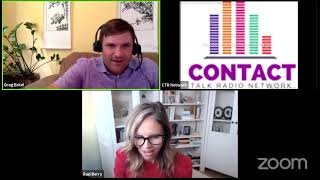
A podcast episode of "What the Health" (host Dr. Greg Eckel) featuring Razzie (Razzie) Berry, founder/publisher of Naturopathic Doctor News & Review and creator of the Love Is Medicine project. They discuss naturopathic principles (vis medicatrix/nature), the difference between common vs. normal illness in the US, patient-centered/functional approaches, Razzie's personal healing story and near-death experience, the Love Is Medicine docu-series (seven episodes, launching mid-September), and practical practices for self-awareness, grounding, and reconnecting to self, nature, and community as pathways to healing.
Chapters
Foreign action. And you are taking action into your consciousness by tuning into Contact Talk radio.
And on tunein.coming&FM and up snap mobile contact talk Radio.
Welcome to what the Health an independent.
Approach to your health span. Have you noticed how our healthcare system may not have your best interest in mind? Join Dr. Eckel in this fun and sometimes disturbing exploration of the state of healthcare and what it means for you.
Now here's your host, Dr. Eckel. Well, welcome back to what the health. I am Dr. Greg Eckel of naturecuresclinic.com and we I'm super excited about my guest today. She is so busy that she's going to be running in here in a little while. But her name is Razzie Berry and Razzie Berry, she's the founder and publisher of the journal A Naturopathic Doctor News and review. Since 2005, she's truly lived a mind, mind body continuum for her healthcare and is a major, major supporter of naturopathic medicine and our whole medical field and way of thinking. And I'm really excited to bring her on here. She's got a couple websites as well, thenaturopath.net which is her forward facing site for consumers, patients, people that are interested in information about naturopathic medicine. And then she also has this Naturopathic Doctor news and Review. I have an article coming out in September in that journal. I've done book reviews and it's a wealth and fountain of information. It's also searchable database online. She also is the founder of Love is Medicine podcasts. It's about self love and self accountability. And she just got an award. Actually we had the 100th. It was the American association of Naturopathic Physicians over the weekend here in Portland, Oregon. And we celebrated a hundred years of licensure as a profession which is, you know, really phenomenal. I feel so fortunate to practice in. We've got the oldest licensed state for naturopathic medicine in the country. We have an amazing scope of practice out here. I function as a primary care provider. I have a DEA license. I can prescribe any drug on the planet. Just 18 years into clinical practice, I choose not to. You know, I like to say there isn't a drug that we can't get somebody off of. Before bringing Razzie on, I just want to talk about a conversation I had with a patient this morning. Gentleman, he's 54. We have him on testosterone therapy, a hormone replacement therapy and his when he originally came to see me, he's a airline pilot. He'd Been flying planes for 20 years for Alaska Air. And they basically told him the orthopedic docs told him he needed to have a hip replacement. And you know, the guy, he loves playing hockey. And I'm a hockey player. I'm originally from Western Pennsylvania, grew up on the Penguins. You know, my cousin is still with the team back there. You know, I'm a rabid hockey fan. So if somebody's coming in with an injury or possible surgery that they're going to knock him out of the game, I really want to support them as best as I can. So I said, you know, Malcolm, let's wait. You know, you might have some options here. You know, once you go under the knife, there's no coming back from that. And lo and behold, he, you know, here he's out playing hockey three nights a week, he's got full functionality of his hips. Now we're moving on to other things, right? So now we're doing bioidentical hormone replacement therapy. And the lab came back and it showed that it was elevated and his testosterone, but it isn't elevated. What happened was the reference ranges of the lab just changed this last year it used to go up to about 1200 was the, the high end number for testosterone on labs. But over the last two decades, men's testosterone has been falling 1 to 2% a year over 40 years old. So that's not normal. It's very common. So common that the reference ranges of the lab got changed. And so, you know, really a take home message is you do not want to compare yourself to anyone, let alone the average American community. A friend of mine, Michael Bernoff, says average sucks because it does. Average does suck. You don't want to compare yourself. It's like two standard deviations around an average on a blood work panel and they've lowered the number. The total number for T is now down to it's like 900 on some labs and it used to be at 12 to 1300. So you know, they've accommodated a dysfunctional, basically environmental toxicity which is lowering men's testosterone levels have now been accommodated on the lab results. So you may not skew it. You wouldn't know any better, right? You just go to see your primary provider and they just say, well, everything looks good, right? How many times have you gotten lab work back? And your provider just said, well, everything looks good, see you next year. It's like, no, no, no, let's go over these. Let's look at optimal levels. Let's really pinpoint, you know, what's happening here and get into an optimal discussion with you around, where do you need to be for health to occur? Because, you know, you don't want to be on the high end, low end, or, you know, maybe you do. It just depends on the number. But you've got to really look functionally and integratively and naturopathically to really come up with some really good parameters there. So optimal levels is what I call them. So the discussion that I got in, I just lectured today. Every week we're lecturing on regenerative medicine, regenerative stem cell therapies, and what those may be able to do for you with orthopedic work, brain health, along those lines. And I have a big, big, big piece of the lecture which I call my public service announcement. It's inventory of symptoms. And the discussion that I get into with folks out and about around Portland, Oregon, and now with you here online is you don't want to compare yourself to the average sick American because we are living in a pharmaceutical cloud. The average American over 65 is on five pharmaceutical medications. That's the health that I like to promote here at Nature Cures Clinic. Is that what I see? What I saw in Vienna, Austria, when I was living over there as an undergrad student, I was hiking mountains with 80 and 90 year olds. The only difference between me and them, they were taking a little bit longer to get to the top of the mountain and they use those ski poles. So that's the type of aging that I want to promote. And so I'm out lecturing, giving these public service announcements to folks saying, you know, if you heard from your provider, just get used to it, you're getting old. Like, walk out, get a new provider. Because that is not an acceptable answer. Nope, nope, nope. I would not take that for my own health. I don't think you should take that for your health. I will never go into agreement with that because I've seen the difference. I've seen 80 and 90 year olds living pain free. I have a patient, Lois, she's 91. When she started to come to see me, she was 81. She gave me a glowing testimonial on YouTube just on how much her life changed in that decade. Now, you know, when you start getting that old, you realize, you think, well, maybe it's not going to work for me. I'm just too old. Hogwash. You know, our bodies are super resilient given the right information, and so do not go into acceptance for dysfunctional state. You know, it's so common, we think it's normal. So that aspect that I was doing, my public service announcement was, you know, I have people check the boxes as far as, oh, do you have back pain, do you have knee pain, do you have hip pain, shoulder pain, neuropathy, cardiovascular disease, do you need to lose weight? Are you trying to lose weight? You know, irritable bowel, digestive complaints, headaches, you know, down the litany of kind of an inventory of symptoms. And you know, it is. It's remarkable how much we accept in even me as provider. When I first started practice, I would go into agreement in these dysfunctional states, meaning, you know, I was taking a great case and talking to them, talking to patient, taking a case. Oh, you have back pain? Okay, check. Knee pain. Okay, check. And it dawned on me, wait a minute. As the professional in the room, I should not be going into conscious or unconscious agreement with this individual because they have symptoms. The symptoms are there to tell you, hey, pay attention to me, pay attention to me. I'm out of balance. You got to go in and talk to an integrative practitioner or holistic medical provider who is going to address all of you. You know, I'm really excited to talk to Razzie. Hopefully she's able to make it on today about her project, her Love is Medicine project, because, you know, she really, she's really grasped this naturopathic principle of addressing the whole dynamic heart centered being. So what we'll get into that. The loveismedicineproject.com I believe. Yes, loveismedicineproject.Com so one of the big components here with this normal versus common symptom picture is it's so common, we think it's normal. Even the providers. So when you go to see the providers and say, oh, get used to it, it's just called getting old. Well, that's what they're seeing. They're seeing dysfunction. They're seeing the broken healthcare system. They're seeing that in you. The patient walking in saying, you know, I got this shoulder pain or this back pain or this hip pain or this knee pain or digestive complaint or diabetes or hypertension, you know, the skin issue, whatever it is, they're seeing it over and over and over again. And you know, it is, you know, it's a shame really, I think, you know, to say, well, just because I'm seeing it all day, it must be normal. And no, it just speaks to how poor the health is of our nation. And, you know, the healthcare system is broke. You know, we Spend more than any other developed nation on the planet. And our health outcomes and our health status is dead last for developed nations. So, you know, maybe it's time for what the health and like, let's. That's why I started this podcast to talk about different angles, get out of an unconscious mindset, really utilizing our full brain and power and healing ability. Let me just check in here. Let's see if we've got a note or something from her. So a little reminder. You're listening to what the health and I'm Dr. Greg Eckel. You can find this fine podcast at my website, naturecuresclinic.com on the top bar there'll be a podcast row and you'll be able to stream these and also the previous notes. There she is. Hello, Razzie. I gave you a glowing, glowing intro. Let's get you unmuted there. Let's see, you're muted. Boom. Unmute you. Awesome. Are you there?
I'm here, I'm here. Thank you. I hope you got my message. That was a little delayed.
Awesome. I gotcha. I just was talking about naturopathic medicine in general, a little bit of the AANP and concept of common versus normal. And so I've given you like a really big wind up. Super excited to talk to you about your projects and the ndnr. And also thank you personally from the profession for the video that you provided us over the weekend. We would have much rather had you there in person, but totally get it. You know, I'm super excited to talk with you about it. Let me. I'll finish this last concept and then we'll get right in there. So I was talking about common versus common versus normal. And patient of mine came in this morning around his testosterone levels were falling and the testosterone levels have been shifted to accommodate dysfunction. Basically, they drop them nationally by 3 to 400 points. And so just my encouragement to the listeners and viewers out there is really get into functional medicine, naturopathic medicine, integrative medicine, somebody that's not just viewing you as a number or a data set on a page. I like to say I treat whole dynamic beings moving through time and space, heart centered beings and which is very appropriate for our discussion today. Without further ado, I'd like to introduce Razzie berry. You've got thenaturalpath.net, you've got this amazing project that I'm super excited to talk to you about, the Love is Medicine. You got the Love is Medicine project and you got the loveismedicineproject.com this docu series coming out. I love that you've got love in the title, number one. There's not enough of that out there and, and it is, you know, as a heart centered being and practitioner and treating people that way as whole dynamic beings like this, we should have a really juicy discussion today. So maybe I'm going to hand the mic off to you and have you kind of give a little introduction of, I mean, I guess how did you get into this? You know, you had some personal trials and tribulations. So maybe let's start at the beginning.
Absolutely. Well, we start in the very beginning. We can begin. When I was a teenager and I was dying of heart failure, 14 years old and I was in Phoenix Children's Hospital and our family priest, Dr. Father McGuire came and did last rite ceremony.
For real.
For real. My heart was failing and there was nothing anyone could do. Now prior to that, in my life whenever I was sick, I was raised in a very allopathic home, meaning, you know, my mother was raised to believe that, you know, like you have a fever and you take medicine, you have a sore throat, you go get an antibiotic. I was fully vaccinated, all those things. And so it was really an interesting phenomenon to suddenly like the doctors couldn't do something. Well, to make a long story short, a few days later I had a spontaneous healing. I had, there's kind of an experience involved there that some people call a near death experience. But it did two things for me, Greg. One is it was an experience where without going too much into the woo woo details, it was very profound experience. Experience of love, I would call it God's love, the universe, whatever. But whatever it was, I healed. I healed from the eating disorder and I healed from the heart failure. I healed my heart. I was left with a mitral valve prolapse. It never went away. But some doctors say I could have been born with that. There is no reason to know. So it also made me ask this question that I've had throughout my whole life and I think sparked my career was where does healing come from? Right. Where does healing come from? If sometimes the doctor could heal me, but in this case didn't. And then throughout my work in publishing naturopathic doctors cases in Naturopathic Doctor News and Review for almost 15 years now, more than 2100 cases. Why is each case unique? And why do even in conventional medicine, some of the practices we have are curated for some people and not for others. And so those questions have been very alive in my heart for a really long time. And you know, I did heal from that. But throughout my life, like life happens, right? Healing isn't something that we just. Okay, I healed and now for the rest of my life I'm good. Yeah, yeah, life happens. And I experienced other things. Chronic fatigue syndrome. I had six years of infertility before I had natural pregnancies with my two daughters. And so each one of those times in my life when I got sick again. Naturopathic medicine and its principles, especially with this medicatrix naturally, this honoring of the body's vital force, this innate, intelligent and ordered life force that can heal. And the fact that naturopathy looks at the physician as somebody who stimulates that vital force and not necessarily just, you know, treat the deficiency in a patient. And that's why I feel like that there's never one size fits all. Even if it's an herb, even if it's homeopathy, even if it's antibiotics, everyone's vital force is different and unique.
It's so true. It really gets driven home, especially after a national convention of naturopathic physicians. What the beauty is, we just think so differently. We've got functional medicine, integrative medicine coming on board. I like to say where the old school, you know, thought process behind that. But what really sets us apart is that concept of the vis of, you know, I like to say I do a lot of nothing all day. It's the body and the medicine coming together to heal. And people come in with different constitution types and so their ability to respond with or interact with intervention, whether it be energetic, biochemical or you know, nutritional, whatever level is so varied and different and where you could have 10 people with the same diagnosis and come up with 12 different treatment plans for them because they're all uniquely themselves. So by treating people, not conditions or disease processes, it is one, it's way more fun. Two, we get these profound healing responses. I like to say we see a lot of spontaneous remissions and here at Nature Cures clinic. And so to have you really kind of be out there on the front and provide a venue and avenue of gathering of the data and kind of a focal point for people to come together with both professionally. And then you have the forward facing, kind of consumer patient based, thenaturopath.net, right, that site, you really spearheaded a lot of efforts, which I really thank you from my heart for doing that for the profession because I didn't realize that was your beginnings with a near death experience and really with the heart in Chinese medicine is the empress or emperor and really leads all of it. And that is really in resonance with the way that I practice, the way that I view medicine as well. Thank you for that.
I love the name of your clinic Nature Curiosity because it just, you know, it's in so alignment of that I find in medicine where and in science we're trying to either harness nature or conquer nature.
Right.
And you know, the early, some early Greek physicians, I forget what the name of this was, but it was some of the kind of pre vitalists, they were kind of against this idea that the way to look at a whole system is by breaking it down into smaller parts, which is a type of reductionist medicine that we see now. And I even see sometimes natural medicine even going in that direction. Sometimes you can't understand the whole organism solely by breaking it down into something smaller. And there's. I think that's one of the reasons. Can you guys hear me?
Okay, just a little bit. It's when you turn your head to the side, it gets a little bit off.
Yeah, I'm part Italian, so I like talk with my hands and I'll try to keep my head.
Got it.
But I think that just like you say the whole system, right, you're looking at the whole system. You can't necessarily just break it down to the gene or to the specific organ and get complete healing. I mean, I'm not saying that that information isn't important, but I think that it's time that we move away from this health hack mentality. Like, how are we going to hack this? And then we get back to, you know, the whole system, whole organism, holistic, interconnected approach to who we are as people. You know, we don't live in vacuums. Most research is done by looking at just a small segment of people in a small section of time with a small, you know, looking in very small parameters. And that's just not real life. And that's why the cases that I publish of naturopathic doctors like yourself, I think are so vitally important and so important to be cataloged for time and eternity. Because it really looks at, I think it looks in a more realistic way of healing for sure.
And you know, you even speak to this spontaneous remission component. You know, as a second year medical student, I came across a book, it had 500 cases. It's called Spontaneous Remissions. And it made such an impact on me. Like, you know, I'm not the physician to close the door on somebody's ability to heal like these things that are, quote, unquote, uncurable. There are people that have been cured of uncurable conditions. Right. And so our minds, our hearts are very potent and powerful. It's not well wishing. It's documented. And I think that your, you know, your case series of 2100 cases, growing database is testament to that. So tell me, you've got this Love is Medicine project podcast, and then you have an upcoming docu series of the same name. So what inspired you to really get this message out now?
Well, I have noticed I'm not a clinician myself, but in poring over all these cases over the last 15 years, I noticed some patterns that are very simple, but I feel like we're constantly overlooking because we're not looking at the forest through the trees. And they are three primary ways that I believe we disconnect from what I feel are sources of love. I'm so sorry. How often does my landmine ring? So the first is how we disconnect from ourselves. And I first regarded that when I was thinking about, you know, my eating disorder. You can't not eat and have a real good connection or relationship to yourself. Right. It's like hunger is a primal cue that we have. And I see that a lot of disease. And the Journal of pharmacological research says 90 to 95% of all cancers, for instance, are due to lifestyle. Well, let's unpack what that is. It's how you style your life. So this. So we disconnect. Like in my case, it was heart failure from not eating. Or we disconnect ourselves into diabetes by maybe overeating or eating the wrong things. We disconnect from our pathways in our body by abusing a child into future autoimmune disease. So we become disconnected from ourselves where we don't listen to our body's cues. I know you as a physician. How many times have you sat with a patient and said, well, what do you think? Why do you think this happened? How often do they actually know?
They do. It's amazing. You know, I like to say we are just expert listeners and just tracing back the little thread and have those aha moments, like the intuitive self, when asked the question, it really does come up. The answers come up. Now, hopefully, you know, sometimes you have to ask the question, why or what is the underlying imbalance? And it takes some time to figure that out. But oftentimes when you ask directly like that, it's like, oh, well, X, Y, Z, this is what happened. It's like, well, you know, there it is. Like let's, let's go through those stages then together.
Yeah, so that's the first part of it. And it's like you can't really love yourself if you're, you know, ignoring every message your body is giving you. If you're suppressing, you know, every fever, if you're not listening, if you're just telling pain to shut up and not looking deeper and listening to what the message is. And then the way we're just so disconnected from the world around us. You know, technology is amazing. We're able to have this conversation today. But you know, every cell, it's not just our circadian rhythm, every cell in our body has a clock. And we, you know, alter those clocks through being in a constant temperature all day long, all year long, which we miss important cues from our environment because of that. Or in artificial light, all day long you walk into a room, even in broad daylight, or you're in an office and you flip on the light. We never touch the bare earth. We don't know where our food comes from. So this is not rocket science, what I'm saying, but it's like the earth provides. It's all altruistic, it's constantly giving and we've disconnected from that. And I think it's a shift in mentality. It's like, how do we love nature or the creation around us, whatever your philosophy is, and bring that into through nature, through plants, through the animals that eat plants, through our sunshine, through clean water, through our relationships. We are co creating ourselves, we're co creating every cell in our body. And I think that framing it into a place of love, I think gives us back some of the self responsibility and the power that we have. And then lastly, I think we've just disconnected from each other. You know, we've just disconnected from each other. I believe there's a moral implication to that too. We're not honest with ourselves or each other anymore. We're constantly looking away because we want instant gratification now. And I think that the Love is Medicine project is all just about reconnecting to those three sources of love, so each other and nature. And that those, when you connect back to those, you can always heal, you can always return to a place of healing like I've had to more than one time in my life. So it's a journey. And I think that we can reframe how we interact with these three sources to really better understand ourselves.
Oh, I love that. I love that. You know, one way I think that I help frame that is we're intelligence expressed. Right. And so having that support. But what do you do? Like, so there is this disconnect on those three levels. And so do you have, like. I mean, obviously you created a docu series to help people kind of unpack this and the different facets that we're going to talk about in a minute. But I'm wondering if there's a way, like, for you, when you start noticing, like, you veered off or feeling a little bit of that disconnect, or do you have some certain practices that you employ in your life that you say, this is how I plug back in or get that connection, more energetic flow, or what do you do?
So one of the things I've been really interested in is how to strengthen my intuition. And through my research, I found intuition isn't really when people think of the psychic phenomenon. I'm not saying that doesn't exist. It's just not. I'm not psychic and it's not what I'm speaking of. We have information is around us all the time. Everything, you know, flowers, plants, people give off chemicals that are seen as, like, scents and aromas or energetic waves or part of the microbiome that gets transferred. And we have these very keen senses of perception that we don't talk about so much. One of them is chemo sensing, which goes way beyond just smelling. But we actually have olfactory receptors, not just in our nose, we have them in our blood vessels. It was recently, like in the last six years, discovered that our blood vessels, our kidneys, have olfactory receptors, sperm cells have olfactory receptors. So we are smelling information from the world in many, many different ways. There was a rat study done where they took rats and bred them for several generations without any type of other species or predator introduced into their environment. And then they introduced tissue, body fluids, scents and things like that into where the rats were. And when. When it was a rat that was, for instance, like in heat, the rats used, like, reproductive pockets, posturing, when it was that of a predator. They showed fear posturing when it was one of the opposite sex. But they were too young to have rat pups. There was no sexual posturing. So what these studies show is we sense, without just using our logical mind, we sense information about the nutritive value in food, the fertility of another person. They've even tested that you can smell the difference between fear and disgust in sweat. So I am getting to a point. So one of the things that I've been really excited about is learning how to really strengthen these Senses so that throughout my day I'm more self aware of myself and my surroundings. So I'm constantly making decisions rooted in love, meaning towards health. So one of the things that I've done is I do these steps, sensory detoxes where like I eliminate all scents from my environment. So even natural scents, natural flavorings, scented candles as a way to stop wearing deodorant. Sounds kind of interesting, but you know, these are nature's ways of you understanding what you need. So that is one thing that I do. I also start every day in the sunlight, barefoot, in my yard or wherever I am in the world. Even if it's snowing, you can go for a few minutes barefoot and really get a sense of where I am, my place in the world. And make sure I'm studying the clocks in every cell in our body. It's not enough, for instance, for light to just use blocking glasses because we have these light receptors, guess what? In many, many different places in inside of our organs where light would never touch it. And not just in our eyes, but in our skin. So you can't really. I guess what I'm trying to say, Greg, is you can't really trick nature with a lot of these acts. In order to live in a state of health, you need to really be self aware of what you're taking into your body through light, through sound, through words, through thoughts, food. And again, it's not totally rocket science, but it's just simple shifts that you can use.
And those are really profound, actually. I mean, you know, with just tuning in and seeing well what is, and being aware of your environment even on a higher level, and vibration, you know, in our go, go, go, sympathetic, dominant, got to get here, got to get there. We don't really slow down to really absorb and listen. Almost like your body is listening or smelling, you know, seeing just differently, right? You're just slowing down enough to, you know, I think for some reason slowing down comes to mind, but I don't think you would say that. But it is that grounding and like being present that it sounds like you do on a daily basis just to align and attune.
And I definitely fail sometimes. You know, just this spring I was recording some of the docuseries and I had been overworking myself over scheduled and I had a relapse of my chronic fatigue and fibromyalgia. And one day filming, I was in such horrible pain. And when I came home I was like, this is really good that this is happening, because this is what the love is medicine Journey is about. So for a couple weeks I, I had to cancel all of my interviews, summit interviews, podcast interviews, I lessened my blog writing. I always eat healthy, but I returned to just very, very clean and nourishing foods and worried less about detox and more about nourishing because there's a time and a place for each, I believe. And so it was a really good lesson for me to practice the Love is medicine kind of paradigm and philosophy because I, you know, like you said, you don't just get there. Okay, now I've got it figured out. It's like human, we're always going to try to do what we can. And, but you know, my body was saying, knock, knock, knock, Razzie. And then it spoke a little louder until finally I was like, okay, I'm going to listen to you.
That's awesome. So on, so on that front, on this. So you, you have trained yourself to listen to yourself and to slow down. A lot of people aren't at that level. Or you know, you talk about the self love, self acceptance piece of the Love is Medicine project. And so what do you, you know, when, when sometimes people hear, oh, do you love yourself? You know, like, what does that mean? And you know, some people will go to, well, you know, I don't want to be a narcissist, right? Or you know, like there's somehow we've got some, there's some weird hang up for some people around that statement.
Well, love to me is not just that romantic feeling myself, I love this person. Love is what I see modeled in nature. Love is always giving what is best, right? It's always doing what is biocompatible and in alignment. So you might not feel like love yourself. You might be afraid. I don't want to be a narcissist. But you definitely can choose to move through your day in ways that are loving, meaning nurturing, life giving, life sustaining. You know, love is life and healing. It's a journey. And I was just reading today the word journey comes from a Latin word that means daily portion.
Daily portion.
Daily portion. So a journey is appealing or a journey to love is what is the daily portion of goodness that you're giving to yourself? What is the portion of thoughts? What is the portion of what you're breathing in, what you're spending your time on? How are you, you have a 24 hour cycle. How are you portioning out those moments? And are you being honest with yourself? I think that one of the really important aspects of love in any relationship, your relationship with Other people, especially your relationship with yourself, is being honest. Like, am I doing everything I can to be the most fulfilled experience of myself? Am I doing everything I can to ensure that I feel good, that I feel rested, that I know I'm on the right path? I mean, we don't do loving things for ourselves. There's always going to be a shame inside of us. And shame is never a place where people should live. But guess what? Shame is a message to say to you. Let's do something different.
Yeah.
That might sound like. I mean, maybe it doesn't sound like flowers and birds, but.
No, I was just gonna, I was just gonna let that sit there for a moment. Cause it's. That's a really profound insight. Yeah. You know, I think a lot of times people try to do kind of like a spiritual bypass around some of the quote, unquote negative emotions or thought processes are like, oh, I shouldn't think like that, or I shouldn't have shame. Cause that's a negative, you know, connotation or thought process or. But, you know, the encouragement is, is like, if that's what's up, listen.
Yeah, that's a love letter and a.
Guidepost to, like, lean into it and, you know, really allow. You just let it sit. And what, what is it teaching you? You know, that those are the, you know, it's a strong emotion.
Yeah. I think it's a love letter or a text message saying, hey, I love you enough. You know, if you're feeling shame, if you're feeling sadness, if you're, you know, if you're feeling fatigued, there's a love letter in there that your body mind is asking you to pay attention and to make a different choice for yourself. And only you can, you know, with the help of your doctor or your therapist, your counselor or your spouse or your best friend, your mother, you know, but only you can decide what that is.
It's awesome. Well, if you're just tuning in right now, this is what the Health. I'm Dr. Greg Eckel, naturecures clinic.com. you can find the beginning of the episode there. I've got my esteemed guest Razzie Berry here, and we've got a great discussion going. And I really, I want to get into your docu series of where that came from. And I think you're really. That's coming out here in September. So I want to make sure, like, who is it for? Who is that series for?
Love is Medicine series is for all of us. It's. For me, it's My journey, it's what I've learned, it's for you. So you can all kind of journey along together on making those new connections. And looking at again this idea of like where does dis ease come from? You know the clue is right there, dis ease. In nature we are rewarded when things are good for us, rewarded through pleasure or something being soft or something tasting good or something smelling amazing. Those are clues that they are good for us. And when we don't feel good, it's a clue that it's not rooted in love. So, so the docuseries is a seven day journey. Each episode is one hour long with some very amazing doctors and experts to share some of their journey and their philosophy. Because you know, as you know Greg so well and your life's work is that there's no one size fits all. A lot of books and even online events, they will give you one way to do things and that's amazing. But what I hope the Love is medicine journey does is helps you to really filter what you learn from other people through the lens of your own self awareness. Because we are always giving away our decisions, giving away our intuition to Google, to gurus, to doctors, to priests, to teachers, to parents, to spouses. And we need everyone together. But again, you have to come back to really understand what is the best choice for you. And I think that it's amazing to me that in our modern day some of the things that are what are primarily make us human. Eating, sleeping, relating, sex, procreating, all of these things are kind of what working make us human and yet we are so just confused. Like nobody knows how to get enough sleep or you know, when should you sleep? How do I sleep? What's going to help me sleep? How can I relate to this person? How do I eat? What should I eat? When should I eat, how should I exercise? When should I exercise? It's like you're over complicating it.
Overcompensating.
Over complicating.
Oh, over complicating. Yes, totally. Yeah it is. And it's different for everybody, right? I mean it depends on it. Depends is the answer. And that's what makes it a little bit difficult in that it puts the onus of responsibility on you to filter it through your apparatus. Whatever the information is from the experts or the professionals or friends or community you, it still has to land and go through your system and you've got to filter it. And you know, there's a component what comes up for me around hearing that is almost, I mean it's going to sound harsh, but a little bit by advocating our responsibility, we're a little bit lazy of like, well, just tell me what to do. Right. And then we don't do it. One, because we didn't come up with it and it didn't resonate for us, or two, we did it and then we've got proof over here to say, look, it didn't work.
Yes, that's so true. A long time ago, I worked as a hypnotherapist and I primarily helped people either through pain or to quit smoking. And I found so many people that came through my door were just like, well, they didn't really want to quit smoking, but they wanted to test their partner, their family. Oh, I tried everything. I wouldn't work with those people because, you know, the power was all within them. But I think you're absolutely right. There is kind of the self responsibility. And guess what? The Love is Medicine project is not going to give anybody the answers, but it is going to inspire people and ask questions to them so they can go inward.
Yes.
You know, and just feel more alive, feel more full of life, vitality.
Oh, I love it. Yeah, the more life and more vitality. Sign me up. Yeah, so the, you know, I went through, I looked at your trailer. This is releasing September 16th online. People can sign up at loveismedicineproject.com I'll have information on my homepage and on the contact talk radio. We're going to help get this word out because it is such a, an important concept in light of kind of, you know, just life just seems to be on hyperspeed out there with a lot of vitriol and hate and, you know, division and separation. This whole aspect of, you know, kind of love is medicine. I like to say I'm a loveinator or love beamer. You know, it's kind of totally in congruence and resonance with the way that I practice, the way that I just even carry myself in the world. So it's super excited to see it.
Well, I think that it's also good for, I think what will happen. My hope is one of the things I'm always really interested in, you know, as a publisher is compliant. You know, doctors have these great. They help patients together, come up with these plans. Right. But then often people don't do that work. They don't know how to make that change. And so instead of this saying, instead of me telling somebody to do it differently than they decide together with their doctor, it will inspire them, I think to follow through with what your health care team or your favorite health influencers book that you read. I think that how many of us have a shelf full of books that teach us, like, how to do something we struggle with and how often do we put it into practice? I'm hoping the Love is Medicine project will really also inspire people to put into practice what they already understand.
Love it. And with. So in the last piece of this, we got 15 minutes of the show left. Wanted to talk through, you know, you've got seven episodes, you've got pieces of this. It's, you know, I'm guessing you came up with these for specific reasons on, you know, you start out with, it's not in your head. And that's from your personal journey, is that right?
That's partly my personal journey. And it's also this idea that we become so disembodied, right? Like we go through life making all our decisions mostly in our head. And it's kind of like in a distant way, kind of like a nod to the field of embodied cognition, that we actually think and make decisions with our whole bodies. There's science to prove this now. And so to just focus, not just in our head, but like in our whole, as you say, whole organism. Our feelings, our thoughts, the decisions we make. There's not a single part of your body that's connected. Even our brains are inside your body. And I'm trying to take the shift away from just brain and mindset into a whole embodied experience. Set people up for a journey to become more self aware.
That's awesome. You know, there are concepts of we're not, we actually aren't in our bodies, but the bodies are in us. Right. So it kind of, it's a little bit of a semantics thing, but it's kind of a. I've been playing with that concept and really talking with patients about it as well and realizing, you know, our connection to each other, the Gaia, the universe, really, you know, we are exposed, expansive beings and you know, not just, not just stuck up in here, right up in the gray matter. Even in the confines of our body, like our auric field. I think it's like 15 yards.
Oh yeah. And I by no means mean that like we're just here. But what I, what I have discovered is that this body, like in a lot of mindfulness practices, we're taught to just kind of like disregard. Like the body is like this kind of like dangerous or unfortunate thing. And our real life is out there somewhere in eternity. And I believe we are so much more than this. But I think a lot of the reason for the physical pain and discomfort and disease we have is because we don't appreciate that these bodies are, right now, in this experience, the tools that we have to seek spirituality, to seek each other. And so I'm not at all trying to redeem it.
I didn't take it that way either. But thank you for, you know, making that clear. How about you? The next episode is then how we get sick. So you've uncovered root causes here.
Well, it goes to those three areas of disconnection. Right. And now, again, it's their sites who support everything. Rejection, social rejection, lights up the same neural pathways as physical pain and inflammation. Relationship conflict, whether it's early childhood or an adult, causes disease and inflammation. And again, inflammation is not really a cause. Inflammation is your body trying to heal damage that's caused by these conflicts. You know, we're clear. You know, night shift workers have higher incidence of cancer and heart disease, heart attacks. You know, we know when we take an animal outside of its wild habitat, the animal doesn't live as long and has trouble reproducing. It gets confused. It loses its infection, instinct. And the same thing happens with humans. And then again, that disconnection to the self by. We just, you know, we always were blaming, like, commercials and big pharma and big Food, but at the end of the day, it's me that puts that in my mouth or I don't smoke. But I'm saying, at the end of the day, it's only yourself that makes every choice. And so that's what that episode is about.
Awesome. Yeah, it sounds like, yeah, we're not victims to circumstance, but we are actually strong creators, and we just have to get conscious to that. That's awesome. Third episode, where healing comes from. So this concept, you know. Yeah. Where. Where does healing come from? That's so mysterious.
And it's just an exploration of that vital force, that life, you know, that vital force. And how do we pay attention to that, honor that, appreciate that and reconnect?
You know, one concept of that that is kind of up for me these days is sometimes, you know, we almost fear death as a culture. And the heroics of medicine in the last years of life really aren't honoring of the situation. Right. Of whenever that comes. Right. So, you know, obviously grief is not a great. It's not a fun emotion to experience. However, it honors our love and our hearts. And looking at it, less of a. Less of an attack, like we need to override our system. But what if all of our experiences are really here for learning and to open our hearts more to and just being with it? It doesn't mean that we're not going to try everything that we have at our capabilities or invent new things to bring back health and vitality. But at the same time it's almost in certain circumstances it's like, oh, this seems like it was written before we got here to like wake us up or you know, kind of change trajectory or open hearts or, or look at.
New possibilities and you know from your life experience too that healing isn't always a cure, is it?
Yeah.
Healing and cure curing is possible but we are, you know, we do have a lifetime here on earth, right?
Yeah. And it's really special while it lasts.
Yeah. And let's really, you know, but I mean how fortunate would we be if we are able to do the best we can with this beautiful tool of our body, with all these senses to perceive the world and each other and co create, you know, our very existence?
Yeah. All right, so we're coming down the home stretch here. Razi, is there anything else that you would like to share with our listeners today? Today about really on any topic, your Love is Medicine project. Anything else?
I would invite people to take little moments throughout the day. I call them little self awareness breaks where it's not like you don't stop what you're doing and close your eyes and take a deep breath. Instead you just be in where you are with your eyes open, breathing warmly. I really like to do that throughout the day and notice the sounds, the taste, the scents all around me. And I've noticed that it helps me become more aware of my daily rhythms, what my body needs. And I think that is one way that you can start inviting more loving decisions in your body.
Awesome. Do you do that? Do you set alarms for yourself or how do you remember?
I set alarms and now it just has become part of my day.
Awesome. Do you have specific times a day that you're doing it or is kind.
Of averages out to be like every two hours? I think that it specifically but now it just becomes part of part of my day.
Love it. You know one of the things I built into my practice, every time I go into a room with a patient, when I touch the door handle, I consciously drop everything and I walk in just clean slate. And so just to take that moment with this new being in the room of like okay, all of Dr. Greg's stuff, you got to leave it outside because there's a whole new being in here, even if I've seen them a couple days prior. So, you know, I think building those routines in where it just becomes rote of like no, this is just what I'm doing. I don't, it's not, it not autopilot. It's conscious autopilot maybe of just building it in there because if you leave it to chance, you might forget your.
Patients are very fortunate.
Thank you. Well, let's see the other component. You know, I really want to encourage Folks, it's loveismedicineproject.com Razzie's assembled 45 plus professionals. I'm super juicy, really in congruence with what we're up to here at Nature Cures and the naturopathic profession as a whole. So I really, you know, kudos to you and the work. You know, anything we can do to support you, please let us know.
We'd love to have you on the Love is Medicine podcast.
So let's make that happen. Awesome. We'll make that happen. I want to thank you all for tuning in. This is what the Health it's Dr. Greg Eckel and Razzie Berry. You can tune into the beginning of the show@naturecuresclinic.com and we'll be back at with you next Tuesday from 2 to 3pm thanks for tuning in too, Elder.
More from Dr.

EP. 197 Brain Regen: Harnessing Essential Oils for Cellular Health and Longevity

EP 196 WTH?!? Unlocking Cognitive Health with Your Genetics with Elwin Robinson






EP 190 WTH?!?: Mind-Body Mastery: Harnessing Movement, Breath, and Sound with Jeffrey Williams

EP 189 WTH?!?: Nourishing Connections: Lynne Bowman on Family Meals and Healthy Living


EP 187 WTH?!?: Clearing the Air: Dr. Kevin Smith on Nasal Health and Migraine Relief